Connect with us

Niger Delta

Diri Hails Executive, Legislature Relationship

Published

on

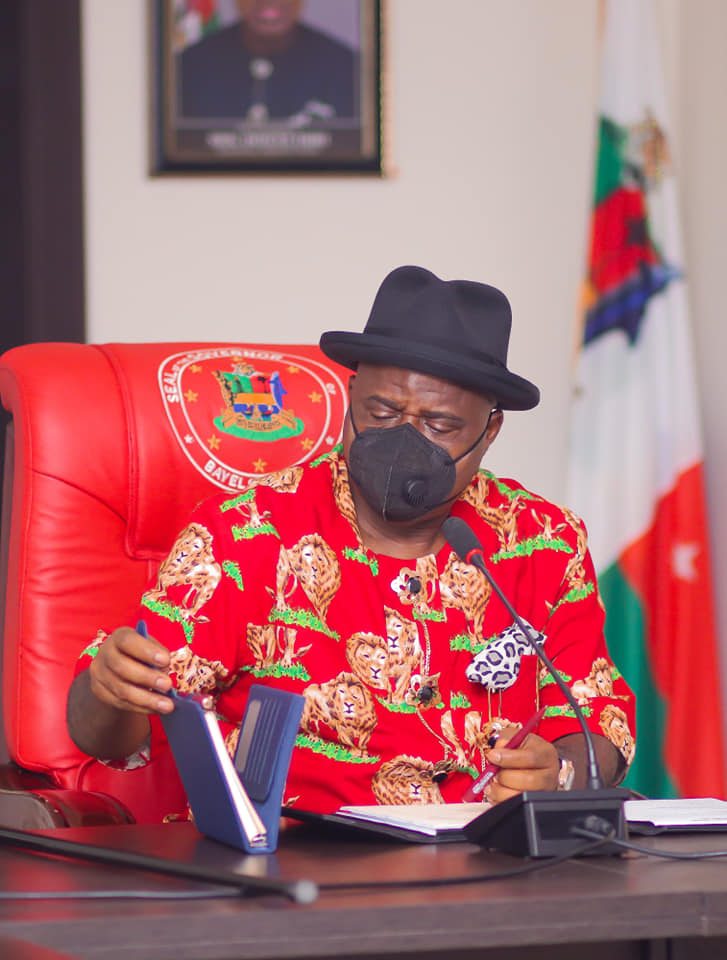
Bayelsa State Governor, Senator Douye Diri, has said he enjoys a cordial and collaborative relationship with the state legislature since he assumed office almost a year ago.
Governor Diri stated this in Asaba, Delta State, while declaring open a three-day special retreat for state legislators with the theme: “Building Capacity For An Impactful Legislature.”
He called on members of the 6th House of Assembly to focus on the training in order to enhance their legislative duties and foster better working relationship among the three arms of government.
The governor in a press release by his Chief Press Secretary, Mr Daniel Alabrah, urged the assembly members not to see the retreat as a tea party but an exercise to enable them effectively perform their functions.
He likened the three arms of government to parts of a machine that require each other to work effectively.
“The executive, legislature and judicial arms of government are one and the same. Although we accede to the principle of separation of powers, the three arms of government are like a machine. If one part is sick, others are affected. So, we must lubricate all parts to ensure that the machine remains functional at all times.
“Since my assumption of office, the assembly has functioned as a separate arm of government and performing its checks and balances. The relationship between both arms of government has been very cordial and collaborative. The best interest of our state has been paramount in our relationship and it continues to be so”, he said.
While highlighting the qualities of a legislator, Diri said knowledge and capacity as well as ability to create harmony with other arms of government were essential in discharging one’s duties.
In his welcome address, Speaker of the House of Assembly, Abraham Ingobere, assured that they would optimise the opportunity of the retreat and bring the knowledge acquired to bear on their legislative business.
Hon. Ingobere, who observed that in every society, the building blocks are the institutions, expressed the optimism that at the end of the retreat they would be better placed to create more viable institutions for effective service delivery.


By: AriweraIbibo-Howells,Yenagoa

Continue Reading

Niger Delta

Flood: NDDC Extends Lifeline To Ayakoro Community

Published

on

The Niger Delta Development Commission (NDDC) has distributed relief materials to residents of Ayakoro Community in Ogbia Local Government Area of Bayelsa State, following recurring flood incidents that have devastated livelihoods and displaced residents.
A statement signed and issued by the Director, Corporate Affairs of the NDDC, Seledi Thompson-Wakama, stated that the intervention, aimed at cushioning the impact of seasonal flooding, comes amid growing concerns over the loss of lives, farmlands and economic assets in the riverine community.
Representing the Managing Director of NDDC, Dr. Samuel Ogbuku, at the event, the Director of Education, Health and Social Services, Dr. Patience Ezugu, said the initiative reflects the commission’s commitment to alleviating hardship and improving living conditions across the Niger Delta.
She noted that the donation of food items and essential household materials forms part of NDDC’s broader strategy to support vulnerable communities while advancing sustainable development in the region.
“As we distribute these materials to the people of Ayakoro, we reaffirm our resolve to empower communities and drive meaningful development across the Niger Delta”, she said.
Ogbuku, in a statement, reiterated that the commission’s mandate is rooted in addressing environmental degradation, pollution and other development challenges confronting the region.
He assured that NDDC would sustain interventions that deliver tangible benefits to affected communities.
In his remarks, the Acting Paramount Ruler of Ayakoro Kingdom, King Micah Itekesi, represented by a community leader, Pastor ThankGod Expenses, commended the commission for its timely response to the plight of flood victims.
Describing the intervention as unprecedented, he expressed gratitude to the NDDC leadership for the scale of assistance provided, noting that the support would go a long way in easing the suffering of residents.
He also assured that the relief materials would be distributed fairly among households in the community.
Speaking on the selection process, the programme consultant, Dr. Daniel George Smile, explained that Ayakoro was prioritised due to the severity of flood impact and the community’s fragile economic condition.
He added that assessments were ongoing in other affected areas for possible intervention.
The latest effort underscores NDDC’s continued focus on humanitarian support alongside its core infrastructure and development mandate in the Niger Delta.
Continue Reading

Niger Delta

C’River Deploys Drones To Boost Rural Healthcare Access

Published

on

The Commissioner for Health in Cross River State, Henry Ayuk, has said the deploent of drone technology has improved access to essential medicines in remote communities, strengthening healthcare delivery across previously underserved and hard-to-reach areas.
Speaking with The Tide’s source in Calabar, Ayuk said the government had leveraged drone technology to improve healthcare delivery and ensured equitable access statewide.
He explained that the innovation had expanded immunisation coverage and enabled efficient delivery of essential medicines and supplies to every nook and cranny of the state, including isolated and difficult terrains.
According to the Commissioner, the initiative, implemented in partnership with Zipline, is designed to serve more than 300 health facilities, especially those located in riverine and mountainous areas lacking reliable transportation access.
“The use of drones has significantly improved healthcare delivery in Cross River, enhancing efficiency and responsiveness in the distribution of medical supplies to health facilities across diverse and challenging terrains.
“Beyond faster deliveries to hard-to-reach areas, the system has reduced wastage and helped curb the circulation of counterfeit medicines, thereby strengthening the integrity and reliability of the state’s drug supply chain,” Ayuk stated.
He continued that the administration of Bassey Otu had also introduced far-reaching initiatives aimed at strengthening healthcare infrastructure, expanding access, and improving the overall quality of medical services across the state.
He highlighted ongoing upgrades and renovations of a out 100 Primary Healthcare centres across the state’s 18 local government areas, aimed at enhancing service delivery and improving access to basic healthcare services.
He added that the government had designated some health facilities to cater specifically to elderly persons, children, and pregnant women, ensuring vulnerable groups received focused and priority medical attention across the state.
According to him, several upgraded Primary Healthcare centres have been completed, while others are at advanced stages, reflecting steady progress in the government’s efforts to revitalise healthcare infrastructure and expand service coverage.
He noted that dedicated facilities for elderly persons above 65, children under five years, and pregnant women were already operational in three local government areas and would be replicated statewide.
On disease control, Ayuk said the government combined preventive and curative strategies, emphasising early detection, rapid response, and sustained public health interventions to minimise risks and effectively manage outbreaks across communities.
He emphasised that there had been a significant reduction in disease outbreaks due to increased focus on preventive measures, including public health education and awareness campaigns targeted at communities across the state.
He explained that authorities provided basic health education and maintained an effective surveillance system that ensured rapid response once cases were reported, helping to contain and mitigate the spread of diseases statewide.
Continue Reading

Niger Delta

South-South APC Elects New Zonal Executive … Reaffirms Unity Ahead Of 2027

Published

on

The All Progressives Congress (APC) in the South-South has elected a new Zonal Executive Committee, following a successful congress held on Wednesday in Asaba, the Delta State capital.
The congress, which drew top party leaders, including the Senate President, Governors, lawmakers, and delegates from across the region, was conducted through a consensus arrangement, reinforcing the party’s commitment to unity and internal cohesion.
Proceedings commenced with a motion for the dissolution of the outgoing Zonal Executive Committee, moved by the Speaker of the Delta State House of Assembly, Rt. Hon. Emomotimi Guwor, and seconded by his Bayelsa State counterpart, Rt. Hon. Abraham Ingobere, and was unanimously adopted.
Subsequently, a motion adopting consensus as the mode of electing new officers was moved by Senator Essien Williams of Cross River State and seconded by Senator Aniekan Bassey of Akwa Ibom North East, and was also unanimously adopted by all delegates.
At the end of the exercise, Chief Victor Giadom emerged as National Vice Chairman (South-South); Dr. Ita Udosen, Zonal Secretary; Barr. Neworld Safugha, Legal Adviser; Dr. Samuel Nwanosike, Publicity Secretary; Prince Urhoro Koyoyo, Youth Leader; Hon. Suobankuo Omoni, Women Leader; Hon. Prince Edward, Organising Secretary; and Prince Ayo Peter, who is to  represent Persons with Disabilities.
President of the Senate, Godswill Akpabio, in his remarks, conveyed the goodwill of President Bola Ahmed Tinubu and commended the South-South for its growing unity and political consolidation within the APC.
He noted that the region had witnessed remarkable transformation, moving from minimal APC presence to becoming a strong political bloc with increased alignment from governors and stakeholders.
Akpabio challenged party faithfuls to position the South-South as the highest vote-delivering region for the APC in the 2027 general elections, stressing that such a goal was both achievable and necessary.
Governor of Delta State, Rt. Hon. Sheriff Oborevwori, in his goodwill message, welcomed delegates to Asaba and described the congress as a demonstration of the party’s strength, unity, and readiness for future political engagements.
Oborevwori emphasized the need for sustained grassroots mobilization and urged party members to deepen internal cohesion, strengthen structures across all levels, and maintain strong connections with the people.
Chairman of the South-South Governors’ Forum and Governor of Bayelsa State, Senator Douye Diri, also underscored the importance of unity, describing the adoption of consensus as a major step in reducing internal conflicts and fostering collective ownership within the party.
He noted that, for the first time in recent political history, the South-South was speaking with one voice, adding that the full attendance of governors at the congress demonstrated their shared commitment to the region’s progress.
Governors  Umo Eno (Akwa Ibom), Bassey Otu (Cross River), Monday Okpebholo (Edo), and Siminalayi Fubara (Rivers) in their separate remarks, spoke in the same vein, stressing the importance of the zone aligning with the Government at the centre.
Earlier in his welcome address, Chief Victor Giadom thanked party leaders and stakeholders for their support during his tenure and highlighted the progress made by the APC in the region, including electoral victories and increased political alignment.
In his acceptance speech, Giadom, who was relelected, expressed optimism that the party would continue to expand its influence ahead of the 2027 elections and position itself for greater success.
The congress was also attended by members of the National and State Houses of Assembly, Ministers, other top government functionaries, party leaders and stakeholders from across the zone.
The event concluded with a renewed commitment by party leaders and members to strengthen unity, expand grassroots support, and consolidate the APC’s growing influence in the South-South region.
Continue Reading

Trending