Connect with us

Editorial

COVID-19 2nd Wave As Schools Resume

Published

on

As schools in Rivers State and many others resume for academic activities this month,
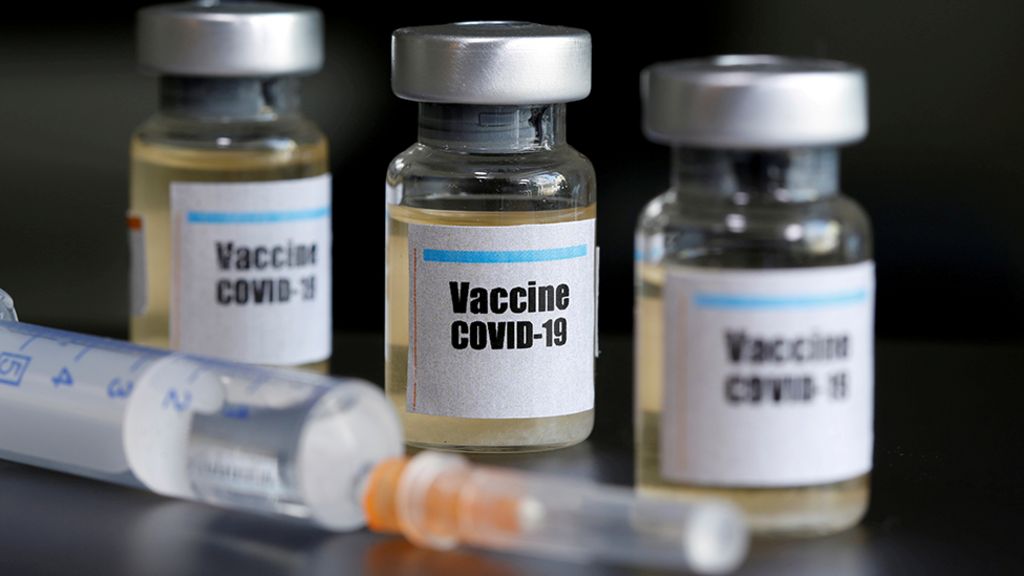
there is an urgent need for the federal, state and local authorities to take adequate precautionary measures to curtail further spread of the second wave of the COVID-19 pandemic in Nigeria.
Countries across Europe are observing a resurgence in COVID-19 cases after successfully slowing outbreaks last year, declaring more cases each day now more than they were during the first wave earlier in the pandemic. England, Portugal and Hungary are among nations in a second lockdown as the new wave of infections sweeps through, shattering efforts and responses to keep the contagion at bay.
Following this global upsurge in the pandemic, the Nigerian government, through the Chairman of the Presidential Task Force (PTF) on COVID-19, Boss Mustapha, ordered schools in the country to suspend resumption from the Christmas and New Year break till January 18, 2021. But contrary to the Federal Government’s directive, many states scheduled the first and second weeks of January for resumption.
If there is a time complaisance with the preventive COVID-19 measures have to be rigorously carried out, especially in our institutions, it is now. The enforcement of all safety protocols outlined by the Nigeria Centre for Disease Control (NCDC) in all our schools must not be ignored. There is no basis to relax. Many countries experienced an upsurge in COVID-19 infections after reopening their schools.
In Israel, for instance, where schools were reopened following a noticeable decline in the number of infections, a total of 1,335 students and 691 staff contracted the virus just within two months of resumption and more than 28,000 students and teachers were quarantined. The volume of the spread resulted in the decision of Prime Minister Benjamin Netanyahu to close down no fewer than 125 schools in an aggressive drive to arrest the spread of the virus.
Barely two weeks after the schools were reopened, Israel was compelled to make a new policy, ordering the closure of any school which had recorded at least one case of COVID-19 infection while all students and staff of the school were quarantined. Similarly, Ghana, a neighbouring West African country, which had reported minimal cases of COVID-19 with low fatalities, also witnessed a rise in infection after reopening schools.
The Nigerian government and school authorities should imbibe useful lessons from the cases of Israel and Ghana by making certain that all COVID-19 protocols are not only deliberately put in place, but are also strictly observed. This has become imperative because an outbreak of infections in schools will spell doom for the country.
Acting in line with NCDC’s prescribed rules to ensure safety in schools, the Rivers State Government has made it mandatory for all institutions in the state to install and provide handwashing facilities in the schools including higher institutions and all persons arriving the campus environment must be subjected to temperature checks, among others. These measures were reiterated as schools in the state resumed from the Christmas and New Year vacation.
The move is applauded. But the truth is that only very few public schools in the state, less than five per cent, can meet the guidelines. Many public schools are dilapidated. Pupils and students learn under seriously compromised circumstances. Schools in Rivers State should be equipped with functional sick bays, maintain the acceptable standard number of students in a class, have functional water and sanitation facilities to promote hygiene as directed by the government.
We need to be cautious and heed the Federal Government’s warnings that a significant increase in Coronavirus infections in Nigeria appears imminent by January 2021 due to continued violation of safety protocols. The NCDC reinforced the same that Nigeria would in January 2021 pay the price of violating the COVID-19 protocols. And schools remain the most vulnerable areas. That is why the authorities in Rivers State have to upgrade public schools for necessary observance of the preventive procedures.
Given the rising rate of the virus in the state, we urge the governor, Chief Nyesom Wike, to introduce severe curtailing measures not only in schools but the entire state. Regrettably, most churches, commercial vehicles, and markets have failed to enforce the compulsory wearing of face mask in adherence to COVID-19 protocol, a fact Wike noted in a recent statement, threatening re-imposition of a lockdown.
“When you go to some churches, they don’t wear a face mask. Go to market, they don’t wear a mask. They believe COVID is not real. It’s not real because it has not happened to you; nobody had died whom you know. When somebody has died and the person is close to you, you will know that COVID is real,” Wike said.
It is necessary to intensify awareness for people to take precautions against the pandemic. Nigerians are not taking enough care against the disease. In this moment of economic recession, the country cannot afford a lockdown which might be introduced if preventive measures are not adhered to. The only option is for the people to observe the new normal, which are the COVID-19 protocols to reduce the spread of the virus.
The relevant authorities, particularly the Ministry of Education and their agencies in various states should dispatch their staff on an inspection tour of every school to certify compliance with COVID-19 protocols. The Ministry of Health in each state should equally join in these efforts. Prevention, as conventional wisdom teaches, is always better than cure. But in the case of COVID-19, there is yet no cure!

Continue Reading

Editorial

Nigeria: Cushioning Effects Of M’East Crisis 

Published

on

The ongoing crisis in the Middle East between the United States and Israel on one hand and Iran on the other has once again unsettled global stability, with escalating tensions disrupting oil production routes and threatening key supply chains. Conflicts involving major oil-producing nations and strategic waterways have created uncertainty in the international energy market. As history has repeatedly shown, instability in this region often sends shockwaves across the global economy, particularly in energy-dependent countries.
One of the most immediate consequences of this war has been a sharp rise in global crude oil prices. Brent Crude has surged between $105 and $110 per barrel in recent weeks, reflecting fears of supply shortages. This increase has translated into higher fuel costs worldwide, placing immense pressure on both developed and developing economies.
Nigeria, despite being a major crude oil producer, has not been spared. The country’s heavy reliance on imported refined petroleum products has meant that global price increases directly affect domestic fuel costs. Rather than benefiting fully from higher crude prices, Nigerians are grappling with the paradox of rising oil wealth alongside worsening living conditions.
The impact on the cost of living has been severe. Transportation fares across major cities have increased by over 50 per cent, while food inflation has climbed above 30 per cent, according to recent data from the National Bureau of Statistics (NBS). The ripple effect of higher fuel prices has touched every sector, from agriculture to manufacturing, making basic goods increasingly unaffordable for ordinary citizens.
In response to this growing hardship, the Nigeria Labour Congress (NLC) has demanded urgent intervention from the Federal Government to cushion the effects of the recent spike in petrol prices occasioned by the Middle East crisis. The call reflects widespread frustration among workers and the broader population.
The NLC made this demand in a statement titled “Save Nigerians From This Shock: An Urgent Relief Has Become Necessary,” signed by its President, Joe Ajaero. The statement underscores the urgency of the situation and highlights the growing disconnect between government policy and the lived realities of citizens.
We strongly support the NLC’s clarion call and urge the administration of President Bola Tinubu to take immediate and decisive steps to cushion the harsh effects of the crisis on Nigerians. Leadership at this critical moment requires bold, people-centred policies that prioritise national welfare over market orthodoxy.
One such step is the reintroduction of a fuel subsidy, funded by the gains from the current surge in global crude oil prices. The government could choose to subsidise either the finished petroleum products or the crude supplied to local refiners. Providing crude at reduced rates to Aliko Dangote refinery would significantly lower the final pump price for consumers.
This brings into focus the role of Dangote, whose refinery has the potential to transform Nigeria’s energy landscape. Dangote has stated that the Federal Government currently supplies only 30 per cent of the crude required for his refinery, compelling him to import the remaining 70 per cent. For a country that produces millions of barrels daily, this situation is both inefficient and unacceptable.
Beyond fuel pricing, there is a pressing need for direct support to workers. A cost-of-living allowance, a wage award, and targeted tax relief measures would provide immediate relief. At the same time, the government must take concrete steps to revive Nigeria’s dormant public refineries, which have long been a drain on public resources without delivering value.
The sharp rise in fuel prices, now selling at approximately N1,310 to N1,400 per litre in many parts of the country, has deepened economic hardship. For millions of Nigerians, daily survival has become a struggle. Without urgent intervention, the nation risks severe social unrest, as frustration continues to mount among the populace.
It is deeply troubling that the Federal Government appears to have left Nigerians at the mercy of volatile global oil prices triggered by the Middle East imbroglio. This situation has exposed the fragility of the downstream petroleum sector and highlighted the failure to build resilience despite decades of oil wealth.
As long as Nigeria remains tied to a market-driven pricing structure dictated by global fluctuations and continues to neglect its domestic refining capacity, it will remain vulnerable to external shocks. International conflicts and speculative market forces will continue to dictate the economic fate of Nigerian households.
Nigerian workers are being pauperised and subjected to immense suffering. They are not mere statistics; they are the engine of the nation’s economy. When that engine overheats, the entire system risks collapse. Ignoring their plight is not just unjust—it is economically reckless.
Finally, the estimated N30 trillion oil windfall expected from the current crisis must not be squandered as in the past. These resources should be transparently managed and invested in social protection programmes, infrastructure, and economic stabilisation. In addition, Nigeria must develop robust crude storage systems, as seen in other countries, to cushion future shocks. Failure to properly manage the energy situation could further accelerate inflation, compounding the already substantial burden on citizens.
Continue Reading

Editorial

Thumbs Up For Sit-At-Home Reversal

Published

on

For the first time in over five years, the bustling markets of Anambra State, particularly the sprawling Onitsha Main Market, opened for business on February 2, 2026, without the fear of coercion or violence. This development marks the definitive end of the illegal Monday sit-at-home order that has held the South-East region hostage since 2021. Governor Chukwuma Soludo has achieved what many thought impossible, finally laying to rest an obnoxious practice that has bled the region dry economically and psychologically.
The Monday sit-at-home order was first declared by the Indigenous People of Biafra (IPOB) on July 30, 2021. The proscribed organisation imposed the directive to pressure the Federal Government into releasing their detained leader, Nnamdi Kanu, and to advance their demand for the creation of an independent sovereign state of Biafra. What began as a protest mechanism quickly degenerated into a compulsory lockdown enforced through intimidation and violence.
For more than four years, the South-East had been crippled every Monday. Schools remained shut, businesses pulled down their shutters, and economic activity ground to a halt across the five states of Anambra, Abia, Enugu, Ebonyi, and Imo. Governor Soludo recently quantified the devastation, noting that every Monday lost represented about 20 per cent of the work week for the region’s informal economy. When calculated over 52 weeks annually for several years, the cumulative losses are truly staggering.
The economic cost to the region has been nothing short of catastrophic. Investors fled, businesses relocated to other parts of the country, and the South-East lost its competitive edge as West Africa’s premier commercial hub. The Onitsha Main Market, reputedly the largest market in West Africa, sat empty every Monday. Thousands of traders lost 52 working days every year, children missed countless hours of education, and families saw their incomes dwindle. The opportunity cost of this self-imposed isolation runs into hundreds of billions of naira.
Professor Soludo demonstrated exceptional leadership by taking the bull by the horns. His administration ordered the closure of the Onitsha Main Market for one week, sending a clear message that the era of economic sabotage was over. Following this decisive action, he engaged in meaningful dialogue with traders and stakeholders, reaching a consensus that markets must operate on Mondays like every other day of the week.
The results of this courageous stance are now visible for all to see. Over 45,000 shops at the Onitsha Main Market reopened for business, and traders turned out in their tens of thousands, jubilant that they could finally resume their livelihoods without fear. The atmosphere was reportedly electric, with over 100,000 people celebrating what many described as a liberation from years of economic captivity imposed by faceless enforcers.
Soludo deserves the highest commendation for confronting this age-long practice that isolated the South-East from the rest of Nigeria. It takes uncommon courage and determination to challenge an entrenched system enforced through fear and violence.
It is senseless for any group to impose such hardship on the very people it claims to be fighting to liberate. Perhaps IPOB thought they were punishing the Federal Government by shutting down the South-East every Monday. Little did they realise that they were inflicting the deepest wounds on their own people. The traders, the schoolchildren, the transporters, and the ordinary workers who lost income and opportunities were all Igbos, the very constituency IPOB professes to protect.
Can it be imagined what it takes to shut down an entire geopolitical zone every Monday for over four years? The mathematics of loss is simple but devastating: 52 Mondays annually means 52 lost working days per year. For a region built on commerce and entrepreneurship, this represented a self-inflicted wound that no external enemy could have achieved. The South-East was effectively closed for business one day every week while the rest of Nigeria moved forward.
Thankfully, IPOB has now officially endorsed the cancellation of the sit-at-home order once and for all. In a statement released, the group announced that Nnamdi Kanu had directed the “total cancellation” of the directive, urging residents to open their shops, go to work, and send their children to school without fear. This is a welcome development, though we must approach it with cautious optimism, as this is not the first time such announcements have been made.
Previous attempts to end the practice were frustrated by the activities of one Simon Ekpa, a self-styled disciple of the IPOB leader based in Finland. Whenever IPOB issued statements calling for a cessation of the sit-at-home, Ekpa would counter with orders for its continuation, creating confusion and perpetuating the cycle of fear. Now that Ekpa has been convicted and jailed in Finland for inciting terrorism and tax fraud, we hope there will be no further excuses to continue this damaging observance.
With the definitive end of the sit-at-home order, people in the South-East, as well as Nigerians travelling through the region, can finally heave a sigh of relief. The order caused immense apprehension for travellers who had to pass through the South-East to reach other parts of the country. Major highways were deserted on Mondays, creating security vulnerabilities and disrupting the flow of commerce and movement across the nation. This created countless problems for families, businesses, and national cohesion.
Now that this painful chapter has come to an end, we urge the proscribed IPOB not to renege on their decision. The South-East people, who were the greatest victims of this infamous order, can now return to doing what they do best: business. The resilience of the Igbo entrepreneur is legendary, and given the opportunity, the region will bounce back stronger than ever. However, this requires that the peace holds and the markets remain open every Monday without exception.
We urge everyone in the region—business owners, market leaders, transporters, stakeholders, and ordinary citizens—to cooperate fully to ensure that this new development is sustained. The government at all levels must also begin to address the underlying issues that led to this ugly incident. We cannot run away from the fact that there is a genuine feeling of marginalisation and oppression in the South-East that the Federal Government needs to look into.
Undoubtedly, Governor Soludo’s action has impacted positively on Anambra State and the entire region. It is a huge plus for the state’s economy, the security architecture of the South-East, and the confidence of investors who had written off the region as too risky for business. By restoring normalcy to Mondays, Soludo has given the people back their most valuable asset: the freedom to earn a living without fear. This is leadership, and this is progress.
Continue Reading

Editorial

Advancing Women, Humanity, Through IWD 2026

Published

on

On March 8, the world once again commemorated International Women’s Day (IWD) 2026, a global moment dedicated to celebrating the achievements of women and renewing commitment to gender equality. This year’s theme, “Give to Gain,” carries a simple but powerful message: when society gives support to women, society itself gains progress, stability, and prosperity.
International Women’s Day is observed annually to recognise the social, economic, cultural, and political achievements of women. It also serves as a reminder that, despite progress made over the decades, gender inequality remains a persistent global challenge that demands collective action.
The IWD 2026 “Give to Gain” campaign encourages a mindset of generosity and collaboration. It calls on governments, institutions, organisations, and individuals to support women’s advancement, recognising that empowerment grows when opportunities are shared and barriers are removed.
At the heart of the campaign is the principle of reciprocity. When people and institutions give generously—whether through opportunities, encouragement, or resources—the benefits multiply. Giving is not subtraction; it is intentional multiplication. When women thrive, families prosper, communities develop, and nations rise.
The concept of giving extends beyond financial assistance. Support for women can come through donations, knowledge, resources, infrastructure, visibility, advocacy, education, training, mentoring, and time. Each contribution strengthens the foundation for a more inclusive and interconnected world.
In this sense, “Give to Gain” is not merely a slogan; it is a global call to action. Every society, institution, and individual has a role to play in creating pathways for women and girls to realise their full potential.
For individuals, giving support means challenging harmful stereotypes and standing against discrimination wherever it occurs. It means questioning prejudices that limit women’s opportunities and celebrating the successes of women in every field of endeavour.
When people actively support gender equality, they reinforce a shared sense of purpose. This support produces a ripple effect: one act of advocacy encourages another, and collective effort spreads impact far beyond its original point.
The campaign, therefore, reminds us that empowerment is not a solitary journey. It is a shared responsibility that requires continuous commitment from communities across the globe.
Once again, the message is clear: everyone can give something. Through encouragement, advocacy, mentorship, or policy reform, society can help women and girls gain the opportunities they deserve.
In Nigeria, however, the message of “Give to Gain” resonates with particular urgency. Women’s rights remain constrained by deeply entrenched patriarchal norms that shape laws, politics, culture, and everyday life.
Despite decades of advocacy and repeated promises by leaders, the lived reality of many Nigerian women is still defined by systemic inequality, violence, and exclusion.
Statistics paint a troubling picture. Women hold only about 3.9 per cent of seats in Nigeria’s National Assembly, one of the lowest rates of female representation in the world. Nearly 43.4 per cent of Nigerian women aged 20–24 were married before the age of 18, while 13.2 per cent of women aged 15–49 report experiencing physical or sexual violence. These figures reveal the depth of gender inequality that still persists.
To realise the ideals of “Give to Gain” in Nigeria, deliberate action is required at all levels of government. The Federal Government must strengthen laws that protect women’s rights and ensure greater representation in governance. State governments should expand access to education, economic empowerment programmes, and protection against gender-based violence. Local governments must prioritise grassroots awareness, training, and opportunities that enable women to participate fully in community development.
Encouragingly, initiatives have begun to emerge. In Rivers State, Siminalayi Fubara used the 2026 celebration of International Women’s Day to reaffirm support for women’s empowerment, distributing N50,000 grants to 1,000 women. The First Lady, Valerie Fubara, also supported 20 women farmers with N10 million through the Renewed Hope Initiative Women Agricultural Support Programme, demonstrating how targeted support can improve livelihoods.
The responsibility for gender equality does not lie with governments alone. Individuals, organisations, and community groups must sustain the spirit of the IWD 2026 “Give to Gain” campaign throughout the year. By giving support, opportunity, and respect to women and girls, society gains a stronger, fairer, and more prosperous future for all.
Continue Reading

Trending