
Editorial
As Yakubu Returns…

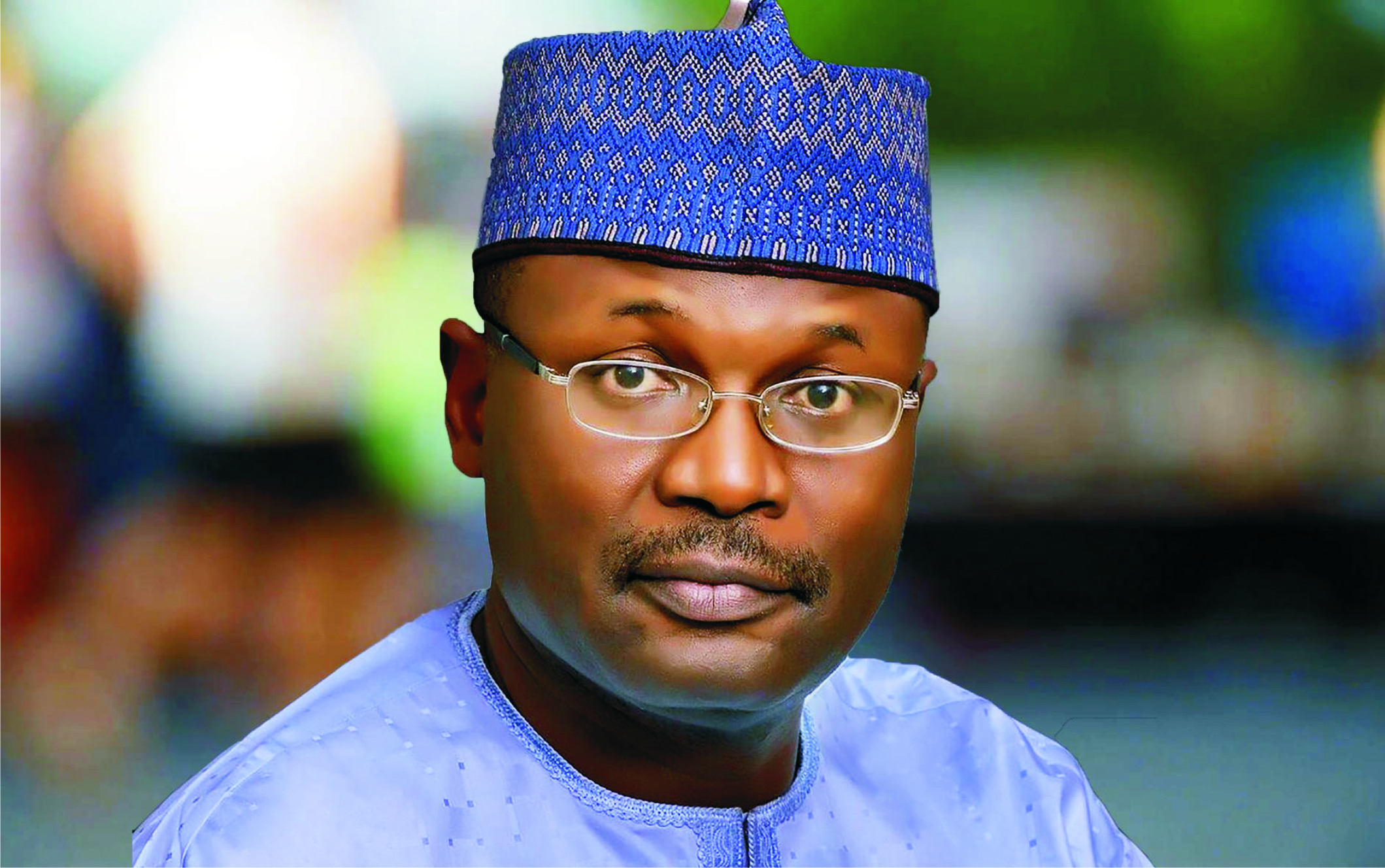
The Senate on Tuesday, December 2, 2020, confirmed the reappointment of Professor
Mahmood Yakubu as Chairman of the Independent National Electoral Commission (INEC) for the second term of five years in office. This supervened his earlier re-nomination by President Muhammadu Buhari in a letter read in the upper chamber on November 25, 2020.
Unarguably, Yakubu’s reappointment is tectonic as this is the first time a chairman is reappointed in INEC. After succeeding Prof. Attahiru Jega, who supervised the 2015 general election, Yakubu conducted the 2019 general election and equally oversaw critical off-cycle polls in Kogi, Edo and Ondo States.
His remarkable feat during the confirmation hearing at the Senate attests to his intelligence and much savvy. Given Nigeria’s byzantine political climate, managing elections is uniquely intense. As such it was expected that INEC would have its pluses and minuses in the last five years under the current electoral boss.
In his first tenure, Yakubu navigated the commission into a valid institution where he, despite so many thought-out attempts by politicians, ensured the strict advertency of electoral rules during elections. These comprise the application of technology to enrich the handling and credibility of elections and guaranteeing strict adherence to the rules by those involved in the process.
The inauguration of a credible public election result viewing portal known as the INEC Result Viewing (IReV) to aid Nigerians to view polling unit results precociously as voting ends on election day, is not just a game-changer but a crucial platform of exacerbating translucency in the electoral system. The feat should be sustained in subsequent elections.
Regrettably, most of the elections in Yakubu’s first term featured some anomalies such as missing ballot materials and cancellation of poll results, while others were inconclusive. Some results were later challenged and upturned by the courts. The general perception was that the elections were not substantially credible and that the courts, rather than the ballots, were the major determinants of winners and losers of elections.
The task ahead for Yakubu will be tricky, especially with the 2023 general elections just two years away. It is heartwarming that the chairman acknowledged that fact during his screening and assured the Senate committee of the commission’s resolve to end undue postponement of elections and improve voter turnout through enhanced voter education.
The time to begin is now as the enormous work beforehand demands quick action. The commission and the National Assembly must immediately commence work on the amendment of the Electoral Act to enhance the credibility of our elections. Delay might catalyze more confusion and distrust in the entire electoral process as it almost did before the last general election in 2019.
The Iearned professor has to take more seriously the constant training of his staff, press for additional electoral reform and enable a more regular continuous voter registration exercise. He must keep a tab on those on electoral duties and sanction violators of the rules. Notably, political parties must unite with INEC to assure full implementation of the laws and finesse gratuitous bickering.
Yakubu’s INEC should be troubled that Nigeria is considered the worst country regarding voter apathy in Africa following the low turnout of voters at elections. Out of 84 million registered voters in the 2019 general elections, only 28.6 million persons voted at the presidential elections. This represents 35% of the registered voters and less than 15% of the country’s over 200 million population.
The more recent elections in Edo and Ondo States were no different as only 25% of registered voters turned up to cast their votes in Edo. While the state had a record of 2.2 million registered voters, 483,000 had failed to collect their voters’ card, thus reducing the number of eligible voters to 1.7 million.
The reason for those storylines is not far-fetched as the general perception that votes don’t count persists. Citizens have little faith in the electoral process because of the misdeed of some electoral officials who in connivance with candidates engage in manipulation of election results.
These issues are aggrandised by electoral violence, thuggery, vote-buying, and multiple registrations. Nigerians still worry about their safety during elections. Therefore, INEC should do more to bring perpetrators of electoral violence to justice to win the confidence of the people, particularly the youths, who constitute a major ratio of the voting public.
Strengthening the country’s electoral system and democracy is a responsibility of all Nigerians but INEC needs to lead by assuring that elections are free, fair and credible. The commission should engage persons of integrity as its returning officers and work more closely with security agencies to protect officials and voters alike, besides ensuring that votes count.
Indeed, Prof. Yakubu has made history but he has a better chance to write his name in gold if he uses the next five years to turn INEC into a better institution that delivers credible elections. We congratulate him on his reappointment and wish him greater successes in his second and final term.



-

 Rivers2 days ago
Police arrest 3 suspects over killing of driver in Rivers
-
Politics2 days ago
I DIDN’T PROMISE YOU TICKETS, AKPABIO TELLS APC SENATORS WHO FAILED PRIMARIES
-

 News2 days ago
FUBARA ASSURES NUT OF SECURITY OF SCHOOLS IN RIVERS
-

 News2 days ago
NDLEA Arrests Four Notorious Female Drug Dealers In Four States
-

 News2 days ago
WORLD FOOD SAFETY DAY: VETERINARIANS TASK GOVT ON MODERN ABATTOIR IN RIVERS
-

 Sports2 days ago
Okpekpe Road Race Gets Mobility Solutions, Fan Engagement
-
Politics2 days ago
Court Dismisses Rivers PDP Members’ Suit Over LG Election Candidates
-

 News2 days ago
RSG ADVOCATES IMPLEMENTATION OF SUMMIT RESOLUTIONS FOR N’DELTA DEV