Oil & Energy
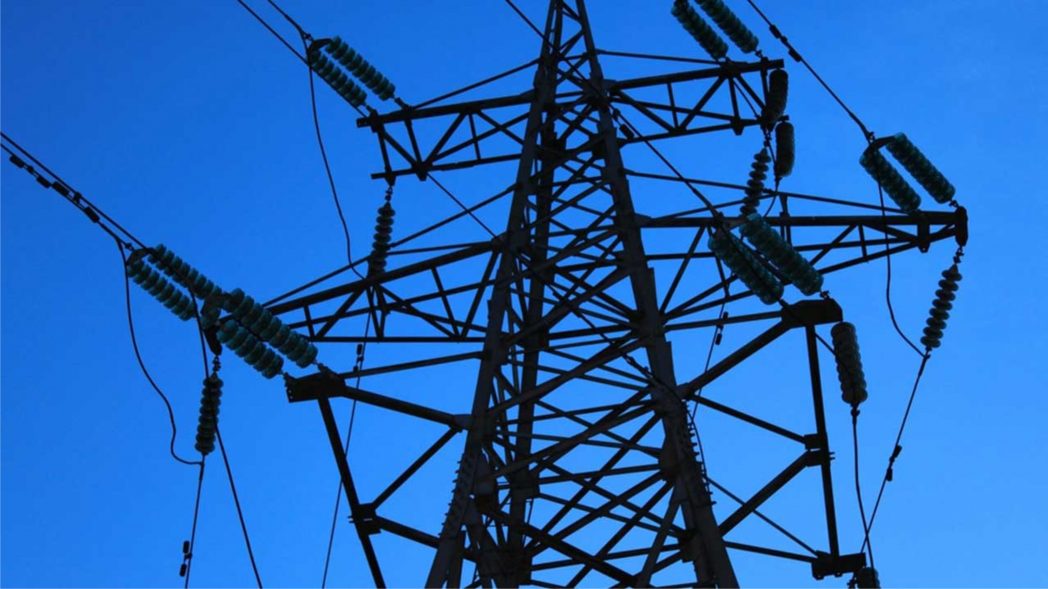
GenCos Lose 3,060.5 Megawatts To Gas Shortage
Electricity Generation Companies (GenCos) comprising gas-fired and hydro stations said that they could not generate 3,060.5 megawatts of electricity on Monday due to unavailability of gas.
This information was made known in a daily energy report by the Advisory Power Team, office of the Vice President, a copy of which was obtained by The Tide in Abuja on Tuesday .
The report also noted that 222.5 megawatts of electricity was not generated due to unavailability of transmission infrastructure during the period.
Similarly, it said that 182 megawatts was not generated due to high frequency resulting from unavailability of distribution infrastructure.
The report, however, said that the GenCos released an average of 4,091 MegaWatts/Hour of electricity into the national grid on Monday, explaining that the electricity sent out by the GenCos was down by 4.74 megawatts from the 4,096 megawatts released on Sunday.
The report revealed that the power sector lost an estimated N1.7 billion on Monday due to insufficient gas supply, distribution and transmission infrastructure.
On sector reform and activities, it said that the dominant constraint for Monday was unavailability of gas, adding that the peak generation attained was 4,884 megawatts.

Oil & Energy
Take Concrete Action To Boost Oil Production, FG Tells IOCs
Speaking at the close of a panel session at the just concluded 2026 Nigerian International Energy Summit, the Minister of State for Petroleum Resources (Oil), Senator Heineken Lokpobiri, said the government had created an enabling environment for oil companies to operate effectively.
Lokpobiri stressed that the performance of the petroleum industry is fundamentally tied to the success of upstream operators, noting that the Nigerian economy remains largely dependent on foreign exchange earnings from the sector.
According to him, “I have always maintained that the success of the oil and gas industry is largely dependent on the success of the upstream. From upstream to midstream and downstream, everything is connected. If we do not produce crude oil, there will be nothing to refine and nothing to distribute. Therefore, the success of the petroleum sector begins with the success of the upstream.
“I am also happy with the team I have had the privilege to work with, a community of committed professionals. From the government’s standpoint, it is important to state clearly that there is no discrimination between indigenous producers and other operators.
“You are all companies operating in the same Nigerian space, under the same law. The Petroleum Industry Act (PIA) does not differentiate between local and foreign companies. While you may operate at different scales, you are governed by the same regulations. Our expectation, therefore, is that we will continue to work together, collaborate, and strengthen the upstream sector for the benefit of all Nigerians.”
The minister pledged the federal government’s continued efforts to sustain its support for the industry through reforms, tax incentives and regulatory adjustments aimed at unlocking the sector’s full potential.
“We have provided extensive incentives to unlock the sector’s potential through reforms, tax reliefs and regulatory changes. The question now is: what will you do in return? The government has given a lot.
Now is the time for industry players to reciprocate by investing, producing and delivering results,” he said.
Lokpobiri added that Nigeria’s success in the upstream sector would have positive spillover effects across Africa, while failure would negatively impact the continent’s midstream and downstream segments.
“We have talked enough. This is the time to take concrete actions that will deliver measurable results and transform this industry,” he stated.
It would be noted that Nigeria’s daily average oil production stood at about 1.6 million barrels per day in 2025, a significant shortfall from the budget benchmark of 2.06 million barrels per day.
Oil & Energy
Host Comm.Development: NUPRC Commits To Enforce PIA 2021
Oil & Energy
PETROAN Cautions On Risks Of P’Harcourt Refinery Shutdown
The energy expert further warned that repeated public admissions of incompetence by NNPC leadership risk eroding investor confidence, weakening Nigeria’s energy security framework, and undermining years of policy efforts aimed at domestic refining, price stability, and job creation.
He described as most worrisome the assertion that there is no urgency to restart the Port Harcourt Refinery because the Dangote Refinery is currently meeting Nigeria’s petroleum needs.
“Such a statement is annoying, unacceptable, and indicative of leadership that is not solution-centric,” he said.
The PETROAN National PRO reiterated that Nigeria cannot continue to normalise waste, institutional failure, and retrospective justification of poor decisions stressing that admitting failure is only meaningful when followed by accountability, reforms, and a clear, credible plan to prevent recurrence.
-
Politics3 days agoAPC Releases Adjusted Timetable For Nationwide Congresses, Convention
-
Business3 days agoCustoms Seek Support To Curb Smuggling In Ogun
-
Sports3 days ago
DG NIS Wants NSC Board Constituted, Seeks Increased In Funding
-
Sports3 days agoSWAN Rivers Set-up Five Functional Committees
-
News3 days ago
Police Bust Kidnapping Syndicate In PH
-
Featured3 days agoINEC Proposes N873.78bn For 2027 Elections, N171bn For 2026 Operations
-
Sports3 days ago
‘NTF Will Build On Davis Cup Success For Brighter Future’
-
Sports3 days ago
NSC Disburses N200m Training Grants To 26 Athletes