
News
Lassa Fever: FG Confirms 41 Deaths In 19 States

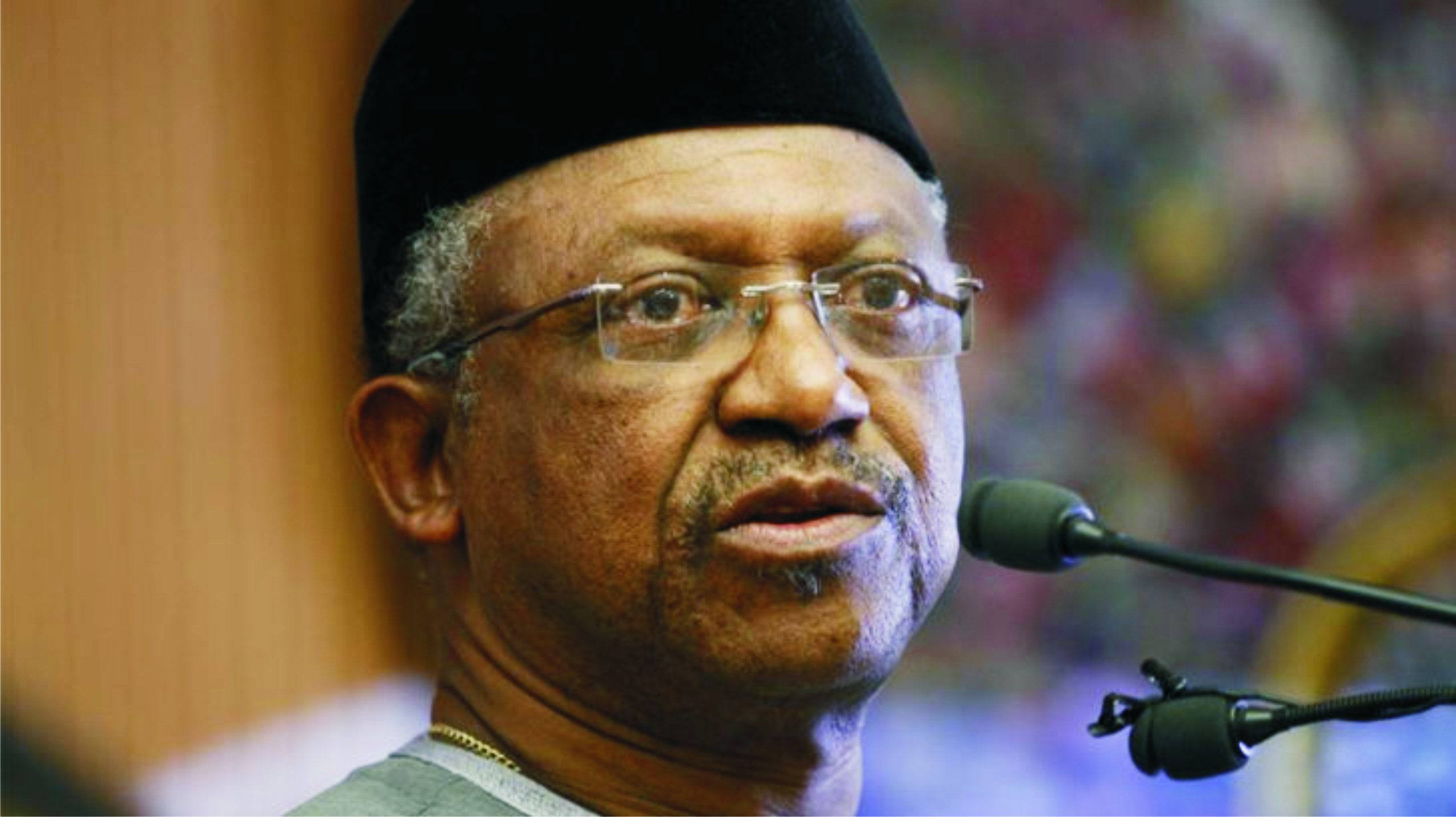
The Minister of Health, Dr. Osagie Ehanire, has confirmed that as of yesterday, 258 cases of Lassa fever have been confirmed with death toll at 41, reported from 19 states.
Also, majority of the cases are from Ebonyi, Edo and Ondo states.
He explained that though the disease is endemic in the country due to our particular ecological profile, the responsibility of curbing its spread is the responsibility of everyone – government, NGOs, development partners etc.
Ehanire, who made this known, yesterday in a press briefing in Abuja, said that “Lassa fever is a disease that is indigenous to our country because it occurs every year, particularly in dry season. This year there has been an increase of Lassa fever reporter across the country. As of the 28th of January, 2020, 258 confirmed cases and 41 deaths have been reported in 19 states, with majority of the cases from Ebonyi, Edo and Ondo states.
“Given the tropical climate in Nigeria and the abundance of the disease vectors in our environment, the high risk of infectious diseases like Lassa fever is high all over the country.
“Despite the increase in confirmed cases, the overall case fatality rate for 2020 has been just about 15 percent compared to the same in 2019 which was 20 percent and few years ago the case fatality rate was over 30 percent”.
About what the government is doing to control and manage the spread of the Lassa fever virus, Ehanire explained that the Nigeria Centre for Disease Control (NCDC) has activated a National Emergency Operations Centre (EOC), to coordinate responses to the increasing number of Lassa fever cases across the country.
According to him, “The National EOC, which was constituted on the 24th of January, 2020, includes representatives from the National Emergency Management Agency (NEMA), Federal Ministry of Agriculture and Rural Development, Federal Ministry of Environment, World Health Organization, UNICEF, US Centers for Disease Control, and other partners.
“While we are gradually moving towards achieving a single digit fatality rate, we will continue to support response activities like surveillance and contact tracing in affected states through the deployment of rapid response teams for improved case management and outcomes. The rapid response teams have so far been deployed to five states – Ebonyi, Enugu, Kano, Borno and Ondo states.
“It is important for health workers to maintain a high index of suspicion and practice universal health precautions to protect themselves from infections by using surgical masks, gloves, laboratory coats and aprons. Further information on Lassa fever can be obtained from the following numbers – 08099555577”.
Concerning the number of health workers that are affected by the Lassa fever, the Director of Prevention, Programmes and Knowledge Management of the Nigeria Centre for Disease Control (NCDC), Dr. Joshua Obasanya, said: “6 healthcare workers were affected – 5 were confirmed and one probable, meaning we are not able to isolate the virus. We lost two of the health workers”.
Concerning the novel Coronavirus, the minister, explained that it was necessary to do a press briefing in order to counter the misinformation and disinformation circulating social media and other forms of conversations and reports.
He explained that the Federal Ministry of Health is working with relevant ministries and agencies to strengthen surveillance, preparedness and response to public health emergencies at our various points of entry.
According to him, “There is high-level inter-ministerial consultation towards setting up a multisectoral committee to scale up surveillance and vigilance to detect suspicious cases and ensure containment at all points.
“The committee shall comprise of critical stakeholders in the health, security, aviation and transport sectors and also include Development Partners. Bearing in mind that air travellers, rather than land border crossers, are more likely carriers of this type of virus, attention will focus largely on our five international airports.
“The ministry is finalizing plans to engage state authorities in Enugu, Lagos, Kano, Rivers states and FCT, to enhance surveillance, preparedness and response activities in their domains. We shall meet with each of them one-on-one.
“The on-going surveillance strategy at Air Points of Entry involves automatic body temperature screening with thermal scanners, which detect any passengers with fever, and focused visual observation of passengers, who may be showing signs and symptoms of being unwell. Where any passenger is observed to meet the slightest index of suspicion, he will be politely invited to step aside for a chat, where the travel history is obtained; this is to determine where the suspect case has travelled to and from in the last two months”.
He explained that the risk factor to Coronavirus depends largely on air travel volume. Nigeria has a moderate risk factor because we do not have the huge air travel volume that other high risks countries have.
“The first suspect case in Africa is said to be in Ivory Coast and is not a Chinese but a student who came back when she heard of the outbreak and quickly bought ticket and left, but arrived the country with symptoms that look like Coronavirus. But it hasn’t been confirmed to my knowledge.
Commenting on whether the country has the capacity to test and contain the Coronavirus in the event that it happens, Ehanire said: “We have very good laboratories here and our laboratory assets are increasing. The fact is that if you want to test for a particular disease, you have to have a reagent for it. The reagents we have do not cover this new Coronavirus yet, so the samples will be taken and sent to a place. The WHO will advise all countries where to send their samples to for testing. Government has been providing resources needed as we request.
According to the director of Port Health services of the Nigeria Centre for Disease Control (NCDC), Dr. Alex Okoh, “For those cases that do not manifest at the ports of entry, this is where it becomes very important to engage the states. The states are expected to ensure mobilization of their population, sensitize them and make them aware so that should any member of the community show symptoms, they can take the appropriate steps and go to health facilities.
Also, Obasanya, said: “About the Chinese holiday, we have had a meeting with the Chinese Embassy and have agreed that we share information in case somebody is identified in Nigeria. This way we are able to trace it back to China and all the contacts will also be traced. We will also be working with Chinese companies and employees. The Chinese embassy has also sent advisories to Chinese employees that they should delay coming back to Nigeria”.
In Gombe, no fewer than seven suspected cases of Lassa fever have been recorded.
The state Commissioner for Health, Dr Ahmed Gana, who disclosed this in Gombe, yesterday, said out of the seven suspected cases, two were confirmed, with one of the confirmed cases dead and the other treated and discharged.
Gana also disclosed that one out of the five suspected cases died while awaiting laboratory confirmation and the remaining four were undergoing treatment at the isolated ward of the Federal Teaching Hospital, Gombe.
According to him, the first confirmed case was from Ibbi Local Government Area of Taraba which was presented at the Teaching Hospital Gombe, where he was diagnosed of Lassa fever and he was treated and discharged.
He added that the second case was brought unconscious from Bayo council area in Borno and he died while awaiting the result of confirmation.
Gana further said that the state Governor, Inuwa Yahaya, has approved the procurement of additional healthcare materials for effective prevention and management of the outbreak in the state.
The arrangement includes free treatment and feeding of suspected persons as well as persons with confirmed cases.
He, therefore, called on the public to ensure they take preventive measures including storing of food in protective covers, personal hygiene and environmental sanitation, as well as report any suspected cases to the nearest hospital.
Similarly, three of the four people admitted over suspected Lassa fever in Adamawa State have been discharged after testing negative.
The Adamawa Commissioner for Health and Human Services, Prof. Abdullahi Isa, made this known, yesterday while giving update on the outbreak of Lassa fever in the state.
Isa, however, said that a woman brought from Numan Local Government who tested positive had died, while those that came into contact with the woman would remain under observation for 21 days.
According to him, the deceased was a pregnant woman who suffered a stillbirth while her affliction lasted.
He said, “The index case was a 29-year-old woman from Numan Local Government Area who was first seen as a gravid patient in a private health facility here in Yola on January 18, 2020, and referred to FMC Yola on January 21, 2020. There, she expelled a macerated still birth.”
The commissioner said after the woman was suspected of the Lassa fever virus, her blood sample, and that of three other people, was taken and sent to a reference laboratory in Abuja where she tested positive for Lassa fever virus while the other three were negative “as revealed by the result on the January 25, 2020.”
He added that while the 29-year-old woman died, the other three suspected cases who were from Yola North, Yola South and Girei LGAs had since been discharged from hospital following their clearance.
The commissioner said that the state government had already activated its emergency operation centre for management of response activities on daily basis.
He added that other measures taken to contain the outbreak included public enlightenment on prevention and control measures and re-orientation of health facility staff on infection prevention and control practices and case management.
He explained that “the public should keep their homes and surroundings clean to avoid contact with rats and other rodents.
“They should always keep their foodstuff in rodent-proof containers and avoid drying of food items in open space.
“They should set traps for rats or keep cats to chase away rodents.
“They should observe universal precautions whenever they came in contact with any patient, regardless of infection status.
“The Ministry of Health is assuring the public of controlling this outbreak in the shortest possible time and needs the cooperation of all.
“Our sincere condolences to the bereaved family and close associates,” the commissioner said.
He assured that his ministry had taken steps for prevention and control, including contact tracing through identification, line listing and follow-up of contacts for the next 21 days, and state-wide public enlightenment campaign.
He advised members of the public to keep their homes and surroundings clean to avoid contact with rats and to quickly report suspected cases to the nearest health facility.
However, the management of Federal Medical Centre, Jalingo, Taraba State, has confirmed that a medical doctor who is a house officer has tested positive to Lassa fever in the state.
The Acting Head, Clinical Service of the Hospital, Dr Ahmed Jatau disclosed this to newsmen, yesterday.
He explained that six suspected cases of Lassa fever tested positive, of which, four deaths were recorded.
He noted that the affected medical doctor is currently undergoing treatment at Irrua Specialist Hospital, Edo State.
According to him, “we have sent 10 samples to NCDC which 6 of those were tested positive to Lassa fever.
“Out of the six confirmed cases, four have died before their result came in.
“Out of the remaining two, one has been discharged while the other who is our own staff has been transferred to Irrua Specialist Hospital for further treatment because we don’t have a dialysis unit here.
“The information from the specialist hospital is that he is doing well after the first dialysis session.
“We have also fumigated the house officers quarters against rodents.”
Meanwhile, a Civil Society Organisation (CSO), in the state, Maigodiya Centre which has been in the forefront of sensitizing members of the public on how to prevent themselves from Lassa fever has called on government to do more to prevent fatalities in recorded Lassa fever cases.
The Director of the CSO, Aliyu Tukur, noted that reactive response to yearly outbreak of the virus has led to recurrent fatalities, which he said could have been prevented, if government was proactive.
He admonished government to combine massive sensitization of the public with provision of adequate health facilities to confirm and treat cases of Lassa fever in the country.
Nevertheless, the Benue State Commissioner for Health and Human Services, Dr Sunday Ongbabo, yesterday, confirmed that one person has been infected with Lassa fever in the state.
Ongbabo, in an interview with newsmen in Makurdi, said the infected woman has been confined at an Emergency Operation Centre (EOC) in a medical facility within the state for proper treatment.
He also noted that contact tracing of those who might have come in contact with the infected person was ongoing while all measures had been put in place to curtail any spread.
Also, the state’s epidemiologist, Dr. Sam Ngishe, corroborated the commissioner, stressing that the Lassa fever patient is responding to treatment.
Ngishe added that they are following up contacts even as the ministry of health has embarked on publicity while arrangements are underway to pay traditional institutions in the state sensitisation visit aimed at creating awareness of the virus in rural vicinities.
But, the Chairman of Medical Advisory Committee at the Benue State University Teaching Hospital (BSUTH), Prof. Olusayo Alao, explained that the 40-year-old woman from Okpoga in Okpokwu area of the state tested positive to the Lassa fever virus at the weekend after suspicion heightened when she reported unabbating fever.
Alao said that samples taken from the female patient for testing had confirmed the suspicion as he used the opportunity to rule out rumours of any death recorded so far.
“There has been no case of mortality in the state since the recent outbreak of Lassa fever in the country. We got confirmation of only one case at the weekend and she is recovering,” he said.
Alao also emphasised that no health worker in the state had been infected just as he informed that the state’s ministry of health was doing its best to equip workers with necessary items to carry out their duties effectively.
In October, last year, the National Centre for Disease Control (NCDC) confirmed five persons dead from the outbreak of Lassa fever in the state.
The Programmes Officer, Risk Communications Desk of NCDC, Hanatu Bello, who had made the confirmation at a news conference in Makurdi, said that 21 suspected cases of Lassa fever was received from the state out of which eight cases were confirmed while five infected persons died.


The Rivers State Government has commended the Church of Nigeria (Anglican Communion) for its outstanding contributions to the development of Rivers State, particularly in the areas of peacebuilding, education, healthcare, and moral development.
Governor of Rivers State, Siminalayi Fubara, stated that the Church has remained a dependable partner in promoting peace, unity, justice, moral discipline, and social harmony across society.
The Governor, who was represented by the Secretary to the State Government, Dr. Dagogo Wokoma, made the remarks during the thanksgiving service marking the 30th Anniversary and First Session of the 11th Synod of the Diocese of Niger Delta North, held at St. Peter’s Anglican Church on Sunday.
Governor Fubara described the Synod’s theme, “Kingdom Advancement: The Priority of Every Believer,” as timely and relevant, considering the prevailing realities in society.
According to him, the Church continues to play a vital role in shaping societal values and inspiring hope among citizens.
“The Church remains a vital partner in promoting peace, unity, justice, and moral discipline. Its role in shaping values and inspiring hope cannot be overemphasized,” he stated.
The Governor further acknowledged the Anglican Communion’s contributions in education, healthcare delivery, youth empowerment, humanitarian services, and spiritual guidance across communities in Rivers State.
“The Rivers State Government appreciates the invaluable contributions of the Anglican Communion in education, healthcare, youth development, humanitarian support, and spiritual guidance. Your impact across communities in Rivers State continues to strengthen families and promote peaceful coexistence among our people,” he added.
Governor Fubara reaffirmed his administration’s commitment to building a peaceful, united, and prosperous Rivers State where all citizens can thrive irrespective of religion, ethnicity, or social background.
He also urged the Synod to continue praying for sustainable development and progress in Rivers State and Nigeria at large.
Earlier in his sermon, the Guest Minister, Joseph Olushola, spoke on the topic, “Kingdom Investment and Internal Rewards,” urging Christians to remain faithful stewards of God’s blessings and committed to advancing God’s kingdom through service and generosity.
The cleric emphasized that believers are custodians of the virtues and resources entrusted to them by God, stressing that divine rewards are based on faithfulness and impact rather than material possessions.
The Shell Nigeria Gas Limited, in partnership with the Manufacturers Association of Nigeria (MAN), has reaffirmed support for efforts to expand gas distribution infrastructure in Rivers State as part of initiatives aimed at improving access to affordable, cleaner and more reliable energy for industries across the South-South region.
The commitment was highlighted during the SNG–MAN Business Forum held in Port Harcourt, where stakeholders from the industrial and public sectors examined the role of natural gas in driving industrialisation, boosting local production and strengthening energy security.
Speaking at the forum on behalf of the Managing Director of Shell Nigeria Gas Limited, the company’s Head of Gas Distribution, Mr. Chukwuka Amos Ejesi, described natural gas as a critical component of Nigeria’s energy mix and a key driver of sustainable industrial growth.
According to him, Nigeria’s gas development agenda has reached a stage where policy direction must be matched with practical implementation capable of addressing the energy challenges confronting manufacturers.
He noted that pipeline gas offers industries a cleaner, more dependable and cost-effective energy alternative capable of supporting uninterrupted operations, reducing emissions and improving production efficiency.
“Gas is the backbone of manufacturing, and we are encouraged by the growing recognition among stakeholders of the need for cleaner and more reliable energy solutions,” he said.
Ejesi stressed the need for sustained collaboration among energy providers, government institutions and industrial stakeholders to maximise the country’s gas resources for economic development.
He added that improved gas infrastructure would strengthen manufacturing value chains, enhance productivity and promote more competitive industrial operations across Rivers State and the wider South-South region.
Participants at the forum also emphasised the importance of expanding energy infrastructure as a pathway to unlocking industrial capacity, reducing operating costs and promoting sustainable industrial development.
Representing Governor Siminalayi Fubara, the Director-General of the Rivers State Investment Promotion Agency, Dr. Chamberlain Peterside, reaffirmed the state government’s commitment to partnering with private sector investors to revitalise industrial activities in the state.
He identified key projects targeted under the initiative to include the revival of the Ahoada Industrial Park, the New Port City project and the proposed Bonny Industrial Park, all aimed at stimulating economic growth and expanding industrial opportunities along the Bonny corridor.
According to the governor, the long-term vision is to position Rivers State as a leading manufacturing hub in Southern Nigeria through strategic public-private partnerships.
Governor Fubara also commended Shell Nigeria Gas and MAN for sustaining engagements geared towards improving industrial energy access, noting that gas infrastructure development remains central to the state’s economic recovery plans.
He further observed that the gas sector presents enormous opportunities for economic growth, especially as global energy systems continue to shift towards cleaner energy sources.
The governor called on stakeholders to work collectively towards developing a practical and sustainable gas framework capable of supporting the state’s industrial and energy development objectives.
By; Kevin Nengia
Rivers State Deputy Governor, Prof. Ngozi Nma Odu, has charged newlywed couples to build their marriages on the virtues of love and submission as taught in the Word of God.
Prof. Odu gave the charge at the wedding ceremony of Amblessed Favour Sunny-Cookey and Samson Jesuganji at Lifegate Power Ministries, Dominion Cathedral, in Port Harcourt on Saturday, 16th May 2026.
The Deputy Governor congratulated the couple on beginning a new phase of life together and prayed for God’s blessings upon their union, noting that the couple had been raised by godly parents and encouraged them to uphold the Christian values instilled in them.
Referring to the sermon delivered during the ceremony, Prof. Odu emphasized that the principles of love and submission remain fundamental to a successful marriage.
According to her, genuine love reflects the nature of God, stressing that love should remain the foundation of the couple’s relationship as they journey through life together.
Prof. Odu further prayed for enduring peace, happiness, and progress in the home, expressing confidence that the marriage would continue to flourish under God’s guidance.
The Deputy Governor also commended the families of the couple for their support and upbringing, while urging the newlyweds to always remember the significance of the day and the commitment they had made before God and witnesses.
In his sermon at the wedding, the Founder and Presiding Pastor of Salvation Ministries, Pastor David Ibiyeomie, stated that marriage did not originate from Western culture, traditions, or human ideas, but from God, whom he described as the “manufacturer” of marriage.
According to the cleric, couples seeking lasting and peaceful homes must rely on biblical principles rather than societal trends or assumptions.
He explained that many marital crises and rising divorce rates stem from ignorance and failure to apply scriptural teachings in family life.
Drawing from the biblical parable of building a house on a rock, Pastor Ibiyeomie said the Word of God remains the only solid foundation capable of sustaining marriages through challenges and difficult times.
He noted that marriage naturally comes with unexpected realities and pressures, stressing that religious ceremonies or cultural practices alone are not enough to sustain a home without proper understanding of God’s instructions.
The pastor further warned that ignorance of scripture remains one of the greatest weapons against believers, urging Christians to study and practice the Word of God rather than merely attending church services.
It would be recalled that the bride is the daughter of Pastor Sunny Cookey the Founder and Presiding Pastor of Lifegate Ministries. The Ceremony had lots of Ministers in attendance which includes Apostle Zilly Aggrey, Pastor George Izunwa, and Bishop Winston Iwo


