Connect with us

Maritime

Navy Wants Special Court To Try Maritime Offenders

Published

on

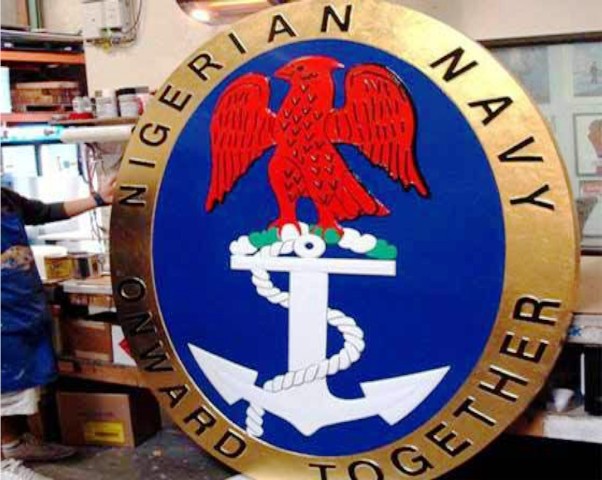
The Nigerian Navy has advocated the establishment of special court to try maritime offenders in the country.
The Chief of Naval Staff, (CNS) Vice Adm. Ibok-Ete Ibas, made the call at a news conference held at the close of the three-day Global Maritime Conference last Wednesday in Abuja.
The conference is part of effort to accelerate adjudication of justice on maritime offenders and curb sea crimes in the maritime industry.
Ibas, who was represented by Chief of Policy and Plans Naval Headquarters, Rear Adm. Begroy Ibe-Enwo, said that the Maritime Domain Awareness has improved security in the nation’s maritime environment.
He suggested that certain courts in the country should be designated as maritime court to handle maritime cases.
On patrol efforts, the CNS said: “two ships are going to join us soon  from the fishery department and will be dedicated for anti-fishery operations.”
“ For the patrol efforts, we have a trinity of actions, we are reinforcing by the day, The first leg of that action is surveillance.
“ The sea out there is a wide expanse of water, before we began to improve on our maritime domain awareness, it requires ships and maybe helicopters to sail out to sea to use their radar to see what is going on there.
“ But right now, in Abuja, Lagos, Calabar and other centres, we are able to see what’s going out there.
“But after seeing what we can see, the next is to deploy ships and helicopters to arrest and intercept these suspects.
“ That is one area we are still building on because we don’t have enough ships to dominate the entire waters that we need to police.
“ It is a work in progress, more ships are being bought by the government
“ With some other levels of collaborations even the fishery department is coming on board fully,” he said.
He noted that in Ghana, fishery department and their Navy collaborate very firmly on this to the extent that the fishery department also buys ships and vessels for the Navy to use.
According to him, that’s the model we are also adopting, two ships are going to join us soon from the fishery department and will be dedicated for anti-fishery.
“ The third leg is enforcement, which revolves around the legal regime. Fortunately, the piracy and suppression of criminal activities act is on.
“ It is already a deterrence by itself by the main fact that the criminals or would-be criminals know that there is a legislation that will bring them to book, that is already a check.
“ But those who still want to be die-hard, the law is out there to catch up with them.
“ It is not a new thing when we say to establish maritime courts rather we have recaptured to express it as the designation of certain courts within the country.
“ It will not require any parliamentary legislation; It is just for the Attorney -General and executive arm.
“ It can be executed so that certain courts can be designated for maritime offences, so that these cases can be expeditiously executed,” he said.

Continue Reading

Maritime

Customs Hands Over Seized Cannabis Worths N4.7bn To NDLEA

Published

on

The Customs Command in Tincan Island, Lagos, has handed over 2,366 packs of cannabis indica, valued at over N4.7 billion, to the NDLEA.
The seizure comprised of a 40-feet container holding 55 jumbo bags of cannabis indica intercepted during routine enforcement operations at the port.
Customs Area Controller, Comptroller Frank Onyeka, disclosed this in a Statement issued by the Command’s Spokesperson Oscar Ivara.and copied Newsmen
Speaking during the handover, Onyeka said officers acted in line with global standards on border protection and public safety.
“Today, we inform you of developments in securing our borders, aligning with the 2026 International Customs Day theme of vigilance and commitment,” he said.
Onyeka said the container was examined on Jan. 28, 2026 alongside NDLEA and DSS operatives, following intelligence-led profiling.
“A 40-feet container was found to contain 2,366 packs in 55 jumbo bags of cannabis indica,” he said.
He added that officers also discovered a Colt MK IV .45 calibre pistol with an empty magazine inside the container.
According to him, three used vehicles were deployed to conceal the prohibited items, including a Hyundai Santa Fe, Toyota Sienna and Toyota Matrix.
“Interestingly, we apprehended one suspect in connection with the seizure,” Onyeka said.
He warned that Customs would not tolerate drug smuggling or transnational crime threatening national security and public health.
Receiving the consignment, NDLEA Commander, Solomon Omotoso, commended Customs for strong inter-agency collaboration.
Omotoso assured that the NDLEA would intensify investigations and prosecution in line with existing laws.
By: CHINEDU WOSU
Continue Reading

Maritime

Over 6,223 Seafarers Abandoned In 2025 – Says ITF

Published

on

The  International Transport Workers’ Federation (ITF), says over 6,223 seafarers were abandoned in 2025
ITF also said the abandoned Seafarers were recorded across 410 ships,
The Data shows that the numbers represent 31% increase in such ship abandonments compared to 2024, and a 32% increase in seafarers abandonment.
ITF data, which will be submitted to the International Maritime Organization (IMO) ahead of its discussion at a legal committee meeting this year, also shows that seafarers were owed a total of $25.8m in 2025 as a consequence of the abandonments.
The report said ITF has recovered and returned $16.5m to seafarers.
David Heindel, Chair, ITF Seafarers’ Section“ said it’s nothing short of a disgrace that, yet again, we are seeing record numbers of seafarers abandoned by unscrupulous shipowners,”
“Every day, all around the world, seafarers face horrific violations of their human and labour rights, all so that bottom-feeding companies can make a quick buck at their expense.
” It’s very clear that this is a systemic issue in the industry – and that means we need the entire industry to come together with seafarers and their unions to say, ‘enough is enough’, and take action together to end this crisis.”
“We are normalising, treating seafarers like disposable pawns”
 The International Maritime Organization IMO and the International Labour Organization (ILO) run a joint seafarers abandonment database.
Indian seafarers were the worst affected national group in 2025, as in 2024, with 1,125 seafarers abandoned. At the end of 2025, the Indian government announced that blacklisting measures would be taken to protect seafarers from ships with a record of repeat abandonments and other bad practices.
Filipino Seafarers were the second worst affected, with 539 abandoned, followed by Syrians with 309 abandoned.
The worst region for abandonment was the Middle East, followed by Europe.
 The two countries where most ship abandonments took place,the countries with the highest number of vessels on which abandonments occurred both of which have significantly higher abandonments than any other country, were Türkiye (61) and the United Arab Emirates (54).
Flag of convenience (FOCs) vessels feature prominently in abandonment: 337 vessels abandoned in 2025 – 82% of the total – were flying FOC flags.
Commenting on the statistics, founder of Seafarer Social Consultants, Carl King told Splash today: “Every abandoned seafarer is a step backwards for the shipping industry. With one hand we talk about a retention crisis; with the other, we normalise treating seafarers like disposable pawns.”
King called the data a “disgrace”, warning shipowners and flag states need to fix the issue quickly, or accept an even steeper decline in the skilled people needed to crew vessels.
 International operations manager at the International Seafarers Welfare and Assistance Network (ISWAN),Chirag Bahri, described how abandonment has lasting impacts on the mental wellbeing of seafarers and their families ashore, alongside severe financial distress.
“Many seafarers are left struggling with unpaid wages, ongoing loans, and money lost to fraudulent agents in the hope of securing work.
The continued rise in abandonment cases highlights systemic failures that necessitate immediate attention and coordinated action across the industry,” Bahri said.
ITF General Secretary Stephen Cotton urged the International Maritime Organization to be given more power to play a coordinating role in eradicating abandonment.
The ITF has three ideas to tackle seafarer abandonment which includes, flag states must be compelled to log a ship’s beneficial owner, including contact details, as a pre-condition for registration.
Secondly, National blacklisting of ships should happen to protect seafarers from ships with repeated involvement in abandonment cases.
 Finally, the ITF is calling on governments to investigate the use of flags of convenience.
Steven Jones, the founder of the Seafarers Happiness Index, hit out at how regulators were not dismantling the mechanisms which allow bad actors,
“the fundamentally evil owners” who have such blatant disregard for seafarers.
“Until we drive real change, until the regulation aligns with the response, and until we get more agile in spotting the warning signs and in dealing with them, then next year the numbers will be bigger. And the year after that,” Jones said.
By: CHINEDU WOSU
Continue Reading

Maritime

Weak Shipping Line Regulation Undermines Customs Reforms —-Says SEREC

Published

on

The Sea Empowerment and Research Centre (SEREC) says poor regulation of shipping lines could undermine the credibility of the Nigeria Customs Service (NCS) reforms.
Head of Research SEREC, Dr Eugene Nweke  made this Known to Newsmen in Abuja
Nweke said that customs efficiency was linked to the performance of the Nigeria’s maritime and trade ecosystem.
Hr described the NCS as central to the success of the National Single Window (NSW) risk-based clearance and trade facilitation reforms.
“However, Customs efficiency gains are systematically eroded when upstream shipping practices introduce artificial delays, speculative charges, remote cargo release approvals and opaque cost structures”.
“In effect, weak regulation of shipping line conduct externalises inefficiencies into the Customs clearance process, inflates transaction costs, distorts compliance behavior and undermines the credibility of customs-led trade reforms,”
Nweke said that SEREC had submitted a white paper to the government advocating that shipping line governance, port economic regulation, and customs trade administration should be treated as inseparable policy domains.
SEREC said Nigeria’s Port challenges were not only infrastructure-driven but governance-related, warning that weak regulation, missing oversight reports and unchecked discretion in systems like the NSW could undermine reform efforts.
SEREC recommended reforms for Nigeria’s shipping sector, including public release of committee findings, statutory refund timelines with penalties, banning speculative demurrage billing, mandatory local cargo release and alignment of shipping practices with the NSW among others.
Nweke said that the aim of the white paper was to draw attention to sharp practices and regulatory weaknesses that had evolved beyond operational inconveniences into macroeconomic and governance risks.
“For NCS trade reforms to deliver their full impact in 2026 and beyond, shipping practices must align with the same principles guiding Customs modernisation: transparency, predictability, automation, accountability and local control.
Nweke said that by 2026, stakeholders in Nigeria’s maritime industry hope to transition from opaque and arbitrary port operations to a transparent, rules-based system managed through digital technology.
He stressed that the shift should align with ongoing reforms and international best practices, facilitated by the government through providing enabling environment and enforcing regulations
“These include predictable costs, enforceable service standards, transparent billing, time-bound cargo release, and institutional accountability particularly as Nigeria advances the National Single Window (NSW), port economic regulation, and revenue optimisation objectives.
“The expectation is not the creation of new laws, but disciplined enforcement of existing instruments, public disclosure of regulatory outcomes, and insulation of regulators from political and commercial capture,” Nweke said.
By: CHINEDU WOSU
Continue Reading

Trending