
News
Insecurity: Living In Nigeria Very Precarious -Catholic Bishops

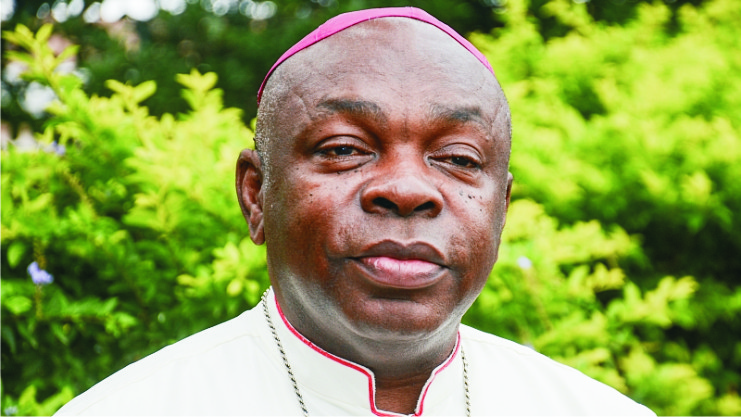
The Catholic Bishops Conference of Nigeria has expressed concern over the state of insecurity in the country and concluded that “living in Nigeria is very precarious.”
The organisation also regretted that many parts of Nigeria were still in disarray and the country badly divided, as evidenced in “appointments to positions of national importance, sharing of resources, and distribution of social amenities.”
The President of CBCN, Rev. Augustine Obiora Akubueze and Secretary, Rev. Camillus Raymond Umoh, made these observations in a communique entitled: “Moving beyond precarious living in Nigeria”, issued at the end of its second plenary meeting held at the Divine Mercy Pastoral Centre, Agbamaya, Obada-Oko, Abeokuta, Ogun State.
The CBCN in document obtained by The Tide in Abuja yesterday, said Nigerian democracy was derailing from what it should be as “qualities of accountability, transparency, independence of the judiciary, respect for fundamental rights, observance of the rule of law, and fair and credible electoral process, to mention only these, are still lacking.”
The Catholic Bishops said, “There are, unfortunately, still many instances of killings as a result of banditry, kidnapping, assassination, armed robbery, reckless use of force by security agencies and lynching. Lately, too, there is an upsurge in the cases of suicide, even among our youths.
“Furthermore, the clashes between herdsmen and communities, and the activities of Boko Haram insurgents have continued, in which many innocent people lose their lives. These make living in Nigeria very precarious.
“We recognise the efforts being made by the government to fight insecurity in the land. However, we emphasise that a lot more still needs to be done in this regard. We pray for the peaceful repose of the victims and sympathise with the bereaved families. We continue to urge the government and security agencies to do all they can to secure the immediate release of Leah Sharibu, the remaining Chibok girls and all the other persons still in captivity.
“We reiterate that without adequate security of lives and property, there can be no stability and enabling environment for meaningful development. We observe that the Federal Government, in which the power to control the major security agencies is vested, is overwhelmed. There is, therefore, need for proper decentralization of these agencies for effective results.”
The CBCN also called on governments at all levels to provide the enabling environment that would make it possible for both the government and the private sector to create job opportunities to minimise the menace of insecurity in the country.
The Catholic Bishops said God had made it possible for the continuous existence of Nigeria as a sovereign nation but however said much effort was required from both government and citizens order to have a nation in which everyone and every part, irrespective of differences of tribe or religion or political affiliation, will have a sense of belonging.
The communique said, “We note with dismay that many months after the general elections, many parts of our nation are still in disarray. The country is badly divided. This is evident in appointments to positions of national importance, sharing of resources, and distribution of social amenities.
“We urge especially the Federal Government, to ensure that it does not allow ethnic or religious hegemony to prevail in our multi-religious and secular state.



The National Drug Law Enforcement Agency (NDLEA) has cautioned parents to closely monitor their children’s craving for cookies and gummies, warning that some of the products may contain illicit substances being smuggled into the country.
In a statement posted yesterday, NDLEA’s Director of Media and Advocacy, Femi Babafemi, said recent seizures by the agency’s officers had revealed attempts by criminal elements to introduce prohibited substances under the guise of everyday snacks.
“As parents, if your kids and young ones always crave for cookies and gummies, you may have to pay a little more attention. There may be more to it than ordinary cookies and gummies,” Babafemi wrote, sharing images of seized packages.
The photos showed colourful pouches of “Cookies Delta 8 Gummies” in flavours such as Hawaiian Rain Pineapple Guava and Thai Mango, labelled as vegan and hemp-derived, alongside the actual gummy products.
The warning comes amid a major interception by the Nigeria Customs Service at the Tin Can Island Port in Lagos.
Officers seized two 40-foot containers containing large quantities of cannabis-infused products concealed among legitimate imports such as used vehicles, generators, batteries and fabrics.
The consignment included thousands of Delta-8 cannabis pre-roll cookies, packs of cannabis-infused gummies and other cannabis-infused cookies, with a combined estimated street value of about ?373.8m.
The items were subsequently handed over to the NDLEA.
NDLEA officials described the products, which originated from the United States and were packaged to resemble ordinary vegan snacks with appealing flavours, as an emerging public health threat.
They noted that the attractive packaging could appeal especially to children, students and young people, raising the risk of accidental consumption of concentrated cannabis.
The Rivers State Waste Management Agency (RIWAMA) has announced plans to partner with the Police Community Relations Committee (PCRC) to strengthen efforts at combating illegal waste dumping and improving environmental sanitation across the state.
The partnership was unveiled during a meeting between officials of RIWAMA and the leadership of the Rivers State chapter of the PCRC in Port Harcourt, recently, where both organisations pledged to work together to restore the Garden City status of the state capital.
In his speech, the Supervisor of Market and Community Sanitation in RIWAMA, Mr. Omereji Ukoha, said the collaboration was in line with the vision of the agency’s Managing Director, Dr. Ibimina Wokoma, and the Board Chairman, Dr. Samuel Nwanosike, to promote a cleaner and healthier environment.
Ukoha described the PCRC as a strategic grassroots partner capable of mobilising communities and driving behavioural change through sustained public enlightenment on proper waste disposal.
He expressed concern over the increasing rate of indiscriminate refuse dumping in parts of Port Harcourt, particularly in New GRA, where blocked drainage channels and illegal shanties have continued to contribute to flooding and environmental degradation.
According to him, the agency is determined to intensify enforcement against environmental offenders, warning that unregistered cart pushers and residents who patronise them would be prosecuted in accordance with the provisions of the RIWAMA Act, 2014.
The RIWAMA official urged residents to embrace proper waste disposal practices and patronise only government-approved waste operators in order to safeguard public health and protect the environment.
Responding, the Chairman of the Police Community Relations Committee in Rivers State, Dr. Voke Emore, commended RIWAMA for seeking collaboration with the committee in addressing environmental challenges confronting the state.
Emore said the PCRC would deploy its community-based structures across the state to support public sensitisation and encourage residents to comply with environmental sanitation regulations.
He also called on local government councils to play more active roles in waste management, noting that they collect sanitation levies and should complement the efforts of the state government in maintaining a clean environment.
The PCRC chairman described indiscriminate refuse disposal as a serious environmental and public health concern, stressing that sustained collaboration among government agencies, community leaders and residents remained critical to achieving lasting sanitation goals.
Both organisations expressed optimism that the partnership would promote cleaner communities, reduce environmental hazards and strengthen public participation in efforts to ensure a healthier and more sustainable environment for the people of Rivers State.
King Onunwor

The Rivers State Police Command has arrested five suspected members of a kidnapping syndicate allegedly terrorising communities in Oyigbo Local Government Area of the State.
The State Police Command disclosed this in a statement by its Public Relations Officer, ASP Blessing Agabe, in Port Harcourt, recently.
The suspects were arrested during a coordinated operation at Oyigbo, following directives by the Commissioner of Police, Rivers State Command, CP Olugbenga Adewole Adepoju.
Those arrested were Ezekiel Emmanuel, 44, from Benue State; Chukwuma Mbanefor, 51, from Anambra State; Nicholas Diala, 65, from Imo State; Ndubuisi Uwakwe, 49, from Abia State; and Ifeanyi Nwakwo, 51, from Imo State.
The Command said the arrest represented another significant operational success in its ongoing efforts to dismantle criminal networks operating in the State.
According to the Police, preliminary investigation indicated that the suspects were allegedly involved in kidnapping operations within Rivers State.
The suspects, during interrogation, allegedly confessed to their involvement in kidnapping and further admitted participating in several operations carried out in Kom-Kom, Railway, Obeama and Afam communities.
The Command said investigation was ongoing, with efforts intensified to identify and apprehend other members of the suspected syndicate who may be connected with the criminal activities.
The Police boss said the operation reflected the implementation of operational directives and the intelligence-driven policing strategy of the Inspector-General of Police, IGP Olatunji Rilwan Disu, psc, NPM.
Adepoju reaffirmed the Command’s determination to sustain aggressive intelligence-led operations against kidnapping, cultism, armed robbery and other violent crimes across Rivers State.
He warned kidnappers and other criminal elements operating in the State that there would be no safe haven for them, stressing that the Command would relentlessly pursue, arrest and ensure that those found culpable were brought to justice.
The Commissioner further assured residents of the Command’s commitment to protecting lives and property, urging members of the public to remain vigilant and cooperate with security agencies in the fight against crime.
He appealed to residents to provide the Police with credible and timely information capable of assisting security operatives in preventing criminal activities and apprehending suspected criminals.
The Command urged members of the public who may have useful information on the activities of the suspected kidnapping syndicate or other criminal elements to contact the Police through its emergency lines, assuring that such information would assist ongoing investigations.
King Onunwor
-
 Editorial1 day ago
That Oshiomhole’s Call On FG’s Road Projects
-
Business1 day ago
PTDF Committed To Tinubu’s Development Plan – CEO
-

 City Crime22 hours ago
Tinubu Appoints Ex-Tide Staff Registrar Of Chartered Chemists
-
Oil & Energy1 day ago
NCDMB, BOI Unveil $100m Nigerian Content Equity Fund …Set To Invest $5m In Oil Firms
-
Oil & Energy1 day ago
Civil Society Demands Accountability over N60Billion AKS Oil Producing Communities
-
Politics1 day ago
Yilwatda’s Birthday Outreach Demonstrates Leadership – Kefas
-

 Sports1 day ago
Rivers-born Chess Player Clinches Third Position At World Amateur Rapid Chess Championship
-
Education1 day ago
Environmental Education Remains Critical Tool To Address Environmental Challenges Says Experts