
Politics
That Bayelsa Lawmakers’ Pension Bill


One thing that is becoming very outstanding in Nigerian politics is the issue of insatiable lust for money which normally in sane societies will cost some people their jobs in elective offices.
If we take a look at the recent ignoble law passed by the Bayelsa State House of Assembly proposing life pension for members of the House or those who have been legislators since the creation of the state, the move does not only send a cold shiver down the spine but shows that there is sheer greed and accumulated grievances against the working class in the society.
How come that a group of legislators who probably have served for only four or eight years will arrogate to themselves the powers to fix pension for themselves without clearly thinking of the consequence. Are they also implying that those who served as commissioners and special advisers should also have life pensions in the scheme of things?
However, it was a cheering news that the state Governor, Seriake Dickson refused to assent to such a self-serving and anti-people bill. The request for such a law was not only nauseating but leaves a very bad odour in the political atmosphere in the country because, if that law had been signed into law, then, trust Nigerians with their copy-cat approach to issues of individual interest, other legislative assemblies nationwide would have started passing such laws. And even councillors at the local government level will have no alternative than to pass such laws too, making themselves and council chairmen to enjoy similar financial benefits.
When the 1999 Constitution was promulgated into law, it was only the office of the President and Vice President that were covered under this law but sadly, the first set of governors from 1999 to 2003 set a bad example by arm-twisting their legislative houses to pass favourable pension laws for them, and this is the genesis of what we are seeing today.
A House of Assembly is supposed to be a hallowed chamber where people-oriented laws are supposed to be made and it is also a place where problems that affect the people or even an individual can be addressed but today what we are experiencing is that it is a place to address only members’ welfare.
The legislators should note that their office is an elective one, they did not write a letter of application for the job and they don’t have any promotion examination to go to the next grade level. In short, they don’t have a retirement age limit but can re-contest for elections as they deem fit.
Please, someone should tell them that politics should not be left to jobless people or the idle minds but to those who have work experience and have something to do to earn a living before venturing into politics. If this notion of life pension…God forbid comes to stay in Nigeria with such huge sums of money approved, what signal then are we sending to the rest of Nigerians, … every Tom, Dick and Harry that is jobless and without any work experience will struggle either by hook or crook to venture into politics with the aim of contesting for the legislative assembly.
In the First and Second Republics, all the members of the legislative assembly including council chairmen and councillors were not lazy people but had well paid jobs before venturing into politics. The likes of Dr. Nwafor Orizu, the then President of the Senate, Rt. Hon Rosebury Briggs, Speaker of the Rivers State House of Assembly in the Second Republic was a successful lawyer in private practice for many years before he entered the murky waters of partisan politics.
All these people and their colleagues at no time advocated for free and easy money from government to take care of their youthful and productive age. If we take a careful look at the age bracket of members of most state houses of assembly, we will hardly see anyone that is above 60 years of age which is an indication that those who want to benefit from this largese are people mostly in either their 30s or 40s … what a tragedy.
Again, a cursory look at the productivity level of some members shows that they have not contributed anything meaningful by either initiating bills or intellectually debating issues affecting the state or their constituencies and sometimes even on television, we see some legislators dozing or sleeping while debates on serious matters affecting the society are going on, yet they want pension for life.
For democracy to grow, we need to elect into office people of substance, people with integrity, individuals who by their pedigree have something to offer society in the area of quality law making and selfless service that is worthy of emulation.
Why is it that when we as Nigerians borrow good ideas from foreign climes, our domestication of such ideas leaves a very bad example for future generations? If we say we are practising a presidential democracy modelled after the United States of America, what stops us from imitating the good sides of such democracy rather than making selfish laws that will only benefit us?
Even in America, legislative business cannot be compared to that of Nigeria. There, legislators pay house rent and do not live in staff quarters and are not chauffeured around in official cars but here in Nigeria, despite all the largese that is spread around such offices, they are still not satisfied but yearn for more. I think one of the solutions to such demands for life pension should be a review of the Constitution to make legislative duties part-time so as to make the offices less attractive to people who are not really cut out to serve the public.
It seems that the military interegnum between 1983 to 1999 really did a lot of damage to our psyche as a nation and that is why the quality of legislators the electorate have been sending to the houses of assembly especially in some states have been deteriorating every four years. The vibrancy and maturity we experienced between 1992 to 1993 and 1999 to 2003 are no longer there.
Our houses of assembly should sit up, look beyond members’ individual interest and learn once more to be honourable not just in name but also in their legislative duties. Nigeria or the various states are not an inexhaustible gold mine or crude oil field where free cash can be gotten to cushion the lavish lifestyle of an individual, what we need are people with ideas that can fashion out modalities of how to tackle the myriad of problems bedeviling our society like unemployment.
This is because if we keep quiet with the way things are going, our inactions will later turn to haunt us in future.
For rejecting that obnoxious bill on pension for legislators, the Bayelsa State Governor, Seriake Dickson has not only saved the people of the state from embarrassment but also people from other states from modern day financial recklessness.
Tonye Ikiroma-Owiye

Politics
Alleged Coup: Protests Rock N’Assembly As Detained Officers’ Children, Wives Demand Justice

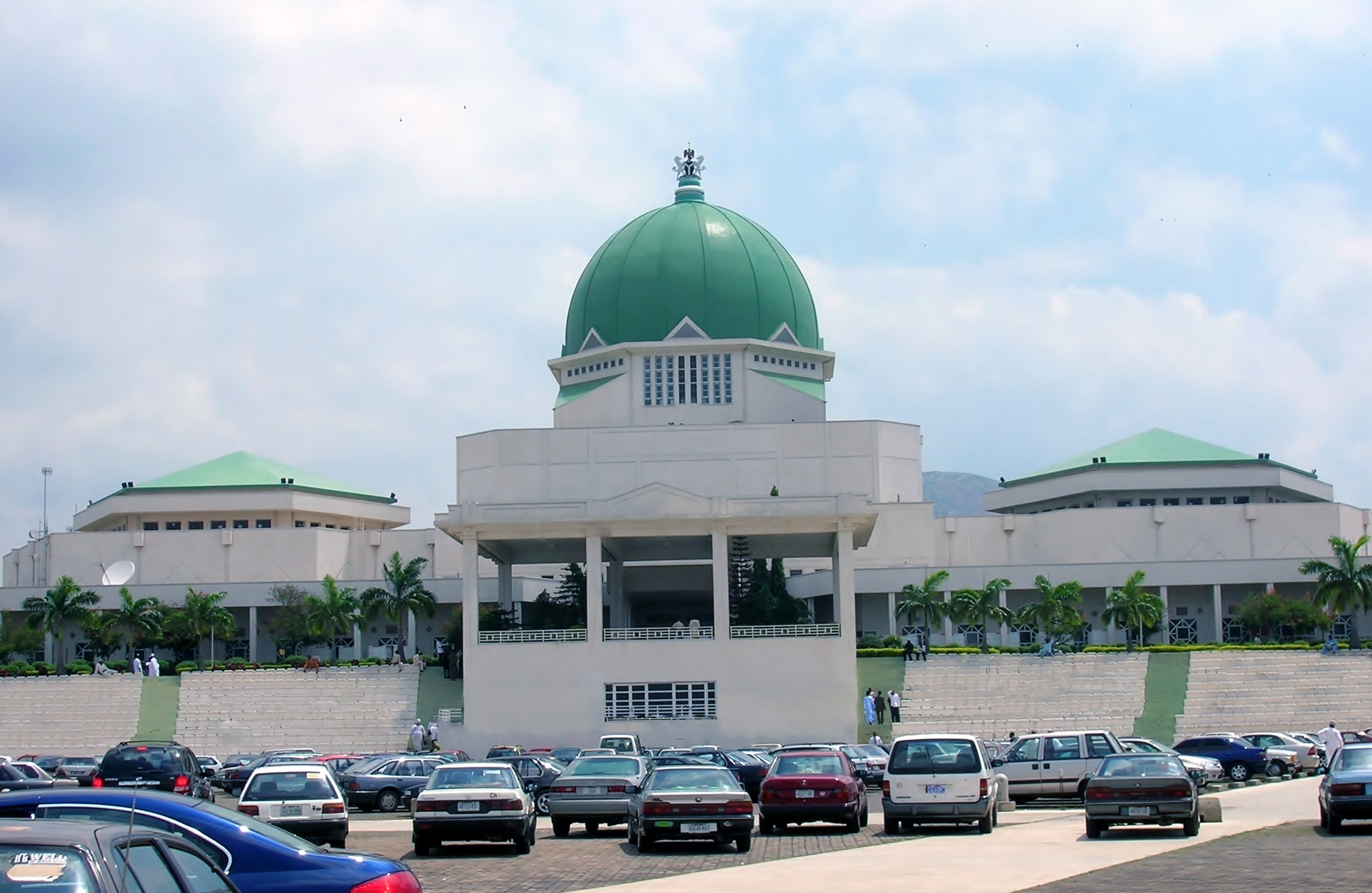
Scores of children and wives of military officers detained over an alleged coup plot yesterday staged a peaceful protest at the National Assembly, demanding a speedy trial and the release of the accused officials.
The protesters who gathered at the entrance of the National Assembly complex, moved in a slow procession while clutching placards with inscriptions such as “Don’t Kill Our Daddies,” “Detention Without Trial is Injustice,” and “Six Months of Torture: Enough Is Enough.”
Amid tears and trembling voices, the children appealed for justice and access to their detained fathers, many of whom they said they had not seen for months.
The appeal was made during a press briefing in Abuja attended by no fewer than 20 wives and several children of the detained officers, including a two-month-old baby.
The families were accompanied by human rights lawyer, Deji Adeyanju and activist Omoyele Sowore.
At the briefing, the families lamented that the officers had been held for over 160 days without trial or contact with their relatives, describing the situation as a violation of their fundamental rights.
Speaking on behalf of the families, Memuna Bashiru said the prolonged detention had thrown their households into uncertainty and emotional distress, noting that while allegations had been widely publicised, families remained in the dark about the fate of their loved ones.
The arrest of the indicted officers was first announced on October 4, 2025, by the then Director of Defense Information, Brigadier General Tukur Gusau, who disclosed that 16 officers were taken into custody for alleged breaches of military regulations and acts of indiscipline.
However, an interim investigation later suggested the existence of a clandestine network of officers, allegedly coordinated by a senior Army officer, which had begun preliminary planning for a coup.
According to the report, the alleged plot involved surveillance of key national assets, including the Presidential Villa, Armed Forces Complex, Niger Barracks in Abuja, and major international airports, with October 25, 2025, cited as the planned date for the operation.
Those reportedly in custody include Brig Gen M. A. Sadiq, Col M. A. Maaji, Lt Col S. Bappah, Lt Col A. A. Hayatu, Lt Col P. Dangnap, Lt Col M. Almakura, Maj A. J. Ibrahim, Maj M. M. Jiddah, Maj M. A. Usman, Maj D. Yusuf, Capt I. Bello, Capt A. A. Yusuf, Lt S. S. Felix, Lt Cdr D. B. Abdullahi, Sqn Ldr S. B. Adamu and Maj I. Dauda.
The alleged plot, according to findings, targeted senior government officials, including President Tinubu and Vice President Kashim Shettima.

In a statement issued yesterday, the party’s National Publicity Secretary, Mr Felix Morka, said the exercise would take place in all wards and designated centres nationwide.
He called on existing members to update their records, while encouraging new entrants to join the party through the digital platform.
“As the electronic membership registration exercise resumes in all wards and designated locations nationwide, we urge existing members to validate their membership while new members are encouraged to register and join the progressive family,” Mr Morka said.
According to him, eligibility for registration is limited to individuals aged 18 and above who possess a valid National Identification Number (NIN).
The party said the initiative is part of efforts to modernise its operations by transitioning to a digital database that would enhance record accuracy and accessibility.
Mr Morka noted that the e-registration would “digitise the party’s membership register, ensure the integrity of records, and enhance efficient access to membership data for planning and management decisions.”
He added that the move is also aimed at promoting internal democracy within the party and strengthening its commitment to democratic innovation.
The APC had previously introduced electronic registration as part of broader reforms to streamline its membership system and improve organisational efficiency.
-

 News5 days ago
RSU Unveils Five-Year Strategic Dev Plan …Calls For Collective Commitment To Institutional Excellence
-

 News5 days ago
Tinubu Commissions Bayelsa Gas Turbine, Other Projects Today
-
Business5 days ago
Niger Delta Investment Summit Targets $5bn Inflows, 500,000 Jobs
-
Nation5 days ago
Rumuji Youth Leader Condemns Protest, Disowns Alleged Government Empowerment Claim
-

 Nation5 days ago
Haniel Jack Foundation Awards Five Rivers Indigenes Scholarship
-
Rivers5 days ago
Dep Gov Seeks Collaboration, Transparency Between RIVCHPP, PHCMB
-

 Featured5 days ago
Fubara Pledges Support For Corporate Organisations In Rivers …Says PPP Business Model Responsible For NLNG’s Success
-

 Featured5 days ago
FG Reaffirms Nigeria’s Stability As US Embassy Suspends Visa Appointments In Abuja Office