
Featured
State Governors Spent N2trn On Police -NGF …As Osinbajo Orders IGP To Overhaul SARS

The thirty- six state governors, under the aegis of Nigeria Governors Forum (NGF), yesterday disclosed that as governors, they have collectively spent about N2 trillion on the Nigeria Police Force in the last decade.
According to the NGF, the money spent by the governors was to augment police operations nationwide, just as it revealed that Lagos State alone under Governor Akinwunmi Ambode spent the sum of N4.76 billion on the police in 2015.
In a statement issued yesterday in Abuja by the Head, Media and Public Affairs of NGF, Abdulrazaque Barkindo, the forum stressed that the N2 trillion does not include the extra contributions of Borno, Yobe, Adamawa and Gombe States, hitherto referred to as the frontline states having virtually been the theatres of war and critical flash-points at the peak of the war against insurgency in the country.
Meanwhile, the forum is insisting on state police as the way forward to the nation’s security challenges, adding that the said amount is part of a research conducted by the media department of the NGF and published in its July edition of the forum’s secretariat’s monthly magazine, The Executive Summary. It pointed out that the magazine which spices its stories with an expenditure table of some of the purchases and donations made to the police by more than 20 of the States, also quoted the lamentations of some of the state governors who in spite of these donations have been unable to enjoy even the partial loyalty of the federal police at their most critical hour of need. According to the statement, the purchases by the governors covered such items as Hilux trucks, Armoured Personnel carriers, Helicopters, River Gun Boats, Horses, Communication equipment, uniforms and handcuffs among others. The statement said, “For example, the magazine which has as its cover story ‘State Police:
The Time is Now,’ related that in 2015 alone Lagos State under Governor Akinwunmi Ambode spent over N4.765bn on helping to sustain the Federal Police.”
According to the report, in subsequent years going forward, the state also bought and donated to the police, 100 4-door Saloon cars, 55 Ford Ranger pick-up trucks, 10 Toyota Landcruiser Pick-up trucks, 15 BMW power-bikes, 100 Isuzu trucks, three helicopters, two gunboats, 15 Armoured Personnel Carriers, revolving lights, sirens, communication gadgets, helmets, handcuffs among many other police requirements. Looking at the donations in retrospect, Governor Ambode’s predecessor, Babatunde Raji Fashola also donated 50 patrol vehicles, 10 Armoured Personnel carriers, 100 walkie-talkies and 200 bullet-proof jackets apart from the establishment of an ICT Resource Centre for the police in Lagos State.
The statement stressed further that it is not Lagos alone that has donated generously to the police as Kano, Kaduna, Kwara, Cross Rivers, Ebonyi and Abia States have all, at various times, donated generously to the police force towards ensuring the safety and security of their peoples and their property. The statement added: “Governor Darius Ishaku of Taraba State, for example, was quoted as having said that ‘I am sitting here as governor, but I cannot control one police troop whenever crises break in my state.’
“His Zamfara State counterpart and Chairman of the Nigeria Governors’ Forum, Abdulaziz Yari Abubakar had, at one time, even relinquished his position as the Chief Security Officer of his state in frustration.”
The report further said even Benue State, which, very recently had its state assembly sealed and overtaken by the Nigeria Police Force had spent a substantial part of its security vote in ameliorating the problems of the same police force that was to later humiliate the state.
The governors however through the Nigeria Governors’ Forum have viewed this situation as absolutely unacceptable. According to the statement, it is for these and several other reasons that the governors have been agitating for the creation of state police so that the safety of lives and property in the country would be firmly rested in the hands of those who spend their resources in sustaining the police force, adding, “Indeed, to give spice to the argument for the agitation of the states, the National Assembly only recently lent its voice to the agitation by state governors and also endorsed the formation of state police, saying it is about time.
“Most others who canvas the same position as the governors allude to the countries whose system Nigeria is emulating, saying community policing is a necessity if crime is to be prevented and insurgency is to be curtailed to the barest minimum.
“However, in response to those who argue that governors would abuse the privilege if given, Governor Mohammed Abdullahi of Bauchi State argued that those who hold that view are fearful because they have restricted their thinking to building individuals rather than building institutions. “In July 2017 the Inspector General of Police Ibrahim Idris approached the Nigeria Governors’ Forum at their meeting in Aso Rock Villa seeking cap-in-hand, the sum of N3trillion as assistance from states.”
The magazine recalled that most states of the federation have already resorted to supporting vigilante groups and some have even gone further to establish various types of self-help security formations like the Bakasi Boys in Abia, KAI in Lagos, Civilian JTF in the northeast, Karota in Kano and several others that fill the vacuum created by the absence of the federal police in their respective states.
Meanwhile, the Acting President, Prof. Yemi Osinbajo, SAN, has ordered the Inspector-General of Police (IGP), Ibrahim Idris, to “overhaul the management and activities” of the controversial police unit, the Special Anti-Robbery Squad (SARS).
This development follows numerous complaints from Nigerians on social media, accusing SARS officers of several misconducts ranging from harassment, extortion, assault to extra-judicial killings.
In a statement issued by his media aide, Laolu Akande, the Acting President ordered the IGP to shut down the unit with immediate effect.
The statement reads, “Following persistent complaints and reports on the activities of the Special Anti-Robbery Squad (SARS) that border on allegations of human rights violations, His Excellency, Prof Yemi Osinbajo SAN, Acting-President, Federal Republic of Nigeria, has directed the Inspector General of Police to, with immediate effect, overhaul the management and activities of SARS.
“And ensure that any unit that will emerge from the process will be intelligence-driven and restricted to the prevention and detection of armed robbery and kidnapping, and apprehension of offenders linked to the stated offences, and nothing more.
“The Acting President has also directed the IGP to ensure that all operatives in the emerging Unit conduct their operations in strict adherence to the rule of law and with due regard to International Human Rights Law and the constitutionally guaranteed rights of suspects.
“The operatives should also bear proper identification anytime they are on duty.
“In the meantime, the Acting President has directed the National Human Rights Commission to set up a Special Panel that will conduct an investigation of the alleged unlawful activities of SARS in order to afford members of the general public the opportunity to present their grievances with a view to ensuring redress.”
In response to the order, yesterday, the Inspector General of Police, Ibrahim Idris, ordered the immediate overhauling of the Special Anti-Robbery Squad (SARS) to address complaints and allegations on human rights violations against some of the personnel of the Special Anti-Robbery Squad (SARS) from members of the public.
This came hours after the directive by the Acting President, Prof Yemi Osinbajo.
A statement by Force spokesman, Jimoh Moshood, said in the new arrangement, a new Commissioner of Police had been appointed as the overall head of the Federal Special Anti-Robbery Squad nationwide.
The statement reads: “The Federal Special Anti-Robbery Squad previously under the Force Criminal Intelligence and Investigations Department (FCIID) is henceforth to operate under the Department of Operations, Force Headquarters Abuja. The Commissioner of Police (FSARS) is answerable to the Inspector General of Police through the Deputy Inspector General of Police, Department of Operations.
“In observance of full compliance with the Presidential directives, the Federal Anti-Robbery Squad will be intelligence driven and will be restricted to the prevention and detection of Armed Robbery, kidnapping and the apprehension of offenders linked to the stated offences only.
“New FSARS Commanders are being appointed for the Federal Anti-Robbery Squad (FSARS) across the country that will now exist and operate in the state and zonal commands under the Commissioner of Police (F-SARS) at the Force Headquarters, Abuja. A Federal SARS Commander of a Rank of Chief Superintendent of Police (CSP) but not below Superintendent of Police (SP) will be in charge of FSARS in State and Zonal Commands across the Country.
“All Commissioners of Police have been directed by the Inspector General of Police to comply with this directive with immediate effect and warn their personnel not to pose as SARS operatives. The IGP X-Squad and Monitoring Unit have been mandated to go round the Commands and Police Formations nationwide to ensure strict compliance with the Presidential directives and apprehend any erring police officer.
“A new Standard Operational Guidelines and Procedures, and code of conduct for all FSARS personnel to ensure that the operations of the Federal Special Anti-Robbery Squad is in strict adherence to the rule of law and with due regards to international human rights law and constitutionally guaranteed rights of suspects will be enforced in totality by the Commissioner of Police, FSARS. Other measures to be implemented by the Force in observance of full compliance with the presidential directives are as follows:
“Human Rights Desk Officers for FSARS in every State to take complaints from the public and forward same to Force Headquarters, the officer will be answerable to the Commissioner of Police, FSARS at the Force Headquarters and not Commander FSARS in the States.
“Medical/Psychological evaluation of all FSARS personnel will be carried out immediately.
“Redesigning of new uniform with identity name tag for all FSARS personnel throughout the Country will be done immediately.
“Henceforth, FSARS personnel will not perform Stop and Search duties except on distress call to respond to armed robbery and kidnapping offences only.
“The Force will be transparent, cooperate, and work cordially with the National Human Right Commission on the special panel that will conduct an investigation of the alleged unlawful activities of FSARS to address grievances from the public against the personnel of FSARS in compliance with the presidential directives.
“Furthermore, a new training program to be organized by the Force in collaboration with some Civil Society Organizations (CSOs), Local and International NGOs, and other Human Rights Organizations on core Police Duties, Observant of Human Rights and Handling, Care and Custody of Suspects have been directed by the Inspector General of Police for all Federal SARS personnel nationwide with immediate effect.
“A committee of Senior Police officers, Technical Consultants, Human Rights/Civil Society organizations (CSOs) has been setup to review the activities of FSARS under the new arrangement. They are to pay unscheduled visits to FSARS formations across the country with particular attention to States with high complaints index, to assess facilities and situations in these States and submit report to the Inspector General of Police on regular basis.
“However, aggrieved members of the public who have any complaint in the past or present of violation of their rights by any Special Anti-Robbery Squad (SARS) personnel anywhere in the country are to report through any of the following channels for investigation and redress.
“I DIG, Department of Operations: 08037025670
ii. IGP X-SQUAD
0902 690 0729, 08078662130, 08174041000 – CALLS
0903 227 8905 – SMS
0903 562 1377 – WhatsApp
Email: integrityxsquad@gmail.com
iii. IGP Monitoring Unit: igpmonotoringabj@yahoo.com, 08036242591
iv. Commissioner of Police, FSARS: 08033476852
v. FORCE PUBLIC COMPLAINT BUREAU
07056792065 Calls/SMS/WhatsApp
08088450152 Calls/SMS/WhatsApp
Email: bailisfree@gmail.com, pressforabuja@gmail.com
Twitter: @PoliceNG
www.facebook.com/ngpolice
vi. PUBLIC COMPLAINT RAPID RESPONSE UNIT (PCRRU)
08057000001 – Calls Only
08057000002 – Calls Only
08057000003 – SMS & WhatsApp only
Twitter: @PoliceNG_PCRRU
www.facebook.com/PolicePCRRU
NGOs/CSOs
vii. sega@aliensmedialtd.com, 08027757359
viii. koredebello@caspertainment.agency, casperentertainment@gmail.com, 09051133035
ix. oluogunsakin@hotmail.com
x. g.writer2011@gmail.com, 07037887630″.



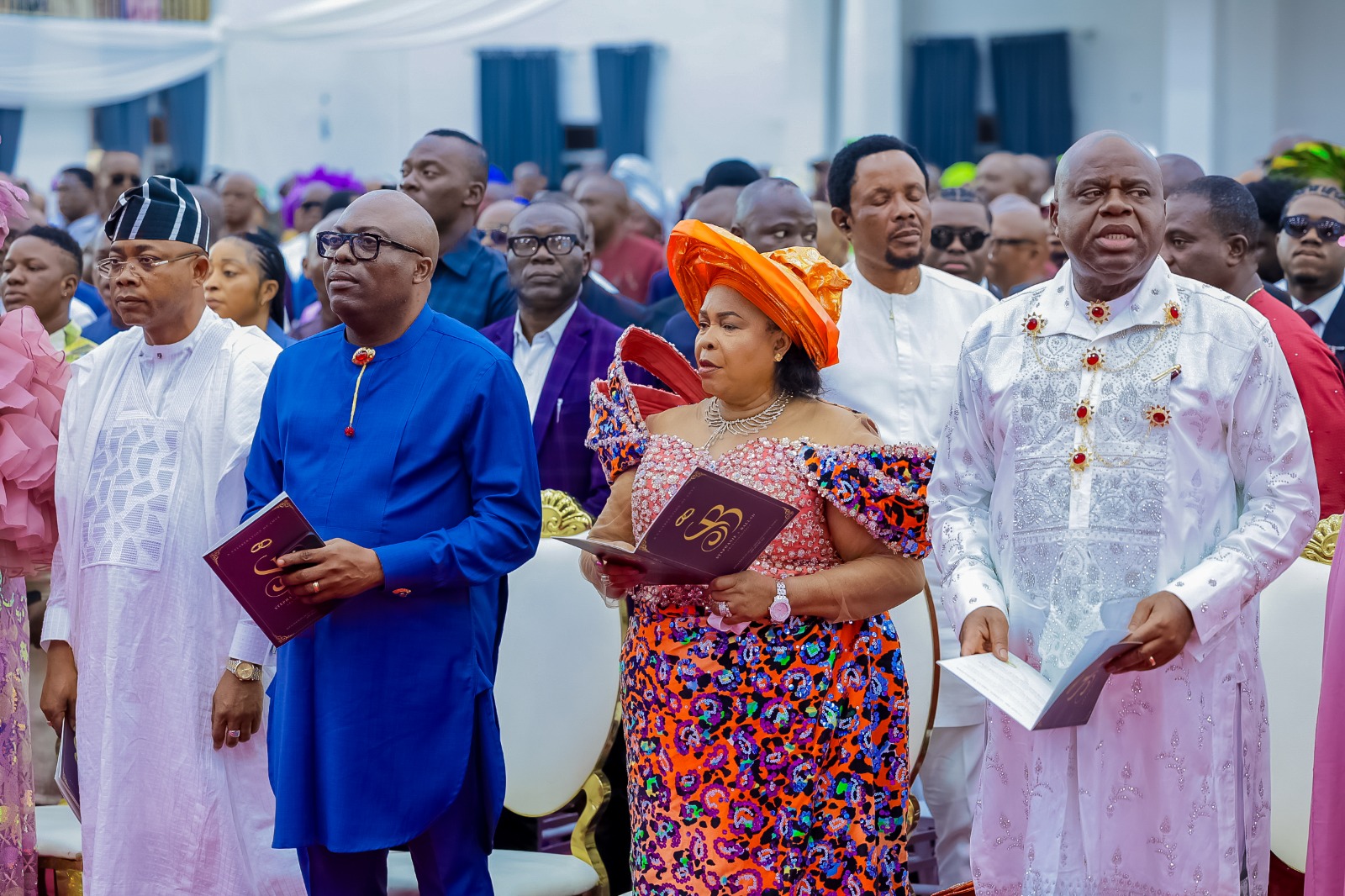
Rivers State, Sir Siminalayi Fubara, has assured members of the National Youth Service Corps (NYSC) of his administration’s commitment to supporting and strengthening the scheme in the State.
Fubara gave the assurance last Friday at the NYSC permanent orientation camp, Nonwa-Gbam, Tai Local Government Area in the State, during the swearing-in ceremony of 2026 Batch B Stream II orientation course.
Represented by the Permanent Secretary, Cabinet Bureau, Office of the Secretary to the State Government, Dr. Promise Oguzie, the governor said the State Government would remain intentional in providing the necessary support to improve the NYSC scheme and enhance the experiences of corps members deployed to the state.
He charged the corps members to be role models and quality nation-builders in their service to the good people of Rivers State in particular, and Nigeria at large.
“I charge you to be exemplary, dedicated and committed in all you do. Take full advantage of all the camp programmes and activities to enrich yourselves”, he said.
In his welcome address, the State Coordinator of NYSC in Rivers State, Mr. Moses Oleghe, urged corps members to see their deployment to Rivers State as a “veritable opportunity to make meaningful contribution to the growth of the State in particular and Nigeria at large.”
He further charged them to serve with all sense of “integrity, discipline, and the fear of God, especially when they will be engaged as INEC ad-hoc staff that will conduct the 2027 general elections.”
A total of 3,584 corps members composed of 1,421 males and 2,163 females were sworn in by the Chief Judge of Rivers State, who was represented by Justice Godspower Aguma.

Governor of Rivers State, Sir Siminalayi Fubara, says Nigeria needs God-fearing leaders for the nation to move in the right direction and make meaningful progress.
The Governor stated this yesterday when he received in audience, the World President of the Seventh Day Adventist Church, Pastor Erton Kohler; his wife, Andriene Marques Kohler; daughter Mariana Marques Kohler and a retinue of ministers of the church at Government House, Port Harcourt.
Fubara who hailed the Seventh Day Adventist Church for its contributions to education and the grooming of future leaders in Nigeria, expressed delight that the Church had over the years, been investing in education at various levels and currently runs two universities in the country.
He commended the church for not only using its institutions to spread the gospel of Christianity but to groom future leaders for the country.
According to him, religion should not be just about defending one’s faith, but also making meaningful impact on the lives of the people.
He said that by floating these educational institutions, the church has demonstrated capacity to support Nigeria in the task of producing not only educated people but a breed of God-fearing leaders.
“Our country is where it is today because we lack the fear of God. If you have the fear of God, there should be a limit to what you can do because you understand the supremacy of God. But when God is not in your equation, you’ll go beyond the line and that is what has brought us to where we are today.
“So, I feel very happy that you are contributing to the development of our future leaders in this country. We need the right people being in the right place; prepared properly with good minds; that is what we need, not just in Nigeria but round the whole world.,” he said.
Governor Fubara further observed that the absence of God-fearing people in high places to take the right decisions that could impact positively on the society, has also given rise to other problems such as social inequality, poverty, corruption and criminality. According to him, Nigeria needs a system where the average parent could afford quality education for their children and a guarantee that upon graduation, the average child will have the capacity to compete favourably with anybody, anywhere in the world.
“If we have a situation where the little money that you’re being paid as wage can also afford you quality healthcare and after working at least for 15-20 years, you have a roof over your head, tell me why you should be involved in any kind of crime? At that point, you’ll feel secured and this attitude of insecurity about the future that leads to all the social vices we have today won’t be there,” he said.
Governor Fubara expressed appreciation to the delegation for the visit and for their prayers for Rivers State, assuring them of his continued support for their programmes in the state.
Leader of the delegation and World President of the Seventh Day Adventist Church, Pastor Erton Kohler said he was in Nigeria for a special conference of the church during which thousands of the church’s ministers will be undergoing an empowerment programme to further equip them for the task of herding their flocks and serving the society.
He expressed gratitude to the Governor for the warm reception accorded his entourage, saying the memory of the visit will linger in his mind for a lifetime.
Kohler disclosed that the Church has over twenty -four million (24,000,000) members and more than 182,000 places of worship, spread across 212 countries of the world.

The Rivers State House of Assembly has approved the 2026–2028 Medium Term Expenditure Framework (MTEF) submitted by Governor Siminalayi Fubara.
This reaffirms the lawmakers’ commitment to enacting laws and taking legislative actions geared towards the overall development of the State.
The Assembly gave the approval during its Second Legislative Sitting of the Fourth Session held last Friday.
Speaking on the MTEF document during plenary, the House Speaker, Rt. Hon. Martin Amaewhule, noted that by the provision of Section 10(1)(b) of the Rivers State Fiscal Responsibility Law No. 8 of 2010, the MTEF ought to have been laid before the House in September 2025.
Amaewhule explained that traditionally, the document is expected to be presented four months before the commencement of the next financial year and immediately after the expiration of every three-year fiscal cycle.
He, however, stated that in the interest of the State and its people, the House considered it necessary to deliberate on the document, describing it as a precursor to the 2026 Budget Estimates.
The Speaker expressed concern that the year had already progressed significantly before the presentation of the framework.
During deliberations on the document, members examined the assumptions and projections contained in the MTEF and observed that strict adherence to the outlined fiscal parameters would ultimately serve the interest of Rivers people.
The lawmakers maintained that effective implementation of the framework would promote prudent financial management and enhance developmental planning across the State.
Following the debate and positive consideration by members, the Speaker put the question to the House and members voted overwhelmingly in support of the approval of the MTEF.
Meanwhile, during the same sitting last Friday, the House also received a petition from the Chairman of Obio/Akpor Local Government Council, Dr. Gift Worlu.
The petition was presented by the member representing Obio/Akpor Constituency II, Hon. Emilia Amadi.
According to the petition, concerns were raised over an imminent security breach, threats to lives, destruction of property and alleged forceful takeover of property by some lawless persons within parts of the Local Government Area.
Presenting the petition before the House, Hon. Amadi appealed to the lawmakers to revisit the matter and take necessary steps aimed at safeguarding lives and property in the affected communities.
The House is expected to further deliberate on the petition and consider measures to address the concerns raised in order to sustain peace and security in the area.
King Onunwor
-

 News2 days ago
RSG Targets Nine Million Residents in Mosquito Net Distribution Campaign
-

 Oil & Energy2 days ago
Aiyedatiwa Signs New Electricity Bill
-

 Oil & Energy2 days ago
NLNG Commissions Research And Innovation Centre In RSU
-

 Maritime2 days ago
Marine Minister Commends President Tinubu On NPERA Bill Assent
-

 News2 days ago
KenPoly Holds Eight Convocations, August 29
-

 News2 days ago
RSG Begins Another Phase of Projects Commissioning Today
-

 News2 days ago
RMAFC Completes Revenue Sharing Review, Proposes New Pay
-

 Maritime2 days ago
NAGAFF Petitions IGP Over Alleged Maritime Police Harassment