
Politics
‘We Need To Recalibrate Nigeria’s Democracy’

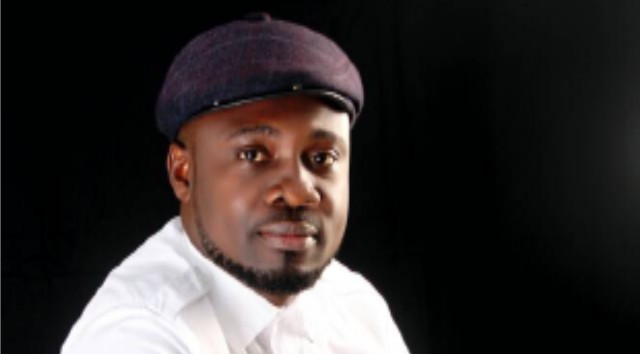
The clamour for the restructuring of the Nigerian federation is one that is gathering momentum by the day. In this interview with Opaka Dokubo, an ardent and passionate proponent of the rearrangement of the Nigerian State with a view to making it deliver its best for the people, Andy Akpotive bared his mind on the burning issue amongst others. Excerpts.
What do you mean when you mention the word restructuring?
If there are people who today say they do not understand the concept of restructuring, they are merely playing the ostrich. Restructuring presupposes that there was something and you know that that thing was not delivering the best for you, what was important that you did would be that you restructure that thing in a way that it would serve you better. It happens in organizations; it happens in families; it happens in societies.
When you go to certain houses, you will see that their chairs are arranged in certain ways before they get married. But when they eventually get married and start having children, and they see that it is very inconveniencing for the children to move around in the house, a parent who understands that these chairs have become impediments, would naturally rearrange or reorganize the chairs such that the children will have ample space to be able to play around while visitors that come in will also be able to enjoy themselves within that same house. That, essentially, is what the concept of restructuring is all about.
Nigeria today is a country that has been existing on a certain structure and we are saying that this structure, from its very beginning, we have had tweaked here and there, we have been removing and adding certain things but not doing it as it should be done, not addressing the core, not doing it organically. So, people like me believe that we have shortchanged ourselves as a people; we have not been able to get our best from our institutions. Therefore, it is imperative that we reconsider the structure so that we can redesign it for effectiveness in order to deliver the best for us.
How important is it for the Nigerian federation to be restructured?
Let me use a story in the Bible to illustrate my response. There was a prophet who always prophesied doom. But the Bible says that in the year that King Uziah died, Isaiah saw also the glory of the Lord. Everything that we have been seeing with the current structure, with the current constitution and the current political arrangement has been at best bleak, has been at best doom because we say we have free education yet it is free of quality; we say we have free healthcare yet it is free of health; people are dying in droves because police officers cannot deliver on their mandate. It is equal to what happened in the time of Isaiah because everything is bleak.
Let’s say for instance you have your car engaged in reverse gear, it wouldn’t matter how powerfully you pres on the accelerator, the car will never move forward. It wouldn’t matter if you are a Formula One driver, until and unless you reengage the gear and put it on drive mode, you will never be able to move that car forward. Nigeria as it is currently constituted is such that all the institutions are at best engaged in park mode.
I give you a typical example. You say that you have federal character and by that principle you are going to pick people in representation, regardless of merit, to fill certain positions in our institutions. Now if there were ten people and nine of them were really very good, but the nine of them were not qualified by the Federal Character principle, you will have to pick the one that is not as competent but is qualified by the Federal Character principle to give that placement. What you would have done in that instance is that you have rendered that institution ineffective. No country progresses with such kind of structure.
We say we operate a federal constitution, yet there are a lot of items that have been placed on the exclusive legislative list such that event the federating units do not have enough power to be able to federate because of such designs. So, today you have the federal government going to drill boreholes in villages across the country. This should not be so. We are saying that, right now, the country is wrongly calibrated. By the structure that we have, even if you bring a saint to this country, he will not be able to deliver because the car is already engaged in reverse gear.
Recently, a presidential aide said that President Muhammadu Buhari will restructure Nigeria if he is voted into power again in 2019. How do you response to that?
My people say that it is the morning that determines how the day will be. The person that will deliver, the person that will restructure does not need to ask of his people for a return to be able to deliver. We would have been seeing signs that this person is interested in restructuring the country.
A lot of people have argued that the restructuring of Nigeria is the preserve of the National Assembly. While I agree that the National Assembly has a lot to do, I beg to insist also that the president has much more to do in the equation as it concerns restructuring. What is this president’s body language as regards restructuring, for instance? Does the president understand that there are certain things concerning restructuring that can be done administratively? There are certain things that do not necessarily need to go through the parliament, that if he is interested he could have done sitting on his table and the citizens will see that this man has good intentions to indeed restructure this country and they will willingly give him their votes so that he can begin lobbying that National Assembly to do the part that they will do.
But what do we have today? We have seen that the president has consistently refused to address the issue concerning restructuring.
The truth is that unless and until this country is restructured we will just be like the proverbial barber’s chair: we will be turning in circles but making no movement. The question I’ve often asked is why is it that there has never been any president that came and Nigerians did not insult? Abacha came, we insulted him. Before then we insulted Babangida. We insulted Shagari. We insulted all the presidents, because they could not deliver. We insulted Obasanjo. Obasanjo left and we insulted Yar’adua. After him came Goodluck Jonathan and we insulted Goodluck Jonathan. Now Buhari has come and we’re insulting Buhari.
What does this tell any sane person? That it is not essentially the people that are administering this state called Nigeria, it is about the fact that the structures are such that even if you bring in a saint, he will not be able to function. If you bring in an Obama to lead Nigeria today, he has to fix two things immediately: restructure the hard infrastructure and soft infrastructure in our country; otherwise he will not be able to deliver.
The best of presidents, in the world will not be able deliver with the present structure we have in Nigeria. Until and unless there is a restructuring such that the institutions will align with the purpose of government, we will just be going round in circles. Because I understand that the president has not shown us sufficient signs that he is indeed interested in restructuring.
In any case, we have not seen the president himself commit to it because we have seen now that this president has shown to us that certain things that were commitment of his party and of his people are not his commitments. So, I am no longer moved by the comments of the people who are following the president or who are in the presidency. I will rather that the president come on air and say to Nigerians that if you give me a second term, I am going to restructure and this will be my idea of restructuring.
If the president says that and that is subjected to intelligent debate and the president eventually accepts it, of course, most definitely I will give him my support. What well meaning Nigerians are interested in is a man who will come and understand that it is only a change in the structure that can change the Nigerian people’s situation. That kind of a man, regardless where he comes from, I will give him my support.
What do you make of the seeming endless registration of political parties by the Independent National Electoral Commission?
A lot of people have said that it is great to open up the space for a lot of people to get in to compete but as much as I am someone who believes in democracy, I think that there is need for us to recalibrate our own democracy after our peculiarities. If you look at China, for instance, you will find that their own democracy was calibrated to suit their peculiarities. The same thing goes for Cuba and even the United States of America.
Democracy is about representation that is brought about as a result of popular vote. When a lot of people show indeed that they have confidence in you as compared to the other person that does not have that much popularity, democracy stands. I believe that a lot of people can be wrong in the equation where they follow and pursue after sentiments. By the design of the American democracy, even though Hillary Clinton won the most number of popular votes, Donald Trump is the president of America today because of the collegiate system. So, there are ways we can design our democracy such that we do not become an embarrassment among the committee of nations.
In the last gubernatorial election that took place in Anambra State, if voided votes was a political party, it would have won the election because the total number of voided votes was so significant. Some of us have investigated and found out that the ballot paper was so long and replete with similar logos and party names that people will just thumbprint any one and anywhere in the confusion.
In any case, we are still using an analogue system so that if you pressed the ink on that particular portion that you want to vote for, by the time you folded that long ballot paper, chances are that that ink will stain or touch on another political party and that vote becomes void.
So, imagine us going into the 2019 elections with close to a hundred political parties, INEC will have to go print a ballot paper that will be as long as you can imagine. The truth is that anytime that is presented to people, it becomes an embarrassment and an impediment to a free and fair election.
So, for me, I think that it’s just not about opening up the space; we must set mutually agreed criteria for establishing political parties. If we streamline and recalibrate our system after our peculiarities, then we can be on our way to solving our problems. Right now, with the registration of these new political parties, I have serious fears that the 2019 general elections will not be free, it will not be fair, it will not be credible.



The Independent National Electoral Commission (INEC) has extended the deadline for political parties to submit the list of candidates for the 2027 governorship and state Houses of Assembly elections from Saturday, August 8, to Tuesday, August 11, 2026.
The commission announced the extension in a statement issued on Saturday and signed by the National Commissioner and Chairman of its Information and Voter Education Committee, Mohammed Haruna.
According to INEC, the decision followed appeals by political parties for additional time to complete the submission process through the dedicated online portal.
“The submission window, which according to the revised Timetable and Schedule of Activities for the General Election was originally scheduled to close on Saturday, 8th August, 2026, has been extended to Tuesday, 11th August, 2026,” the commission said.
In a a related development, INEC announced the suspension of PVC collection in Osun State ahead of the August 15 governorship election.
The commission said voters who applied for replacement of lost, damaged or defaced Permanent Voter Cards would have until midnight on Sunday, August 9, to print downloadable copies of their cards.
The electoral body explained that the deadline was necessary to enable it compile data on downloaded PVCs and produce final statistics on the total number of cards collected ahead of the election.
INEC said PVC collection in Osun commenced at the Registration Area level from July 22 to 28, 2026, but was extended to July 31 following complaints about large crowds and difficulties experienced by voters at collection centres.
The exercise subsequently moved to the local government level and ran from August 1 to 7.
The commission also disclosed that replacement downloadable PVCs had been made available to voters in Odo-Otin and Ife Central Local Government Areas following the theft of cards during attacks on the two collection centres.
It stressed that the stolen cards could not be used to vote.
INEC reassured Osun residents of its preparedness for the August 15 governorship election.
“The commission reiterates that the stolen cards cannot be used to vote.
“INEC reassures the people of Osun State of its readiness to conduct a free, fair, credible and inclusive governorship election on 15th August, 2026,” the statement said.
The commission said the deadline, initially set for Saturday, 8 August, has been extended to Tuesday, 11 August 2026, following appeals from political parties for more time.
INEC also announced that the window for voters who applied to replace lost, damaged or defaced PVCs to download their replacement cards will close at midnight on Sunday, 9 August.
The move is to enable the commission compile final PVC collection figures ahead of the 15 August Osun governorship election.
INEC said replacement downloadable PVCs have also been provided to affected voters in Odo-Otin and Ife Central Local Government Areas after hoodlums carted away cards from two collection centres, stressing that the stolen cards cannot be used to vote.
The commission reaffirmed its readiness to conduct a free, fair, credible and inclusive election in Osun State.
Gov. Kefas made the remarks over the weekend at the Federal Medical Centre (FMC), Jalingo, during the flag-off of the second phase of the Renewed Hope Medical Outreach in Taraba State, organised as part of activities marking Prof. Yilwatda’s 58th birthday.
The governor commended Prof. Yilwatda for choosing to mark his birthday by providing medical care to people in need.
“What Professor Nentawe did is a powerful demonstration of what leadership should be,” Gov. Kefas said.
He assured that his administration would continue to support initiatives that complement government efforts to improve healthcare delivery and the wellbeing of residents.
Speaking at the event, Prof. Yilwatda called on Nigerian leaders to embrace the culture of giving and use their positions to touch the lives of the less privileged.
He said his decision to celebrate his 58th birthday in Taraba State was deliberate and informed by the needs of underserved communities, particularly people who face difficulties accessing healthcare because of distance and financial constraints.
According to him, the intervention followed a needs assessment and was extended across the three senatorial districts of the state.
He said the exercise commenced on August 3 at Takum General Hospital and covered the Federal University Teaching Hospital, Wukari; First Referral Hospital, Sunkani, Ardo-Kola Local Government Area; General Hospital, Bali; General Hospital, Gembu; and FMC Jalingo.
Prof. Yilwatda said the intervention provided medical services to thousands of beneficiaries, including people who required surgical procedures.
He said sustainable national development could only be achieved when strong institutions placed Nigerians at the centre of development.
“Leadership is about service,” he said, urging political and public leaders to make giving back to society an important part of their responsibilities.
He reaffirmed his commitment to serving Nigeria and its people, saying his personal vision was to make every day of his life useful to humanity.
“Every day that I live, the vision is: let it be useful to humanity,” he said.
The Taraba State Commissioner for Health, Dr. Bordiya Buma, commended the initiative, saying it was consistent with the Renewed Hope agenda and efforts to strengthen healthcare delivery in the state.
Dr Buma said the second phase followed the successful completion of the first phase, which was conducted simultaneously in six local government areas, with two LGAs selected from each of the three senatorial districts.
According to him, more than 10,000 patients were attended to during the first phase, including people with medical and surgical conditions.
He disclosed that 327 general surgeries, 71 eye surgeries and 575 dental procedures were carried out during the exercise.
The commissioner expressed appreciation to President Bola Tinubu for the Renewed Hope Medical Outreach and thanked Prof. Yilwatda for supporting the initiative and choosing Taraba State as a beneficiary.
The Minister of Health and Social Welfare, Prof. Muhammad Ali Pate, also commended Prof. Yilwatda for choosing Taraba State to mark his 58th birthday through a medical outreach.
Prof. Pate said making healthcare the centrepiece of the birthday celebration was significant because health affects everyone.
-

 News2 days ago
RSG Targets Nine Million Residents in Mosquito Net Distribution Campaign
-

 Oil & Energy1 day ago
Aiyedatiwa Signs New Electricity Bill
-

 Maritime1 day ago
Marine Minister Commends President Tinubu On NPERA Bill Assent
-

 Oil & Energy1 day ago
NLNG Commissions Research And Innovation Centre In RSU
-

 News2 days ago
KenPoly Holds Eight Convocations, August 29
-

 News2 days ago
RSG Begins Another Phase of Projects Commissioning Today
-

 News2 days ago
RMAFC Completes Revenue Sharing Review, Proposes New Pay
-

 Maritime1 day ago
NAGAFF Petitions IGP Over Alleged Maritime Police Harassment