
Nation
THE STATES

Adamawa
Adamawa State Acting Governor Ahmadu Umaru has
approved the constitution of a seven-man judicial panel of inquiry to investigate the administration of impeached Murtala Nyako from June, 2007 to June 2014.
A statement issued by the Secretary to the State Government, Prof. Tukur Liman in Yola recently indicated that the panel which has Justice Bobbo Umar as chairman, and Mr Sedan Nyari, as its secretary has four weeks to submit its findings. According to the statement, the terms of reference of the panel were to investigate financial accruals to the State from June, 2007 to June, 2014 and the investigation of disbursement and application of funds to ministries, boards, and agencies over the period of reference.
The panel would also identify those involved in inappropriate financial disbursements and application. It further stated that the panel would investigate staff recruitment, deployment and administration of human resources.
Bauchi
Some gunmen, suspected to be armed robbers, have killed
the District Head of Soro in Bauchi State Malam Abdulrahman Baba, and injured two other persons.
The Bauchi Police Command’s spokesperson, DSP Haruna Mohammed, who confirmed the killing in a statement yesterday, said the incident occurred at 7.45 pm last Saturday
.He said: “On Saturday at about 7.45 pm, six gunmen suspected to be armed bandits, stormed Soro town in Ganjuwa Local Government Area of Bauchi State, killing the District Head, Abdulrahman Isa Baba, and injuring two other traders. They carted away undisclosed amount of money from their victims and escaped to unknown destination. The entire surrounding had been cordoned off and efforts are being intensified to arrest the fleeing suspects.”
Mohammed also said a 32-year-old man had been apprehended in connection with an Improvised Explosive Device (IED) that was buried in a building site located at VIO quarters in Azare.
Ekiti
A former Speaker of the old Ondo State House of
Assembly, Chief Femi Akinyemi, says the Governor of Ekiti State, Dr Kayode Fayemi, lost his bid for a re-election in the June 21 governorship election to “inexperience and incompetence in politics and governance.”
Chief Akinyemi, who is also the chairman of Subsidy Re-investment and Empowerment Programme (SURE-P) in Ekiti State, addressed newsmen in his native Usi-Ekiti in Ido/Osi Local Government Area of the state after he received a merit award of the community. He claimed that “Fayemi failed woefully in the election because he did not put reliable structures in all the councils to reach out to the people.”
Describing the SURE-P scheme as a huge success and one of the best poverty alleviation strategies in the country, Akinyemi revealed that “the Federal Government spends a sum of N360 million on beneficiaries in Ekiti annually.”
Akinyemi, however, condemned the states and local governments for not showing enough transparency in the disbursement of the funds to beneficiaries like the Federal Government.
FCT
The Nigeria Immigration Service said recently that 24
officers were to be sent to various embassies abroad to ease the process of obtaining visas and e-passports.
The NIS Public Relations Officer, Mr. Emeka Obua said some Nigerians in Diaspora and foreigners experienced difficulties obtaining visas and e-passports because NIS was not represented at some Nigerian embassies.
The spokesman said to complement the effort of officers, the service would also make provisions for more machines since the passport was mainly done online.
He said that NIS had begun the implementation of the new e-passport reforms, and called on all Nigerians to cooperate with the service to ensure its implementation.
The spokesman said the new 64-page e-passport costs N20,000, adding that those under 18 years and those above 60 years could obtain the passport at N8,750.
Kano
Governor Rabiu Musa Kwankwaso of Kano
State, yesterday accused President Goodluck Jonathan of running a government based on ethnic sentiment and religious bigotry.
Kwankwaso, who spoke with reporters in his office weekend, also advised the Presidency to reduce the level of hatred and bitterness among Nigerians, if the government was actually interested in resolving the problem of insecurity.
According to him, the real cause of insecurity in the country was bad leadership being experienced in the Peoples Democratic Party (PDP)- led government, noting that the inability of President Jonathan to tackle the issue of insurgency in the North and insecurity in other parts of the country had exposed Jonathan’s incompetence to preside over the affairs of Nigeria.
Kwara
The Kwara State House of Assembly last
Monday debunked a report that it had concluded plans to impeach Governor Abdulfatah Ahmed.
The Majority Leader of the House, Alhaji AbdulKareem AbdulGaniyu, told newsmen in Ilorin that the impeachment rumour was fuelled by a report that the House was divided over the second term bid of the governor.
Abdulkareem, however, said the House was united, adding that most of the members were from the same party. He also maintained that the relationship between the governor and Senator Bukola Saraki was cordial.
Lagos
As part of the on-going efforts to prevent the
spread of the dreaded Ebola Virus Disease, EVD, into the country, a team of federal and Lagos State health officials, yesterday, visited the General Overseer of The Synagogue Church of All Nations, Prophet Temitope Joshua, to sensitise members of the congregation about persons from the affected countries in their midst.
The team, led by the state Commissioner for Health, Dr. Jide Idris, expressed readiness to work with the health team of the Church by way of technical assistance, medical advice and training to ensure that no victim of the deadly disease comes to the Church undetected. Medical doctors attending to an Ebola virus disease victim
Nasarawa
Nasarawa State Universal Basic Education Board said
it had concluded plans to recruit no fewer than 2,000 teachers to fill vacant positions in schools in the state.
Executive Secretary of the board, Malam Abdulkarim Abdullahi, made this known at a meeting of the board and local government councils’ chairmen and education secretaries in the state in Lafia recently Monday.
Abdullahi said the board had set up a committee to collaborate with the councils’ chairmen and the education secretaries to identify areas where the teachers were needed stated that the committee was also charged with the responsibility of working out modalities of ensuring that only competent hands were employed.
Osun
The All Progressives Congress (APC) has issued a red
alert on the August 9 gubernatorial election in Osun State, saying, about half a million permanent voters cards (PVCs), which were either unclaimed, not handed over to their authentic owners or obtained fraudulently, have been cloned by unscrupulous persons ahead of the election, with the sole purpose of rigging.
”These cloned cards, mostly in the hands of persons from states other than Osun, are to be used along with the authentic PVCs issued to the electorate in Osun state during the August 9 Osun governorship election,” the party said in a statement issued in Osogbo last Monday by its National Publicity Secretary, Alhaji Lai Mohammed.
”Already, we can confirm that the hundreds of thousands of people in possession of these cloned cards all over Nigeria, especially in the states neighboring Osun, are being induced monetarily and instructed to super impose their photographs on the cloned PVCs.
Oyo
The epileptic electricity supply currently being experienced
in Ibadan and its environs will soon be a thing of the past as Ibadan Electricity Distribution Company Plc (IBEDC), in charge of electricity distribution in the zone, has promised a daily 15-hour electricity supply to consumers.
The Managing Director of Ibadan Electricity Distribution Company Plc, Engr. Fortunato Leynes, made this promise at the company’s first journey to change knowledge sharing series which held in Ibadan over the weekend.
According to Leynes, one of the greatest challenges hindering uninterrupted power supply to customers is inadequate power generation capacity for his company to distribute to consumers.
Speaking on the essence of the knowledge sharing series being organised by the company, Deputy Managing Director of IBEDC Mr. John Darlington noted, that “the challenges are enormous but if we get our people, technology, attitude and discipline right, in the next two or three years our company will make the difference.”

Governor Aliyu Wamakko of Sokoto (left), receiving a souvenir from Sultan of Sokoto, Alhaji Sa’ad Abubakar 111 for attending the Nigerian Defence Academy Alumni 18th Regular Course Re-union in Sokoto, recently.



As the world marked the 2026 International Day of the Girl Child on Sunday, October 11, 2026, a non-governmental organisation, Stand Up for Women Society (SWS) has intensified its campaign against child marriage, urging schoolgirls to prioritise education, protect their rights and develop skills for a better future.
The organisation joined the global observance of the day under the theme, “International Day of the Girl Child: End Child Marriage and Invest in Girls’ Rights,” with a sensitisation programme at Government Girls Secondary School, Oromenike, D-Line, Port Harcourt, Rivers State.
Led by its Vice Chairperson, Daba Benebo, the group engaged the students in discussions on the dangers of early marriage, teenage pregnancy, sexual abuse and other challenges that threaten the education, safety and development of the girl child.
Speaking during the programme, Benebo urged the students to reject early marriage and remain focused on their studies, stressing that education would empower them to make informed decisions about their lives and future.
She cautioned the girls against allowing anyone to deprive them of their right to education and dignity, advising them to report cases of harassment, abuse and other violations of their rights to the appropriate authorities.
Benebo assured the students that SWS remained available to support them whenever they encountered violations of their rights.
She also encouraged them to maintain discipline and responsible conduct while avoiding behaviours that could expose them to negative influences and jeopardise their future.
Beyond formal education, the SWS vice chairperson urged the students to acquire vocational skills that could provide additional opportunities for economic independence and help them navigate future challenges.
The sensitisation programme, enlivened by singing, dancing and to share their views and experiences on issues affecting the girl child interactive sessions, provided an opportunity for the students to share their views and experiences on issues affecting the girl child.
One of the major issues raised during the discussion was the appropriate age for marriage. While some participants maintained that 18 years was the constitutionally approved age, the discussion highlighted the need to consider not only age but also the maturity, preparedness and responsibilities associated with marriage.
The speaker stressed that marriage required adequate mental and emotional preparation, as well as the capacity to shoulder its responsibilities.
She therefore advised the students to concentrate on acquiring a sound education before considering marriage, noting that education would equip them with the knowledge and skills needed to make responsible decisions and manage family life.
The issue of teenage pregnancy also featured prominently during the question-and-answer session.
In addressing the subject, the speaker explained that pregnancy could occur even at the age of 12, using the example to underscore the vulnerability of young girls to the consequences of early sexual activity.
She advised the students to avoid sexual intercourse and prioritise their education, personal safety and future aspirations.
The discussion also examined the difficulties some girls encounter when living with hostile spouses, relatives or guardians.
Benebo encouraged the students to cultivate patience, humility and diligence, noting that these qualities could help them navigate difficult situations and build a brighter future.
However, she warned that patience and humility should never be interpreted as an obligation to endure violence, abuse or degrading treatment.
She urged girls experiencing hostile or abusive living conditions to seek help from their parents, trusted adults or appropriate support services rather than remain in environments that could expose them to physical or emotional trauma.
“When such happens, please return to your parents and engage in petty trade or learn a skill to support your education rather than stay in a hostile environment,” Benebo stressed.
The programme also underscored the importance of protecting girls from early marriage and other harmful practices that can disrupt their education, compromise their well-being and limit their opportunities in life.
It also reinforced the need for families, schools, communities and relevant organisations to work together to ensure that girls have access to education, vocational training, protection and the support they need to realise their potential.
For SWS, the message was clear: empowering the girl child begins with protecting her rights, investing in her education and equipping her with the confidence and skills to make informed choices about her future.
Stories by Kevin Nengia
The Egberipapa Foundation has unveiled a mass transit scheme aimed at easing transportation difficulties and improving connectivity among communities in the three Kalabari local government areas of Asari-Toru, Degema and Akuku-Toru in Rivers State.
The initiative, established by former Caretaker Committee Chairman of Akuku-Toru Local Government Council, High Chief Sobomabo Jackrich, popularly known as Egberipapa, is designed to make transportation more accessible and affordable for residents across the Kalabari area.
The scheme was launched on Monday, October 12, 2026, and is expected to address longstanding transportation challenges confronting residents, particularly those in riverine and hard-to-reach communities.
Communities expected to benefit from the initiative include Krakrama, Minama, Angulama, Sangama, Omekwe-Tariama and Omekwe-Ama.
The project is expected to ease movement within and beyond the Central Group area, while providing residents with a more convenient means of transportation for their daily activities.
For decades, transportation difficulties have posed significant challenges to several Kalabari communities, making movement between settlements both cumbersome and expensive. These challenges have also affected commercial activities, social interactions and access to essential services.
The introduction of the mass transit scheme is therefore expected to provide relief to residents, strengthen inter-community connections and stimulate economic activities across the benefiting communities.
Beyond improving mobility, the initiative could contribute to community development by facilitating the movement of people and goods, supporting local businesses and enhancing social and economic interactions within the Kalabari area.
As the scheme gets underway, attention will be focused on its implementation, accessibility and sustainability, as well as its capacity to deliver lasting transportation benefits to the target communities.
The initiative represents a potentially significant step towards addressing transportation challenges and promoting grassroots development across the Kalabari Kingdom.
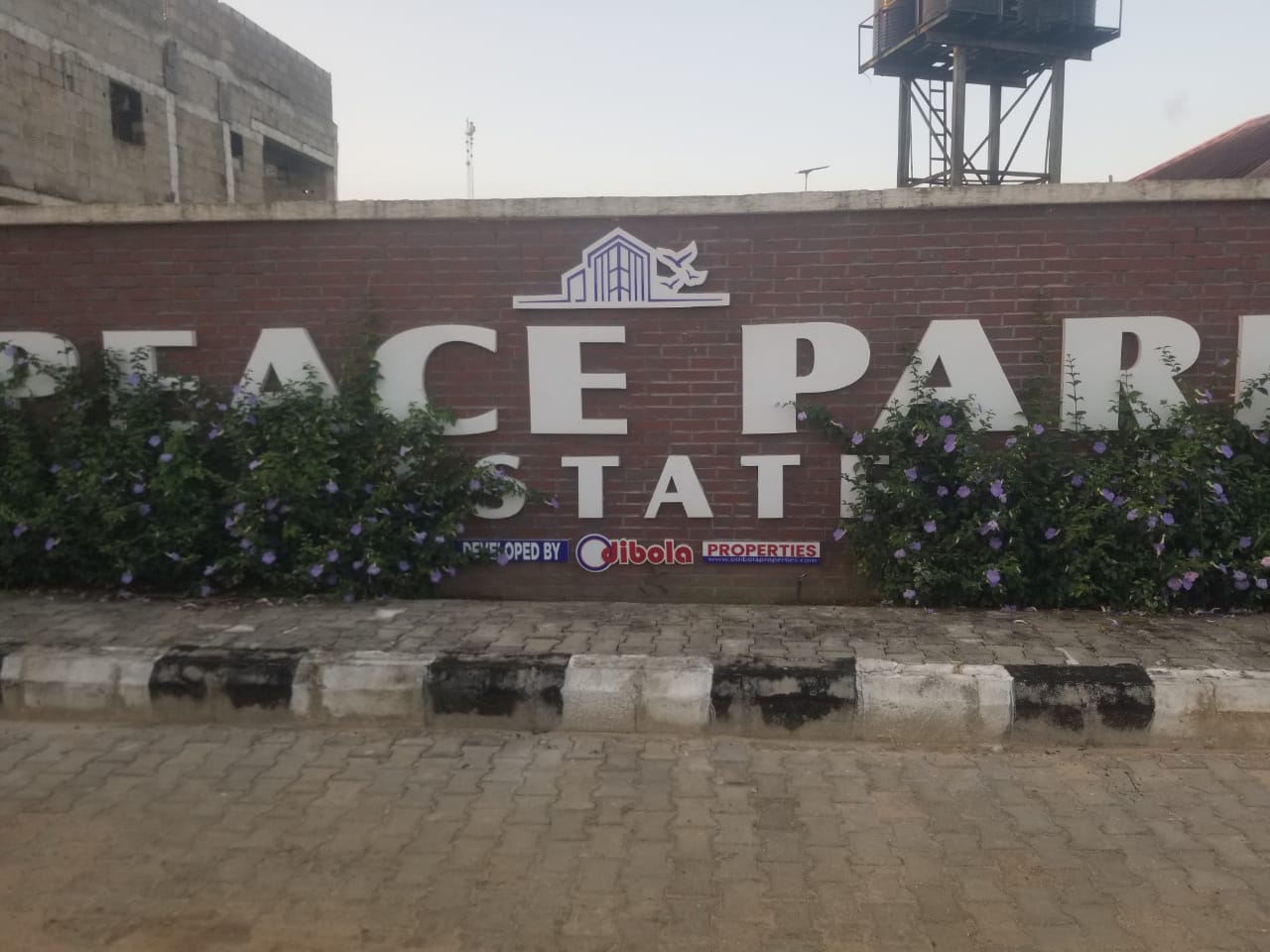
The Amaewhule family of mbodo Aluu in Ikwerre Local Government Area of Rivers State has cautioned members of the public against entering into any land transaction involving a disputed property known as “Ada Oro Fam Land,” located behind the OPM Church along Airport Road.
The family, through its legal counsel, Barrister Ndubuisi Agumagu, issued the warning amid an ongoing legal dispute over the ownership and control of the property, which is said to comprise more than 900 plots of land.
The matter is currently before the Isiokpo High Court of Rivers State in a suit numbered IHC/246/CS/2026, presided over by Justice Sobere Biambo.
The claimants in the suit include Chief Green Amaewhule and others, while Fabulous Amaewhule and Odibola Properties are listed among the respondents.
Counsel to the Amaewhule family, Barr Ndubuisi Agumagu, advised prospective land buyers and members of the public to exercise caution and refrain from purchasing any portion of the disputed property pending the determination of the case by the court.
According to the legal counsel, the property is a family estate belonging collectively to the Amaewhule family, and no individual member of the family has the authority to unilaterally dispose of portions of the land.
The counsel specifically maintained that Fabulous Amaewhule, one of the respondents in the suit, does not have the legitimate authority, according to the family’s position before the court, to sell portions of the disputed property.
The family further warned that anyone who proceeds to purchase land from the respondents while the matter remains before the court would be doing so at their own risk.
It stressed that such buyers could potentially lose their investments should the court eventually deliver judgment against the validity of the transactions.
The legal team said the warning became necessary to prevent unsuspecting members of the public from committing their resources to a property whose ownership and right of disposition are currently the subject of judicial determination.
The family also urged prospective investors, developers and land buyers to conduct proper legal inquiries and obtain independent verification of the status of the property before committing funds to any transaction relating to it.
The Amaewhule family said its position was intended to protect members of the public from possible financial losses and further legal complications while the case remains sub judice, stressing that interested parties should await the final determination of the court.
Akujobi Amadi
-

 Niger Delta4 hours ago
Diri Restates Stance On Lagos-Calabar Coastal Highway
-

 Niger Delta4 hours ago
C’River, NUJ Pay Tribute To Late Guardian Editor
-

 News5 hours ago
NDLEA Recovers Tons Of Illicit Drug Consignments In Nine States
-

 Opinion4 hours ago
Checking Voter Apathy In Nigeria’s Electoral Process
-

 Oil & Energy5 hours ago
S&P Global Warns Hormuz Energy Shock Could Become A Global Food Crisis
-

 Oil & Energy5 hours ago
Gas Reserves Hit 215 Trillion Cubic Feet
-

 Rivers4 hours ago
Education Ministry Condemns Female Virginity Testing In CHS, Taabaa
-

 Oil & Energy5 hours ago
NCDMB, Manufacturers Commit To Scale Up Local Oil And Gas Production Components