Connect with us

Editorial

Nigeria And The Ebola Scare

Published

on

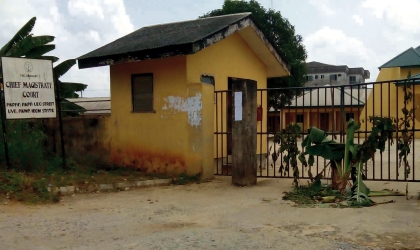
An injunction placed at the gate of Uyo Magistrate Court in compliance with the indefinite nationwide strike in Uyo last Friday. The strike was however suspended last Saturday.

An injunction placed at the gate of Uyo Magistrate Court in compliance with the indefinite nationwide strike in Uyo last Friday. The strike was however suspended last Saturday.

The death of a Liberian in Lagos said to
have died of Ebola virus has brought
home the fear of the scourge currently ravaging some of the Central and West African countries. It has also engaged the attention of the world and the reason is obvious, Ebola is dangerous.
Ebola is considered to be worse than HIV/AIDS not because it has no known cure or vaccine, its effect on victims is rather fast and excruciating. Infected persons face painful death in days. So far, about 720 persons are known to have died of the virus in Central, Southern and West Africa.
The Ebola virus, classified as a zonotic disease came to limelight in 1976 from forest bats along the Ebola Rivers in Zaire, now Democratic Republic of Congo. It is said to have been transmitted to chimpanzees, monkeys and a few other animals when they feed on infected animals and fruits. Men contract the virus through handling or and eating of infected animals, especially ‘bush meat’ as well as the keeping of games and pets.
Regrettably, Ebola virus has claimed many lives including healthcare providers. Only recently, a frontline medical doctor in Liberia, Samuel Brisbane died of the virus and so did another doctor in Uganda, while an American aid worker, Nancy Writebol was said to have tested positive to the virus. On Tuesday, July 20, 2014 another frontline doctor, Umar Khan reportedly died of the virus in Sierra Leone.
Infected persons exhibit symptoms ranging from diarrhea, bleeding, high temperature, haemorrhagic fever and sore throat among others. Thankfully the Federal Ministry of Health says no Nigerian has been infected with the virus, even as medical experts warn against the consumption of “bush meat”, as well as physical contact with infected persons, by way of hand-shake, sexual intercourse and exposure to wild animals and birds.
The situation has become scary that the corpse of a Nigerian flown home to Anambra State from Liberia raised fears and caused federal authorities to carry out autopsy on the corpse to reassure the people.
We think that more than any other time, Nigerians need to be very cautious as conditions that predispose the population to the virus appear to be everywhere. Nigeria’s close interaction with some countries with the virus is an issue. Also worrisome is the preponderance of slum settlements and a culture that cherishes the “bush meat” delicacy.
Though there are concerns about the spread of the virus world-wide, concerted actions are ongoing to contain and prevent it from overwhelming the population, especially, in Africa. Moreso, the World Health Organisation, WHO and the European Union have put in place facilities and strategies to combat the scourge.
The Tide commends the Lagos State Government for the prompt action following the death of the Liberian. It quickly quarantined the hospital where the Liberian died and identified 47 persons that had contact with the deceased while searching for those on the same flight with him.  We also commend the elaborate plan set in motion by the Rivers State Government on the subject.
Already, Arik Air has suspended flight to countries with Ebola record and advised others to do likewise. This the Nigerian government must enforce, even as the recent ban on bringing of corpses from abroad is a move in the right direction.
While we expect citizens to report suspected cases, we believe that this is the time medical personnel and other stakeholders, especially, the mass media should synergise towards providing the needed sensitisation.
There must be effective plan for adequate surveillance on the Ebola disease as well as diagnoses and containment strategy. In as much as it is good to isolate or quarantine infected persons, the authorities must request and confirm health certifications from pet owners and importers of animals and birds into the country.
Perhaps, this is one reason health workers, who have been on strike for so long, should reconsider their stand and go back to work to help save the population.


Continue Reading

Editorial

June 12: The Faltering Democratic Journey

Published

on

Nigeria today marks Democracy Day, an occasion set aside to celebrate the country’s democratic journey and reflect on the sacrifices made by citizens in the struggle for representative government. The day is both a celebration and a reminder that democracy is not merely about periodic elections. It is also about freedom, justice, accountability, security, and the welfare of the people.
June 12 occupies a special place in Nigeria’s political history because it commemorates the presidential election of June 12, 1993, widely regarded as the freest, fairest, and most credible election ever conducted in the country. The election was won by late Chief Moshood Kashimawo Olawale Abiola, but the military government of General Ibrahim Babangida annulled the results, plunging the nation into political turmoil and a prolonged struggle for democratic rule.
For many years, Nigeria celebrated Democracy Day on May 29 because that was the date when military rule ended and power was handed over to a democratically elected government in 1999. However, in 2018, the administration of late President Muhammadu Buhari officially moved Democracy Day from May 29 to June 12. The change was intended to honour the sacrifices of those who fought against military dictatorship and to recognise the importance of the annulled 1993 election.
More than two decades after the return to civilian rule, Nigeria’s democratic record presents a mixture of progress and disappointment. The country has maintained uninterrupted civilian government since 1999, making it the longest democratic period in its post-independence history. Yet, the quality of governance and democratic institutions remains a matter of concern.
On political rights, Nigeria has made modest gains. Citizens have the constitutional right to vote and contest elections, and political parties operate freely. However, concerns have always been about voter apathy, political violence, and the influence of money in politics. In the 2023 general election, fewer than 30 per cent of registered voters cast their ballots, highlighting declining public confidence in the electoral process.
Civil liberties have improved compared with the military era, but challenges persist. Citizens enjoy greater freedom to express opinions, organise groups, and participate in public debates. Nevertheless, reports of unlawful arrests, harassment of activists, and restrictions on peaceful protests raise questions about the full protection of civil freedoms.
Electoral integrity has shown some improvement through the deployment of technology by the Independent National Electoral Commission. Yet disputes over election management, vote buying, rigging, logistical failures, and prolonged litigation undermine public trust. Many Nigerians still believe electoral reforms have not gone far enough to guarantee completely transparent elections.
Freedom of expression and association are relatively vibrant. Traditional and social media platforms provide citizens with avenues to criticise government policies and mobilise public opinion. However, journalists, activists, and media organisations occasionally face intimidation, legal pressures, and threats that create concerns about press freedom and democratic openness.
Security is one of Nigeria’s weakest democratic indicators. Insurgency in the North East, banditry in the North West, farmer-herder conflicts in parts of the Middle Belt, separatist tensions in the South-East, and widespread kidnapping have created a climate of fear. Thousands of lives have been lost in violent attacks over the past decade, while many communities live under constant security threats.
The rule of law and judicial independence present a mixed picture. Nigerian courts have delivered landmark judgments that have strengthened democracy and resolved electoral disputes peacefully. Yet allegations of political interference, delays in the justice system, and concerns over selective application of the law affect public confidence in the judiciary.
Protection of individual rights and checks on executive power are among areas requiring improvement. Although constitutional safeguards exist, enforcement is often inconsistent. Institutions responsible for oversight, including the legislature and anti-corruption agencies, sometimes face accusations of weakness or partisanship. Strong democratic systems require institutions that can operate independently of political influence.
On accountability and transparency, Nigeria has made some progress through public procurement reforms, digital financial systems, and increased access to information. Yet corruption remains a major obstacle. Transparency International’s Corruption Perceptions Index has consistently ranked Nigeria among countries facing serious corruption challenges. The misuse of public resources undermines development and public trust.
Citizen participation in governance has expanded through civil society organisations, community groups, and digital engagement. However, many citizens still feel disconnected from decision-making processes. Economically, democracy has not delivered the level of prosperity many expected. Despite being Africa’s most populous nation, Nigeria has been struggling with high inflation, unemployment, poverty, and a rising cost of living. Effective and responsive government remains a challenge as many Nigerians demand better public services, infrastructure, healthcare, and education.
As Nigeria marks Democracy Day, the path forward is clear. Electoral reforms must be strengthened to improve transparency and public confidence. Security agencies must be better equipped and held accountable. Judicial independence should be protected, while anti-corruption institutions must be empowered to act without fear or favour. Governments at all levels should embrace transparency, respect human rights, and prioritise economic policies that create jobs and improve living standards.
Above all, citizens must actively engage in governance. Democracy flourishes not only through elections but also through continuous participation, vigilance, and accountability. The promise of June 12 will be fully realised only when democratic governance delivers freedom, justice, security, and prosperity to all Nigerians.
Continue Reading

Editorial

Fix Bad Roads, Avert Flooding In PH

Published

on

For many years, residents of Port Harcourt have suffered from deplorable roads and persistent flooding. During the rainy season, movement becomes difficult and business activities are often disrupted. Thankfully, there has been some relief in one major area. Since Governor Siminalayi Fubara addressed the flooding problem along Ikwerre Road by Afikpo Junction, the situation has improved significantly. Even after heavy rainfall, the area no longer experiences the usual flooding, and vehicles can now move freely without difficulty. This intervention deserves accolade and commendation.
Another notable project is the ongoing drainage reconfiguration at NTA Road, opposite the Nigerian Television Authority. The work being carried out there shows that the government recognises the connection between poor drainage and deteriorated roads. Once completed, the project could become a good example of how proper planning and infrastructure maintenance can improve urban roads. The administration should be encouraged to sustain this undertaking.
While the governor continues to carry out development projects across the state, attention should also be given to Obi Wali Road in Obio/Akpor Local Government Area. The road has remained in decrepit condition for years despite its importance as a major economic route. Whenever it rains, flooding stretches from Rumuigbo Junction to Nkpolu Junction, forcing businesses to discontinue operations for the day. According to traders in the area, several shops shut down after every heavy rainfall. This situation cannot continue indefinitely.
Fubara should spend more time scrutinising roads and infrastructure across Port Harcourt personally rather than depending entirely on reports from officials. His intervention at Ikwerre Road was successful because he saw the problem firsthand and understood the extent of the tribulations faced by motorists and residents. The same practical approach should now be replicated on Obi Wali Road.
A visit to the area during rainfall would clearly reveal how quickly the road becomes impenetrable. Vehicles struggle to move through the flooded sections, while pedestrians are forced to walk through unsanitary water. Direct assessment often provides a clearer understanding of problems and can lead to quicker and more efficacious solutions.
The current condition of Obi Wali Road is similar to what Elelenwo Road looked like before it was reconstructed under the administration of former Governor Nyesom Wike. After the road was metamorphosed, the area became more accessible, attractive and serviceable. Today, Elelenwo Road accommodates heavy traffic daily without major flooding issues. There is no reason Obi Wali Road should not receive similar attention. What is required is commitment and political fortitude.
The Airforce and Rumuomasi section of the Port Harcourt–Aba Road, beginning from Shoprite to PAMO, also remains in very poor predicament. During heavy rainfall, flooding affects the stretch from Lagos Bus Stop to Market Junction, covering almost 1.2 kilometres. As a result, motorists are forced to circumnavigate through Old Aba Road before reconnecting at Rumubiakani or Market Junction. This often adds between 20 and 30 minutes to expeditions during the rainy season.
The situation is becoming increasingly disconcerting. Smaller vehicles frequently avoid the route whenever it rains heavily. Reports from local transport operators indicate that many private and commercial vehicles circumvent the area on rainy days. Sadly, this has become a perennial problem every rainy season, despite changes in government over the years. The current administration should focus on providing a permanent solution rather than temporary repairs that fail after a short time.
Flooding is also common along the NTA–Choba Road near Choba Market, opposite Royal House of Grace Church. Although the road itself is in fairly good condition, blocked drainage channels continue to create encumbrances whenever it rains. In addition, potholes are beginning to materialise along Obiri Ikwerre Road leading towards NTA Road. If these faults are ignored, they will eventually develop into major road degeneration.
Other areas in urgent need of attention include Mile 3 Market Road to Wokoma Street, which floods after torrential rainfall, and Gambia Junction at Mile 2 Diobu, where flooding has become ubiquitous. Okporo Road, the stretch from Rumuodara Junction to Artillery, Bereton Junction, and Miniesuku Junction near Halley College are all in dilapidated condition. Altogether, these roads affect the daily movement of hundreds of residents across the city.
To address these challenges effectively, the state government should establish a specialised road maintenance agency responsible for identifying and repairing damaged roads before they deteriorate completely. Regular inspections and preemptive maintenance would help reduce long-term reconstruction costs and improve road safety across Port Harcourt.
Local government councils also have an important role to play. Each council should maintain meticulous records of roads within its jurisdiction and monitor their condition regularly. Responsibility for road maintenance should not rest entirely on the state government. Better synergy between state and local authorities would ensure that no road is overlooked.
Governor Siminalayi Fubara has already shown positive leadership through the improvements at Ikwerre Road. Residents now hope that the same commitment will be cloned across other troubled areas in Port Harcourt so that the city could finally experience safer roads, better drainage and unobstructed movement for everyone.
Continue Reading

Editorial

Nigeria’s 27 Years of Civil Rule Journey

Published

on

Nigeria returned to civil rule on May 29, 1999, after several years of military intervention in politics. The transition marked a major turning point in the nation’s history and raised hopes for freedom, stability, economic growth and accountable leadership. Citizens expected that elected governments would strengthen institutions, improve living conditions and unite the country after years of authoritarian rule. Twenty-seven years later, civil rule has survived without interruption, making it the longest uninterrupted civilian administration since independence in 1960.
Since 1999, Nigeria has witnessed six administrations at the federal level. Olusegun Obasanjo governed from 1999 to 2007, followed by Umaru Musa Yar’Adua from 2007 until his death in 2010. Goodluck Jonathan served from 2010 to 2015, while Muhammadu Buhari led the country between 2015 and 2023. Since May 2023, Bola Ahmed Tinubu has been in office. Though democracy has remained stable, governance outcomes have produced mixed reactions among Nigerians.
The country has made some notable progress over the past 27 years. Democratic institutions such as the National Assembly, judiciary, political parties and the media have become stronger than they were during military rule. Elections are now regular, though still imperfect. Telecommunications, banking, entertainment and digital technology have expanded greatly. Nigerian youths have also become more politically aware and active. The country’s economy, despite its difficulties, remains one of the largest in Africa.
However, many of the expectations that came with democracy remain unmet. Corruption, unemployment, poverty, insecurity and poor infrastructure continue to trouble the nation. Public confidence in government institutions has weakened over time because many citizens believe political leaders have not done enough to improve their welfare. Ethnic and religious tensions also remain major challenges. While democracy has endured, good governance has not always matched the hopes of the people.
President Tinubu’s administration began with bold economic decisions aimed at reforming the nation’s finances. His government removed fuel subsidy and unified the foreign exchange system. Supporters argue that these measures were necessary to reduce waste and attract investment. The government also increased revenue allocation to states and sought to improve tax administration. Yet the immediate impact has been severe hardship for millions of Nigerians. Inflation, high transport costs and the falling value of the naira have placed enormous pressure on households and businesses.
In education, the Tinubu administration has promised reforms through student loan schemes, support for technical education and efforts to reduce strikes in tertiary institutions. Some progress has been recorded with the establishment of the Nigerian Education Loan Fund. However, public schools still face poor funding, inadequate facilities and shortage of teachers. Many students continue to struggle with rising school fees and declining quality of education.
The health sector under the current administration has also recorded both efforts and challenges. Government has pledged to improve health insurance coverage. Nevertheless, hospitals across the country still suffer from inadequate equipment, shortage of medical personnel and brain drain as doctors and nurses continue to leave Nigeria for better opportunities abroad. Access to affordable healthcare remains difficult for many rural communities.
The power sector remains one of Nigeria’s biggest disappointments after nearly three decades of democracy. Despite repeated promises and reforms, electricity supply is still unstable. Businesses and households spend heavily on generators and fuel. The Tinubu administration has introduced policies aimed at decentralising power generation and encouraging investment, but ordinary Nigerians are yet to feel significant improvement in electricity supply.
The rising cost of living has become the greatest concern for many Nigerians today. Food prices, transportation costs and rent have increased sharply. Though the Federal Government introduced palliative programmes and cash transfer initiatives to cushion the effects of reforms, many citizens believe the interventions have been inadequate or poorly distributed. There is growing demand for more effective social protection programmes targeted at vulnerable citizens.
On national security, the government continues to battle terrorism, banditry, kidnapping and communal violence. Security agencies have recorded some successes in parts of the country, yet insecurity remains widespread. Farmers in many rural communities still face attacks, affecting food production and increasing fear among citizens. Regional stability in West Africa has also become more uncertain due to political crises in neighbouring countries. Nigeria continues to play a leading diplomatic role in the region, but internal security challenges weaken its influence.
In infrastructure and other key sectors, the Tinubu administration has continued several road, rail and housing projects inherited from previous governments. Investments in ports, gas and digital technology have also been encouraged. In agriculture, government has promoted mechanised farming, dry season cultivation and access to credit. Yet food insecurity remains high because insecurity, inflation and poor rural infrastructure continue to affect agricultural productivity. Nigeria still imports many food items despite its vast agricultural potential.
To improve national conditions, the Federal Government must place greater attention on job creation, industrialisation and support for small businesses. More investment is needed in agriculture, healthcare, education and electricity. Anti-corruption institutions should be strengthened while government spending must become more transparent. Leaders must also prioritise national unity and reduce political divisions. Nigerians expect reforms that produce visible improvements in their daily lives, not only policy announcements.
In Rivers State, the 27 years of civilian rule have produced substantial development alongside political tensions. The state has remained economically important because of its oil and gas resources. Different administrations since 1999 have invested in roads, schools, healthcare facilities and urban renewal projects. However, political conflicts and struggles for power have often affected governance and slowed development in parts of the state.
Governor Siminalayi Fubara assumed office in May 2023 amid high expectations and intense political disagreements. In infrastructure, his administration has initiated projects such as massive road construction, bridge rehabilitation and urban development schemes in parts of the state. Ongoing works on major roads and public facilities have been presented as efforts to improve transportation and economic activities. Critics, however, argue that political instability in the state has distracted government’s attention from faster project delivery.
In education and health, the Rivers State Government has continued support for public schools and healthcare centres. Efforts have reportedly been made to improve learning environments and sustain payment of workers’ salaries. In health, there have been interventions in hospitals and primary healthcare services. On security, the administration has worked with security agencies to maintain peace, although political tensions in the state have created uncertainty. In the civil service, workers and pensioners have largely continued to receive salaries, stipends, and welfare support. The state government has also shown interest in agriculture and power development, though these sectors still require stronger investment and clearer long term strategies.
Going forward, Rivers State needs greater political stability to achieve meaningful development. The government should focus more on rural roads, youth employment, agricultural expansion and uninterrupted healthcare services. Investments in independent power projects and industrial development would help attract businesses and reduce unemployment. Above all, political leaders in the state must place the interest of the people above personal or factional battles. Democracy can only succeed when governance delivers peace, development, and hope to ordinary citizens.
Continue Reading

Trending