
Opinion
The Fire In Jonathan

It goes without saying that in the past twelve years, Dr. Goodluck Ebele Jonathan has traversed Nigeria’s political firmament like a colossus. From political pupilage, Dr. Jonathan shot into limelight in 1999 when he became the first Deputy Governor of Bayelsa State. And upon the impeachment of his former boss, Chief D.S.P. Alamieyeseigha, he became the second Executive Governor of Bayelsa State.
In 2007, he moved on to be the Vice President of the Federal Republic of Nigeria to the amazement of many, especially the high profile politicians who were jostling for the coveted and second most-powerful office in the land.
As Vice President, and even while his boss, late president Umaru Musa Yar’Adua, was ill and flown to King Faisal Specialist Hospital at Jeddah in Saudi Arabia, where it was rumoured that he had become bedridden, Dr. Jonathan remained calm and seemingly unambitious.
Then came the confusion over Alhaji Yar’Adua’s return or non-return from Saudi Arabia. Following several agitations by civil societies, eminent Nigerians, and the general public, the National Assembly on February 9, 2010 proclaimed the Vice President, Dr. Jonathan, as the country’s Acting President. And by virtue of the constitution of the Federal Republic of Nigeria, it became incumbent on him to assume full status of the country’s president upon the death of his former boss, Alhaji Yar’Adua on May 5, 2010.
Yar’Adua’s death and the zoning razzmatazz which produced the Turakin Adamawa, former Vice President Atiku Abubaka, as the consensus candidate of the North apparently polarised the country’s political space and generated serious internal crisis for the Peoples Democratic Party (PDP).
But even with the intrigues and crisis that greeted the PDP presidential primary, Dr Jonathan still clinched his party’s ticket, beating the former Vice President Atiku Abubakar, Mrs Sarah Jubril, and Adamu Dutsinma.
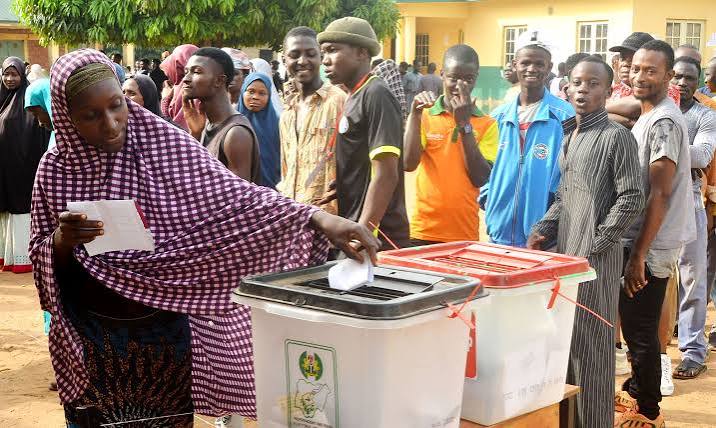
In the end, Dr. Jonathan resoundingly won the presidential election for which Prof. Attahiru Jega and his team received so much cheers and commendations from labour unions, associations, well-meaning Nigerians, election monitoring groups and observers, and many country’s across the world.
Strictly speaking, Dr. Jonathan has had the fastest political career in Nigeria. Certainly, it is not smartness or calculations that have brought him this far. So is it God or sheer luck as some Nigerians believe, that has propelled Dr Jonathan to this marvelous height? Is it destiny? Or is he being moved by a magic formula he has employed which is not known or open to the rest of us?
Dr Jonathan may not be as gifted in rhetoric as Franklin D. Roosevelt, John F. Kennedy, Ronald Reagan, Bill Clinton, and Barack Obama of this world, but he is a man of passion, dedication, and courteous disposition. Before he jumped into the murkey waters of politics, he had already cleared his path to the top of his academic career, having obtained B.Sc., M.Sc., and Ph.D in the Biological Sciences. As Deputy Governor and later governor of Bayelsa State, he was seen by many as a gentleman of humble, honest, amiable, and impeccable character. And as the country’s Vice President, a cross section of the country saw him as a man devoid of excessive desire for power, wealth and fame. In fact, with his political progression, I believe very strongly that his political party as a body, perceives him as a diligent, loyal, and credible member who has kept the flag of democracy flying very high across the country.
But Dr Jonathan’s virtues are turning to two edged sword. They have made him great. But are they going to destroy him? Recently, his critics have been lampooning him left, right and centre.
Some of the critics perceive him as slow, feeble, and weak to tackle the security and other challenges threatening the survival of the nation. To others, Jonathan lacks the toughness, fluidity, and wit to withstand the intrigues of national and international politics.
Apparently agitated against the attack on his style of governance, President Jonathan used the occasion of the country’s 51st Independence Anniversary Church Service held on Sunday September 25, 2011 at the National Christian Worship Centre, Abuja to reply his critics. In his words: “Some others will want the President to operate like an army general, like my Chief of Army Staff commanding his troops. Incidentally, I am not a lion, I am not also a general. Somebody will want the President to operate like the Kings of Syria, Babylon, Egypt, the Pharaoh, all-powerful people that you read about in the Bible. They want the president to operate that way, the characters of the Goliath. Unfortunately, I am not one of those.”
In the ideal world, President Jonathan is expected to be an orator, a source of inspirations and motivation to the people, a self-confident leader who is committed to excellence, and who walks his talk. He is expected to have efficient and effective organisational capacity, innate intelligence, emotional balance, political skill, clarity of vision, and a lot more.
But in the real world, no person is perfect. And President Jonathan cannot be an exception. Even with his rhetorical gift, Reagan was known for his imperfect understanding of some of his own policy initiatives. Yet, he had major policy achievements as the President of the United States of America (USA).
In the final analysis, President Jonathan, in spite of his human imperfection, possesses formidable ability and fire to propel Nigeria to the promised land. To me, President Jonathan belongs to the class of Sir Robert Walpole. Sir Wapole was a compromiser. And when he became the Prime Minister of Britain in 1721, he employed his compromising disposition to conciliate all the major gronps who were fighting each other.
Dr. Jonathan is an intellectual. And intellectuals are known to be vehicles of change in any society. So, Nigerians are watching him with so much expectations. They are expecting the fire in him to be evident and strong for the quick realisation of his transformation dream.



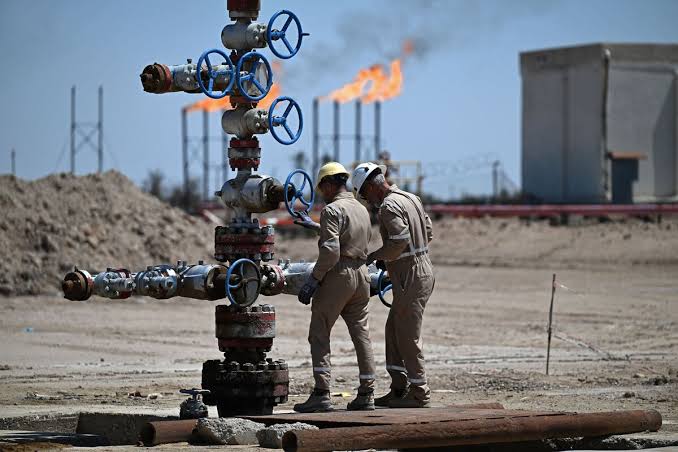
Quote: “No oil vessel, commercial contract or operational deadline is worth the loss of innocent lives; where environmental grievances are ignored and dialogue gives way to confrontation, the entire society pays a price that no compensation can adequately erase.”

Quote:”The value of wealth is
Will and gifts are subjects
A Will is an important legal
Where documentation is
This does not mean every
Properly completed lifetime
Property owners must also
My appeal is simple: let us
-

 Niger Delta12 hours ago
Diri Restates Stance On Lagos-Calabar Coastal Highway
-

 Niger Delta12 hours ago
C’River, NUJ Pay Tribute To Late Guardian Editor
-

 News13 hours ago
NDLEA Recovers Tons Of Illicit Drug Consignments In Nine States
-

 Opinion12 hours ago
Checking Voter Apathy In Nigeria’s Electoral Process
-

 Sports9 hours ago
Nigerian Trio Target Titles At PFL Africa Finals
-

 Education10 hours ago
FCE Yola Graduates 3,555 Teachers , Seeks Upgrade to University
-

 Politics9 hours ago
2027: DICKSON’S EX-ALLY VOWS TO WORK AGAINST NDC INTEREST IN BAYELSA
-

 Politics9 hours ago
2027: GROUP PLEDGES 40,000 SUPPORTERS FOR COALITION CANDIDATES IN RIVERS