
Nation
THE STATES

Adamawa
The Rural Information and Communication Technology Centre (RITC) in Mubi, Adamawa, has trained 30 unemployed youths from Mubi North Local Government Area of the state.
The Manager of the centre, Malam Abdulkareem Abubakar, told newsmen in Mubi on Monday that the 30 were trained in Computer Appreciation and Software Application.
He said that the graduates were exposed to various aspects of IT during the three months training.
Established under the Federal Government’s Rural Information and Communication Technology (RICT) scheme, Abubakar said the centre was designed to provide training and enhance IT development at the grass-roots level.
Bauchi
No fewer than 100 suspected political thugs on Monday in Bauchi surrendered their weapons and promised to turn a new leaf.
The youths gathered at Mallam Goje Enclave in Bauchi Metropolis to surrender their weapons and promised to shun political violence.
The youths confessed to previous crimes, which they committed, at the forum organised by one Alhaji Uba Boris and attended by Hajiya Hawa Yuguda, Wife of the State Governor.
Boris said most of the youths indulged in political violence locally known as “sara suka” (a group that specialises in killing people along the north-eastern part of the country).
He attributed their renouncing of violence to efforts made by the government to empower youths.
Borno
The Borno State Chapter of the Christian Association of Nigeria (CAN) yesterday, called on the State Government to address the killing of innocent people in the state urgently.
The Chairman of the chapter, Rev. Yuguda Mdurvwa, made the call while addressing newsmen in Maiduguri.
Mdurvwa pointed out that the Christian community in the state had suffered great losses in recent times, following attacks by unidentified gunmen.
“A number of churches, clergy men and other Christians have been killed in recent times in cold blood in Maiduguri.
FCT
Mrs Fidelia Njeze, the Minister of Aviation, on Monday in Abuja gave a six-week ultimatum to the Committee on the Removal of Disabled Aircraft to submit its report.
Njeze gave the ultimatum during the inauguration of the 12-member committee, chaired by Capt. Mohammed Ruma, the Director, Safety and Technical Policy Department of the ministry.
“The purpose of this gathering is to formally bring together professionals and stakeholders to outline the responsibilities to manage the removal of disabled aircraft as it is consistent with safety and security of aircraft and airport operations.
Jigawa
Governor Sule Lamido of Jigawa has commended the Nigerian military for its contributions to peacekeeping operations in the West African sub-region.
Receiving members of the Course 33 of Armed Forces Command and Staff College, Jaji, on Monday in Dutse, Lamido said the Nigerian military had played significant roles in ensuring peace among African countries.
He said the military also ensured that the country remained one, united and an indivisible entity.
“To be frank, the military has displayed uncommon brotherhood for its African brothers in ensuring that peace prevails on the continent each time they are deployed to any troubled state,” he said.
Kaduna
The Minister of Defence, Mr Adetokunbo Kayode, on Monday in Jaji, Kaduna State, called for adequate media coverage of Nigerian contingents on peace support operations.
The minister, who was represented by the Army Director of Information, Brig.-Gen. Chris Olukolade, made the call at the opening ceremony of a capacity building workshop for defence correspondents in Jaji.
Katsina
The Public Relations Officer (PRO) of CPC in Katsina State, Alhaji Aliyu Gidado, has alleged the registration of ineligible and foreign persons in some parts of the state.
Gidado told newsmen after a closed-door meeting of the 34 local government chairmen of the party in Katsina on Monday that some Nigerians were registered in Mai’adua Local Government Area.
He also alleged that some politicians were selling voters cards and bribing INEC officials to facilitate the registration of ineligible persons.
Gidado complained of inadequate registration materials in many registration units and urged INEC to address the anomalies.
The state Resident Electoral Commissioner, Alhaji Abubakar Wara, however, dismissed the allegations.
He said additional DDC machines had been received and distributed to areas where they were lacking.
Kogi
Kogi chapter of the Action Congress of Nigeria (ACN) on Monday in Abuja staged a protest at the party’s National Secretariat, requesting for fresh primaries.
A governorship aspirant, Mr. George Olumoroti, told newsmen during the protest that its essence was to pressurise the party to conduct fresh primaries.
“The prospects of ACN in Kogi state now are very high and we cannot afford to go to the polls without somebody that is popularly elected,” he said.
Olumoroti said the primaries which held on January 12 were annulled due to some malpractice and rescheduled to January 23.
He said the exercise did not hold on the day while there was no explanation by the secretariat.
Lagos
Popular Juju musician, King Sunny Ade, recently gave his life to Jesus Christ at a church service at the Redeemed Christian Church of God (RCCG) Yaba, Lagos.
Sunny Ade dedicated himself to Christ during an alter call by the RCCG’s General Overseer, Pastor Enoch Adeboye.
The Juju music maestro was among 30 worshippers at the service that rushed to the altar to be prayed for by the General Overseer.
When Adeboye asked that the persons who answered the call were to confess their sins, Sunny Ade was the first to kneel down.
During the thanksgiving, Sunny Ade expressed gratitude to God for his mercies and for making him see the day.
In his characteristic style, Sunny Ade rendered a song in Yoruba with members of his band: “If not for God, I would have been gone and buried. I thank you God for my life”.
Earlier in his message, Adeboye had told the congregation that anyone who had not given his life to Christ should not rejoice and praise God because such a person was hell-bound.
Oyo
Voter registration is set to commence in 478 polling units in Oyo State as the state INEC on Sunday took delivery of 837 Direct Data Capturing (DDC) machines.
Alhaji Ayodele Afolami, the Public Affairs Officer of INEC in Oyo, told newsmen on phone that since the voter registration started the exercise had not taken place in 478 polling units out of the 4,783 in the state.
He said that the machines had been dispatched to all the outstanding 478 units.
“The machines have been configured and all that the registration officers need do is to charge the battery and commence registration,’’ he explained.
Plateau
Five persons were killed and three others injured in a midnight attack on Sunday by unknown gunmen on Dagiru, a village in Farin Lamba, Vom, Plateau State.
The development forced an emergency security council meeting presided over by Governor Jonah Jang, where urgent measures were taken to restore peace in the crises-ridden state.
Mr James Mannok, Director of Press Affairs, confirmed the meeting in an interview with correspondents.
Mr Moses Dalyop, Chairman, Jos South Local Government Area, told correspondent that the attackers came in two Hilux vehicles and were “dressed in black jackets as soldiers”.
Sokoto
Atiku Kafur, the Assistant Inspector General of Police (AIG) in charge of Zone 10, has stressed the need for officers and men under his command to abide strictly by the ethics of policing.
Addressing officers and men of the Sokoto State Police Command on Monday in Sokoto, Kafur said it was only through abiding by the ethics that the police would effectively provide adequate security in the country.
He said the police faced the major task of mapping out a formidable strategy that would enhance security in the country as “we are approaching the April general elections’’.
Yobe
Alhaji Abbagana Tata, PDP Chairman in Yobe State, has alleged that 50 people from a border village in Niger Republic were transported into the state to register as voters.
“Forty persons were brought in to register in Korsoli and 10 others in Karigide villages in Machina Local Government Area of the state,’’ he added.
Tata, who made the allegation in Damaturu on Tuesday, accused some public officers of hiring people from Niger Republic to register as voters in the state.
“We are aware of government officials smuggling youths from Niger Republic, Borno and Kano States to register in order to boost the voter register in their favour,” he added.



As the world marked the 2026 International Day of the Girl Child on Sunday, October 11, 2026, a non-governmental organisation, Stand Up for Women Society (SWS) has intensified its campaign against child marriage, urging schoolgirls to prioritise education, protect their rights and develop skills for a better future.
The organisation joined the global observance of the day under the theme, “International Day of the Girl Child: End Child Marriage and Invest in Girls’ Rights,” with a sensitisation programme at Government Girls Secondary School, Oromenike, D-Line, Port Harcourt, Rivers State.
Led by its Vice Chairperson, Daba Benebo, the group engaged the students in discussions on the dangers of early marriage, teenage pregnancy, sexual abuse and other challenges that threaten the education, safety and development of the girl child.
Speaking during the programme, Benebo urged the students to reject early marriage and remain focused on their studies, stressing that education would empower them to make informed decisions about their lives and future.
She cautioned the girls against allowing anyone to deprive them of their right to education and dignity, advising them to report cases of harassment, abuse and other violations of their rights to the appropriate authorities.
Benebo assured the students that SWS remained available to support them whenever they encountered violations of their rights.
She also encouraged them to maintain discipline and responsible conduct while avoiding behaviours that could expose them to negative influences and jeopardise their future.
Beyond formal education, the SWS vice chairperson urged the students to acquire vocational skills that could provide additional opportunities for economic independence and help them navigate future challenges.
The sensitisation programme, enlivened by singing, dancing and to share their views and experiences on issues affecting the girl child interactive sessions, provided an opportunity for the students to share their views and experiences on issues affecting the girl child.
One of the major issues raised during the discussion was the appropriate age for marriage. While some participants maintained that 18 years was the constitutionally approved age, the discussion highlighted the need to consider not only age but also the maturity, preparedness and responsibilities associated with marriage.
The speaker stressed that marriage required adequate mental and emotional preparation, as well as the capacity to shoulder its responsibilities.
She therefore advised the students to concentrate on acquiring a sound education before considering marriage, noting that education would equip them with the knowledge and skills needed to make responsible decisions and manage family life.
The issue of teenage pregnancy also featured prominently during the question-and-answer session.
In addressing the subject, the speaker explained that pregnancy could occur even at the age of 12, using the example to underscore the vulnerability of young girls to the consequences of early sexual activity.
She advised the students to avoid sexual intercourse and prioritise their education, personal safety and future aspirations.
The discussion also examined the difficulties some girls encounter when living with hostile spouses, relatives or guardians.
Benebo encouraged the students to cultivate patience, humility and diligence, noting that these qualities could help them navigate difficult situations and build a brighter future.
However, she warned that patience and humility should never be interpreted as an obligation to endure violence, abuse or degrading treatment.
She urged girls experiencing hostile or abusive living conditions to seek help from their parents, trusted adults or appropriate support services rather than remain in environments that could expose them to physical or emotional trauma.
“When such happens, please return to your parents and engage in petty trade or learn a skill to support your education rather than stay in a hostile environment,” Benebo stressed.
The programme also underscored the importance of protecting girls from early marriage and other harmful practices that can disrupt their education, compromise their well-being and limit their opportunities in life.
It also reinforced the need for families, schools, communities and relevant organisations to work together to ensure that girls have access to education, vocational training, protection and the support they need to realise their potential.
For SWS, the message was clear: empowering the girl child begins with protecting her rights, investing in her education and equipping her with the confidence and skills to make informed choices about her future.
Stories by Kevin Nengia
The Egberipapa Foundation has unveiled a mass transit scheme aimed at easing transportation difficulties and improving connectivity among communities in the three Kalabari local government areas of Asari-Toru, Degema and Akuku-Toru in Rivers State.
The initiative, established by former Caretaker Committee Chairman of Akuku-Toru Local Government Council, High Chief Sobomabo Jackrich, popularly known as Egberipapa, is designed to make transportation more accessible and affordable for residents across the Kalabari area.
The scheme was launched on Monday, October 12, 2026, and is expected to address longstanding transportation challenges confronting residents, particularly those in riverine and hard-to-reach communities.
Communities expected to benefit from the initiative include Krakrama, Minama, Angulama, Sangama, Omekwe-Tariama and Omekwe-Ama.
The project is expected to ease movement within and beyond the Central Group area, while providing residents with a more convenient means of transportation for their daily activities.
For decades, transportation difficulties have posed significant challenges to several Kalabari communities, making movement between settlements both cumbersome and expensive. These challenges have also affected commercial activities, social interactions and access to essential services.
The introduction of the mass transit scheme is therefore expected to provide relief to residents, strengthen inter-community connections and stimulate economic activities across the benefiting communities.
Beyond improving mobility, the initiative could contribute to community development by facilitating the movement of people and goods, supporting local businesses and enhancing social and economic interactions within the Kalabari area.
As the scheme gets underway, attention will be focused on its implementation, accessibility and sustainability, as well as its capacity to deliver lasting transportation benefits to the target communities.
The initiative represents a potentially significant step towards addressing transportation challenges and promoting grassroots development across the Kalabari Kingdom.

The Amaewhule family of mbodo Aluu in Ikwerre Local Government Area of Rivers State has cautioned members of the public against entering into any land transaction involving a disputed property known as “Ada Oro Fam Land,” located behind the OPM Church along Airport Road.
The family, through its legal counsel, Barrister Ndubuisi Agumagu, issued the warning amid an ongoing legal dispute over the ownership and control of the property, which is said to comprise more than 900 plots of land.
The matter is currently before the Isiokpo High Court of Rivers State in a suit numbered IHC/246/CS/2026, presided over by Justice Sobere Biambo.
The claimants in the suit include Chief Green Amaewhule and others, while Fabulous Amaewhule and Odibola Properties are listed among the respondents.
Counsel to the Amaewhule family, Barr Ndubuisi Agumagu, advised prospective land buyers and members of the public to exercise caution and refrain from purchasing any portion of the disputed property pending the determination of the case by the court.
According to the legal counsel, the property is a family estate belonging collectively to the Amaewhule family, and no individual member of the family has the authority to unilaterally dispose of portions of the land.
The counsel specifically maintained that Fabulous Amaewhule, one of the respondents in the suit, does not have the legitimate authority, according to the family’s position before the court, to sell portions of the disputed property.
The family further warned that anyone who proceeds to purchase land from the respondents while the matter remains before the court would be doing so at their own risk.
It stressed that such buyers could potentially lose their investments should the court eventually deliver judgment against the validity of the transactions.
The legal team said the warning became necessary to prevent unsuspecting members of the public from committing their resources to a property whose ownership and right of disposition are currently the subject of judicial determination.
The family also urged prospective investors, developers and land buyers to conduct proper legal inquiries and obtain independent verification of the status of the property before committing funds to any transaction relating to it.
The Amaewhule family said its position was intended to protect members of the public from possible financial losses and further legal complications while the case remains sub judice, stressing that interested parties should await the final determination of the court.
Akujobi Amadi
-

 Niger Delta4 hours ago
Diri Restates Stance On Lagos-Calabar Coastal Highway
-

 Niger Delta4 hours ago
C’River, NUJ Pay Tribute To Late Guardian Editor
-
 News5 hours ago
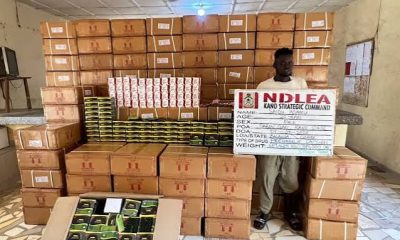
NDLEA Recovers Tons Of Illicit Drug Consignments In Nine States
-

 Opinion4 hours ago
Checking Voter Apathy In Nigeria’s Electoral Process
-

 Oil & Energy5 hours ago
S&P Global Warns Hormuz Energy Shock Could Become A Global Food Crisis
-

 Oil & Energy5 hours ago
Gas Reserves Hit 215 Trillion Cubic Feet
-

 Rivers4 hours ago
Education Ministry Condemns Female Virginity Testing In CHS, Taabaa
-

 Oil & Energy5 hours ago
NCDMB, Manufacturers Commit To Scale Up Local Oil And Gas Production Components