
Nation
THE STATES

Adamawa The Adamawa State Fadama Office says it has supported three fish farmers groups with inputs worth N408,000. Malam Dalhatu Girei, the communication officer of the programme told newsmen that the objective was to encourage fish farming and increase the income of the groups. Girei said the office was currently working with 19 fish farmer groups across the state. He identifed one of the three groups being supported as Fada B women fish farmers in Tola village in Mayo Belwa Local Government Area. According to him, 1,800 fingerlings, 300 bags of feeds and 20 sachets each of antibiotic and stress drugs were given to the group. FCT The Congress for Progressive Change (CPC) has constituted an eminent persons committee to proffer ways of addressing disputes that arose from its just concluded primaries. This is contained in a statement signed by Mr Buba Galadima, the National Secretary in Abuja. The statement stated that approval for the constitution of the committee was granted by the National Executive Committee of the party for some states in the federation. It added that members of the committee in some cases were not card carrying members of any political party. The statement quoted Galadima as saying that the essence of the committee was to “harmonise contestants in some constituencies and to advise the party on the way forward’’. The committee, according to the statement, is expected to examine the social and political environment and assess its dynamics and variables. This, it said, was with a view to recommending candidates that would ensure electoral victory in each constituency. Gombe Dr Abu Muazu, the Head of Public Health Department at Federal Medical Centre, Gombe, has advised adults to drink, at least, five litres of water daily. Addressing patients at the hospital last Thursday, Muazu said the measure would go a long way to aid the physiological system, especially the kidney. “The medically recommended quantity of water for every adult is a minimum of five litres daily. “This helps a lot in cleansing the digestive system, making it easier for the kidney to discharge its responsibilities without any stress. According to him, the recommended quantity of water for children depends on their weight. The doctor, however, said that women, who were practising exclusive breast feeding, were exempt from the practice. Muazu condemned the practice by some people, who ate solid food without drinking enough water. Jigawa The Emir of Dutse, Alhaji Mohammadu Sanusi, has appealed to his subjects to turn out en masse and participate in the ongoing voter registration exercise. Sanusi, who gave the charge last Thursday in Garu-Kudu ward in Dutse where he registered, advised residents in his domain to exercise patience no matter how long it would take to register. He noted that voting was one way Nigerians could exercise their civic responsibility, saying voters would have the opportunity to elect leaders of their choice. Sanusi also enjoined husbands to allow their wives to register in order to promote gender equity. He appealed to politicians not to engage in acts that would jeopardise the unity and mutual co-existence among the people. Kaduna The Police in Kaduna say they are yet to arrest one Mubarak, alias Best Keeper and seven others, who allegedly murdered one Sunday Onoja. Onoja, 25, a sachet water vendor, was last Tuesday allegedly stabbed to death by Mubarak at Kabala Doki, Kaduna, at about 5 p.m. The Police Public Relations Officer, Malam Aminu Lawal, who confirmed the incident to newsmen in Kaduna, said the police were still investigating the incident. Lawal said that the parents of the suspects were being held by the police, but that they were in “protective custody” against possible attack from the relations of the deceased. Kano Governor Ibrahim Shekarau of Kano State last Thursday, urged the Nigeria Association of Women Journalists (NAWOJ), to make nation building its priority. He made the call in Kano at the national delegates’ conference of NAWOJ, which has the theme: “Media Women and Development: The Challenges of Achieving the Millennium Development Goals (MDG)”. “Your role is more like that of a middleman. You educate the general public on government activities and vice-versa. “It is good to assess yourselves and ensure that you engage in nation building so as to promote unity and peaceful co-existence among Nigerians in order to move the country forward,” he said. Earlier, Alhaji Haruna Dederi, the state Commissioner for Information and Sports, had remarked that women had the capacity to make a difference in any country. Katsina The Katsina State Police Commissioner, Alhaji Sabo Ringim, last Friday warned politicians in the state against using thugs to foment trouble during election campaigns. Ringim gave the warning in Katsina at a joint meeting of various security agencies on election security. He said that the command would not allow thugs to breach the peace during any political activity, stressing that it would deal with anybody found wanting. According to him, the state command is prepared to ensure the security of lives and properties during and after the general elections. The commissioner called on politicians in the state to give the police all the necessary support and cooperation to ensure violence-free election campaigns in the state. In his remark, Alhaji Abubakar Wara, the state Resident Electoral Commissioner, expressed appreciation with the security provided at all the registration centres across the state. Kebbi The Kebbi State Government has disbursed N1.98 billion to its 21 local government areas for the January monthly allocation. Alhaji Abubakar Kardi, the Commissioner for Local Government and Chieftancy Affairs, told newsmen in Birnin Kebbi last week that N2.1 billion was received by the state from the Federal Government for the month. He said that in accordance with the provisions of the law, some statutory deductions were made and N527.9 million, representing 25 per cent, was allocated for rural infrastructure projects. Kardi said N357.4 million was for payment of UBE primary school teachers, N45 million for local government service commission and N11.6 million for servicing of joint account committees. The commissioner said N4.2 million was allocated for social security welfare, while N6.3 million was for the army and police joint patrol. He said that Birnin Local Government Area received the highest allocation of N65.8 million, while Zuru Local Government Area got the lowest allocation of N39.4 million. Kardi advised the councils to utilise the resources judiciously in executing projects that had direct positive impact on the people, warning that strict punitive measures would be taken against officials who diverted or mismanaged the funds. Lagos The Director-General, Standards Organisation of Nigeria (SON) Dr John Akanya, has appealed to importers to be patriotic when importing goods. Akanya told our correspondent in Lagos last Thursday at the presentation of a quality certificate tagged “ISO 2008” to Dangote Cement Plc that in spite of efforts to stamp out substandard products, some businessmen still imported such goods. He said the trend was his major regret, noting that “despite the organisation’s milestone achievements under my tenure, some unscrupulous importers still cut corners and import substandard products. “It’s regrettable that some importers still circumvent the law and import substandard products that can destroy the lives of innocent Nigerians. “My vision is for the average Nigerian to abide by standards, be orderly as far as quality standard is concerned and make consumers have value for their money. Ogun The Ogun State Government has approved 150 per cent salary increase to its medical and health workers in line with the Enhanced Medical and Health Workers Salary Scale (OGEHESS). Mr Sina Kawonise, the Commissioner for Information and Orientation, announced this in a statement issued last Friday in Abeokuta. The commissioner said that the gesture was aimed at boosting the morale of the medical and health workers. The new wage (150 per cent increase) has increased the monthly wage bill of the health sector in the state by N300 million. “This increase is the fourth for medical and health workers since the inception of the present administration in May 2003,’’ the commissioner noted. He said that to further demonstrate its concern for the health of the people, the government had established new or rehabilitated existing general hospital in each of the 20 local government areas. Kawonise added that government had also provided one health centre, complete with the appropriate manpower and state-of-the-art equipment in each ward. “From 1,175 in 2003, workers in the health sector in the state increased to 3,085 by 2010, while the number of hospitals increased from 26 to 29. Sokoto No fewer than 100 patients of the Ammanawa Leprosy Hospital in Dange-Shuni Local Government Area of Sokoto State, have been registered in the ongoing voter registration. Mr. Moses Kayode, a Registration Officer at the hospital’s registration unit, told newsmen there was a large turn-out of the patients to exercise their civic responsibility. He said that all the materials needed for the conduct of exercise had been provided by INEC. He said: “I don’t have a problem registering eligible voters as all the materials needed for the exercise are in good condition.” Most of the registration centres in Dange-Shuni and Tureta Local Government Areas witnessed large turn-out of people. Alhaji Mande Usman, Chairman of Tureta Local Government, told The Tide in Tureta, that already the council had embarked on a campaign to mobilise voters to participate in the exercise.



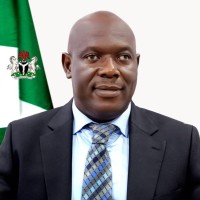
The Hydrocarbon Pollution Remediation Project (HYPREP) has commemorated the 15th anniversary of the release of the United Nations Environment Programme (UNEP) Environmental Assessment Report on Ogoniland, reaffirming its commitment to restoring the environment and improving the livelihoods of affected communities.
In a statement signed by the Project Coordinator, Prof Nenibarini Zabbey, to commemorate the anniversary, HYPREP described the anniversary as a significant milestone in Nigeria’s environmental restoration efforts, noting that the project has made remarkable progress in implementing the recommendations of the landmark UNEP report released on August 4, 2011.
The UNEP report had revealed extensive oil pollution across Ogoniland, severe environmental degradation, and serious public health risks resulting from decades of petroleum operations. It also recommended an initial $1 billion fund to commence the cleanup of the affected communities.
According to HYPREP, the Federal Government formally launched the Ogoni clean-up in 2016, while the Project Coordination Office was established in 2017 to drive the implementation of UNEP’s recommendations.
Zabbey said the current administration has continued to prioritise the project under the Renewed Hope Agenda.
Providing an update on the cleanup, the Project Coordinator disclosed that 30 of the 65 contaminated sites identified by UNEP have been fully remediated, while work is ongoing at several medium- and high-risk locations. It also stated that more than 1.5 million mangrove seedlings have been planted as part of what it described as the world’s largest restoration of oil-degraded mangroves, with over 1,000 hectares of shoreline already rehabilitated.
Zabbey further revealed that 49 Ogoni communities have been connected to potable water schemes through multiple water projects and booster stations aimed at providing safe drinking water across the region.
In the health sector, he said the 100-bed Ogoni Specialist Hospital in Kpite and the 43-bed Cottage Hospital in Buan are nearing completion, adding that several existing health facilities have been upgraded with modern medical equipment, while five ambulances have been donated to improve emergency healthcare services. The Project Coordinator also disclosed that a three-year human health biomonitoring study is being conducted in collaboration with the World Health Organization’s International Agency for Research on Cancer (IARC).
On economic empowerment, Zabbey stated that the Project has created more than 8,000 direct jobs and trained thousands of Ogoni youths and women in various vocational and technical skills, including software development, cybersecurity, aviation, commercial diving, seafaring, mechatronics, and creative arts. The project also reported awarding scholarships to more than 1,000 students, providing grants to small businesses, and supporting persons living with special needs through skills acquisition programmes.
The statement further highlighted ongoing legacy projects, including the Ogoni Power Project and the Centre of Excellence for Environmental Restoration, which it said is about 96 per cent complete. HYPREP also welcomed the recent designation of the Ogoni Wetland as a Ramsar Site of International Importance and pledged to continue promoting biodiversity conservation and sustainable management of the ecosystem.
Marking the anniversary, Zabbey said the progress achieved over the past 15 years demonstrates the collective commitment of government, development partners, stakeholders, and local communities to restoring Ogoniland. He called for renewed collaboration to sustain the cleanup effort, promote environmental sustainability, and support the long-term development of the region. 3
-

 News2 days ago
RSG Targets Nine Million Residents in Mosquito Net Distribution Campaign
-

 Oil & Energy2 days ago
Aiyedatiwa Signs New Electricity Bill
-

 Maritime2 days ago
Marine Minister Commends President Tinubu On NPERA Bill Assent
-

 Oil & Energy2 days ago
NLNG Commissions Research And Innovation Centre In RSU
-

 News2 days ago
KenPoly Holds Eight Convocations, August 29
-

 News2 days ago
RMAFC Completes Revenue Sharing Review, Proposes New Pay
-

 News2 days ago
RSG Begins Another Phase of Projects Commissioning Today
-

 Maritime2 days ago
NAGAFF Petitions IGP Over Alleged Maritime Police Harassment