Connect with us

Rivers

Stopping HIV Infection By 2030 Still Long Way Off – ASWHAN

Published

on

Amid growing pessimism over whether Nigeria can meet the Joint United Nations Programme On HIV/AIDS (UNAIDS) target of eliminating new HIV inffections by 2030, the Association of Women Living With HIV/AIDS in Nigeria (ASWHAN) has said it would be difficult to attain the target in Nigeria, nay Rivers State.

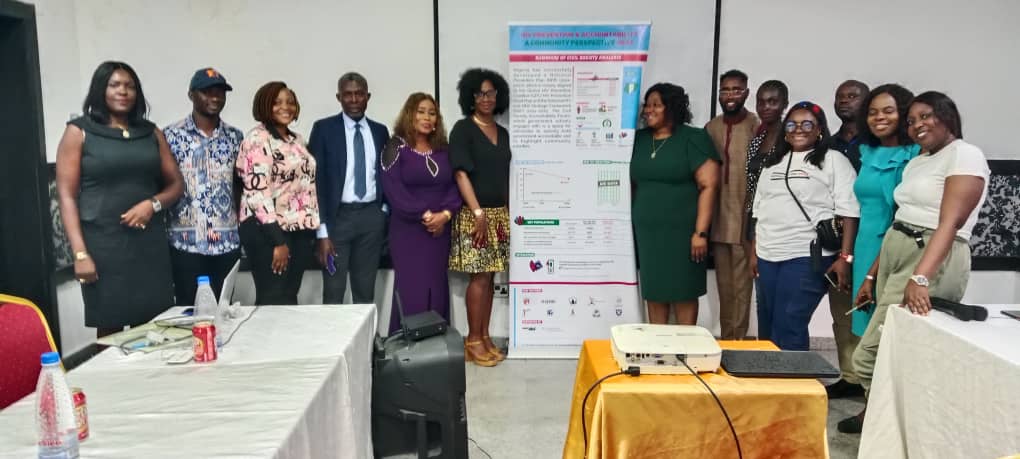
The Coordinator of ASWHAN in Rivers State, Mrs. Fortune Kalio-Faladu, made this disclosure in an exclusive interview with The Tide, recently, during a meeting of key stakeholders involved in HIV prevention held in Port Harcourt, organised by the ASWHAN, in collaboration with the Coalition of Sex Workers Rights Movement (COSWRIM) in Nigeria.

She said, going by revelations from presentations and dicussions during the meeting, achieving the 2030 target would not be feasible, except more deliberate drastic actions are taken by stakeholders, particularly Government, at all levels.

“From our discussions today, we still have a long way to go. But I think if we, as stakeholders, and members of the State, particularly the government, can actually come to do what we have to do, in the right proportion and at the right time, we can still achieve the 2030 target”, she stated.

On the part of individuals, she said people would need to come out to ascertain their HIV status, and be on treatment, if they turn out positive, and those who are negative would have to abstain from habits that could make them positive.

“For those that are positive, they should be on drugs, because I know that once you take your drugs correctly and consistently over a period of time, you will be virally suppressed, and once you’re virally suppressed, you cannot transmit the virus”, she explained.

For stakeholders, she called for more all round commitment: to meetings, increase efforts to not only create awareness, but to also follow-up on drives to reach targeted vulnerable groups to HIV infection.

She also said beyond these, the Government has a greater part to play, if the 2030 tagget for zero HIV infection can be achieved.

A key way to do this, she said, is for the government to come up with a disciplinary group that would act as spy in order to enforce discrimination of HIV positive persons.

“The truth be told, when we talk about prevention, if I’ll be stigmatized and discriminated upon, I don’t think I will come out from my hiding. I’ll be in my house, possibly without taking the necessary drugs.

“But if the Government is there, and these positive persons are aware that they’re being protected, then they’re more likely to come out of their hiding, because they know they can get jobs for which they are qualified, and also attain societal status without discrimination”.

In her presentation at the meeting, titled, “HIV Prevention and Accountability: A Community Perspective, 2023”, the ASWHAN Coordinator delved into such areas as efforts made by Civil Societies Organisation’ (CSOs) in HIV prevention; and Progress against the 2025 roadmap for CSOs, which covered Evidence-driven assessment of HIV prevention programme needs and barriers, Precision Prevention Approach, country investment needs, HIV Prevention political leadership, community-led HIV prevention services, remove social and legal barriers, promote HIV prevention integration, new HIV prevention technologies, Real-time prevention programme monitoring, and Accountability for HIV Prevention.

Buttressing the stand of the ASWHAN Coordinator on the feasibility of the 2030 target and the way forward, the Communication Officer of the COSWRIM in Nigeria, Mr. Vena Daniel, re-echoed the need for more efforts by key stakeholders.

He said, “Based on our meeting today, I will say that we are still very far away from attaining that goal, because, looking at some of the laws and practices and fragmentations within the CSO movement, you’ll see that we’re still far away from it.

“For instance, it’s just today we’re realising that a unique group has been excluded from the HIV/AIDS implementation space, that is, people who are in confined space, such as correctional homes (prison), frequent travellers, such as drivers, Police, and other security personnels.

“Implementation has been going on over the years, but these groups have been neglected”.

He, therefore, suggested that given the present scenario, there’s the need to extend the target year to 2035, within which more deliberate efforts should be made in HIV preventive efforts, considering that it’s barely six years to 2030.

“If we can extent it to 2035, we can begin to consider it. But, for now, 2030 is not feasible. Looking at the level of work that still needs to be done, I don’t think by 2030 we can achieve zero HIV infection “, he emphasized.

Sogbeba Dokubo

Continue Reading

Niger Delta

MNCH Week Begins Today  … As Consultant Urges Parents To Vaccinate Children, Others

Published

on

The second phase of the Optimised Maternal Newborn Child Health Week (oMNCHW) is billed to hold from today to Thursday, July 12, 2026.
In an interview with the Behavioural Change Consultant for the Rivers State Primary Healthcare Management Board, Sandra James, she disclosed that although the programme is tagged Maternal Newborn Child Health (MNCH) Week, it is not for only children.
“We are looking at everybody. That we tagged  it MNCH does not make it strictly for mother and child. It’s a one-stop-shop, as we usually call it, for mother, children, adolescents, and fathers.
“Everybody can work into a Primary Healthcare facility, because it’s going to be a major facility-based activities: you just work in for your deworming exercise for your children under five; for your sexual gender-based violence services for girls and boys that are sexually assaulted; for Family Planning (FP) for both adolescent and everybody of reproductive age; for free delivery during the week; and for nutrition in which you check the children who are malnourished and you ensure that their nutritional status are improved through counselling, through dispensing of nutritional therapeutic ready-to-eat meal”, she said.
She continued that it also include malaria treatment, and HIV treatment counselling to prevent maternal child transmission. All of these will be available during the one week period of he programme.
She said, “any person that works into our health centres within the period in the 23 local government areas will access the services.
“The Executive Secretary, Dr. Chituru Adiele, has ensured that all the 23 LGAs have their health facilities up  and running to ensure that there is, and will be, a successful maternal health week.”
She adviced parents to access the facilities within the period, saying the services “are not mainly there for mother’s to go and deliver their babies, they are not mainly for immunisation services, they’re not there for antinatal care, they’re not for post-natal services. It’s for everybody.
“That’s your first place of call to ensure that you’re healthy. Per adventure, you go to these health facilities, and anything is beyond them, they have been trained to know when to refer.
“So, please, minimise self-medication, herbal medication, and ensure that you utilise the services of these primary healthcare centres in our communities.”
Speaking on areas currently experiencing diphtheria in Rivers State, the State Immunization Officer, Dr. Joseph Urang, said the focus is on Oyigbo and Agbandele, both in Oyigbo and Obio/Akpor Local Government Areas, respectively.
According him, so far, one case in Oyigbo, and two cases (twins) in Agbandele of clinically diagnosed diphtheria have been identified, with one of them already dead, due to the fact that the twins, who are four years old, are both zero dose, while the single case in Oyigbo (15 years) has however been vaccinated in childhood.
Dr. Urang explained that when the team of health officers moved into both areas, the parents resisted their children being immunised, and only succumbed after much persistence and persuasion by the health team.
Explaining the diphtheria vaccine, he said it is part of he pental vaccines: “what happens is that the World Health Organisation (WHO) has said that at between 3 and 5, the effect actually weans out. That’s why they recommend that when you give your child the vaccine, you have a booster dose at 5, 10, and 15 years.
He said after the booster dose at 15 years, the person will have protection for life.
Diphtheria, he explained, “is a bacteria, and it has strong affinity to the respiratory system. It’s an infection in the respiratory system. It’s all around us, in the air we breadth.
“That’s why it requires continuous vaccination, because once you stop vaccination, it comes back to infect our system. The way we, as humans, are struggling to survive, that’s how these organisms are struggling to survive.”
He urged everybody to avail themselves the opportunity of accessing the available services in health centres close to them.
By: Sogbeba Dokubo
Continue Reading

Rivers

Ajumogobia Seeks Stronger NDDC, Faults Governance

Published

on

Former Minister of Petroleum Resources and Foreign Affairs, Henry Odein Ajumogobia, has called for the strengthening of the Niger Delta Development Commission (NDDC) as the principal agency for coordinating development efforts in the Niger Delta, warning that fragmented governance structures have continued to impede meaningful progress in the oil-rich region.
Speaking as keynote speaker at the NDDC Law and Development Summit in Port Harcourt, Ajumogobia said the commission must be empowered to function as the central coordinating institution among the various agencies, governments and organisations involved in the region’s development.
He lamented that instead of serving as the lead development agency, the NDDC had become merely one of several actors operating within a crowded and poorly coordinated framework.
“Rather than functioning as the central coordinating body, the NDDC has become one layer in a crowded ecosystem where responsibilities are diffused and unclear.
“This has produced patterns of duplication in which multiple actors work at cross-purposes while oil-producing communities remain underdeveloped”, he said.
According to him, the challenges confronting the commission are not solely administrative but deeply structural, arising from overlapping mandates among federal institutions, state governments, private sector operators, corporate social responsibility initiatives and other intervention programmes.
Ajumogobia stressed that addressing these institutional bottlenecks was critical to unlocking sustainable development across the Niger Delta.
Also speaking, Chairman of the NDDC Governing Board, Chiedu Ebie, described the relationship between law and development as fundamental, noting that legal frameworks remain essential tools for economic transformation, environmental sustainability and the protection of citizens’ rights.
He said the summit’s theme, “The Role of Law in Driving Sustainable Development in the Niger Delta”,  reflected the urgent realities confronting communities in the region.
“For the people of the Niger Delta, a region whose vast natural wealth has for too long stood in painful contrast to the poverty and neglect of its communities, these are not abstract ideals. They are urgent, lived realities”, Ebie said.
He added that the commission had adopted innovative approaches to navigate development challenges, strengthen governance systems and accelerate project delivery within the ambit of the law.
In his opening remarks, the Managing Director of the NDDC,  Dr. Samuel Ogbuku, said sustainable development extended beyond physical infrastructure to include economic growth, social inclusion and environmental protection.
Ogbuku noted that the current management had embarked on deliberate reforms aimed at repositioning the commission from a transactional institution to a transformational development agency.
According to him, the commission engaged global advisory firm, KPMG, to review its internal processes and develop new corporate governance policies that now guide its operations.
He disclosed that the NDDC had also overhauled its procurement processes and digitised nearly 90 per cent of its operations to enhance transparency, efficiency and accountability.
“We have implemented mechanisms for contractors and stakeholders to sign and execute contracts electronically from the comfort of their homes and offices, with minimal physical contact”, he said.
The Managing Director explained that the summit was convened to explore ways of strengthening the legal and institutional frameworks necessary for the commission to sustain ongoing reforms and deepen development interventions across the Niger Delta.
Earlier, Director of Legal Services at the NDDC, Victor Arenyeka, said the summit was designed to provide a platform for policymakers, legal practitioners, development experts, traditional institutions, civil society groups and other stakeholders to examine how law, governance, accountabilitqy and policy implementation could drive sustainable regional transformation.
He noted that as a statutory institution, the activities of the NDDC are governed not only by its Establishment Act but also by several other laws, regulations and policy frameworks that shape its operations and development mandate.
Continue Reading

Rivers

Police arrest 3 suspects over killing of driver in Rivers

Published

on

The Police Command in Rivers State has arrested three suspects in connection with the alleged murder of a commercial driver, Mr. Christopher Akpabio, and recovered his stolen vehicle.
The command’s spokesperson, ASP Blessing Agabe, told journalists in Port Harcourt that Akpabio, 55, an indigene of Akwa Ibom State, was reported missing on May 22.
Agabe said preliminary investigations revealed that the suspects hired the victim at Garrison Park in Port Harcourt under the pretence of travelling to Asarama Community in Andoni area for a traditional marriage ceremony.
“The suspects allegedly lured the victim to Asarama Community, where they murdered him and dispossessed him of his vehicle”, she said.
The police spokesperson identified the stolen vehicle as a black Daihatsu Hiject minibus with registration number BGM 328 DA.
She said further investigations led to the discovery of the victim’s remains buried in a shallow grave in Asarama Community.
Agabe stated that the three suspects, aged between 30 and 45 years, were indigenes of Andoni and Okrika Local Government Areas of the state.
She explained that operatives of the command’s Violent Crime Response Unit, Diobu, launched an intelligence-driven investigation after the incident was reported.
“The operation culminated in the arrest of the three suspects on May 28. The stolen minibus was recovered during the operation”, she said.
She added that the remains of the deceased had been deposited at the University of Port Harcourt Teaching Hospital mortuary for preservation and further examination.
Agabe said investigations were ongoing, while efforts had been intensified to apprehend a fourth suspect who remained at large.
She urged residents to exercise caution when  entering transportation or business arrangements with unfamiliar persons, particularly for long-distance or late-night trips.
“Commercial drivers are also advised to inform their family members, colleagues or trusted associates before embarking on such journeys,” she said,
The police spokesperson encouraged members of the public to promptly report suspicious persons or activities to the nearest police station.
She reaffirmed the command’s commitment to protecting lives and properties and ensuring that criminal elements have no safe haven in the state.
Continue Reading

Trending