Connect with us

Rivers

Ajumogobia Seeks Stronger NDDC, Faults Governance

Published

on

Former Minister of Petroleum Resources and Foreign Affairs, Henry Odein Ajumogobia, has called for the strengthening of the Niger Delta Development Commission (NDDC) as the principal agency for coordinating development efforts in the Niger Delta, warning that fragmented governance structures have continued to impede meaningful progress in the oil-rich region.
Speaking as keynote speaker at the NDDC Law and Development Summit in Port Harcourt, Ajumogobia said the commission must be empowered to function as the central coordinating institution among the various agencies, governments and organisations involved in the region’s development.
He lamented that instead of serving as the lead development agency, the NDDC had become merely one of several actors operating within a crowded and poorly coordinated framework.
“Rather than functioning as the central coordinating body, the NDDC has become one layer in a crowded ecosystem where responsibilities are diffused and unclear.
“This has produced patterns of duplication in which multiple actors work at cross-purposes while oil-producing communities remain underdeveloped”, he said.
According to him, the challenges confronting the commission are not solely administrative but deeply structural, arising from overlapping mandates among federal institutions, state governments, private sector operators, corporate social responsibility initiatives and other intervention programmes.
Ajumogobia stressed that addressing these institutional bottlenecks was critical to unlocking sustainable development across the Niger Delta.
Also speaking, Chairman of the NDDC Governing Board, Chiedu Ebie, described the relationship between law and development as fundamental, noting that legal frameworks remain essential tools for economic transformation, environmental sustainability and the protection of citizens’ rights.
He said the summit’s theme, “The Role of Law in Driving Sustainable Development in the Niger Delta”,  reflected the urgent realities confronting communities in the region.
“For the people of the Niger Delta, a region whose vast natural wealth has for too long stood in painful contrast to the poverty and neglect of its communities, these are not abstract ideals. They are urgent, lived realities”, Ebie said.
He added that the commission had adopted innovative approaches to navigate development challenges, strengthen governance systems and accelerate project delivery within the ambit of the law.
In his opening remarks, the Managing Director of the NDDC,  Dr. Samuel Ogbuku, said sustainable development extended beyond physical infrastructure to include economic growth, social inclusion and environmental protection.
Ogbuku noted that the current management had embarked on deliberate reforms aimed at repositioning the commission from a transactional institution to a transformational development agency.
According to him, the commission engaged global advisory firm, KPMG, to review its internal processes and develop new corporate governance policies that now guide its operations.
He disclosed that the NDDC had also overhauled its procurement processes and digitised nearly 90 per cent of its operations to enhance transparency, efficiency and accountability.
“We have implemented mechanisms for contractors and stakeholders to sign and execute contracts electronically from the comfort of their homes and offices, with minimal physical contact”, he said.
The Managing Director explained that the summit was convened to explore ways of strengthening the legal and institutional frameworks necessary for the commission to sustain ongoing reforms and deepen development interventions across the Niger Delta.
Earlier, Director of Legal Services at the NDDC, Victor Arenyeka, said the summit was designed to provide a platform for policymakers, legal practitioners, development experts, traditional institutions, civil society groups and other stakeholders to examine how law, governance, accountabilitqy and policy implementation could drive sustainable regional transformation.
He noted that as a statutory institution, the activities of the NDDC are governed not only by its Establishment Act but also by several other laws, regulations and policy frameworks that shape its operations and development mandate.
Continue Reading

Rivers

National Health Council’s 67th Meeting Ends In Lafia … As RIVCHPP Participates Fully

Published

on

The 67th National Council on Health (NCH) meeting, Nigeria’s highest health policy-making body, has ended in Lafia, Nasarawa State, after bringing together key stakeholders across the country’s health sector to deliberate on existing challenges and strategies for improving healthcare delivery.
The meeting, held under the theme, “Commitment to Results: Delivering Equitable Healthcare for All Nigerians,” provided a platform for participants to review critical issues affecting the health sector and explore practical approaches to strengthening healthcare services nationwide.
At the end of the deliberations, participants emphasised that achieving sustainable progress in the health sector requires effective policy implementation, accountability and sustained commitment to ensuring that all Nigerians have access to quality, affordable and equitable healthcare services.
The Rivers State Contributory Health Protection Programme (RIVCHPP), led by its Executive Secretary/Chief Executive Officer, Dr. Vetty Agala, participated in the meeting alongside other health sector leaders and stakeholders from across the federation.
On the sidelines of the National Council on Health meeting, the Forum of State Social Health Insurance Agencies (SSHIA) Chief Executive Officers also held a separate meeting at the office of the Executive Secretary of the Nasarawa State Health Insurance Agency in Lafia. The meeting was chaired by the Forum’s Chairman, Mr. Safana Mohammed.
At the Forum’s meeting, Dr. Vetty Agala, who serves as the Forum’s Secretary-General and Executive Secretary of RIVCHPP, actively participated in discussions focused on advancing Universal Health Coverage (UHC) through stronger alignment of state health insurance schemes with primary healthcare development and climate resilience initiatives.
The discussions also explored sustainable financing mechanisms under the National Health Sector Renewal Investment Initiative (NHSRII) framework, with particular emphasis on protecting vulnerable households affected by climate-induced health and economic disruptions from catastrophic out-of-pocket healthcare expenditures.
Participants highlighted the disproportionate impact of climate-related events on poor and vulnerable populations, noting that such disruptions often deepen existing economic hardships, particularly when affected households are confronted with unexpected health emergencies.
The Forum noted the strategic role of state health insurance agencies in providing targeted financial risk protection and ensuring that vulnerable populations and communities have access to affordable healthcare without suffering financial hardship.
RIVCHPP’s participation in the meeting underscores the Programme’s continued engagement in national health policy discussions and its commitment to strengthening health insurance coverage, promoting financial risk protection and advancing Universal Health Coverage in Rivers State and Nigeria at large.
Continue Reading

Rivers

2027: Kalabari Renaissance Foundation Chair Urges Political Consciousness, Unity

Published

on

The Chairman of the Kalabari Renaissance Foundation, Harry Awolayeofori Macmorrison, has called on Kalabari people to strengthen their political consciousness, pursue meaningful representation, and actively participate in governance ahead of the 2027 general elections.
He made the call during the Third Unified Kalabari New Year Festival held on Monday, November 16, 2026, in Minama, Asari-Toru Local Government Area of Rivers State.
Speaking under the theme, “Unity of Heritage, Power of the Tides: Advancing Kalabari Prosperity to the World”, he stressed that cultural identity must go handi-in-hand with political awareness, collective responsibility and strategic engagement in governance.
He clarified that the Kalabari Renaissance Foundation was neither a political party nor an appendage of any political organisation, but stated that the Kalabari people must become more conscious of their political interests and developmental aspirations.
He urged them to participate responsibly in the electoral process, make informed choices and demand accountability, equitable development and meaningful political representation.
Macmorrison further called for unity across Kalabari communities, urging the people to rise above political, religious and communal differences.
He emphasised that the development of one community should be the collective concern of all, noting that the progress of Buguma should matter to Bakana, just as the advancement of Abonnema, Abalama, Minama and Elem-Kalabari should concern the entire Kalabari nation.
He said the annual festival, beyond its cultural significance, provided an opportunity to mobilise the people towards a common development agenda, particularly in education, youth empowerment, women’s development, environmental sustainability, tourism and economic advancement.
The Foundation’s Chairman also advocated greater participation of Kalabari people in governance and development planning, urging its members and committees to remain active throughout the year rather than limiting their activities to the annual festival.
The celebration attracted traditional rulers, chiefs, government representatives, cultural groups and Kalabari sons and daughters from within and outside Rivers State.
The Amanyanabo of Minama, His Royal Highness, King Dr. Iboroma Talbot Pokubo, Loku XII, delivered the royal welcome address and commended the gathering for promoting Kalabari heritage and unity.
The festival featured traditional libation, Ekine performances, Iria dances, Ikpakaa dancers, women’s cultural displays, traditional wrapper presentations and a special performance by the host community’s Omofin dancers.
Macmorrison also highlighted the importance of protecting the Kalabari riverine environment, particularly its mangrove ecosystem, and called for partnerships to address pollution, erosion and environmental degradation, with  a tree-planting exercise forming part of the activities.
He further appealed to Kalabari people in the diaspora, corporate organisations, development partners and government institutions to support the Foundation’s vision of transforming the festival into an internationally recognised cultural tourism event.
The humanitarian intervention of the Foundation in the rehabilitation of Madam Ibiene Amachree, who had previously lived under difficult circumstances around the Air Force Roundabout, was also highlighted.
Macmorrison, who appealed for continued support towards her accommodation, welfare and rehabilitation, commended the Amanyanabo of Minama, Council of Chiefs, Local Organising Committee and the entire Minama community for hosting the celebration.
The Unified Kalabari New Year Festival began in Abalama in 2024, moved to Elem-Kalabari in 2025, and was hosted by Minama in 2026, reflecting the Foundation’s commitment to rotating the event among Kalabari communities.
The festival ended with a renewed call for the Kalabari people to translate their shared cultural heritage into political consciousness, stronger unity and sustainable economic and social development.
Continue Reading

Health

HIV Gets New Prevention Technology … Media Urged To Announce Lenacapavir Entry

Published

on

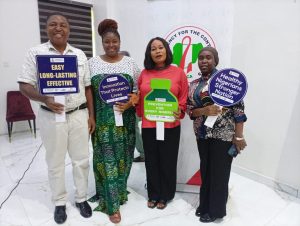
Prevention for HIV has taken yet another more advanced dimension with the introduction of the Lenacapavir (LEN) Pre-Exposure Prophylaxis (PrEP) into the stable of HIV prevention.

This was disclosed to Journalists assembled from across Nigeria in a two-day training programme on Lenacapavir in Lagos State.

In his presentation, the Lead Facilitator, and Principal Partner, Kent Consult Limited, Abuja, Dr. Segun Oyedeji, said unlike the earlier Post-Exposure Prophylaxis (PEP), which is taken to prevent HIV infection after exposure, the Lenacapavir PrEP is taken by non-infected persons.
Such targeted persons are usually those exposed to vulnerable behaviours capable of exposing them to HIV infection.

“PrEP is taken before you are exposed to HIV, and comes in three forms: the daily oral PrEP, Truvada pill; the two-months interval injectible, Cabotegravir; and the long-acting bi-annually (six months interval) injectible, Lenacapavir. There’s also the Dapivrine Vaginal Ring, which women wear for one month”, he said.

Dr. Oyedeji explained that PrEP is meant for people who are exposed by their risk profile to HIV infection.

Risk profile, he explained, “is the kind of risk behaviours they exhibit in their lifestyle.”

Such people include people with a partner who has HIV, people who don’t always use condoms, sex workers, etc.

PrEP, according to Dr. Oyedeji, “builds up protection in your body so that if HIV enters your body, the medicine stops it from multiplying.”

Also, within the period the person is taking it, the person must get tested for HIV every three months interval.

So far, among the four options of PrEP, Adedeji, continued, “the Lenacapavir is the game-changer everyone is talking about.”

The reason is that it is a Capsid inhibitor, first of its class, that attacks the protein shell that HIV uses to copy itself, which is different from old drugs, and is just two injections per year, plus small starter tablets at the beginning. Not daily pills.

He, however, noted that before any of the PrEP options can be used, the person has to go through an eligibility test to ascertain which of the options would be suitable for the person, based on the person’s risky behaviour, and that all the person needs to do is to go to any health facility close to them to seek for the service, or the State Agency for the Control of AIDS (SACA) to get the right direction.
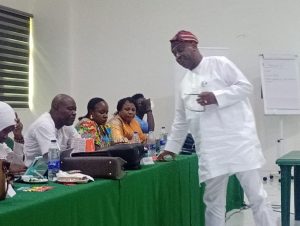
On his part, the Senior Prevention Manager, AIDS Healthcare Foundation (AHF), Mr. Adeleye Taofeek, who spoke on condom use as part of preventive measures for both HIV and Sexually Transmitted Infections (STIs), encouraged the use of condoms, especially where abstinence from sex is inevitable.

He said, “We are canvassing that as much as you use PrEP, you can also use condoms to prevent other STIs, beside HIV.

“We want the media to engage in demand creation for use of the various HIV prevention options: whether it is condom, PrEP, or change of behaviour, staying with an uninfected partner, we want the media to support the national response by creating demand for HIV prevention options.”

Earlier in her welcome address to participating Journalists at the two-day training, organised by the NACA and the Institute of Human Virology, Nigeria (IHVN), the Director-General, National Agency for the Control of AIDS (NACA), Dr. Temitope Ilori, emphsised the importance of the media in awareness creation.

She said: “PrEP is an effective HIV prevention for people who are HIV-negative and may be at risk of acquiring HIV. However, the availability of a prevention intervention is only one part of the equation. People must also have access to the right information, understand their prevention options, know where services are available, and feel confident seeking those services. This is where you, our media professionals, become indispensable partners.

“The media has the power to shape public understanding. A well researched story can dispel a misconception, encourage someone to seek a prevention service and potentially change a life. On the contrary, inaccurate or sensational reporting can create fear, reinforce stigma and discourage people from accessing HIV services.

“We, therefore, count on you to report PrEP and HIV prevention accurately, responsibly, and without stigma.”

The NACA D-G, who was represented by the Head, Public Relations and Protocol, NACA, Toyin Aderibigbe, charged the participants at the training, saying, “your reporting should make these issues understandable to ordinary Nigerians.”
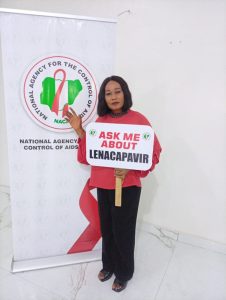
Research shows that so far there have been no infections among all the people who have received the LEN PrEP, showing almost 100% protection.

The World Health Organisation (WHO) adopted it in July 2025 as an additional PrEP option.

In Nigeria, NAFDAC approved it in the late 2025 and received regulatory clearance, with the country receiving its first batch of doses in March 2026, and subsequently distributed it to 8 pilot states.

The states are: Akwa Ibom, Anambra, Benue, Cross River, Ebonyi, FCT, Gombe, and Kwara.

Investigation revealed that since May 2026, all the pilot states are accessing the LEN, and the demand is very high, especially among sex workers who want privacy and no daily pills.

In Rivers State, although the Lenacapavir is expected to arrive soon, the daily oral PrEP (Truvada pill), and the two-months interval injectible (Cabotegravir) are available, and the relevant authorities are encouraging people to access the drug.

Sogbeba Dokubo

Continue Reading

Trending