
Editorial
That Eleme Road Conundrum

Penultimate Friday, a devastating fire incident occurred, leaving a trail of destruction and unspeakable tragedy. A tanker transporting premium motor spirit (PMS) collided with a heavy duty truck, triggering an inferno that engulfed the area. Motorists and commuters were caught in the conflagration, their lives extinguished in the relentless flames. The fire’s intensity left many victims unrecognisable, while their bodies charred beyond identification.
The vehicles in the vicinity were reduced to smoldering wreckage, their once-pristine exteriors twisted and consumed by the relentless heat. The fire raged uncontrollably, leaving a scene of utter devastation in its wake. Emergency responders fought valiantly to contain the blaze, but the damage had already been done. The incident sent shockwaves throughout the state and beyond, leaving residents reeling from the magnitude of the loss. Families were torn apart, lives cut short in an instant.
The event reportedly occurred between Indorama gate and Aleto bridge on the popular and ever-busy Eleme section of the East-West Road, now undergoing major reconstruction by the Federal Government. The State Governor, Sir Siminalayi Fubara, visited the scene and expressed pain and anguish upon sighting the gory spot. It was a devastating sight that left him visibly shaken, as he consoled the victims and their families.
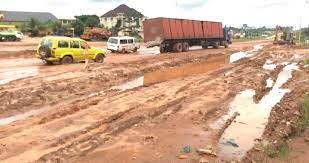
Nigeria’s infrastructural state has been a scourge for many years, with roads being one of the most glaring examples of neglect. Sadly, that portion of the East-West Road, which has been neglected for more than 17 years, connects the Eleme-Onne oil and gas industrial hub as well as hundreds of other related industries like the Indorama Petrochemical, Port Harcourt Refineries, Onne Oil and Gas Free Zone and the two seaports, the Federal Light Terminal and Federal Ocean Terminal, all in Onne. The road equally leads to the entire Ogoni axis, and some South-South states like Akwa Ibom and Cross River.
The deplorable condition of the road connecting the Ogoni Local GovernmentAreas of Khana, Gokana, Tai, and Eleme, as well as Ogu\Bolo, Okirika, Andoni and Opobo, has made access to the areas difficult. The road had deteriorated so severely that motorists would endure agonising journeys of up to seven hours to navigate a mere 20-minute stretch. The treacherous highway had claimed numerous lives, leaving behind a trail of shattered families and broken dreams.
Recognising the urgency of the situation, the Rivers State Government and several multinational companies operating in the area took the initiative to rehabilitate that portion of the expressway in 2015. Their collaborative effort focused on a six-kilometre stretch from Eleme Junction in Port Harcourt to the Onne exit point. The project, estimated to cost around N3 billion, aimed to address the dilapidated condition of the roadway, which had become a major impediment to economic activities and transportation.
In 2021, hundreds of youths under the auspices of the Ogoni Youth Federation (OYF), took over the Eleme-Onne axis of the East-West Road in a peaceful protest against the Federal Government’s alleged neglect of that fraction. The youths were said to have mobilised trucks to barricade the Akpajo and Refinery junction stretch, making it impossible for thousands of workers who journey through that route to get to their offices.
The tragic incident could have been prevented if Reynolds Construction Company (RCC), the firm handling the project, had taken adequate measures to manage traffic flow at the construction site by opening up alternative routes. The company’s negligence in this regard bears compelling responsibility for the unexpected event and the subsequent loss of lives. Consequently, RCC should be held accountable and face appropriate sanctions for its failure to plan out public safety.
In addition to holding the establishment responsible, the Federal Government has an obligation to provide compensation to the victims who suffered injuries and losses. This indemnity should not only cover medical expenses and loss of property but also provide for the emotional trauma and suffering endured by the affected individuals. The provision of financial assistance would demonstrate the administration’s commitment to supporting those who have been impacted by the adversity.
Furthermore, the federal authorities should reimburse the families of the deceased victims. Losing a loved one in such a senseless and devil-may-care manner is an immeasurable loss that deserves adequate financial recognition. The Nigerian government should acknowledge the pain and hardship experienced by these families and help them navigate the difficult road ahead by offering some sort of settlement.
Following that Friday’s tanker combustion, the Nigerian Governors’ Forum (NGF) released a statement, seeking safer methods of transporting petroleum products across the country. During a visit to commiserate with Governor Fubara, Chairman of the Forum, AbdulRahman AbdulRazaq, said that discussions were ongoing among the 36 state governors and strategic federal agencies in the oil and gas industry to achieve the objective.
We agree no less with the Forum. Petroleum exploration has revolutionised transportation across various sectors of human activity. The sheer volume of oil produced necessitates efficient and large-scale transportation methods, making rail and maritime freightage indispensable. The economic significance of oil transportation by these modes cannot be overstated, especially considering the potential risks and impracticalities of transporting vast quantities of petroleum via road.
Rail and maritime means of conveyance offer far more efficient and cost-effective solutions. Trains possess the capacity to transport large volumes of oil over long distances, while ships enable the haulage of even greater quantities across oceans. These modes provide a safe, reliable, and economically viable means of distributing petroleum to various regions of the world, meeting the demands of industries and individual consumers alike.
Finally, this catastrophe has highlighted the urgent need for the Rivers State Government to revitalise its inactive fire service. This can be achieved through the recruitment of qualified firefighters, extensive training, and the provision of modern firefighting equipment and vehicles. Besides responding to emergencies, a functional fire service would also carry out fire safety inspections and educate the public on preventing fires. Moreover, there should be an emergency management team to mitigate future disasters in the state.



Nigeria stands at a critical juncture as the world marked World Press Freedom Day (WPFD) on May 3. This annual observance is a reminder that a free press is central to democratic life, good governance, and public accountability. For Nigeria, it is also a moment for sober reflection on how far the country has come and how far it still has to go in safeguarding the independence of its media.
World Press Freedom Day exists to highlight the fundamental importance of freedom of expression and to honour journalists who risk their lives in pursuit of truth. It underscores the idea that without a free press, societies cannot function transparently, nor can citizens make informed decisions. In countries like Nigeria, where democracy continues to evolve, the observance carries particular urgency.
This year’s theme, “Shaping a Future at Peace: Promoting Press Freedom for Human Rights, Development and Security”, places journalism at the heart of global stability. It emphasises that a peaceful society cannot be built on silence, fear, or manipulated information. Rather, it depends on the free flow of accurate, timely, and independent reporting.
At its core, the theme highlights the role of journalism in fostering accountability, dialogue, and trust. These are not abstract ideals. In Nigeria, where public confidence in institutions is often fragile, the media remains one of the few platforms through which citizens can question authority and demand transparency. When press freedom declines, so too does public trust.
Journalism serves as a foundation for peace, security, and economic recovery. Countries with robust media systems tend to attract greater investment, maintain stronger institutions, and resolve conflicts more effectively. Nigeria’s economic challenges, ranging from inflation to unemployment, require open scrutiny and informed debate, both of which depend on a free press.
However, the issue of information integrity has become increasingly complex in the digital age. Artificial Intelligence (AI) and online platforms have amplified the spread of misinformation and disinformation. In Nigeria, where internet penetration has grown rapidly, false narratives can travel faster than verified facts. This makes the role of credible journalism more vital than ever.
The challenge is not only technological but also ethical. AI-driven manipulation of information threatens to distort public discourse, influence elections, and deepen social divisions. In such an environment, professional journalism must act as a stabilising force, ensuring that truth prevails over sensationalism and propaganda.
Equally troubling is the safety of journalists. Across Nigeria, reporters face growing levels of online harassment, judicial intimidation, and physical threats. Self-censorship is becoming more common, as media practitioners weigh the risks of reporting sensitive issues. This trend undermines the very essence of journalism.
A particularly alarming incident involved a serving minister in the present administration, who openly threatened to shoot a journalist during a televised exchange. Such conduct, broadcast to the public, sends a dangerous signal that hostility towards the press is acceptable. It erodes the norms of democratic engagement and places journalists in harm’s way.
This year’s theme aligns closely with the United Nations Sustainable Development Goal (SDG)16, which promotes peace, justice, and strong institutions. Freedom of expression is a cornerstone of this goal. Without it, institutions weaken, corruption thrives, and justice becomes elusive. Nigeria’s commitment to SDG 16 must therefore include genuine protection for the media.
Historically, the Nigerian press has been a formidable force. From resisting colonial rule to challenging military dictatorships, our journalists have played a central role in shaping the nation’s political landscape. Today, however, that legacy appears to be under strain, as the media operates under what can best be described as a veneer of freedom.
Beneath this facade lies a troubling reality. Journalists are routinely harassed, detained, and prosecuted for performing their constitutional duties. Reports from media watchdogs indicate that dozens of Nigerian journalists face legal threats or arrest each year, often for exposing corruption or criticising those in power.
The Cybercrimes (Prohibition, Prevention, etc.) Act of 2015 has become a focal point of concern. Originally intended to combat cyber threats, it has increasingly been used to silence dissent. Sections 24 and 27(1)(b), in particular, have been invoked to target journalists, bloggers, and social commentators.
Although amendments introduced in February 2024 were meant to safeguard journalists, concerns persist. The law continues to be wielded in ways that stifle investigative reporting and restrict freedom of expression. Legal reforms must go beyond cosmetic changes to address the root causes of misuse.
To safeguard the future of journalism in Nigeria, decisive action is required. The Cybercrimes Act must be revisited to ensure it cannot be weaponised against the press. Law enforcement agencies must operate free from political influence, upholding the rule of law and protecting journalists’ rights. Civil society and international partners must also strengthen independent media through funding, training, and platforms for wider reach.
In this rapidly evolving world shaped by artificial intelligence and digital innovation, Nigeria faces a clear choice. It can either allow press freedom to erode under pressure, or it can champion a truly independent media landscape. The path it chooses will determine not only the future of journalism, but also the strength of its democracy and the peace it seeks to build.

-

 Featured16 hours ago
WASSCE: RSG Distributes Science Materials To Secondary Schools
-
Rivers21 hours ago
MBA Forex Trial Adjourn To June 3, Amid Bereavement … As Court Declines Cost Application
-
Aviation21 hours ago
Passengers Stranded As Delta Airline From Atlanta Route Back Eight Hours After
-
Business21 hours ago
Customs Impound N2.35bn Cocaine, 15 Trailers of Rice
-
News21 hours ago
Xenophobic Attacks: Nigerian Lives More Important Than Foreign Investment – Oshiomhole
-
News21 hours ago
ActionAid Demands Probe Of Govs Using Public Funds For Campaign
-

 Nation5 days ago
Education Commissioner Seeks media Collaboration In Rivers
-

 Nation5 days ago
RSUBE Holds Training For 1,000 New Teachers To Strengthen Basic Education