
Nation
Buhari Approves Committee On PIA Implementation

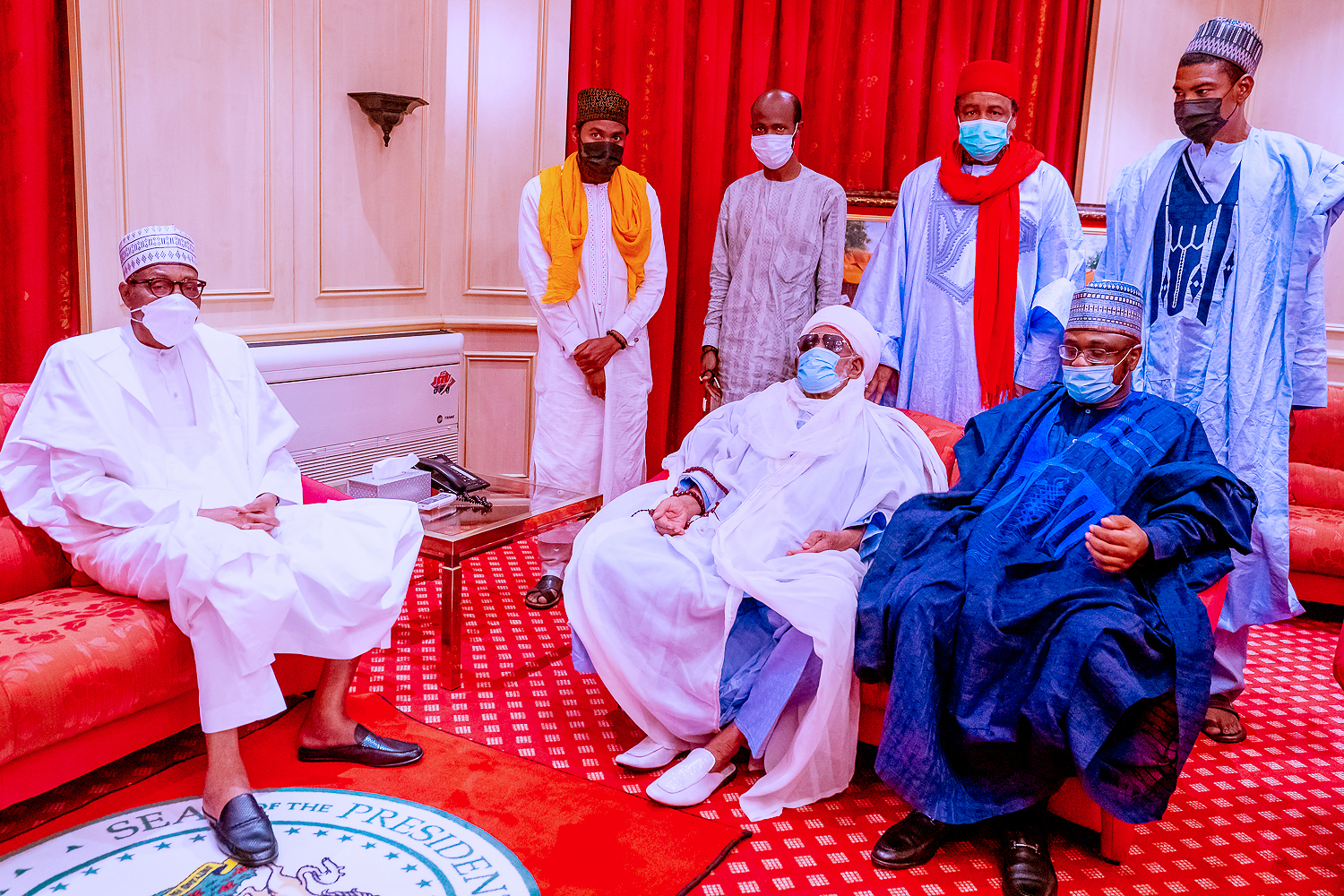
President Muhammadu Buhari has approved a steering committee to oversee the process of implementation of the newly signed Petroleum Industry Act (PIA).
The steering committee is headed by the Minister of State, Petroleum Resources, Chief Timipre Sylva.
The president, who announced this while marking the passage of the PIA which he signed into law on August 16, said Nigeria lost an estimated $50billion worth of investments in 10 years, created by the uncertainty of non-passage of the PIB, lack of progress and stagnation in the petroleum industry.
According to the President, the committee was tasked with the completion of the implementation of this act within 12months.
He, therefore, directed all relevant Ministries, Departments and Agencies (MDAs) of government to fully cooperate in ensuring the successful and timely implementation of the PIA.
“The implementation process to be headed by the Hon Minister of State, Petroleum Resources is hereby tasked with the completion of the implementation of this act within 12months. I am therefore directing all relevant Ministries, Departments and Agencies of government to fully cooperate in ensuring the successful and timely implementation of this law.
“To consolidate the commitment of this administration to delivering the value proposition of this law, I have approved an implementation framework commencing immediately to ensure the industry envisaged in the new law begins to take shape.
“The implementation process to be headed by the Minister of State, Petroleum Resources is hereby tasked with the completion of the implementation of this act within 12months.
“I am, therefore, directing all relevant Ministries, Departments and Agencies of government to fully cooperate in ensuring the successful and timely implementation of this law,’’ he said.
The president maintained that the signing into law had become necessary in view of the fact that Nigeria runs a petroleum industry that is governed largely by laws enacted over 50 years ago such as the principal legislation; the Petroleum Act of 1969 and other obsolete legislations.
According to him, in the past 10 years, Nigeria has lost an estimated $50billion worth of investments due to uncertainty created by the non-passage of the PIB.
“We are all aware that past administrations have identified the need to further align the industry for global competitiveness, but there was lack of political will to actualize this needed transformation.
“This lack of progress has stagnated the growth of the industry and the prosperity of our economy.
“In the past 10 years, Nigeria has lost an estimated $50billion worth of investments due to uncertainty created by the non-passage of the PIB.
“This administration believes that the timely passage of the Petroleum Industry Bill will help our country attract investments across the oil and gas value chain.’’
The president commended the two Chambers of the National Assembly for ensuring the passage of the PIB.
He noted that his signing of the Petroleum Industry ill on August 16, 2021 to “Petroleum Industry Act 2021”, marked the beginning of the journey towards a competitive and resilient petroleum industry that would attract investments to support the nation economic recovery and growth plan.
According to the president, the PIA creates a regulatory environment that will ensure efficiency and accountability across the oil and gas value chain and reposition NNPC to a commercially driven National Petroleum Company that is accountable to the federation.
“The Act also provides for a direct benefit framework that will enable sustainable development of host communities. I appeal to the host communities to look carefully at the contents of the Bill which in the implementation will bring real and lasting benefits to them.”
“Furthermore, the act provides for deliberate end to gas flaring which would facilitate the attainment of Nigeria’s Nationally Determined Contributions of the Paris Agreement through a funding mechanism to support gas flare out project in host communities.
“Similarly, it acknowledges global energy transition and made necessary provisions for NNPC to invest in renewable energy,’’ he added.
The president commended the two Chambers of the National Assembly for ensuring the passage of the PIB.
“Let me now commend the leadership of the 9th Assembly for their continued pursuit of our national aspiration and demonstration of mutual harmony with the Executive in the pursuit of a patriotic outcome in the passage of the PIB.
“I also commend the entire team in the executive that worked tirelessly to ensure the delivery of this strategic legislation for our country,’’ he said.
Buhari also thanked Nigerians and other industry stakeholders for their contributions and support in achieving this historic landmark.
Other members of the implementation committee include: Permanent Secretary, Ministry of Petroleum Resources; Group Managing Director, NNPC; Executive Chairman, FIRS; representative of the Ministry of Justice; and representative of the Ministry of Finance, Budget and National Planning.
The Senior Special Assistant to the President on Natural Resources, OlufemiLijadu, will serve as External Legal Adviser; while the Executive Secretary, Petroleum Technology Development Fund, will serve as Head of the Coordinating Secretariat and the Implementation Working Group.
The primary responsibility of the steering committee shall be to guide the effective and timely implementation of the PIA in the course of transition to the petroleum industry envisaged in the reform programme.
It is also to ensure that the new institutions created have the full capability to deliver on their mandate under the new legislation.
The committee has 12months duration for the assignment, and periodic updates will be given to Mr President.



The Rivers State Commissioner for Education, Dr. Peters Nwagor, has commended the orderly conduct of the ongoing 2026 West African Senior School Certificate Examination in the state and urged schools to sustain the standard.
Dr. Nwagor gave the commendation on Tuesday during a monitoring tour of selected secondary schools in Port Harcourt and environs where the WAEC exam is ongoing.
The commissioner, who was accompanied by directors and monitors from the Ministry of Education, said he was impressed with the peaceful atmosphere at the centres visited.
“The students conducted themselves properly and wrote their papers under conducive conditions. Invigilators and supervisors also performed their duties professionally,” he stated.

Nwagor noted that the Rivers State Government had invested heavily to ensure the smooth and credible conduct of the examination across the state
He urged candidates to reciprocate government’s effort by shunning all forms of examination malpractice and focusing on their studies.
“Government has done so much to ensure successful examinations in our schools. Students should take advantage of it by remaining focused,” the commissioner said.
While no case of malpractice was recorded in the centres inspected, Dr. Nwagor warned that any principal, teacher, invigilator, or official caught aiding malpractice would face strict sanctions in line with regulations.
He also commended school administrators, teachers, WAEC officials, and security personnel for upholding the integrity of the process.
Centres visited included County Grammar School, Ikwerre/Etche; Government Comprehensive Secondary School, Borokiri; Government Secondary School, Borokiri; and Pabod Model Secondary School.

Rivers State University and the Otonti Nduka Foundation for Values Education jointly hosted a two-day National Conference on 8 and 9 May 2026 to examine the state of values in Nigeria.
The two days conference held at Rivers State University convocation arena brought together academics, policymakers, legal experts and education leaders under the theme _“Trends and Challenges in Upholding Values in Nigeria.”_
The gathering focused on policy gaps, curriculum reform, and the role of ethics in public service and education.
The event opened on Friday with remarks from Vice Chancellor Prof. Chief Isaac Zeb-Obipi, who stressed the need to address declining moral and civic values across Nigeria’s education and public sectors. A book of abstracts for the plenary sessions was also presented to participants.
Key speakers included former Attorney General Chief Dr Kanu Agabi, SAN; NERDC Executive Secretary Prof. Shehu Salisu; Prof. Hauwa Imam, FNAE, of the University of Abuja; former Rivers SUBEB Chairman Ven Dr Fyneface Akah, ; former NIMASA DG Dr Hon. Dakuku Adol-Peterside; and RSU Director of ICT Prof. Sunny Orike.
Discussions centered on integrating values education into schools, tertiary institutions and public institutions, alongside the impact of technology on moral development among young Nigerians. Panel and plenary sessions produced practical recommendations for curriculum and policy reform.
On Saturday, the foundation marked its centenary with the unveiling of the book _Otonti Nduka in History_, launched by Chief Engr. Grant Offor, FNSE. The Nigerian Academy of Education held a ceremonial procession led by its President Prof. Olu Jegede and the Ikwerre Professors Forum.
In a communiqué, participants called for stronger collaboration between government, civil society and academia to mainstream values education nationwide. They recommended reviewing teacher training curricula and expanding digital platforms to promote ethical civic engagement, with the foundation pledging to share the outcomes with education authorities for implementation.
Dignitaries present included Ogbakor Ikwerre Worldwide as Chief Host, Prof. Emeritus Chief T. Uzodimma Nwala, the Ikenga 1 of Mbaise and first philosophy student of Prof. Otonti Nduka, alongside scholars and community leaders.
Amadi Akujobi
-

 Rivers3 days ago
Police arrest 3 suspects over killing of driver in Rivers
-
Politics3 days ago
I DIDN’T PROMISE YOU TICKETS, AKPABIO TELLS APC SENATORS WHO FAILED PRIMARIES
-

 News3 days ago
FUBARA ASSURES NUT OF SECURITY OF SCHOOLS IN RIVERS
-

 News3 days ago
NDLEA Arrests Four Notorious Female Drug Dealers In Four States
-
Politics3 days ago
POST PRIMARIES: IKWERRE MONARCHS ADVOCATE ISSUES-BASED POLITICS IN RIVERS
-
Politics3 days ago
Court Dismisses Rivers PDP Members’ Suit Over LG Election Candidates
-

 Sports3 days ago
Okpekpe Road Race Gets Mobility Solutions, Fan Engagement
-
Politics3 days ago
Don’t Risk Your Legacy, Citizen Begs Jonathan Against 2027 Presidential Race