
Featured
RSG, Not FG, Funded Don Waney’s Fall – Wike …Denies Sponsorship Of Cult Group For Election …Berates FG For Stalling Elelenwo-Akpajo Road Project

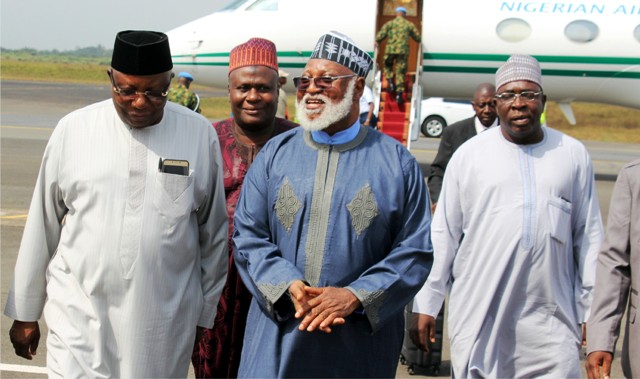
Rivers State Governor, Chief Nyesom Wike last Saturday said the government of Rivers State funded the recent military and DSS joint operation which led to the elimination of notorious killer, Johnson Igwedibia, a.k.a. Don Waney, whose reign of terror left several persons killed in Ogba/ Egbema/Ndoni Local Government Area.
Wike, in a media programme in Port Harcourt, the Rivers State capital, was reacting to the widespread notion that the security offensive which killed Don Waney was ordered by President Muhammadu Buhari, without knowledge of the Rivers State Governor. Chief Nyesom Wike. “The State Government funded the operation that led to the death of Don Waney. The President may have encouraged it, but the operation was funded by the Rivers State Government.
“Don Waney accepted Amnesty, but refused to abide by the tenets of the amnesty. It was at this point that the Security Council resolved to track him down.
“If we do not work in synergy with security agencies, how would we have gotten Don Waney?. Whether we like it or not, it is incumbent on us to play our own part on security”, Wike stated.
In self appraisal on his stewardship, the governor noted that electoral prospects of the Peoples Democratic Party, PDP, in Rivers have been enhanced by his outstanding performance.
He said: “If elections are held 100 times in Rivers State, the PDP will win. The chances of the PDP are even brighter in Rivers State as a result of my performance.
“I have projects located in all local government areas of the state. I have reasons in each local government area why the people should vote for me.”
He also assured that council polls would hold this year as the State Electoral Commission has proposed a budget for same, adding that PDP will hold transparent primaries that will lead to the emergence of popular candidates which will form the premise for victory in 2019.
Meanwhile, Wike has debunked rumours making the rounds in the state by the opposition that he sponsored cult groups to win the 2015 governorship election, but Governor Wike over the weekend reacted and declared that, he had never sponsored or armed any cult group to win any poll in the state.
Gov. Wike also said he had never belonged to any cult group since his undergraduate days at University of Port Harcourt and in Rivers State University of Science and Technology, Nkpolu, even during his days in the Nigeria Law School.
The state Governor stated this in Port Harcourt at the weekend during an exclusive radio interview programme with Rhythm 93.7, View Point monitored by The Tide in the state capital.
The governor who told his listening audience that, right from his days as student and twice chairman of Obio/Akpor Local Government Area, he had never bought weapons for anybody or cult groups to assist him win election.
“My records are straight, I graduated from UNIPORT and later proceeded to RSUST and served my National Youth Service Corps in Gongola State, I never joined any cult group or sponsored any even at the law school,” Gov Wike said.
Hear Gov Wike, ‘Rivers people know my antecedent even as a former chairman of Obio/Akpor local government and a serving governor now’.
I have never bought guns, weapon for anybody to put me in power, I have also, never sponsored any cult group to win any election in the state even as governor’
On the killing of a notorious cult leader Don Waney in Omuoku by the security agencies, Governor Wike said, Don Waney as a cult leader embraced amnesty, but later embarked on killings of innocent people in Ogba, Egbema, Ndoni Local Government Area, ONEGLA that led to the killing of over twenty persons on the New Year eve.
He also revealed that the criminal gangs were plotting to launch another attack that could have killed over 200 persons in Omoku before he was gunned down by the security agents.
The governor insisted that the killing of Don Waney has brought peace in the area and that residents of ONEGLA are now going about their lawful business peacefully
Governor Wike said, his timely killing was masterminded by the provision of logistics by the Rivers State Government to aid the operations of the security agencies.
Late Don Waney, Wike said was operating from Awara forest located in Imo State with his criminal gangs before he met his waterloo early January.
Wike insisted that, he is ready to partner with security agencies in the state at ensuring that total peace is returned to the state an support them with logistics to do their work
On the 32 persons pronounced as cultists in the state, Governor Wike said, the names were submitted by security agencies after thorough intelligence gatherings, noting that he cannot wake up and pronounces those names as cultists terrorising the peace of the state.
On whether he would contest the 2019 governorship election in the state, Gov Wike said, he would consult the leaders of the party to decide, noting that his performance as governor in the past two and half years speaks volumes of him.
Gov. Wike said, he had virtually executed tangible projects in all the 23 local government Areas of the state and his and performance as governor will convince the electorate to vote him for second term in office.
Similarly, the Rivers State Governor, Chief Nyesom Wike has berated the All Progressives Congress-led Federal Government for deliberately stalling the completion of the dualization of the Elelenwo-Akpajo Road which links Obio/Akpor Local Government Area to Eleme Local Government Area in the state.
Addressing journalists, last Friday, after inspecting the portion where the Federal Ministry of Transportation officially directed the Nigerian Railway Corporation (NRC) not to cooperate with the Rivers State Government, Wike said that the objective of the APC-led Federal Government was to stall the completion of the all-important project.
The road links the economic nerve centre of Rivers State where Onne Port, Oil and Gas Free Zone Authority, Port Harcourt Refinery, Indorama, Intels, Notore Fertilizer Company, and other oil multinationals are located.
The governor said that the refusal of the APC-led Federal Government to cooperate with the Rivers State Government on the completion of the road will not stop his administration from completing it.
Wike, however, admitted that the antics of the APC-led Federal Government may delay the completion of the road.
He directed the contractor to study the affected portion of the road, and suggest options within the shortest possible time.
The governor said: “We wrote to the Nigerian Railway Corporation for an understanding on this portion of the road. But what we got was that they made up their minds not to cooperate with us.
“That instruction was given by the Minister of Transportation, Chibuike Amaechi. This road was awarded by the minister when he was the governor of the state. But he never mobilised the contractor”.
“When we took over, we felt the former contractor lacked the capacity for this important road, so, we engaged Julius Berger Plc. We thought he should be happy that we are doing what he failed to do”.
Wike regretted that the APC-led Federal Government and her agents politicise everything, including development.
“This may affect the commissioning of this project within the scheduled time. That is what they are trying to achieve. But, we will do everything we can to ensure completion of the road”, he said.
Earlier, Project Manager of Julius Berger Plc, Sam Ngbor assured the governor that the engineers of the firm will study the situation, and find solution to the challenge.



Governor of Rivers State, Sir Siminalayi Fubara, has reaffirmed the unwavering commitment of his administration to peace, unity, security, and inclusive development as Rivers State marked its 59th anniversary, last Wednesday.
In a goodwill message issued on Wednesday to commemorate the anniversary, Governor Fubara stated that despite the challenges faced over the years, the people of Rivers State have continued to demonstrate resilience, strength, and an enduring spirit of unity that has sustained the state since its creation.
The Governor noted that the strong bond of brotherhood among the various ethnic nationalities of the state, including the Ijaw, Ikwerre, Ogoni, Etche, Ekpeye, Andoni, Kalabari, and others, remains one of Rivers State’s greatest strengths and a critical foundation for peace, stability, and progress.
He further observed that Rivers State has remained a major driver of Nigeria’s economy for decades, not only because of its abundant oil and gas resources, but also because of the exceptional contributions of its people across diverse sectors including academia, jurisprudence, business, entertainment, public service, and sports.
Governor Fubara assured the people that his administration will continue to prioritize policies and programmes that promote peace, protect lives and property, and expand development across all parts of the state. He emphasized that governance must be people centered and impactful, with equal attention given to every Local Government Area of the state.
The Governor also paid tribute to the elders and founding leaders of the state for preserving the spirit of unity and coexistence over the years, while urging the youths to remain hopeful, responsible, and actively committed to building a greater Rivers State through innovation, hard work, and patriotism.
He equally acknowledged the invaluable role of women in strengthening families, communities, and society, describing them as indispensable partners in the continued growth and stability of the state.
Governor Fubara called on all Rivers people to use the occasion of the anniversary as a moment of reflection and renewed commitment to peaceful coexistence, mutual respect, dialogue, and collective progress, stressing that the unity and future of Rivers State must always rise above personal interests and political differences.
Rivers State was created on May 27, 1967, by General Yakubu Gowon.


The Rivers State Government has distributed science equipment and materials to all senior secondary schools across the state to support students during the ongoing West African Examinations Council exams and to strengthen practical learning.
Flagging off the distribution at the Rivers State Senior Secondary Schools Board premises in Port Harcourt, on Monday, the State Commissioner for Education, Dr. Peters Nwagor, said the move demonstrates Governor Siminalayi Fubara’s commitment to improving education standards in the State.
Nwagor said the materials were approved and provided by the state government specifically to boost the teaching and learning of science subjects, describing science education as the foundation for technological advancement, innovation, and national development.
“No society can compete globally without deliberate investment in science and technology,” the Commissioner stated.
He commended the governor for consistently prioritising the education sector by providing tools needed for effective teaching and hands-on learning.
The Commissioner directed principals to ensure that the equipment are used strictly for practical lessons in their schools, warning that any principal or administrator found diverting, hoarding, or selling the materials wil face disciplinary action under public service regulations.
Nwagor also warned against examination malpractice, saying any principal found aiding or encouraging malpractices will be decisively sanctioned.
“We must collectively restore the dignity and credibility of our educational system,” he said.
Also speaking, Chairman, Rivers State Senior Secondary Schools Board, Tony Egwurugwu, urged school heads to make judicious use of the materials for students’ benefit.
He thanked the State Government for providing the resources, and assured that monitoring mechanisms would be put in place to ensure the materials serve their intended purpose.
In his own remarks, a Board Member for Technical Education, Nwisabari Bani Samuel, expressed appreciation to the governor for prioritising education and acknowledged the Commissioner’s role in advancing education development in the State.
He said the distribution covers all senior secondary schools in the State and is intended to improve students’ performance in both internal and external science examinations.
Akujobi Amadi
-

 Rivers3 days ago
Police arrest 3 suspects over killing of driver in Rivers
-
Politics2 days ago
I DIDN’T PROMISE YOU TICKETS, AKPABIO TELLS APC SENATORS WHO FAILED PRIMARIES
-

 News3 days ago
FUBARA ASSURES NUT OF SECURITY OF SCHOOLS IN RIVERS
-

 News3 days ago
NDLEA Arrests Four Notorious Female Drug Dealers In Four States
-
Politics2 days ago
POST PRIMARIES: IKWERRE MONARCHS ADVOCATE ISSUES-BASED POLITICS IN RIVERS
-
Politics2 days ago
Court Dismisses Rivers PDP Members’ Suit Over LG Election Candidates
-

 Sports2 days ago
Okpekpe Road Race Gets Mobility Solutions, Fan Engagement
-
Politics2 days ago
Don’t Risk Your Legacy, Citizen Begs Jonathan Against 2027 Presidential Race