
Nation
THE STATES

Adamawa
Some primary school teachers in Mubi North Local Government Area of Adamawa have been made to forfeit part of their salaries for being perpetually absent in school.The Education Secretary, Malam Danrimi Ahmed, told the newsmen in Mubi on Friday that the teachers were found wanting by a disciplinary committee.Ahmed said the committee, which found seven of the teachers guilty of absenteeism, made them forfeit certain percentage of their salaries based on the number of days each of them was not in class.He added that the amount deducted from the affected teachers salaries was used to purchase exercise books to be distributed free to pupils as compensation.“We have purchased exercise books to be distributed free to pupils as compensation for the lessons they missed because of the teachers absence,” he added.The education secretary noted that the state government and universal basic education board had provided teaching facilities and effected teachers promotion.
FCT
The Head of Agriculture, Bwari Area Council of the FCT, Dr Godwin Abah, says the council plans to boost cassava production in the area.
Abah said in an interview with newsmen in Bwari recently that the council had received improved cassava stems from the International Institute for Tropical Agriculture toward realising the goal.
“The samples of the improved stems were planted in our farm, it was harvested and what we got has been very good which encouraged us to look for more for our farmers,” he said.
According to him, the improved stems reduce cultivation time.
“When old stock took about three to four years before harvesting, the improved one was only for six months to one year to ripe for harvest.’’
He called on the farmers to visit the agriculture department of the council to get improved stem for trial and to increased cassava production.
Abah said that extension workers of the council were always on hand to advise farmers on ways of improving their productivity.
Kebbi
The Kebbi House of Assembly has closed deliberations for one week to enable members to verify and solve difficulties faced by civil servants over the e-payment system.
The Chairman, Committee on Information and Culture, Alhaji Rabiu Sallah, told newsmen in Birnin Kebbi last Thursday that the e-payment consultants would be invited to explain difficulties in the payment of workers’ salary.
He explained that committees of the House had been mandated to embark on fact-finding visits to ministries and parastatal agencies on the e-payment and proffer solutions.
He urged civil servants to be patient while efforts were made to resolve the problem.
Lagos
Stakeholders in the oil and gas industry on Friday called on the Acting President Goodluck Jonathan to urgently find a lasting solution to the problem
in the power sector.
They told newsmen on Friday in separate interviews in Lagos, that the acting president should find lasting solution to the epileptic power to boost the nation’s socio-economic growth.
Mr Tokunbo Korodo, the Chairman of National Union of Petroleum and Natural Gas NUPENG , Lagos Zone, said there was the need to enforce total and radical changes in the sector to meet the vision 20-2020.
Korodo said the only way to address the problem of gas supply to the power sector is for the acting president to give a standing warning and instruction to all those concerned in the sector.
He said the epileptic power supply had damaged the growth of the nation’s economy.
Mr lssac Arowolo, the President, Nigerian Association of Petroleum Explorationists (NAPE), said the only way to effectively address the issue of gas supply was for everybody to be committed to the set target.
He said apart from gas, the Power Holding Company of Nigeria (PHCN) should also develop another source of power generation and called for proper utilisation of the gas supply.
Arowolo urged the government to urgently work toward the reform to save the sector from total collapse.
Ondo
Mrs Oluremi Oyo, on Thursday in Akure urged women journalists to embrace capacity building to enable them to cope with the challenges of the profession.
She said that training and re-training were the only way to ensure continuous self-improvement and that “without training, no media woman can meet the challenges of professional demands.”
Oyo spoke at a lecture entitled, “The Media Woman: Challenges, Pains and Gains,” at the 2010 Week of the Nigeria Association of Women journalists (NAWOJ), Ondo State.
“I wish to advise that as a body, you should take the issue of training your members seriously by exploring and exploiting every available opportunity to build their capacity.
“The Internet offers unlimited opportunity for aspiring journalists to develop themselves in various necessary skills for the advancement of their profession.
“I see no reason why journalists should not acquire skills in photography and usage of computer,” she said.
The NAN managing director, who said that the media world would soon experience drastic changes, held that only hard work and tenacity of purpose would see the media woman through.
Osun
Mr Sunday Akere, the Director of Publicity and Strategy of the Action Congress (AC) in Osun, on Thursday commended Acting President Goodluck Jonathan on his choice of ministers.
Akere made the commendation in a telephone interview with newsmen in Osogbo.
“Although, I am still watching the trend of events and I am waiting for the screening of the nominees by the Senate but the ministerial list is okay,” he said.
Akere lauded Jonathan for selecting those who were “versatile and competent in politics’’ as members of the Federal Executive Council.
“I am talking of persons like Prof. Dora Akunyili, the immediate-past Minister of Information and Communications,” he added.
Akere said that although he never supported the idea of recycling ministers, the need for experience could not be compromised in a fledging democracy.
He commended Jonathan for being objective and for not playing politics with issues of national interest.
“This is not a matter of pro- or anti-Yar’Adua; it is a matter of those who can effectively manage the country’s affairs. Therefore, there is no room for sentiments,” he said.
Sokoto
Nigeria Customs officials in Kebbi, Sokoto and Zamfara States now use camels to chase smugglers, according to Mr Bitrus Kuyli.
Kuyli, the Comptroller of Customs for the three states, told newsmen on Friday in Sokoto that the animals had made it easier to penetrate the bush parts.
He said that donkeys were also being used as a means of transport in the remotest areas of Kebbi.
“The borders are very long and generally in the bushes hence the need to use the animals.
“The borders are porous and smugglers use all kinds of routes, but the customs officials can penetrate all corners with the use of the animals,” Kuyli said.
The customs chief said that the command was working with traditional rulers in the border communities to check smuggling activities.
“The traditional rulers are expected to assist with information needed to check the activities of smugglers,” he said.
Taraba
Governor Danbaba Suntai of Taraba has said that the peer review initiative of the Nigeria Governors’ Forum (NGF) will aid national development.
The governor said this on Thursday in Jalingo when he received the peer review team of the NGF.
Our correspondent reports that the team was in Taraba to inspect development projects undertaken by the state government and assess their impact on the people.
‘‘The project monitoring exercise, being carried out by the team, will speed up development in the country and it should be encouraged by all,’’ Suntai said.
The governor expressed optimism that the outcome of the exercise would help in shaping government policies and the governors’ desire to deliver the dividends of democracy to the people.
NGF Director-General Asishana Okauru, who is the leader of the team, told Suntai that the focus of the exercise was on health, education, agriculture, water and other development issues that would enhance the people’s wellbeing.
He said that the peer review exercise was an initiative which the 36 states governors adopted in 2009 to review themselves with a view of encouraging healthy competition in development programming.
Zamfara
The Zamfara Government has expressed concern over the activities of land speculators using fake documents to defraud the public in some parts of the state.
Alhaji Bashir Madaro, the Commissioner of Land and Survey, expressed the worry in a statement issued in Gusau on Friday Gusau.
It quoted Madaro as advising the public to desist from land speculation and developing reserved areas meant for public use or face the wrath of the law.
The statement quoted him as urging the public to always transact land businesses with government to avoid being involved in shady deals.
“Appropriate documents relating to land transactions must be obtained from the ministry directly without any mediation, because the ministry will no longer entertain complaints on such issues,’’ it warned.



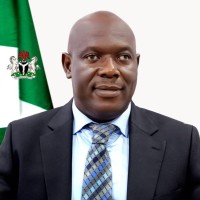
The Hydrocarbon Pollution Remediation Project (HYPREP) has commemorated the 15th anniversary of the release of the United Nations Environment Programme (UNEP) Environmental Assessment Report on Ogoniland, reaffirming its commitment to restoring the environment and improving the livelihoods of affected communities.
In a statement signed by the Project Coordinator, Prof Nenibarini Zabbey, to commemorate the anniversary, HYPREP described the anniversary as a significant milestone in Nigeria’s environmental restoration efforts, noting that the project has made remarkable progress in implementing the recommendations of the landmark UNEP report released on August 4, 2011.
The UNEP report had revealed extensive oil pollution across Ogoniland, severe environmental degradation, and serious public health risks resulting from decades of petroleum operations. It also recommended an initial $1 billion fund to commence the cleanup of the affected communities.
According to HYPREP, the Federal Government formally launched the Ogoni clean-up in 2016, while the Project Coordination Office was established in 2017 to drive the implementation of UNEP’s recommendations.
Zabbey said the current administration has continued to prioritise the project under the Renewed Hope Agenda.
Providing an update on the cleanup, the Project Coordinator disclosed that 30 of the 65 contaminated sites identified by UNEP have been fully remediated, while work is ongoing at several medium- and high-risk locations. It also stated that more than 1.5 million mangrove seedlings have been planted as part of what it described as the world’s largest restoration of oil-degraded mangroves, with over 1,000 hectares of shoreline already rehabilitated.
Zabbey further revealed that 49 Ogoni communities have been connected to potable water schemes through multiple water projects and booster stations aimed at providing safe drinking water across the region.
In the health sector, he said the 100-bed Ogoni Specialist Hospital in Kpite and the 43-bed Cottage Hospital in Buan are nearing completion, adding that several existing health facilities have been upgraded with modern medical equipment, while five ambulances have been donated to improve emergency healthcare services. The Project Coordinator also disclosed that a three-year human health biomonitoring study is being conducted in collaboration with the World Health Organization’s International Agency for Research on Cancer (IARC).
On economic empowerment, Zabbey stated that the Project has created more than 8,000 direct jobs and trained thousands of Ogoni youths and women in various vocational and technical skills, including software development, cybersecurity, aviation, commercial diving, seafaring, mechatronics, and creative arts. The project also reported awarding scholarships to more than 1,000 students, providing grants to small businesses, and supporting persons living with special needs through skills acquisition programmes.
The statement further highlighted ongoing legacy projects, including the Ogoni Power Project and the Centre of Excellence for Environmental Restoration, which it said is about 96 per cent complete. HYPREP also welcomed the recent designation of the Ogoni Wetland as a Ramsar Site of International Importance and pledged to continue promoting biodiversity conservation and sustainable management of the ecosystem.
Marking the anniversary, Zabbey said the progress achieved over the past 15 years demonstrates the collective commitment of government, development partners, stakeholders, and local communities to restoring Ogoniland. He called for renewed collaboration to sustain the cleanup effort, promote environmental sustainability, and support the long-term development of the region. 3
-

 News2 days ago
RSG Targets Nine Million Residents in Mosquito Net Distribution Campaign
-

 Oil & Energy2 days ago
Aiyedatiwa Signs New Electricity Bill
-

 Maritime2 days ago
Marine Minister Commends President Tinubu On NPERA Bill Assent
-

 Oil & Energy2 days ago
NLNG Commissions Research And Innovation Centre In RSU
-

 News2 days ago
KenPoly Holds Eight Convocations, August 29
-

 News2 days ago
RSG Begins Another Phase of Projects Commissioning Today
-

 News2 days ago
RMAFC Completes Revenue Sharing Review, Proposes New Pay
-

 Maritime2 days ago
NAGAFF Petitions IGP Over Alleged Maritime Police Harassment