
Nation
THE STATES

Bauchi
A Bauchi-based NGO, Challenge Your Disability Initia
tive (CYDI), has called on the National Agency for the Prohibition of Traffic in Persons (NAPTIP), to establish its presence in Bauchi State.
Programme Manager of CYDI, Mr Maina Ayuba, who made the call last Thursday in Bauchi, in an interview urged NAPTIP to broaden its enlightenment campaign activities, so that physically-challenged persons throughout the country,would understand its mission and benefit from its services..
“NAPTIP should widen its enlightenment campaign throughout the country, so that disabled persons will understand its mission and be aware of its presence. “It will also help if the body, which is responsible for fighting against human trafficking, opens an office in Bauchi for easy communication and logistics,” he urged.
Ayuba, however, commended NAPTIP for organising a stakeholder’s forum recently in Bauchi, adding that the event highlighted some activities of the agency.
Benue
A don, Prof. Leonard Shilgba, has warned that math
ematics might go extinct in the next 10 to 15 years if more teachers were not produced to teach the subject in Nigerian schools.
Shilgba, a professor of Mathematics, said last Wednesday in Makurdi that the current statistics of mathematics teachers in Nigerian schools was appalling.
He said most universities in the country had “less than five lecturers who teach mathematics when they should have at least 40 in the department,’’ adding that “even 40 is a conservative figure because mathematics is a service subject, it is required in Medicine, Engineering and in many other courses in the university.”
The don said the situation was even more pathetic in secondary schools across the country.
Borno
Programme Manager, British Council, Kano office, Mr
Ryan Chris, has urged the people of Borno to work toward achieving lasting peace in the state.
Chris, who made the call last Wednesday in Maiduguri while speaking at this year’s North-East Peace Summit, said that the security challenges facing the state required collective efforts of the people to tackle.
Chris said that several developmental programmes being undertaken in the state were under reported by the media.
In his remark, Alhaji Ahmed Shehu, North-East Coordinator of Youth Federation for World Peace, said the summit was organised to consolidate the emerging peace in the state.
Ekiti
The Deputy Governor of Ekiti State, Prof. Modupe
Adelabu, last Wednesday in Ado-Ekiti inaugurated members of the State Universal Basic Education Board (SUBEB).
The enlarged board included representatives of the Nigeria Union of Teachers, Parent/Teachers Association, Association of Primary School Headmasters of Nigeria and Ministry of Justice as well as Ministry of Education, Science and Technology.
The deputy governor said at the forum that the enlarged board was inaugurated in accordance with the relevant laws.
She said that the board would boost efficiency and promote effective administration of basic education in the state.
Gombe
The Revenue Mobilisation Allocation and Fiscal Com
mission (RMAFC) has called for input from the people of Gombe State for the review of the nation’s revenue allocation formula.
A National Commissioner at the Commission who represents Gombe state, Amb. Saidu Fawu, made the call last Wednesday in Gombe during an interactive session with some stakeholders.
He described as disturbing, the failure of stakeholders in the state to submit memoranda to the commission for the proposed review of revenue formula, in spite of an earlier sensitisation campaign he organised on the issue.
According to him, while some states have submitted as many as 30 memoranda to the commission, there was none from Gombe State.
Jigawa
The Jigawa State Correspondents’ Chapel of the Nigerian
Union of Journalists (NUJ), last Wednesday boycotted the election of the state’s chapter Sports Writers Association of Nigeria (SWAN).
The election, held at the NUJ Press Centre, Dutse, was supervised by SWAN’s Vice President, North-West, Ado Salisu.
The Chairman of the Correspondents’ Chapel, Comrade Ahmed Abubakar, alleged that the criteria used for the screening of the members who contested in the election were unconstitutional.
Abubakar said that until the aberrations were corrected, his members would not cover any sporting activities in the state.
Katsina
The Katsina State Police Command has said five persons
were killed and seven others injured in a dispute between suspected cattle rustlers and vigilance group in Danmusa Local Government Area of the state.
The Police Public Relations Officer (PPRO) in the state, DSP Aminu Abubakar, said at a news briefing in Katsina last Wednesday that the incident occurred on September 17 in Danmusa when a vigilance group engaged some suspected rustlers in the area.
The PPRO also said the police had killed four suspected armed robbers during an exchange of fire, adding that eight others were arrested at different locations in the state from September 1 till date.
He also said that the command had recovered 120 cows and 70 sheep stolen by suspected rustlers in Tsaru village of Faskari Local Government Area and disclosed that one suspected rustler was arrested in Jibia Local Government Area with seven cows recovered from him.
Kogi
The Kogi State Commissioner for Education, Mrs Grace
Elebiyo, last Wednesday said the ministry had not officially been communicated by WAEC on alleged de-recognition of five schools in the state. Elebiyo said in Lokoja while speaking with newsmen that any publication on the alleged de-recognition of five schools in the state should be ignored.
She identified the schools as Government Secondary School, Ologba; Government Day Secondary School, Akpogu and Okene Central Community Secondary School, Anyava. Others are Kadrex International College, Ethahi-Okene and Inele Community Secondary School, Inele.
Kwara
The Kwara State Government has awarded a contract for
the construction of the Ilesa-Baruba-Guarara-Okuta road at a cost of N1.5 billion, the state’s Commissioner for Finance, Mr Ademola Banu, has said.
Banu made the disclosure last Thursday in Ilorin while briefing newsmen at the end of the meeting of the State Executive Council said the project for the 32.8-kilometre road, awarded to Duravil Construction Nigeria Ltd., would be completed in 12 months.
He said the meeting reviewed the level of work on all on-going projects across the 16 local government areas (LGAs) of the state adding that the meeting was delighted by the progress recorded in all the sites,’’ Banu said.
Osun
The Power Holding Company of Nigeria (PHCN), Osogbo
Business Unit, last Thursday apologised over the 48-hour blackout being experienced by residents.
The Public Affairs Manager of the unit, Mr Timothy Adesanya, conveyed the apology through a statement made available to newsmen in Osogbo.
According to Adesanya, the black out is as a result of a fault from Odiolowo Injection Substation in Osogbo.
‘’Normal electricity supply will be restored as soon as the fault is rectified as engineers are already attending to the fault,’’ he said.
Adesanya said the apology became necessary in order to assure electricity consumers that they were not being taken for granted.
The affected areas include the GRA, Okefia, Ajegunle, Alekuwodo and Old Garage. Other areas affected are Fagbewesa, Odi Olowo, Station road, Technical, Oroki Estate and Old Governors Office.
Sokoto
The Sokoto State Executive Council has approved the
execution of various projects worth over N3 billion across the state.
The Commissioner for Environment, Dr Jabbi Kilgori, disclosed while briefing newsmen on the outcome of the council’s meeting on Thursday in Sokoto.
Kilgori said the projects included solid minerals exploitation, roads and schools rehabilitation. Other projects listed by Kilgori were the provision of access roads and parking spaces at the new NYSC permanent orientation camp in Wamakko, awarded at the cost of N65.5 million, and two roads to link border communities with Niger Republic.
Kilgori also announced that N177.5 million was approved for the installation of solar-powered traffic lights on 10 major roundabouts in Sokoto and environs.
He said the council had approved N107.8 million to provide access roads and parking spaces at Government Day Secondary School , Shuni, while N87.6 million would be for the rehabilitation of Aminu Ginga Memorial Secondary School, Shagari.
Taraba
The TY Danjuma Foundation last Wednesday donated
N8 million to four Non-Governmental Organisations (NGOs) in Taraba State for use in the treatment of chronic hepatitis.
Executive Director of the foundation, Dr Florence Etta-AkinAina, who presented cheques to the NGOs in Jalingo, said the money would be used to raise awareness on the dangers of drug abuse and skills training.
She said that the foundation had already supported 36 projects worth over N25 million in the state, in collaboration with NGOs and Community Based Organisations.
According to her, the projects include 1, 719 free surgeries, 3, 462 eye surgeries, treatments of River Blindness cases, rehabilitation of 234 hand pumps and the training of 25 hand pump mechanics across the state.
Etta-AkinAina explained that chargro care trust would work towards reducing cases of chronic hepatitis B and C in Takum, while WOWICAN would mount campaign against drug abuse in Wukari.



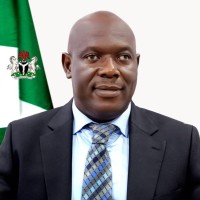
The Hydrocarbon Pollution Remediation Project (HYPREP) has commemorated the 15th anniversary of the release of the United Nations Environment Programme (UNEP) Environmental Assessment Report on Ogoniland, reaffirming its commitment to restoring the environment and improving the livelihoods of affected communities.
In a statement signed by the Project Coordinator, Prof Nenibarini Zabbey, to commemorate the anniversary, HYPREP described the anniversary as a significant milestone in Nigeria’s environmental restoration efforts, noting that the project has made remarkable progress in implementing the recommendations of the landmark UNEP report released on August 4, 2011.
The UNEP report had revealed extensive oil pollution across Ogoniland, severe environmental degradation, and serious public health risks resulting from decades of petroleum operations. It also recommended an initial $1 billion fund to commence the cleanup of the affected communities.
According to HYPREP, the Federal Government formally launched the Ogoni clean-up in 2016, while the Project Coordination Office was established in 2017 to drive the implementation of UNEP’s recommendations.
Zabbey said the current administration has continued to prioritise the project under the Renewed Hope Agenda.
Providing an update on the cleanup, the Project Coordinator disclosed that 30 of the 65 contaminated sites identified by UNEP have been fully remediated, while work is ongoing at several medium- and high-risk locations. It also stated that more than 1.5 million mangrove seedlings have been planted as part of what it described as the world’s largest restoration of oil-degraded mangroves, with over 1,000 hectares of shoreline already rehabilitated.
Zabbey further revealed that 49 Ogoni communities have been connected to potable water schemes through multiple water projects and booster stations aimed at providing safe drinking water across the region.
In the health sector, he said the 100-bed Ogoni Specialist Hospital in Kpite and the 43-bed Cottage Hospital in Buan are nearing completion, adding that several existing health facilities have been upgraded with modern medical equipment, while five ambulances have been donated to improve emergency healthcare services. The Project Coordinator also disclosed that a three-year human health biomonitoring study is being conducted in collaboration with the World Health Organization’s International Agency for Research on Cancer (IARC).
On economic empowerment, Zabbey stated that the Project has created more than 8,000 direct jobs and trained thousands of Ogoni youths and women in various vocational and technical skills, including software development, cybersecurity, aviation, commercial diving, seafaring, mechatronics, and creative arts. The project also reported awarding scholarships to more than 1,000 students, providing grants to small businesses, and supporting persons living with special needs through skills acquisition programmes.
The statement further highlighted ongoing legacy projects, including the Ogoni Power Project and the Centre of Excellence for Environmental Restoration, which it said is about 96 per cent complete. HYPREP also welcomed the recent designation of the Ogoni Wetland as a Ramsar Site of International Importance and pledged to continue promoting biodiversity conservation and sustainable management of the ecosystem.
Marking the anniversary, Zabbey said the progress achieved over the past 15 years demonstrates the collective commitment of government, development partners, stakeholders, and local communities to restoring Ogoniland. He called for renewed collaboration to sustain the cleanup effort, promote environmental sustainability, and support the long-term development of the region. 3
-

 News2 days ago
RSG Targets Nine Million Residents in Mosquito Net Distribution Campaign
-

 Oil & Energy1 day ago
Aiyedatiwa Signs New Electricity Bill
-

 Oil & Energy1 day ago
NLNG Commissions Research And Innovation Centre In RSU
-

 Maritime1 day ago
Marine Minister Commends President Tinubu On NPERA Bill Assent
-

 News2 days ago
KenPoly Holds Eight Convocations, August 29
-

 News2 days ago
RSG Begins Another Phase of Projects Commissioning Today
-

 News2 days ago
RMAFC Completes Revenue Sharing Review, Proposes New Pay
-

 Maritime1 day ago
NAGAFF Petitions IGP Over Alleged Maritime Police Harassment