
Nation
THE STATES

Adamawa
The Adamawa State Government said last Tuesday it had
employed more than 13,000 teachers to boost secondary school education in the state.
The state Commissioner for Education, Mr Gabriel Hamman-Adama, said in Yola that the measure was to address the problem of inadequate teachers and to enhance the quality of education at the schools.
On the issue of non payment of some of the teachers salaries for months, the commissioner blamed the delay on non compliance with due process.
“The affected teachers were employed and posted to schools without following the necessary due process of their data being captured in computer due to some unforeseen circumstances, he said.
Benue
The Benue State Commissioner for Education, Dr Elizabeth
Ugo, announced last Monday that the State Government had closed down three colleges of education for poor staffing and infrastructure.
Ugo, who made the announcement in Makurdi at a news conference on the activities of the ministry, named the colleges as Emmanuel Ebije Ikwe College of Education, Otukpa, Ityiav-Gar College of Education, Mkar and Malamin College of Education, Gboko.
The commissioner regretted that the schools were being managed solely for commercial gain noting that the standard of the colleges had fallen below the expectations of the National Commission for Colleges of Education (NCCE).
She said the closure of the schools was to ensure that tertiary institutions in the state complied with the minimum requirements of the NCCE.
Borno
The Public Complaints Commission (PCC) last Tuesday
said restriction of movement in some areas in Borno had hindered effective resolution of cases filed by the public.
PCC Director of Investigation in Borno, Malam Muhammad Kyauta, said in an interview in Maiduguri, that only 24 out of the 128 cases recorded in the state had been resolved so far this year, due to the situation, while 104 cases were still pending.
The director said some of the cases were on delay in payment of gratuities and wrongful termination of appointments.
Others include seizure of lands by traditional rulers and non refund of contributions to retiring civil servants by national funds such as the National Housing Funds (NHF).
FCT
The Federal Government said last Monday that it reduced
debts owed marketers on oil subsidy from N2.2 trillion in 2011 to N971 billion in 2012.
A statement issued from the office of the Coordinating Minister for the Economy, Dr Ngozi Okonjo-Iweala, in Abuja signed by the minister’s spokesman, Mr Paul Nwabuikwu, said the amount represented a reduction of over N1.2 trillion or 56 per cent of the total sum.
It said the Federal Ministry of Finance had released N46. 76 billion as latest payment to oil marketers whose claims had been verified.
The statement said that the latest payment brought the total verified claims paid to marketers so far in 2013 to N287. 35 billion.
Jigawa
The Nigeria Security and Civil Defence Corps (NSCDC) in
Jigawa State said last Monday it arrested two men for allegedly stealing building materials.
Commandant of the corps in the state, Mr Muhammad Gidado, said that the suspects were arrested in Dutse Local Government Area.
He said the suspects were arrested after the owner of the house lodged a complaint with the command that they stole the building materials in his house at Fagoji quarters.
Gidado said the materials included 20 pieces of roofing zinc, 17 bags of cement, shovel, digger and hammer.
He said the suspects confessed to committing the offence and would soon be charged to court.
Kano
The Federal Road Maintenance Agency (FERMA) in Kano State last
Tuesday called for the termination of the contract for the rehabilitation of Kano-Gwarzo road.
The rehabilitation work is being carried out by an indigenous construction firm, Muslac Techno Company limited.
FERMA Engineer in the state, Mr Michael Akuyo, who made the call in an interview in Kano said the agency found it necessary to seek for the immediate revocation of the contract because the contractor had failed to execute the work as expected.
According to him, the agency has written to the contractor early this year, threatening to terminate the contract before he moved back to site after abandoning the work.
He said the contract, which should have been completed in December 2012, had to be extended.
Kogi
Chairman, Ofu Local Government Council in Kogi State, Mr Isah
Ameh, has called on traditional rulers and faith-based organisations (FBOs) in the area, to be involved in the campaign against the spread of HIV and AIDS.
He made call lastMonday in Ugwolawo at a one-day sensitisation workshop on the control of HIV/AIDs, organised by the Local Government Action Committee for the Control of AIDS (LACA), for traditional rulers, faith based organisations and officials of the council.
Ameh, represented by the Vice Chairman of the Council , Dr Friday Alih, described HIV and AIDS as a “national problem which must be tackled with all seriousness in view of its devastating effect.’’
He assured that the council would support Non-Governmental Organisations (NGOs) with human and material resources and urged traditional and religious leaders, to sensitise their followers on how to curtail the spread of the disease.
Kwara
Governor Abdulfatah Ahmed of Kwara State last Monday in Ilorin
flagged off disbursement of N3 billion car loans to civil servants and teachers in the state.
Speaking at the presentation of cheques to some civil servants, the governor said that about 5, 000 government workers were expected to benefit from the loan scheme.
He said the number included staff members of the Teaching Service Commission, State Universal Basic Education Board and local government areas.
The governor said artisans and transport workers in the state would receive N100 million each for their members, adding that the loans would be managed by First Bank Plc.
Lagos
Governor Babatunde Fashola of Lagos State last Monday backed
the concept of plea bargain in the nation’s justice system, saying it has helped in the speedy conclusion of cases.
At a special service marking the commencement of the 2013/2014 Legal Year of the state’s judiciary, the governor, who was represented by Mr Ade Ipaye, the Attorney-General and Commissioner for Justice, said plea bargain which should be sustained had helped to decongest the prisons.
Delivering a lecture Prof. Tajudeen Gbadamosi National Education Secretary, Ansar-Ud-Deen Society of Nigeria, advised them not to allow selfish interests to interfere in the dispensation of justice.
Earlier at a church service, the Most Revd Adedayo Akinde, the Archbishop of Lagos Province, Anglican Communion, urged judges to shun corruption.
Plateau
The Plateau State Government said it had earmarked
about N600 million, in conjunction with its local councils, for two immunisation programmes in the state.
The Commissioner for Health, Dr Fom Dakwak, announced this while addressing newsmen in Jos after the State Executive Council meeting, last Monday.
Dakwak said: “ The immunisations, which are national exercises, are very important to the people of the state. The state and local governments have put together more than N600 million for the two exercises.’’
According to him, the immunisation against measles will take place between Oct. 5 and Oct. 9 and will be for children of between the ages of one month and five years.
“We also have a very important immunisation against meningitis now that the dry season is setting in and the weather is getting hot. “It will come up from November 2 to November 11 and would be for the children of ages of one to 29 years,’’ he said.
Sokoto
The Sokoto State Government said it would spend N120
million on the renovation of structures at Army Day Secondary School, Sokoto.
The Commissioner for Education, Malam Danladi Bako, said in an interview last Monday in Sokoto that the government was embarking on the project as part of its efforts to provide environment conducive to teaching and learning in all schools across the state.
He listed the structures to be renovated in the school to include: classrooms, offices and perimeter fencing, among others.
“The renovation is in line with our efforts to provide environment conducive to working for both the teachers and students in the school,” he said.
Bako pledged that government would accord priority to education.
“The only legacy any responsible government can leave behind for the future generation is sound education,’’ he said.
Zamfara
Governor Abdulazez Yari of Zamfara State last Mon
day said gunmen had killed 160 people and abducted 10 married women in different villages of the state in the last three months.
Yari who made the disclosure when he addressed members of the House Assembly on security situation in the state in Gusau, said the situation had caused disaffection between residents of the affected villages and the state government.
The governor said the hoodlums, who continued to terrorise villages in parts of the state, stole no fewer than 6,000 cows and 4,000 sheep within the period.
The Speaker of the house, Alhaji Sanusi Rikijin, assured the governor of the assembly’s support.



Eight states across Nigeria have converged in Port Harcourt for the 2026 edition of the President’s Inter-Senior Secondary Schools Debate Championship, hosted by Rivers State Government.
The three_days championship, themed “27th Democracy & 3rd Year Anniversary of President Ahmed Tinubu Inter-Senior Schools Debate Championship,” opened on Monday at Government Girls Secondary School, Rumueme, Port Harcourt.
The participating states are Ebonyi, Abia, Delta, Sokoto, Yobe, Kwara, Enugu, and host state Rivers. Each state is represented by its top debaters selected through state-level contests.
Declaring the event open, the Rivers State Commissioner for Education, Dr. Peters Nwagor, said the championship goes beyond winning trophies. He described it as a national investment in the next generation of leaders.
“This platform is for nurturing young minds,” Nwagor said. “It builds critical thinking, research skills, confidence, effective communication, and the ability to engage constructively with views different from one’s own. These are the very qualities upon which responsible leadership and nation-building are founded.”
The Commissioner commended the organizers, participating schools, teachers, and coordinators for their commitment to promoting intellectual excellence among Nigerian youths.
He urged the students to compete with confidence, discipline, and respect. “Debate is not merely about winning an argument,” he noted. “It is about listening carefully, reasoning with clarity, presenting your evidence with honesty, and having the grace to learn from others. Let the quality of your ideas and the strength of your character define your participation here.”
Nwagor assured the participants that Rivers State is proud to play its part in raising a generation that will bring bold and innovative solutions to the country’s challenges. He wished all teams a rewarding, memorable, and successful championship.
Earlier in his welcome address, the National Coordinator of the President’s Schools Debate Nigeria, PSDN, Elder Dare Oritu, called the event a “gathering of minds” drawn from different parts of the country.
According to Oritu, debate is about three things. “It is about _unity_. It brings us together from different schools and backgrounds to learn from one another. It is about _broadening the mind_. It teaches you to think deeply, to listen well, to ask ‘why,’ and to defend your ideas with facts and respect. It is about _preparing you for leadership_. The problem-solvers and decision-makers of tomorrow are in this hall today.”
He reminded the students that debate is not a contest of aggression. “Debate is _not a fight_. We challenge ideas, not people. It is _not about who is better_. And it is _not do-or-die_. We win with grace, and we learn with humility,” Oritu said.
The PSDN National Coordinator encouraged all participants to compete with integrity, speak with clarity, and leave wiser than they came. He wished them the very best throughout the competition.
Highlights of the opening ceremony included the official draw for debate matches, administered by PSDN officials. The pairings will determine which states face each other in the preliminary rounds as the battle for the 2026 national title begins.
Amadi Akujobi
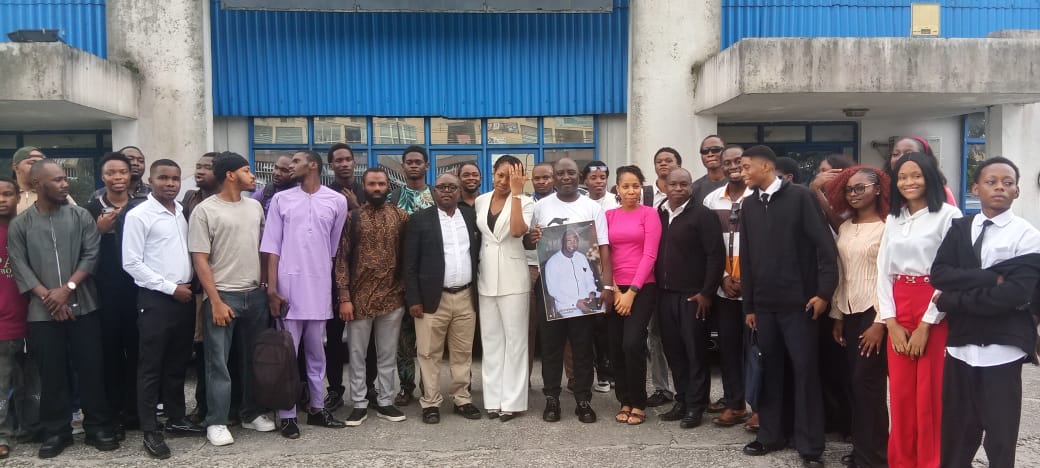
The National Institute of Information Technology (NIIT), Port Harcourt, has graduated 61 students from its six-month Cybersecurity training programme. The institute also inducted 48 new students for the new academic session during a brief ceremony held at its Port Harcourt centre on Monday.
Centre Manager of NIIT Port Harcourt, Mr. Precious Ogulu Tom, said the institute is always excited to induct students into cybersecurity because it is one of its flagship courses with strong international recognition. He noted that the centre’s performance has earned it high ratings from ICSS, adding that in the past academic year, more than 20 students passed ICSS certification exams.
According to him, beyond the NIIT certificate, which is globally recognized, students also proceed to ICSS and complete their courses without difficulty. He credited the faculty for maintaining standards and said NIIT remains the leading ICT training institute in Port Harcourt and Rivers State.
Tom said NIIT has a presence in all major cities in Nigeria and its headquarters in India, with training covering all areas of ICT. He added that every year the institute produces at least one first-class graduate in Software Engineering from partner universities such as Middlesex University and the University of Sunderland. He described the institute’s approach as practical and hands-on.
On fees, he addressed comments about cost online, saying quality training requires investment. “Does anything good come easy? Nothing good comes easy,” he stated. He explained that students receive industry-standard books and globally recognized certificates, and invited parents and prospective students to register with NIIT for value-driven training.
Also speaking, Principal Instructor for Cybersecurity and Ethical Hacking, Mr. Nyekwere TamunoTonye, said the cohort began in February with high expectations and completed the programme in six months. He said one notable achievement was that the class remained largely intact despite challenges, including system breakdowns and family issues. “At the end of this six months, we never lost anybody. That is the greatest. So, we give God the glory,” he said.
Nyekwere said students were exposed to multiple domains in cybersecurity and received strong practical training. He told the graduands that their real learning starts now and urged them not to relent. “This is no longer the time you go back to play,” he added.
He emphasized that the institute equipped them not only with technical and practical skills but also with character and a mindset for continuous learning. He noted that no institution, including Harvard or Yale, can teach everything, but good schools set the path, which NIIT has done.
He charged them to deploy their skills positively. “I don’t want to see any of you being arrested by the EFCC tomorrow. I don’t want to see any of you being arrested by the police. I don’t want to see any of you being arrested,” he said.
Senior IT Counselor and Head of Sales and Marketing, Mrs. Igbigbari Vincent-Eretoru, congratulated the graduands for completing the programme and defending their presentations according to NIIT academic standards. She said certificates are awarded in character and learning, and urged them to be good ambassadors of NIIT Port Harcourt by applying what they learned.
Responding on behalf of the graduates, Class Section Head Tamunotonyesia Epelle said many came in with questions and uncertainty about specializations but left with clarity, confidence, and technical competence gained through practical assignments, teamwork, and the instructor’s push to avoid mediocrity.
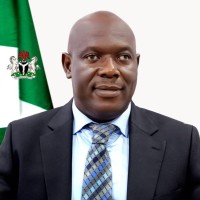
The Hydrocarbon Pollution Remediation Project (HYPREP) has commemorated the 15th anniversary of the release of the United Nations Environment Programme (UNEP) Environmental Assessment Report on Ogoniland, reaffirming its commitment to restoring the environment and improving the livelihoods of affected communities.
In a statement signed by the Project Coordinator, Prof Nenibarini Zabbey, to commemorate the anniversary, HYPREP described the anniversary as a significant milestone in Nigeria’s environmental restoration efforts, noting that the project has made remarkable progress in implementing the recommendations of the landmark UNEP report released on August 4, 2011.
The UNEP report had revealed extensive oil pollution across Ogoniland, severe environmental degradation, and serious public health risks resulting from decades of petroleum operations. It also recommended an initial $1 billion fund to commence the cleanup of the affected communities.
According to HYPREP, the Federal Government formally launched the Ogoni clean-up in 2016, while the Project Coordination Office was established in 2017 to drive the implementation of UNEP’s recommendations.
Zabbey said the current administration has continued to prioritise the project under the Renewed Hope Agenda.
Providing an update on the cleanup, the Project Coordinator disclosed that 30 of the 65 contaminated sites identified by UNEP have been fully remediated, while work is ongoing at several medium- and high-risk locations. It also stated that more than 1.5 million mangrove seedlings have been planted as part of what it described as the world’s largest restoration of oil-degraded mangroves, with over 1,000 hectares of shoreline already rehabilitated.
Zabbey further revealed that 49 Ogoni communities have been connected to potable water schemes through multiple water projects and booster stations aimed at providing safe drinking water across the region.
In the health sector, he said the 100-bed Ogoni Specialist Hospital in Kpite and the 43-bed Cottage Hospital in Buan are nearing completion, adding that several existing health facilities have been upgraded with modern medical equipment, while five ambulances have been donated to improve emergency healthcare services. The Project Coordinator also disclosed that a three-year human health biomonitoring study is being conducted in collaboration with the World Health Organization’s International Agency for Research on Cancer (IARC).
On economic empowerment, Zabbey stated that the Project has created more than 8,000 direct jobs and trained thousands of Ogoni youths and women in various vocational and technical skills, including software development, cybersecurity, aviation, commercial diving, seafaring, mechatronics, and creative arts. The project also reported awarding scholarships to more than 1,000 students, providing grants to small businesses, and supporting persons living with special needs through skills acquisition programmes.
The statement further highlighted ongoing legacy projects, including the Ogoni Power Project and the Centre of Excellence for Environmental Restoration, which it said is about 96 per cent complete. HYPREP also welcomed the recent designation of the Ogoni Wetland as a Ramsar Site of International Importance and pledged to continue promoting biodiversity conservation and sustainable management of the ecosystem.
Marking the anniversary, Zabbey said the progress achieved over the past 15 years demonstrates the collective commitment of government, development partners, stakeholders, and local communities to restoring Ogoniland. He called for renewed collaboration to sustain the cleanup effort, promote environmental sustainability, and support the long-term development of the region. 3
-

 News4 days ago
RSG Targets Nine Million Residents in Mosquito Net Distribution Campaign
-

 Oil & Energy4 days ago
Aiyedatiwa Signs New Electricity Bill
-

 Oil & Energy4 days ago
NLNG Commissions Research And Innovation Centre In RSU
-

 Maritime4 days ago
Marine Minister Commends President Tinubu On NPERA Bill Assent
-

 News4 days ago
KenPoly Holds Eight Convocations, August 29
-

 News4 days ago
RSG Begins Another Phase of Projects Commissioning Today
-

 News4 days ago
RMAFC Completes Revenue Sharing Review, Proposes New Pay
-

 Maritime4 days ago
NAGAFF Petitions IGP Over Alleged Maritime Police Harassment