
Nation
THE STATES

Adamawa
The Adamawa State Agency for Mass Education enrolled 14,643
adult students in its 2011 mass education programme, Mr Solomon Adzigare, the
Executive Director of the agency, said.
Adzigare told our correspondents in Yola on Tuesday that out
of that number, 6,659 were females while 7,984 were males aged between 30 years
and 70 years.
“In 2011, the agency admitted a total of 14,643 adults for
mass education programme. And about 8,765 graduated and issued with
certificates,” Adzigare said.
According to the director, the agency is presently offering
about seven courses under the national mass education guidelines and
supervision, explaning that the courses offered by the agency include basic
literacy class for those that did not have access to primary education from
their childhood.
Bauchi
Bauchi State Government has banned all mining activities in
the state, the Commissioner for Environment, Alhaji Mahiru Maiwada, has said.
Maiwada disclosed this in an interview with our
correspondent in Bauchi on Tuesday,
saying that the ban would remain in
force until the law regulating the exploration of mineral resources was amended
by both the Federal and State House of Assemblies.
He said that the state was not comfortable with the
arrangement whereby prospective miners would obtain permission from the Federal
Government to operate in the state.
“We know that mining
is on the exclusive list of the Federal Government, but we’ve domesticated it
here. We have our own local laws which will soon be passed by the State House
of Assembly to regulate the activities of all these illegal miners in the
Bauchi.
Benue
Rehabilitation camps set up by the Benue State Government to
accommodate displaced flood victims in Makurdi need more food supplies to cope
with the feeding of victims, camp workers say.
Some camp workers told The Tide in Makurdi on Tuesday that
the populations in the camps surpassed food supplies to the victims.
At the Wurukum camp, the Assistant Camp Commandant, Mr Justin
Depuun, complained of difficulties in meeting the feeding needs of the people,
especially the children.
Depuun said for a camp with a population of 4,290 people
that comprised 501 families, it was difficult to adequately meet their feeding
requirements and appealed to corporate organisations, political and religious
organisations as well as individuals to donate food items, especially for the
use of the children.
FCT
A black Honda saloon car with registration number CY 691 LND
on Tuesday fell off a bridge near Wuse Market, Abuja, killing the driver.
The driver, a police corporal, died on the spot.
The Tide correspondent, who visited the scene, reports that
the car knocked off the concrete embankment on the bridge before crashing into
the ravine below.
The impact tore the car into pieces with the engine
separated from the body.
Mr Kassim Yusuf, the Divisional Traffic Officer at Wuse
Police Station, confirmed the death of the driver who, he said, was a police
corporal at the FCT command.
Gombe
The transportation of Muslim pilgrims from Gombe State to
Saudi Arabia will commence on October 2,
the state Amirul Hajj, Alhaji Usman Baba-Liman, has said.
The Amirul Hajj told newsmen after inspecting facilities at
the Gombe Airport that arrangements had been made to ensure that this year’s
exercise was the most successful in the history of the state.
Baba-Liman commended Hajj officers in the local governments
for their efforts in properly organising the pilgrims and urged them to remain
focussed throughout the duration of the exercise.
He called on the state Muslim Pilgrims Welfare Board to
address the problems the pilgrims often encounter while at the Hajj Camp,
adding that the board had succeeded in
getting visa for the pilgrims with the exception those sponsored by the
government.
Baba-Liman advised the pilgrims to attend induction courses
to get acquainted with the modalities for the Hajj and the laws of Saudi Arabia.
Kano
A Kano-based
electrical engineering consultant, Malam Ibrahim Sani has advised the federal
and state governments to provide special recycling plants for electronic scrap
materials to protect the environment.
Sani, who spoke to The Tide in Kano on Tuesday, described
electronic waste as “dangerous and harmful to human beings”, saying that recycling plants could sort out the waste
into useable and non-useable components.
Sani suggested that as an alternative to the expensive
recycling plants, landfills may be excavated at special locations to dispose of
the wastes. He, however, warned that when buried, certain poisonous chemical
components of the electronic wastes could be passed to underground water,
causing soil pollution and health problems.
Kebbi
The Kebbi State Pilgrims Welfare Agency has said it had
transported 2,000 out of 5,670 pilgrims registered for this year’s Hajj in the
past three days.
Alhaji Usman Suru, the Executive Secretary of the agency,
told our correspondent in Birnin Kebbi
that pilgrims from Aliero, Augie, Bagudo and Koko/Besse local government areas
had departed.
He said the agency had prepared adequately for the
accommodation, welfare, medical and transportation needs of the pilgrims in
Saudi Arabia. “For the 2012 Hajj, Kabo and Max Airlines will transport the
pilgrims to the holy land and back with their luggage on time.”
Kogi
The Federal Government has
directed Julius Berger and two other construction companies to free the
submerged Lokoja-Abuja Road from flooding within three days.
The Minister of
Works, Mr Mike Onolememen, gave the directive in Lokoja when he paid a courtesy
call on Governor Idris Wada.
Onolememen described the flood as a disaster that deeply
touched President Goodluck Jonathan because it affected key national structures
and threatened the link between the northern and southern parts of the
country.
He said he also brought the managing directors of the three
construction companies; Julius Berger, RCC and Dantata and Sawoe and their
teams to assess the impact and address the situation.
Lagos
Public primary and secondary schools in Lagos State could
not resume for the new academic session on Monday because of a teachers’
strike.
The state chapter of Nigeria Union of Teachers (NUT) on
Thursday declared an indefinite strike starting from Monday following the
failure of government to pay them the 27.5 per cent Teachers Peculiar
Allowance.
Some of the schools visited by our correspondent include
Zumratul Isamiyya Senior High School, Yaba, Surulere Girls’ junior and senior
schools, Jibowu, Biney Memorial Primary School as well as Anglican Primary
School, Jibowu.
Others are Holy Trinity and Anglican primary schools,
Ikorodu, Iponri Estate Junior and Senior School, Iponri, Ola-Olu Primary
School, Shomolu, and Shyllon Primary School, Ilupeju. Oriwu Model College and
Igbogbo High School both in Ikorodu and Ransome Kuti Memorial Junior and Senior
Grammar schools, Jibowu.
Niger
The Sector Commander, Federal Road Safety Corps (FRSC), in
Niger State, Mr David Usman, has said that the corps would soon personalise
vehicle number plates to help track offenders.
Usman made the plan known when he paid a courtesy visit to
the Niger State Assembly, saying: “that
is why the number plates have to be changed. Right now, the number plates are
registered with the vehicles.’’
He said when operational, the owner of the vehicle would own
the number plate not the vehicle.
The commander said: “if you decide to sell your vehicle at
any time, you detach your number plate from the vehicle and keep it. When you
have a new vehicle, you register it with the number.
Ogun
The Thai Farm International Limited, Ososa in Ogun, has
urged cassava farmers to pool their resources in order to benefit from the
opportunities offered by the Federal Government’s Agricultural Transformation
Agenda.
The Tide reports that
the company is one of Nigeria’s leading producers of high quality cassava
flour.
The Managing Director of the company, Mr Louw Burger, gave
the advice in Abeokuta while presenting a paper at the international symposium
on root crops.
In his paper titled: ‘Building a Strong Partnership for
Cassava Development’, Burger noted that an average Nigerian farmer faced
daunting challenges in cassava production.
Oyo
Chairman, Nigerian Bar Association (NBA) in Oyo State, Mr
Oluseun Abimbola, on Tuesday advised security operatives to focus more on
intelligence gathering in their operations.
Abimbola gave the advice in an interview with The Tide in
Ibadan.
He described intelligence gathering as the most critical
factor in any security operation, pointing out that security was beyond
deploying armed personnel at check points, but more of intelligence gathering.
He said that the security challenges was not peculiar to
Nigeria and advised that the country’s security agencies to learn from the
experiences of other countries that went through similar challenges.
Plateau
Worried by the incessant theft of cattle largely blamed for
violence in Plateau north and parts of Bauchi, the military Special Task Force
(STF) in Plateau has banned grazing at night.
In a communique after a peace meeting with stakeholders from
nine local government areas held on Monday in Barkin-Ladi, Plateau State, the
STF also banned any movement of cows at night.
“There should be no movement of cattle in the night even on
the highways within these states,’’ the communiqué declared.
The STF and stakeholders from seven Plateau crisis-prone
local government areas – Jos East, Riyom, Barkin-Ladi, Kanke, Pankshin, Bokkos
and Kanam, and two others – Bogoro and Tafawa Balewa in Bauchi State, agreed to
arrest anyone with cows at night.
Zamfara
The Zamfara State Pilgrims Welfare Agency has transported
2,140 intending pilgrims to Saudi Arabia one week after the commencement of the
exercise.
The Spokesman of the agency, Malam Yakubu Mafara, gave the
figure in an interview with The Tide in Gusau on Tuesday.
Mafara said that the more than 3,000 pilgrims from the state
would be transported to Saudi Arabia through the Sutan Abubakar International
Airport, Sokoto, adding said that the
intending pilgrims, who had arrived in Saudi Arabia included those from
Maradun, Mafara, Gusau, Kauran Namoda, Shinkafi , Zurmi, Tsafe and parts of Bukkuyyum
local governments.
He said that all pilgrims from the state had arrived in
Saudi Arabia and in Medinah except some female pilgrims, who had been detained
by the Saudi immigration officials.
Mafara noted that
high level talks between Nigerian and Saudi Arabian authorities were on to
resolve the issues surrounding the controversial detention of the 400 Nigerian
female pilgrims.
He said that reports from Zamfara pilgrims’ officials
indicated that pilgrims from the state were in good health and had adequate
welfare facilities to enable them commence the Hajj rites.



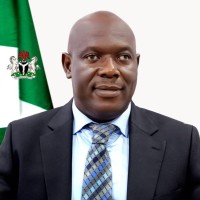
The Hydrocarbon Pollution Remediation Project (HYPREP) has commemorated the 15th anniversary of the release of the United Nations Environment Programme (UNEP) Environmental Assessment Report on Ogoniland, reaffirming its commitment to restoring the environment and improving the livelihoods of affected communities.
In a statement signed by the Project Coordinator, Prof Nenibarini Zabbey, to commemorate the anniversary, HYPREP described the anniversary as a significant milestone in Nigeria’s environmental restoration efforts, noting that the project has made remarkable progress in implementing the recommendations of the landmark UNEP report released on August 4, 2011.
The UNEP report had revealed extensive oil pollution across Ogoniland, severe environmental degradation, and serious public health risks resulting from decades of petroleum operations. It also recommended an initial $1 billion fund to commence the cleanup of the affected communities.
According to HYPREP, the Federal Government formally launched the Ogoni clean-up in 2016, while the Project Coordination Office was established in 2017 to drive the implementation of UNEP’s recommendations.
Zabbey said the current administration has continued to prioritise the project under the Renewed Hope Agenda.
Providing an update on the cleanup, the Project Coordinator disclosed that 30 of the 65 contaminated sites identified by UNEP have been fully remediated, while work is ongoing at several medium- and high-risk locations. It also stated that more than 1.5 million mangrove seedlings have been planted as part of what it described as the world’s largest restoration of oil-degraded mangroves, with over 1,000 hectares of shoreline already rehabilitated.
Zabbey further revealed that 49 Ogoni communities have been connected to potable water schemes through multiple water projects and booster stations aimed at providing safe drinking water across the region.
In the health sector, he said the 100-bed Ogoni Specialist Hospital in Kpite and the 43-bed Cottage Hospital in Buan are nearing completion, adding that several existing health facilities have been upgraded with modern medical equipment, while five ambulances have been donated to improve emergency healthcare services. The Project Coordinator also disclosed that a three-year human health biomonitoring study is being conducted in collaboration with the World Health Organization’s International Agency for Research on Cancer (IARC).
On economic empowerment, Zabbey stated that the Project has created more than 8,000 direct jobs and trained thousands of Ogoni youths and women in various vocational and technical skills, including software development, cybersecurity, aviation, commercial diving, seafaring, mechatronics, and creative arts. The project also reported awarding scholarships to more than 1,000 students, providing grants to small businesses, and supporting persons living with special needs through skills acquisition programmes.
The statement further highlighted ongoing legacy projects, including the Ogoni Power Project and the Centre of Excellence for Environmental Restoration, which it said is about 96 per cent complete. HYPREP also welcomed the recent designation of the Ogoni Wetland as a Ramsar Site of International Importance and pledged to continue promoting biodiversity conservation and sustainable management of the ecosystem.
Marking the anniversary, Zabbey said the progress achieved over the past 15 years demonstrates the collective commitment of government, development partners, stakeholders, and local communities to restoring Ogoniland. He called for renewed collaboration to sustain the cleanup effort, promote environmental sustainability, and support the long-term development of the region. 3
-

 News2 days ago
RSG Targets Nine Million Residents in Mosquito Net Distribution Campaign
-

 Oil & Energy2 days ago
Aiyedatiwa Signs New Electricity Bill
-

 Oil & Energy2 days ago
NLNG Commissions Research And Innovation Centre In RSU
-

 Maritime2 days ago
Marine Minister Commends President Tinubu On NPERA Bill Assent
-

 News2 days ago
KenPoly Holds Eight Convocations, August 29
-

 News2 days ago
RSG Begins Another Phase of Projects Commissioning Today
-

 News2 days ago
RMAFC Completes Revenue Sharing Review, Proposes New Pay
-

 Maritime2 days ago
NAGAFF Petitions IGP Over Alleged Maritime Police Harassment