
Features
Appraising Afro-American Legends (1)

Continued from Page 26 Wednesday February 8, 2012.
President Barack Obama.
This is another Afro-American citizen that has shaped the cause of world history. He was born to a white American mother, Ann Dunham, and a black Kenyan father, Barack Obama Sr. With the help of his grandmother, Barack Obama was admitted into Punabon School Hawaii’s top prep academy. From there, he moved to Columbia University. He became a community organiser for a small Chicago church-based group for three years, helping poor South Side residents cope with a wave of plant closings. He then attended Harvard Law School, and in 1990 became the first African-American editor of the Harvard Law Review. He turned down a prestigious judicial clerkship, choosing instead to practice civil-rights law, back in Chicago.
He also began teaching at the University of Chicago Law School, and married Michelle Robinson, a fellow attorney. Eventually, he was elected to the Illinois state senate, where his district included both Hyde ark and some of the poorest ghettos on the South Side are located.
In 2004, Obama was elected to the US Senate as a Democrat, representing Illinois. He gained national attention by giving a rousing and well-received keynote speech at the Democratic National Convention in Boston. In 2008, he ran for president of the United States, the first African-American ever elected to that position.
His policy decisions have addressed a global financial crisis in the United States. His foreign policies are legendary. In Cuba, Obama was recently awarded the Nobel Peace prize for “his extraordinary efforts to strengthen international diplomacy and co-operation between people.”
Obama’s approval rating is roughly equal to what Bill Clinton had during his presidency, higher than the 45 per cent that Ronald Reagan recorded in April, 1982 and more favourable than Democratic or Republicans currently in office.
William Edward Burghart Dubois (1868-1963). Born in Great Barrington, Massachusetts, W.E.B. Du Bois became the most respected and effective spokesperson for the full rights of African Americans in the decades before World War II.
A Harvard Ph.D graduate, Du Bois taught in several universities and authored more than twenty books including the Souls of Black Folk (1903), The World and Africa (1947). In Battle for peace (1952) and a trilogy Black Flame (1957). In 1909, he founded the National Association for the Advancement of Coloured People and helped it to become the country’s single most influential organisation for African-American.
Dr. Du Bois emigrated to Africa in 1961, and became editor-in-chief of the Encyclopedia Africana, an enormous publishing venture which has been planned by Kwame Nkrumah. Du Bois died in Ghana on August 27, 1963 at the age of 95.
Dr. Martin Luther King Jr
Dr. Martin King Jr was born in January 1929. His father was the famous Reverend Martin Luther King Senior. Martin Luther King Jr had his Ph. D degree from Boston and a Doctorate of Philosophy in Systematic Theology.
At the age of thirty-five, Martin Luther King Jr. was the youngest man to have received the Noble Peace prize for his advocacy for love, peace and non violence.
He once led a mass protest in Birmingham, Alabama, that caught the attention of the entire world. The peaceful March he led in Washington D.C where he delivered his famous address, “I have a Dream” to over 250,000 remains legendary till date.
Martin Luther King Jr was arrested twenty times and assaulted at least four times for leading mass protests against human rights abuse.
He was however, assassinated on April 4, 1968 in Memphis, Tennessee.
Born in 1954, Oprah Winfrey revolutionises the talk show market with her unique and natural style. He is the host of the most watched daytime show on television, with over 22 million viewers daily.
Oprah Winfrey is the first African-American to own her own TV studio. She is also a businesswoman, actress, owner of a movie production company and a committed philanthropist.
Maya Angelous
Maya Angeleous is an African-American writer. She was born on April 4, 1928. His autobiography, I Know Why The Caged Bird Sings, was nominated for a National Book Award and made her a symbol of pluck and pride for African-American Women.
In the 1950s, Angelou had been a dancer and stage actress. She was also active in the civil rights movement.
During the 1960s, she spent five years in Africa, working as a journalist and a teacher. Angelou returned to the United States and in 1969 published I Know Why The Caged Bird Sings.
In 1972, she was nominated for a Pulitzer Prize for her collection of poetry, Just Give Me a Cool Drink of Water ‘fore I Diiie. Since then, Angelou has continued to engage in teaching, writing, acting, producing, and recording. She won Grammy Awards for the spoken word in 1993, 1995 and 2002. She is also a professor of American Studies at Wake Forest University in North Carolina. At Bill Clinton’s request, Angelou wrote a poem pulse of Morning for his 1993 inauguration as US President.
Denzel Washington
Born in 1954 in Mount Vernon, New York, Washington is a Movie Star. During his teenage years he was banned by his parents from watching movies.
When his parents separated, he went through a rebellious stage at the end of which several of his friends were sentenced to prison. He studied at Fordham University where he discovered acting and earned a degree in journalism.
Washington played in movies like Cry Freedom, for Queen and country, the might Quinn, Mississppi Mosala, Glory and several others.
Michael Jackson
American superstar Michael Jackson was born in Gary, Indiana, on August 29, 1959 and entertained audiences throughout his entire life.
He made record sales, culminating in the biggest-selling album of all time. He ventured into films, but had much better luck with elaborate music videos.
Michael Jackson’s passion and artistry as a singer, dancer, writer and businessman is unparalleled. Till date, he remained the most celebrated musician in the world. His rare talents and ingenuity ultimately prevailed over the extremely negative aspects of his troubled adult life. He however, died on June 25, 2009 at the age of 50 of a drug-induced cardiac arrest.
Muhammed Ali
Three times world heavyweight boxing champion, Muhammed Ali known for his Iyrical Charm and boasts as much, is remembered all over the world as perhaps the charismatic boxer of all times.
Being one of the most remarkable personalities of our time and one of the greatest sportsmen that ever walked the planet earth, Muhammed Ali was voted the best boxer of the 20th century.
One other great Afro-American sportsman in this category is Mike Tyson.
Serena Williams
Serena Williams was born in 1981 in Saninaw, Michigan. Her father, Richard Williams taught her and her elder sister, Venus how to play tennis. Her first great victory came in 1999 when at the age of 17 she defeated No. 1 Martina Hingis in the US Open final. Between 2002 and 2003, she held the No. 1 ranking for 57 consecutive weeks.
Serena Williams has won over 10 Grand Slam double titles (Australian Open in 2001, 2003, 2009; French Open in 1999; Wimbledon in 2000, 2002, 2008, 2009; US Open in 1999, 2009 and two Olympic gold medals in doubles (2000,2008) with her sister, Venus.
A pop culture icon with an interest in fashion, Serena runs a line of designer apparel called “Aneres” (her first name spelled backwards).
Serena Williams has won more than $30 million in career prize money, the highest so far by any female athlete in world’s history.
Michael Jordan
By acclamation, Michael Jordan is the greatest basketball player of all time. He is a phenomenal athlete with a unique combination of fundamental soundness, grace, speed, power, artistry, improvisational ability and an unquenchable competitive desire. Jordan single-handedly redefined the NBA superstar.
Ichoku writes from Port Harcourt
Anthony Ichoku




It has been 25 years of impactful development of the Niger Delta region, facilitated by theNiger Delta Development Commission. NDDC. Without doubt, it has been a remarkable journey, marked by significant milestones and daunting challenges.
For the past week, the NDDC has been celebrating its achievements, beginning with a thanksgiving service in Akure, Ondo State, on July 6, drawing stakeholders and Niger Deltans to express gratitude to God for the Commission’s journey so far.
Taking off on the wings of the Oil Minerals Development Commission, OMPADEC, in 2000, the NDDC has grown into a symbol of federal presence in the oil-rich Niger Delta region.
The celebration moved from spiritual reflection and thanksgiving to strategic communication, with a World Press Conference held in Asaba, Delta State, on Monday, the 7th of July. There, members of the Fourth Estate across all media gathered in what was perhaps the most extensive media engagement of its kind. The NDDC Managing Director and Chief Executive Officer, Dr. Samuel Ogbuku, reaffirmed the Commission’s commitment to its motto of “making a difference.”
Dr. Ogbuku stated, “The President gave us a matching order during our inauguration to positively turn things around in the Niger Delta region.” That presidential directive, he noted, continues to guide the Board and Management as they pursue legacy projects across the region.
From electricity restoration in Ondo to road linkages in Bayelsa and Akwa Ibom, the NDDC’s impact was showcased in clear, tangible terms. “We commissioned the 45-km double-circuit 33KV feeder line from Omotosho Power Station to Okitipupa in Ondo State,” Dr. Ogbuku recalled, “bringing electricity back to 25 local governments after 15 years in darkness.” This was just one of several landmark interventions highlighted during the press briefing, underscoring the Commission’s renewed vigour under the current leadership.
The Managing Director spoke candidly about the setbacks caused by years of instability in leadership. “Frequent changes in management and boards have slowed our progress,” he admitted. “But today, we are targeting legacy projects. Our mandate is to complete those critical projects.” He emphasised that the Commission had transitioned from a transactional mindset to one of transformation, including the digitisation of procurement processes to ensure transparency and accountability.
Other top executives echoed similar sentiments. The Chairman of the Governing Board, Mr. Chiedu Ebie, stressed the importance of collaboration, particularly with the media, whom he described as “critical stakeholders” in advancing development. Alabo Boma Iyaye, the Executive Director of Finance and Administration, noted that the celebrations would run until Saturday, July 12, culminating in a gala night and plenary session in Port Harcourt.
Perhaps, the most significant message from the silver jubilee celebration is the renewed hope that the Niger Delta can finally experience holistic and sustainable development.
According to Ogbuku, “Through the initiative of the Board and Management, we have restructured the administrative architecture of the Commission to its 13 statutory Directorates, introduced robust Corporate Governance protocols… This formalised a value- driven institutional culture anchored on ethics and performance.”
As the weeklong celebrations continue across different states in the region, the NDDC appears determined not just to celebrate its past but to chart a bold course for the future.
The people of the Niger Delta are watching, hopeful that the next 25 years will be defined not by promises, but by lasting progress that transforms lives and communities, truly making a difference.
The celebration also featured a movie premiere titled “Making a Difference”, which traced the Commission’s journey and told stories of transformation in communities once plagued by underdevelopment. For many observers, the film served as both an emotional tribute and a powerful reminder of the NDDC’s role in shaping the destiny of the region.
The Governing Board and management of the NDDC have again proven to Nigerians, particularly the people of the oil-bearing Niger Delta region, that history does matter. They have also shown clearly that extraordinary personalities can upturn calculations and permutations. The above assertion was evidenced by the torrents of praises, accolades, and commendations poured on the Commission and its management and board by critical stakeholders during its week-long 25th anniversary celebration.
Beginning with Ondo State, one of the NDDC mandate states, Ondo Governor, Lucky Aiyedatiwa, hailed the management of the NDDC for the peace and development currently prevailing in the Niger Delta region. He said the Commission, under the current management and board, has succeeded in bridging developmental gaps in the region, noting that NDDC’s emphasis on partnerships and collaboration aimed at driving sustainable development across the Niger Delta has ushered in unprecedented progress.
Aiyedatiwa, who spoke at the Thanksgiving Service of the NDDC held at St Thomas’s Anglican Church, Akure, the Ondo State capital, stressed that the commission has undoubtedly lived up to its established mandate, commending the Board and Management for their exemplary leadership and commitment.
The Governor hailed the commission’s commitment and dedication to project conception, implementation, and completion, noting that the NDDC has established a culture of delivery and the region would no longer witness abandonment of projects as was the case in the past.
He said, “As we celebrate the Silver Jubilee of the NDDC, we must acknowledge the progress we have made and also recognise that there is still much work to be done as the Niger Delta region continues to face significant development challenges and we must work together to address these issues. “I urge the NDDC to continue to improve on its activities, ensuring that projects are tailored to the needs of the communities we serve. Let us work together to unlock the potential of our region, promote economic growth and enhance the lives of our people. We are partners in progress, unity and development.”
From Ondo State to Asaba, the Delta State capital, it was the same rain of praises. The Asaba monarch, the Asagba of Asaba, Obi Epiphany Azinge, on his part, was full of praises for the NDDC for its achievements in the past 25 years.
Obi Azinge spoke when Ebie led a delegation of the Commission’s Board and Management to pay a courtesy visit to him in his palace in Asaba, the Delta State capital. The Royal Father commended the NDDC for its intervention in several sectors across the Niger Delta region.
He expressed delight with the foreign postgraduate scholarship programme, which had helped many youths from the Niger Delta upgrade their knowledge.
He also acknowledged the contributions of the NDDC Chairman, whom he said had served the Delta State Government in different capacities. He noted that Ebie served meritoriously as Delta State Commissioner for Basic and Secondary Education and later, Secretary to the State Government. The monarch thanked the NDDC for selecting Asaba as the venue for some of the activities marking its 25th anniversary, such as a press conference and the movie premiere.
Earlier, the NDDC Board Chairman congratulated Asagba on his ascension to the throne of his forefathers, saying he was eminently qualified for the position. Ebie expressed optimism that the Asagba’s reign would bring good tidings to Asaba, which serves as both a Kingdom and the capital of Delta State.
He stated that the NDDC had come of age and was now a big brother to the new development agencies in Nigeria’s geo-political zones. Ebie disclosed that as part of the silver jubilee celebration, the Commission was going around the nine States of the Niger Delta.
The NDDC Chief Executive Officer pledged that the NDDC’s commitment to adhering strictly to the President’s directive to the Commission to complete all ongoing projects in the region, including roads, bridges, schools, and healthcare facilities. He disclosed that the Commission was engaging all stakeholders to ensure harmony and cooperation in the task of developing the hitherto neglected Niger Delta region.
He noted that, ”It is not only by our efforts; it is the collaborative efforts from all the stakeholders who believe the time has come when there should be stability in the NDDC and that stability is a challenge to us to ensure that we deliver development to the people of the Niger Delta region.”
Ifeatu Agbu
Agbu wrote in from Port Harcourt.
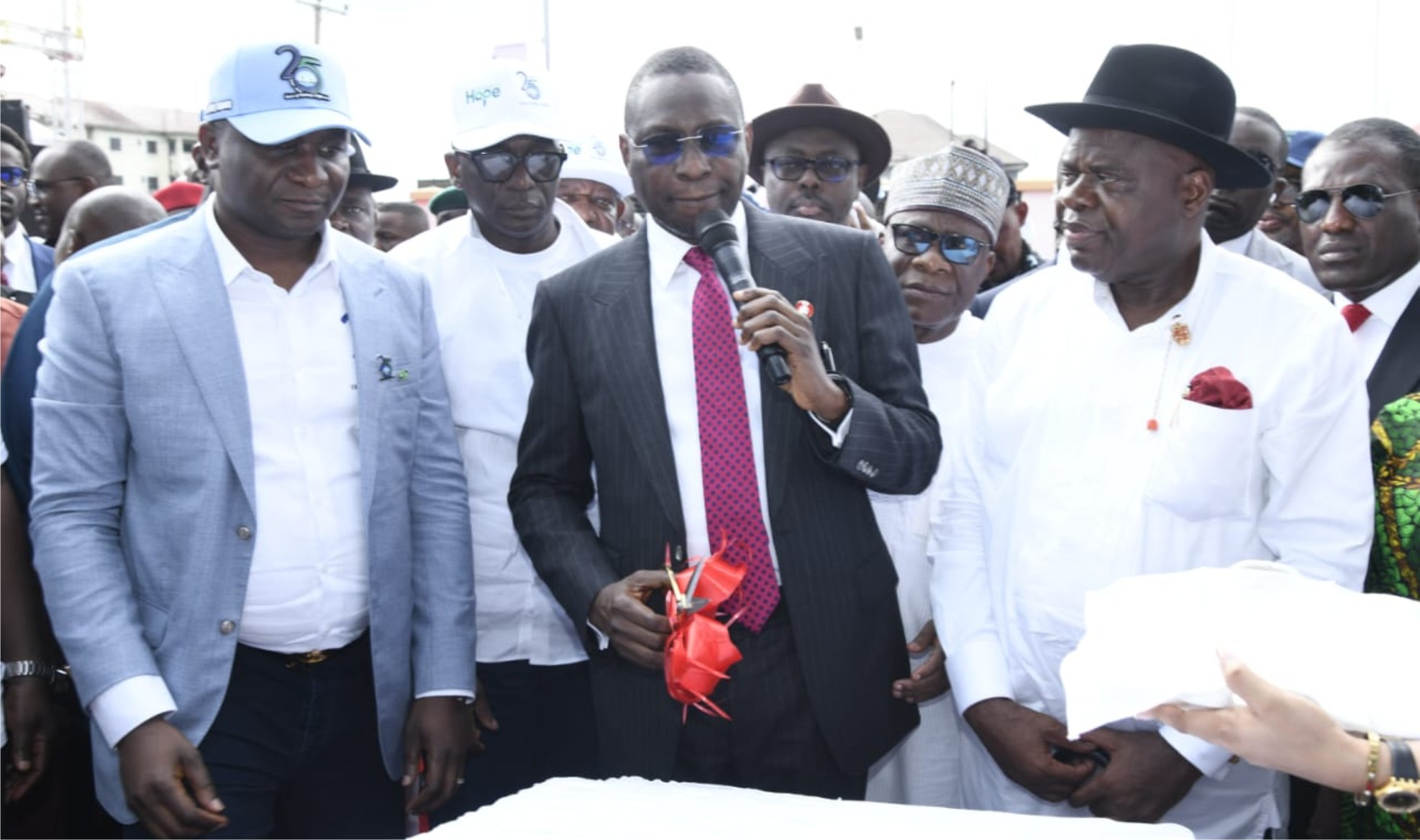
The mandate of the Niger Delta Development Commission, NDDC, is to facilitate the rapid and sustainable development of the Niger Delta region, while that of the Economic and Financial Crimes Commission, EFCC, is to investigates financial crimes and put corrupt practices in check.
Given their different roles, the idea of an alliance between the two organisations may seem far-fetched. However, with the NDDC Managing Director, Dr Samuel Ogbuku, and the EFCC Executive Chairman, Mr. Olanikpekun Olukoyede, it is not just an idea; it is a reality.
The unique collaboration between the NDDC and the EFCC has given rise to the Renewed Hope Multi-Purpose Training Centre, unveiled on Tuesday at Otuokpoti Community in Ogbia Local Government Area, Bayelsa State.
According to the NDDC Managing Director, the vast training complex was executed with funds recovered on behalf of the Commission by the EFCC.
Ogbuku explained that the Bayelsa training centre was funded through the money recovered by the EFCC and executed under a signed performance bond, ensuring transparency and impact. He noted that the facility represented one of several such centres being constructed in Delta and Rivers States. He said: “We have similar facilities currently under construction in Odi, Bayelsa State, while the ones in Delta State are being built in Patani and Ozorro and another two in Rivers State.”
He observed that the Multi-Purpose Training Centre, which was completed in record time, was a partnership between the EFCC and the NDDC, as the anti-crime agency had recovered the funds that facilitated the project’s execution.
Ogbuku observed that the facility, which could accommodate 1,000 persons, represented a significant step toward empowering local communities through skills development and inclusive growth.
The training centre’s components, which include a school, hospital, cafeteria, police post, and recreational centre, are all designed to support training, healthcare, and emergency accommodation within a single integrated complex.
Speaking at the inauguration ceremony, the EFCC Chairman assured the NDDC of the release of more recovered funds in the coming weeks.
Olukoyede described the NDDC as a “renewed and transformed government agency.” He assured that the EFCC would do everything to recover all outstanding statutory contributions due to the NDDC from oil companies.
He noted: “We have made several recoveries on behalf of the NDDC, and we will not relent in this direction. We are encouraged by the fact that the NDDC is making the Renewed Hope Agenda of the Federal Government a reality in the Niger Delta region.”
Olukoyede commended the NDDC for its institutional and policy reforms, declaring that the people of the Niger Delta will have every reason to celebrate the current leadership of the Commission. He described the NDDC as a beacon of good governance under President Bola Ahmed Tinubu.
He noted: “The Niger Delta is the goose that lays the golden egg and should not be denied the benefits of that golden egg. On our part at the EFCC, we must do everything within our power to ensure that the three per cent statutory contribution due to the NDDC is recovered and handed over to the Commission. We are going to continue supporting you.”
He said further: “Under this President, NDDC is working; good governance is being delivered. It is my delight to be part of this transformational agenda. The Renewed Hope Agenda is no longer a slogan—it is a reality. For the first time, people are identifying with what NDDC is doing.”
Olukoyede commended the NDDC, saying the Commission has refined its processes to uphold the principles of probity. This aligns with the agency’s head’s emphasis on upholding transparency and accountability in the country’s affairs.
The Chairman of the anti-crime agency confessed that his perspective on the NDDC was turned around in 2024, when the NDDC management, led by Ogbuku, paid him a courtesy visit at the EFCC’s headquarters in Abuja.
Olukoyede stated that he was impressed by the Commission’s “Rewind to Rebirth” initiative.
He declared: “The five minutes of interaction with the MD left me with a different perception of NDDC. Maybe, we will begin to see an NDDC that is a symbol of pride, accountability, transparency and able to deliver on its mandate.
“From his presentation, you can see that he is ready to bring a change, and that is the exact thing that we stand for in EFCC.”
Assuring that the EFCC would continue to assist the NDDC to achieve its mandate, he said: “We have been working with you to make recoveries; we will continue to do more.
“The collaboration is something we need to take to the next level, and with what you have put on the table I think we are ready to work with you to strengthen your systems and processes and to take the NDDC to the next level.”
In his remarks, the Minister of Niger Delta Development, Engr. Abubakar Momoh, praised the NDDC Board and Management for their unity of purpose and commitment to service delivery, stating that the level of harmony and stability within the Commission is unprecedented.
He declared: “What we are witnessing here today has never happened in the history of the NDDC. Since I assumed office as Minister, I have not been called upon to settle any crisis within the Commission. This is a testament to the teamwork between the Board and Management.”
Also speaking, the Chairman of the NDDC Governing Board, Mr. Chiedu Ebie, emphasised the human capital development focus of the two projects commissioned, noting that reforming the NDDC is an ongoing but rewarding process.
He stated: “We are moving from transaction to transformation. We are doing our best to improve not just the reputation of the NDDC, but everything that concerns the Commission. Today is about promoting and celebrating human capacity.”
Without a doubt, the Niger Delta region is confronted with ecological and environmental challenges that should, perforce, attract significant funds from the Federal Government and the oil companies operating in the region.
Sadly, this has not been so, thus limiting the capacity of the NDDC to fulfill its mandate of driving the development process and transforming the Niger Delta region into one that is “economically prosperous, socially stable, ecologically regenerative and politically peaceful.”
It is rather unfortunate that, despite the spirited efforts by successive boards and managements of the NDDC to meet the expectations of the people, their efforts have not been matched with commensurate funding.
The issue of inadequate funding is resurfacing again. Indeed, it is an inconvenient truth that will remain on the front burner until it is fully addressed.
That explains why the NDDC Managing Director highlighted the issue during interactive sessions that the Commission’s Board and Management held with the relevant Committees of the National Assembly in Abuja last year.
Ogbuku told the House of Representatives Committee on NDDC, chaired by Hon. Ibori-Suenu Erhiatake, that the Commission is owed over N2 trillion, arising from withheld funds and underpayments by both the government and the oil companies. He blamed this on non-compliance with the Act establishing the Commission.
Given the enormous impact of their activities on the environment, the oil companies are expected to be at the forefront in the critical task of urgently developing the oil basin that has suffered so much neglect in the past. It is, in fact, in their interest to develop the communities where they operate to guarantee peace, which is very necessary for them to continue with their work.
Thankfully, both the Senate and the House of Representatives promised to assist the NDDC in recovering its outstanding funds. In their various interactions with the NDDC leadership, the lawmakers expressed concern about the disregard for existing laws governing the Commission’s funding.
The Chairman of the Senate Committee on NDDC, Senator Asuquo Ekpenyong, expressed displeasure over the disregard for the law by the International Oil Companies (IOCs) and promised to call them to order.
The Senate Committee Chairman stated that proper funding would help NDDC to adequately address the sustainable development of the Niger Delta region, noting that the challenge of developing the region was enormous and that all relevant contributors to the NDDC must play their roles diligently.
Senator Ekpenyong said that in discharging its oversight functions, his committee will ensure that every contributor to NDDC pays what they owe the Commission, “because we cannot afford to toy with the development of that very important region. We owe it to the country to make sure that we improve the living conditions of the people of the region.”
It is reassuring to note that both chambers of the National Assembly are concerned about the pressing funding challenges facing the NDDC and are taking steps to address the situation.
The lawmakers understand that we have a responsibility to adequately fuel the vehicle chosen to drive the development process in the Niger Delta region.
In 2023, the House of Representatives unveiled plans to investigate the activities of International Oil Companies (IOCs) operating in the Niger Delta region, as well as the recovery of over $4 billion allegedly owed to the NDDC.
The resolution was passed sequel to the adoption of a motion sponsored by Hon. Donald Kimikanboh Ojogo, who frowned at the flagrant breach of the NDDC Act, 2000, which was established in response to heightened agitations and violent yearnings for special intervention in the oil-producing states.
He said: “The House is aware that the indebtedness of the IOCs to the NDDC had culminated in the drive by the Economic and Financial Crimes Commission (EFCC) to commence the debt recovery process.
By Ifeatu Agbu
-

 News3 days ago
RSG Targets Nine Million Residents in Mosquito Net Distribution Campaign
-

 Oil & Energy3 days ago
Aiyedatiwa Signs New Electricity Bill
-

 Oil & Energy3 days ago
NLNG Commissions Research And Innovation Centre In RSU
-

 Maritime3 days ago
Marine Minister Commends President Tinubu On NPERA Bill Assent
-

 News3 days ago
KenPoly Holds Eight Convocations, August 29
-

 News3 days ago
RSG Begins Another Phase of Projects Commissioning Today
-

 News3 days ago
RMAFC Completes Revenue Sharing Review, Proposes New Pay
-

 Maritime3 days ago
NAGAFF Petitions IGP Over Alleged Maritime Police Harassment