
Opinion
Subsidy Is Dead, Long Live Subsidy

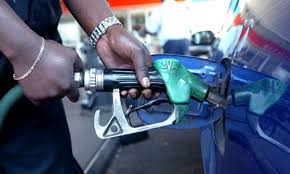
Before the 2023 presidential elections, acres of print space and hours of airtime were expended by armies of well-paid publicists and media influencers to sell home the fact that candidate Bola Ahmed Tinubu was the real deal among the three presidential candidates running in the election. The narrative ran that Tinubu had in his ken, the ability to turn Nigeria’s flagging economy and transform it like he did as Governor of Lagos State when he oversaw an unprecedented level of development at the centre of excellence.
Last week, a major dent to that well packaged façade of President Tinubu was inadvertently revealed when it emerged that the cardinal economic measure of the administration, removal of subsidies on petroleum products, have all along been an elaborate deception. Before nervous and embarrassed Tinubu administration officials disclaimed it, the story that subsidy payments totalling N5trillion had been making the rounds.
To the utter consternation of Nigerians, the question was howbeit that a government that said it had ended subsidy payments is now having to pay more than two times the Buhari government which was paying over N2trillion on subsidies?
The case of petroleum subsidy payments has been mired in a crisis of clarity and truth. When some petroleum economists questioned the claim that subsidy had been removed with empirical facts, mum was the word from the President who announced the measure in the first place and who doubles as substantive Petroleum Minister. The minister of State in the same Ministry, Heineken Lokpobiri without providing contravening facts pointedly denied that subsidy was being paid. The Group Managing Director of the Nigeria National Petroleum Company Limited (NNPCL) Mele Kyari also said what amounted to the same thing as the minister of state. His explanation was that in the past subsidies arose out of the necessity to license contractors to import and distribute petroleum products in the country as a result of non-functioning of the refineries. In the current dispensation however as the NNNCL had been given the sole responsibility of that task, there was no need for subsidies as he said ‘’NNPCL (through its ways, I presume) had the mechanism to cover the costs’’ of the task of importing and distributing the commodity without subsidy.
But the International Monetary Fund (IMF) and World Bank were not convinced. Let us not forget that the twin institutions are the authors and supervisors of the Tinubu administration’s economic policies. And what they say in their assessment of the economic policies of the administration cannot be far from the truth. Whereas the GMD’s explanation was more on the side of contrived sophistry intended to deflect embarrassing enquiry, the statements from the IMF and World Bank on subsidies were decidedly factual. The World Bank’s Country Director in Nigeria connected the variables of the oil importation and distribution monopoly of the NNPCL to arrive at the conclusion that subsidy was indeed being paid. These include; the rate at which the NNPCL procures the dollar for the transaction; the cost of the commodity at point of procurement; cost of freight and insurance; landing and distribution costs in Nigeria. Where there is a difference in the actual cost of one or all of the variables, this then establishes the fact of subsidy. The World Bank knew that NNPCL was getting foreign exchange preferentially at the official rate which is below the market rate. And from that stage right up to the landing stage and distribution in Nigeria, the subsidy graduates at every point leading inevitably and factually to the conclusion that subsidy was being paid.
The IMF on its part pointedly said that taking all the points together, the fact that the pump price of the petroleum products all things being equal should be somewhere between 700 and 800 naira per litre and not the 680 naira per litre that it is being sold presently. The fact that it is not being sold at those rates is the clearest indicator that the difference in pricing is the subsidy. Kyari’s explanation that the NNPCL is covering the cost is a vague indication that the conglomerate is paying the cost differentials to the local oil marketers to distribute the cost locally after it had imported the commodity to the country.
Let us not pussy foot about it; subsidy is indeed being paid by the Tinubu administration. The only difference here is that unlike in the past where the subsidy payment was a bazaar for all comers, in this particular dispensation, it is the NNPCL that exclusively warehouses the subsidy. And it is by connecting and calculating all the dots on the entire chain of NNPCL’s oil importation monopoly that the World Bank concluded that there was indeed subsidy in the process. So in reality, Mele Kyari’s explanation that NNPCL had the means to cover the cost of oil importation task was merely half the story and it does not convincingly disprove that oil subsidy was not being paid.
If walks and quacks like a duck, it is a duck. Much as it strenuously tries to deny that there is no subsidy, discerning Nigerians know for a fact that subsidy is indeed being paid by the administration. The truth however is that because the payment goes to a single source, the NNPCL which buries the payments in its labyrinthine maze of creative accounting it is not readily discernible as it was in the past subsidy dispensation.
That perhaps explains why from the President who is the substantive Minister of Petroleum to Lokpobiri the State Minister and the GMD of NNPCL, they all can put up a face and say that there are no subsidies. They are able to say so because they are secure in the knowledge that the NNPCL which is at the nexus and custody of the entire process of oil importation into the country can obfuscate the truth about it all with a wink and a nod as it is now doing.
Gadu, is a prolific writer and online communicator.
By: Iliyasu Gadu




Quote: “Ogoniland does not
The latest attack by Chief
Instead, the gathering and
The proposal for a unified
The question should be: who
It is easy to criticise
The people are looking beyond
onest people can reach
Society must therefore

Quote: “Privilege should
There is an old saying that
While motivations cannot
A person who benefits from a
This is why citizens should
We must not assume that
By: Michael Abraham

Quote:”Although the Federal
The recent outburst by the
The senator also alleged
They connect ports, airports,
To address these challenges,
Rwanda and Morocco, for
FERMA should also prioritize
Many Nigerians have asked
-

 News2 days ago
RSG Targets Nine Million Residents in Mosquito Net Distribution Campaign
-

 Oil & Energy2 days ago
Aiyedatiwa Signs New Electricity Bill
-

 Oil & Energy2 days ago
NLNG Commissions Research And Innovation Centre In RSU
-

 Maritime2 days ago
Marine Minister Commends President Tinubu On NPERA Bill Assent
-

 News2 days ago
KenPoly Holds Eight Convocations, August 29
-

 News2 days ago
RSG Begins Another Phase of Projects Commissioning Today
-

 News2 days ago
RMAFC Completes Revenue Sharing Review, Proposes New Pay
-

 Maritime2 days ago
NAGAFF Petitions IGP Over Alleged Maritime Police Harassment