
Editorial
That NBS’ Report On Poverty Level

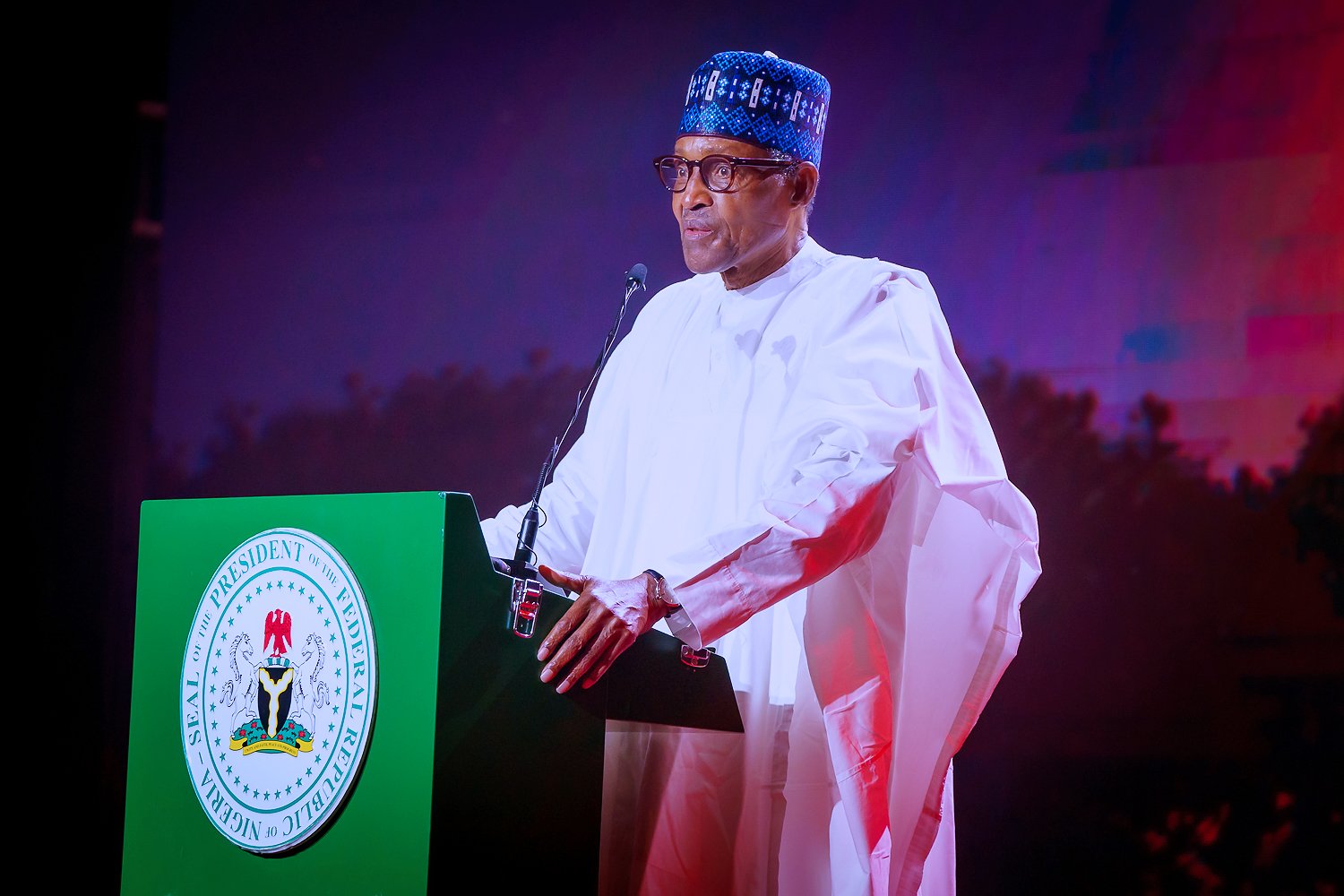
Rather than fulfil its promise of lifting 100 million Nigerians out of poverty in 2015, President Muhammadu Buhari and the All Progressives Congress (APC) government officially threw 133 million Nigerians into deeper poverty. The National Bureau of Statistics (NBS) confirmed this last week in its latest National Multidimensional Poverty Index Report.
According to the report, 63 per cent of Nigerians are poor following a lack of access to health, education, and living standards, alongside unemployment and shocks. The report shows that three out of five Nigerians live impoverished. In 2020, NBS reported that more than 80 million Nigerians lived below the poverty line. The report added that over half of the population who are multidimensionally poor cook with dung, wood or charcoal rather than clean energy.
The latest report is in tandem with the United Nations Development Programme (UNDP) requirement of a basket of goods and services needed to live a non-impoverished life valued at the current prices rather than those who live on less than two dollars a day. People who do not have an income sufficient to cover that basket are deemed to be multidimensionally poor and that is currently the reality for more than 133 million Nigerians.
Findings show that the North-West has the highest number of people in poverty at 45.49 million followed by the North-East 20.47 million, North-Central at 20.19 million, South-South at 19.66 million, South-West 16.27 million and South-East at 10.85 million. On the state profile, Kano has the highest number with 10.51 million, while the least is Abia with 1.12 million people. Inflation and insecurity are contributory factors. The report was released days after the NBS disclosed that Nigeria’s inflation stood at 21.09% from October 2022.
We are not surprised by the North-South gap in poverty surveys. At the 4th Kaduna Economic and Investment Summit in 2018, Alhaji Aliko Dangote, Africa’s richest man and president of the Dangote Group, spoke about the dire extent of poverty in the region. Poverty is a national problem which requires multi-level support from critical stakeholders to address. Food affordability has long become a major challenge confronting most Nigerian homes.
Basic staples have been priced beyond the reach of an average Nigerian. Even the on-season periods when prices of certain items drop, providing a window for consumers to stockpile against off-season periods, no longer count due to the national security situation. In several parts of the country where farming is the main occupation, incessant violence in communities by terrorists has made the profession a serious hazard.
Rising unemployment, inflation, and an increasingly fragile currency continue to plague people and make their lives even more miserable. We therefore call on all levels of government to intervene to provide immediate relief to more than 60% of our population and develop sustainable measures to address the growing multidimensional poverty in Nigeria. People-friendly programmes must be implemented to instil much-needed hope in the population.
In November 2020, a report by the World Poverty Clock rated Nigeria as the poverty capital of the world. According to that report, Nigeria had overtaken India, which United Nations data indicated had a population of 1.3 billion people – more than six times the population of Nigeria. Meanwhile, since Nigeria’s return to democracy in 1999, each of the four successive civilian administrations had rolled out different poverty alleviation programmes. The irony, however, is that rather than decrease, the level of poverty in Nigeria seems to be worsening.
The Buhari administration announced a series of social interventions aimed at shoring up the debilitating economic situation of Nigerians in 2016. The National Social Investment Programme (NSIP) sought to, among other things, provide soft credit to ‘millions of Nigerians’. Despite more than seven years of implementing the NSIP, the poverty level in the country has significantly increased, leading to widespread hunger and under-five deaths.
What is more surprising is that the managers of the NSIP expect that after defrauding many beneficiaries through underpaying them, these beneficiaries would turn around and pay back the fraudulent loans they got. The Trader Moni and other NSIP interventions were built on quicksand, driven more by politics rather than economics. Trillions of Naira have been thrown at the wind by the Federal Government with no tangible and visible outcomes for Nigerians.
To reduce poverty in Nigeria, there must be an increase in literacy rate and skill development. Nigeria has one out of every five out-of-school children in the world, according to UNICEF, with the situation in Northern Nigeria appearing to be even worse. According to data from October 2018, the country has the highest number of out-of-school children. This lack of human capital development invariably results in poverty.
Economic fragility due to an overreliance on oil revenue is another significant reason for the rising poverty levels in Nigeria. As such, diversifying economic activities is critical to give possibilities for Nigerians while maintaining economic stability. Poverty reduction can be aided by enhancing value addition in the agriculture sector. The sector currently employs a large workforce, but by growing it, the government will be able to give even more specialised jobs, allowing individuals to advance up the employment ladder.
With corruption deeply rooted in Nigeria’s system and the absence of penalties for corrupt public officials, the resultant effect has been the diversion of funds intended for development projects, leading to inadequate infrastructure development and social welfare, as well as poverty. Fighting corruption is a step in the right direction to rid the nation of its rising poverty levels, and to curb corruption, a comprehensive anti-corruption campaign and strong fiscal oversight are required.
Infrastructure investment is one strategy to help the country establish a more integrated economy, which can assist in alleviating poverty. Providing reliable power, a rail network, good roads, pipe-borne water, and intervention in mass housing projects, would stimulate economic activities and empower more Nigerians. All of these initiatives, if embraced and implemented properly, can significantly reduce poverty in our country.



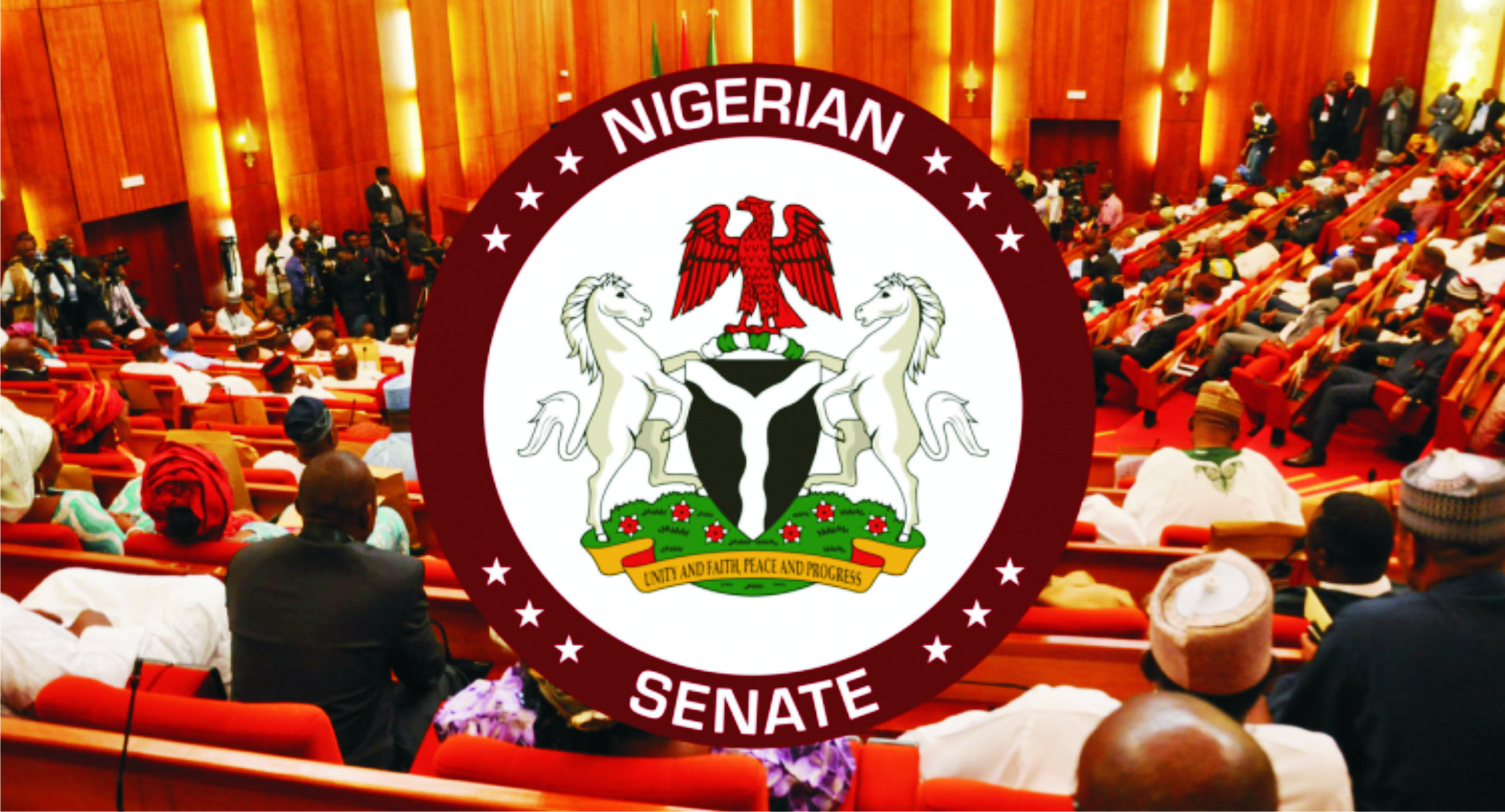
There are moments in the life of a legislature when plain speaking becomes a public service. Senator Adams Oshiomhole provided such a moment on the floor of the Senate when he accused the Minister of Works, Senator David Umahi, of manifestly neglecting critical federal arteries in Edo and Delta States, and implored his colleagues to prevail on the Minister to adopt a more equitable and genuinely national approach to road infrastructure delivery. It was blunt, it was uncomfortable, and it was necessary.
The specifics of his complaint deserve restating. Drawing attention to the recent approval of some 20 new road projects despite the parlous state of existing ones, the former Edo State governor lamented that Nigerians cannot travel from Benin to Warri, Benin to Asaba, Benin to Auchi, or Auchi to Okene without encountering severe distress. He alleged a deliberate omission of these corridors from the national budget in the last three years, save for palliative interventions directed by President Bola Tinubu through tax credit arrangements. His question — “What have we done wrong?” — resonates far beyond the chambers of the National Assembly.
We lend our full and unequivocal support to that call. The Auchi-Benin Road, for instance, has been in a deplorable and near-impassable condition for several years, turning what should be a two-hour journey into an all-day ordeal of broken axles, extortionate fares, and despondent commuters. The media have, on multiple occasions, chronicled the suffering of motorists, traders, and students who ply that route. To describe it as a federal road today is to stretch the meaning of the term beyond recognition.
This pattern of sidelining is not confined to Edo or Delta. Even here in Rivers State, the disposition of the Federal Ministry of Works has left much to be desired, particularly along the Eleme axis of the East-West Road. That road, which ought to be a flagship of federal presence in the Niger Delta, has remained in a wretched state for long. Those who use it daily — workers at the Eleme Petrochemical Complex, the two refineries, Onne Port, and the countless ancillary industries — can attest to its deterioration. Work has proceeded in fits and starts without the sustained urgency such a strategic road demands.
The Eleme stretch is not a mere intra-state byway. It is the gateway to the nation’s economic jugular. According to the Federal Ministry of Works and Housing’s 2023 Highway Condition Survey, only about 35 per cent of the country’s 36,000 kilometres of federal roads are rated as being in good or fair condition, with the remainder classified as poor or very poor. The East-West Road, conceived in the 1970s to bind the entire Niger Delta, remains unfinished in critical sections more than four decades after. If it had been treated as a priority, the perennial gridlock, carnage, and economic loss on the Eleme-Refinery junction would have long been consigned to history.
The irony is as painful as it is glaring. The Niger Delta remains the goose that lays the golden eggs. Data from the Nigeria Extractive Industries Transparency Initiative [NEITI 2023 Oil and Gas Audit] show that the region still accounts for over 78 per cent of Nigeria’s federally collected export earnings and about 65 per cent of total government revenue. The National Bureau of Statistics [NBS Foreign Trade Report Q4 2024] similarly confirms that crude oil continues to dominate export receipts. By every metric of equity and economic logic, a region that sustains the national purse deserves first-rate consideration in the allocation of infrastructure, not afterthoughts and tokenism.
Road infrastructure is not largesse to be dispensed by favour; it is the skeleton upon which commerce, cohesion, and citizenship hang. When contracts are concentrated in one geopolitical zone while other zones are left to contend with craters, it erodes trust in the federation itself. The World Bank’s Nigeria Development Update [June 2023] estimated that poor transport connectivity inflates the cost of moving goods by up to 40 per cent and costs the Nigerian economy an estimated $1.5 billion annually in lost man-hours and vehicle maintenance. If we profess to be one country, then equity must be the compass that guides key institutions before any project is executed. Development must spread round, not pool in one place as though other regions do not matter.
There is also a grave security dimension that can no longer be ignored. The deplorable condition of federal roads has become a veritable enabler of criminality. The NBS Crime Experience and Security Perception Survey reported over 2.5 million incidents of kidnapping-related occurrences nationally, with transport workers identifying bad road spots as prime ambush points. When vehicles are forced to crawl at 10 kilometres per hour through failed sections at Auchi, Sapele Road, or Eleme, they become sitting ducks for armed gangs. Fixing bad roads, therefore, is not merely about convenience; it is about safeguarding lives.
By his intervention, Senator Oshiomhole has hit the nail on the head and reminded Minister Umahi of a fundamental constitutional truth: public office is held in trust. The Ministry of Works is not a personal estate where contracts are awarded according to whim or political convenience. It is a national institution funded by the collective resources of Nigerians, including the oil and gas rents from the very communities whose roads are now neglected. The Minister must demonstrate balance, transparency, and a pan-Nigerian outlook in the distribution of projects that impact the daily existence of citizens. Selective neglect breeds suspicion, and suspicion is corrosive at a time when the nation is preaching unity, oneness, equity, and justice.
Consequently, the National Assembly must go beyond rhetoric and assert its oversight powers with vigour. Sections 88 and 89 of the 1999 Constitution [as amended] empower the legislature to investigate and expose any maladministration in the execution of federal projects. If an office holder is not acting rightly, it is the duty of the Senate and the House of Representatives to call him to order. Oversight must not be reduced to budget approval ceremonies; it must translate to field verification, public hearings, and insistence that the Federal Character principle, as enshrined in Section 14(3) of the Constitution, reflects in road awards.
Let the Auchi-Okene, Benin-Warri, Benin-Asaba, and Eleme East-West gangways be restored to motorable dignity. Let priority be given to completing existing, economically vital roads before embarking on new ones. If those who, through their resources, sustain the federation are sidelined in the distribution of tangible dividends, it tells poorly of our nationhood. Bad roads must be fixed, and they must be fixed now, with fairness as the guiding standard.
-

 News2 days ago
RSG Targets Nine Million Residents in Mosquito Net Distribution Campaign
-

 Oil & Energy2 days ago
Aiyedatiwa Signs New Electricity Bill
-

 Maritime2 days ago
Marine Minister Commends President Tinubu On NPERA Bill Assent
-

 Oil & Energy2 days ago
NLNG Commissions Research And Innovation Centre In RSU
-

 News2 days ago
KenPoly Holds Eight Convocations, August 29
-

 News2 days ago
RSG Begins Another Phase of Projects Commissioning Today
-

 News2 days ago
RMAFC Completes Revenue Sharing Review, Proposes New Pay
-

 Maritime2 days ago
NAGAFF Petitions IGP Over Alleged Maritime Police Harassment