
Editorial
For A Reasonable 2023 Budget

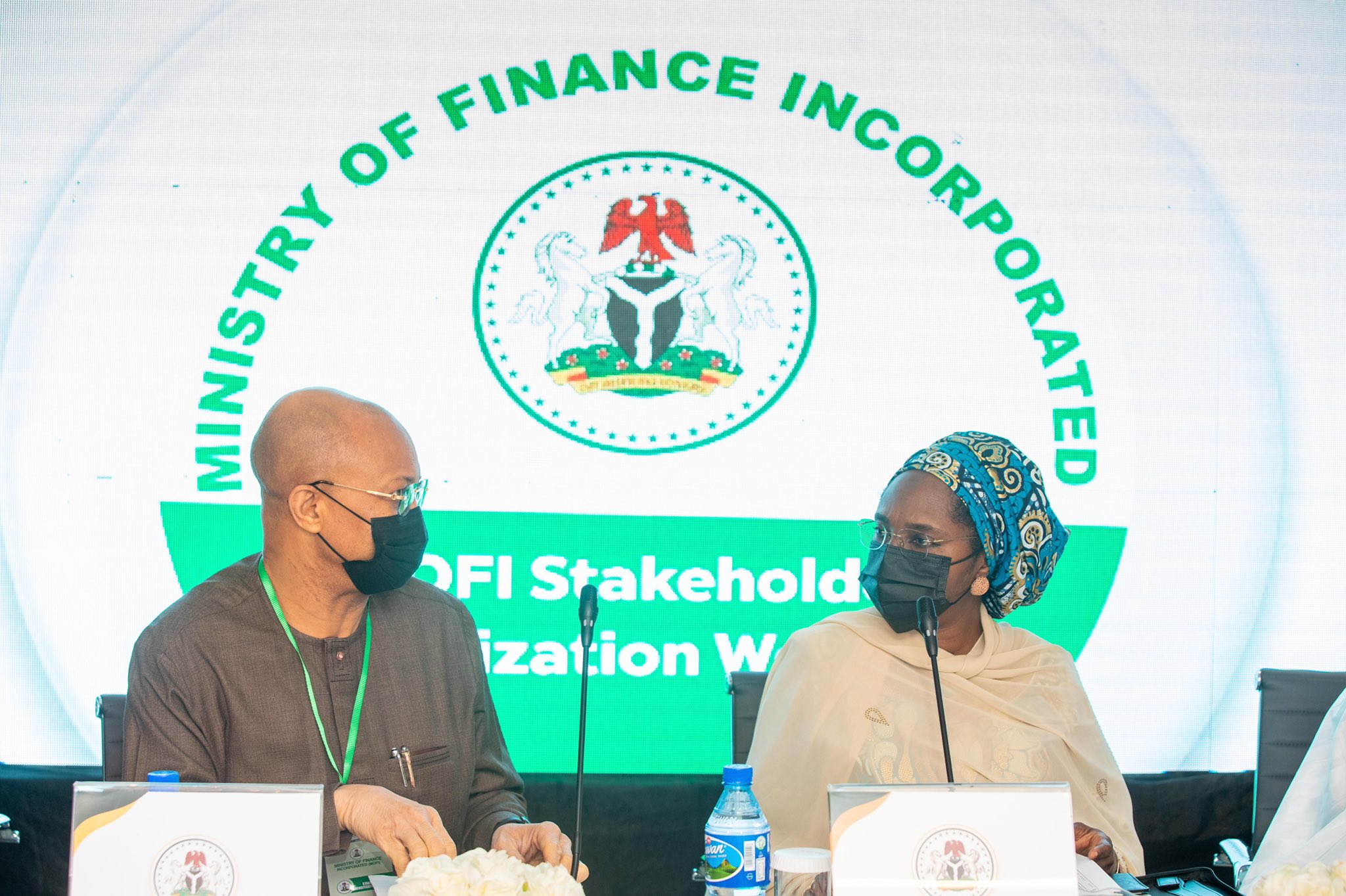
Nigeria’s plan to obtain another N11 trillion loan to finance the 2023 national budget leaves a bitter aftertaste. The nation’s dwindling economy obviously demonstrates that going for a fresh loan would further exacerbate the country’s financial adversity, as the monies borrowed before now have not been fully repaid. If the proposal to borrow in the 2023 fiscal year goes through, the present administration will leave behind massive debts for its successor next year.
The Minister of Finance, Budget and National Planning, Mrs Zainab Ahmed, recently amazed Nigerians when she disclosed that the Federal Government would be unable to fund capital projects in the 2023 fiscal year unless it borrowed more than N11 trillion. Zainab, who said that the budget deficit for the 2023 fiscal year might run between N11.30 trillion and N12.41 trillion, noted that the government’s decision to continue payment of petrol subsidy would largely affect the projection.
Currently, the country’s total debt is N41.6 trillion. With the new borrowing for 2023, the cumulative debt will be N52 trillion at the time the administration will hand over to the next President on May 29, 2023. The minister, while presenting the 2023–2025 Medium Term Expenditure Framework and Fiscal Strategy Paper before the House of Representatives Committee on Finance, put the aggregate expenditure of the government for 2023 at N19.76 trillion.
Stakeholders fear that the economy is on the verge of bankruptcy because of the deepening debt crisis. Ahmed said crude oil production challenges and fuel subsidy deductions by the Nigerian National Petroleum Corporation (NNPC) Limited constitute a significant threat to the achievement of the nation’s revenue growth targets. They stated the need for bold, decisive and necessary action to address revenue loss and expenditure efficiency at national and subnational levels.
Indeed, the government’s suggested move smacks of gross insensitivity and a confirmation that President Muhammadu Buhari cannot manage Nigeria’s challenges. Nigerians must resist any further attempt by the current administration to enslave the country. Instead of plunging the nation deeper into irredeemable debt, it will be better for the President to honourably resign if the nation’s complex problems have overwhelmed him.
It is time everyone became conscious of the unfortunate economic implications of Buhari’s borrowing spree to avoid mortgaging the future of the unborn generations. We have pretended enough and for too long. At this rate of borrowing, Nigeria will soon be worse than a failed nation. We should no longer be making excuses about the despondency of our situation brought upon us by the current government. The situation is disconcerting and scary.
The new proposal to borrow would worsen the existing bad debt situation. Already, debt service has exceeded the government’s revenue going by the financial report of the Federal Government as of April this year. We are now at a debt threshold that is unsustainable. The economy is on the verge of collapse, while the increasing debt crisis could crystallise the insolvency risk. Therefore, elevated debt burden should be resisted strongly.
Regrettably, it implies that the entire capital budget, recurrent expenditure and part of the debt service, would have to be funded from borrowing. What is required is the political will to cut expenditure and undertake reforms that could scale down the size of government, reduce governance costs and ease the fiscal burden. Fuel subsidy has to be addressed as steps should be quickly taken to gradually exit the subsidy regime if the economy must not disintegrate.
The truth is that the Federal Government cannot cut costs; it keeps spending on unnecessary and unproductive items as if it was not aware that Nigeria has been grappling with a severe revenue crisis. The major source of its foreign exchange is oil export. To make issues worse, the country has been unable to meet its Organisation of Petroleum Exporting Countries (OPEC) allocated daily crude oil production quota for more than two years.
The sector is faced with unprecedented crude oil theft, while the governing authorities fail to make existing refineries work for domestic refining of crude. Our country already has a double-digit inflation figure as refined petrol sells for between N174 and N220 per litre above the official rate of 165/litre. Nigeria’s foreign exchange reserve is drying out because of poor forex earnings from oil that is spent on scandalous fuel subsidies through the back door.
It is spurious to think that Nigeria has a revenue concern. What it suffers from is the inability to reap its earnings because the government has not demonstrated enough capacity to either curb corruption or theft in the oil sector. Hence, the fiscal deficit would continue to soar as long as the authorities fail to creatively strengthen revenue generation by reducing corrupt practices, impeding oil theft and dealing with insecurity that has adversely manacled economic enterprises across the board.
Some financial and economic experts have warned the Federal Government to reduce its current level of borrowing, as a considerable chunk of government revenue is now being spent on debt servicing. This position is not distant from the truth. It is our view that rather than continue to rely on borrowing to finance its activities, Buhari should adopt other sources of funding for the infrastructure needs of the country. The government should broaden the sources of revenue for budget financing.
Significant areas the government could explore to free more funds for infrastructure development include reorganisation of the National Housing Fund, reorganising railway development to expunge it as a federal monopoly to bring in private sector investments, and opening the window of investments into the power sector, especially in transmission and distribution, among others.
So, we ask: where is the vaunted expanded production and revenue with which to pay the loans? The country is not yet paying back these loans; neither does it have sufficient funds to pay the interests on the loans. This government will easily go on record as having mortgaged the present and the future of Nigeria with its profligate expenditure and mercenary management of the economy.
We hope it will be restrained from doing more harm before leaving office. The National Assembly must not endorse another borrowing but rather institute an impartial panel that will probe and investigate all the monies generated from NNPC Limited, taxes and excise duties, contracts awarded, monies produced from gold and other solid minerals, Abacha’s loots and others recovered by the regime.



-
Nation5 days ago
Asarama Kingdom Condemns Gruesome Murder of A Commercial Vehicle Driver
-
Rivers5 days ago
Monarch Raises Alarm Over Defamatory Politics … Urges For Unity In Ogoni
-
News5 days ago
Nigeria, Ethiopia Seal Agreement To Transfer 100 Nigerian Prisoners
-
News5 days ago
Nigeria No Longer Safe For Drug Cartels – Marwa
-
News5 days ago
Xenophobia: 268 Nigerian Returnees Arrive In Lagos From S’Africa
-

 News5 days ago
FG Declares Today Public Holiday To Mark Democracy Day
-
Women5 days ago
Nigerian Women And Dividends Of Democracy
-
Business5 days ago
FG Approves $1 Bn AFCFTA Credit Facility For Nigerian Exporters