
News
2m Employees Die Yearly From Work-Related Causes -ILO, WHO

Work-related diseases and injuries were responsible for the deaths of 1.9million people in 2016, according to the first joint estimates from the World Health Organization (WHO), and International Labour Organization (ILO).
According to the WHO/ILO Joint Estimates of the Work-related Burden of Disease and Injury, 2000-2016: Global Monitoring Report, the majority of work-related deaths were due to respiratory and cardiovascular disease.
Non-communicable diseases accounted for 81 per cent of the deaths.
The greatest causes of deaths were chronic obstructive pulmonary disease (450,000 deaths); stroke (400,000 deaths) and ischaemic heart disease (350,000 deaths).
Occupational injuries caused 19 per cent of deaths (360,000 deaths).
The study considers 19 occupational risk factors, including exposure to long working hours and workplace exposure to air pollution, asthmagens, carcinogens, ergonomic risk factors, and noise.
The key risk was exposure to long working hours – linked to approximately 750,000 deaths.
Workplace exposure to air pollution (particulate matter, gases and fumes) was responsible for 450,000 deaths.
According to WHO Director-General, Dr Tedros Adhanom Ghebreyesus, “It’s shocking to see so many people literally being killed by their jobs. Our report is a wake-up call to countries and businesses to improve and protect the health and safety of workers by honouring their commitments to provide universal coverage of occupational health and safety services.”
Also, commenting, ILO Director-General, Guy Ryder, said, “These estimates provide important information on the work-related burden of disease, and this information can help to shape policies and practices to create healthier and safer workplaces.
“Governments, employers and workers can all take actions to reduce exposure to risk factors at the workplace. Risk factors can also be reduced or eliminated through changes in work patterns and systems. As a last resort personal protective equipment can also help to protect workers whose jobs mean they cannot avoid exposure”.
On her part, Director of the Department of Environment, Climate Change and Health at WHO, Dr. Maria Neira, said, “These almost 2million premature deaths are preventable. Action needs to be taken based on the research available to target the evolving nature of work-related health threats.
“Ensuring health and safety among workers is a shared responsibility of the health and labour sector, as is leaving no workers behind in this regard. In the spirit of the UN Sustainable Development Goals, health and labour must work together, hand in hand, to ensure that this large disease burden is eliminated.”
Also, Director of the Governance and Tripartism Department at ILO, Vera Paquete-Perdigao, said, “International labour standards and WHO/ILO tools and guidelines give a solid basis to implement strong, effective and sustainable occupational safety and health systems at different levels. Following them should help to significantly reduce these deaths and disabilities.”
Work-related diseases and injuries strain health systems reduce productivity and can have a catastrophic impact on household incomes, the report warns.
“Globally, work-related deaths per population fell by 14 per cent between 2000 and 2016. This may reflect improvements in workplace health and safety, the report says. However, deaths from heart disease and stroke associated with exposure to long working hours rose by 41 and 19per cent, respectively. This reflects an increasing trend in this relatively new and psychosocial occupational risk factor.
“This first WHO/ILO joint global monitoring report will enable policy makers to track work-related health loss at country, regional and global levels. This allows for more focused scoping, planning, costing, implementation and evaluation of appropriate interventions to improve workers’ population health and health equity”.
The report shows that more action is needed to ensure healthier, safer, more resilient and more socially just workplaces, with a central role played by workplace health promotion and occupational health services.
“Each risk factor has a unique set of preventive actions, which are outlined in the monitoring report to guide governments, in consultation with employers and workers. For example, the prevention of exposure to long working hours requires agreement on healthy maximum limits on working time. To reduce workplace exposure to air pollution, dust control, ventilation, and personal protective equipment is recommended.
“A disproportionately large number of work-related deaths occur in workers in South-East Asia and the Western Pacific, and males and people aged over 54 years”.
The report notes that total work-related burden of disease is likely substantially larger, as health loss from several other occupational risk factors must still be quantified in the future.
Moreover, the effects of the Covid-19 pandemic will add another dimension to this burden to be captured in future estimates.



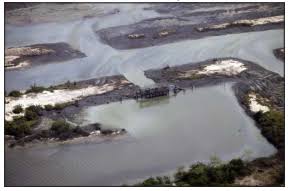
A Coalition of civil society organisations has urged the Federal Government to take proactive steps towards addressing the persistent gas eruptions in Bille, Rivers.
The coalition, made up of the People’s Assembly and Bille Working Group, made the call in an open letter addressed to President Bola Tinubu, and read to journalists in Port Harcourt, yesterday.
Reading the letter, the coalition’s convener, Dr Isaac Osuoka, said that the persistent gas eruption in Bille had led to serious environmental and public health challenges.
Osuoka, also the Executive Director, Social Action, urged Tinubu to establish a presidential task force to investigate and contain the gas leak in Bille.
He also called for the immediate relocation of residents to safe shelters, provision of clean water, food and healthcare services.
Dr Emem Okon, the Executive Director, Kebetkache Women Development and Resource Centre, stated that gas had been bubbling from the ground, creeks, boreholes and hand-dug wells in the community since October 2025.
Okon said that the gas had triggered several fires and explosions, and that residents of the community had reported respiratory problems, vomiting and other illnesses associated with exposure to the emissions.
According to her, preliminary investigations by the National Oil Spill Detection and Response Agency (NOSDRA) and the Nigerian Upstream Petroleum Regulatory Commission (NUPRC) have yet to identify the source of the gas.
Mr Kentebe Ebiaridor, the Coordinator, Oilwatch International, called for the publication of results from preliminary soil and water tests conducted in Bille for the residents to know the nature and extent of the contamination.
Ebiaridor urged the Federal Government to deploy medical teams to screen and treat affected residents, and immediately commence an independent study on the health impacts of the leak.
He further called for the suspension of oil and gas operations around OML 18 and 24 until the source of the gas leak was identified and the affected areas declared safe.
Ebiaridor urged the government to hold current and former operators of the oil leases accountable for environmental damage on the community.
Another speaker, Dr Bieye Briggs, urged the National Assembly to fast-track the NOSDRA Amendment Bill, 2025 to provide the agency with statutory funding and stronger enforcement powers.
Briggs urged the Federal Government to activate the regional Spill Command Centre, and make the Upstream Remediation Fund accessible for the Bille crisis and other affected communities in the Niger Delta.

The Akwa Ibom State Police Command has banned drone operations and fireworks in Uyo and announced temporary traffic restrictions ahead of President Bola Tinubu’s visit to the State today.
The state Commissioner of Police, Baba Mohammed Azare, announced the measures yesterday while briefing journalists at the Police Headquarters in Ikot Akpan Abia, Uyo.
He said the restrictions were part of security arrangements to maintain public order, protect strategic locations and ensure the smooth movement of the President’s convoy during his engagements.
“There will be total restriction on the operation and flying of drones within Uyo metropolis throughout the period of the visit. Members of the public, drone operators and service providers are advised to strictly comply with the directive,” he said.
The police commissioner also announced a ban on fireworks, knockouts and other explosive sound-producing devices within the state capital during the visit.
He said the measure would prevent panic and allow security personnel to respond effectively to genuine security threats.
The command also announced temporary restrictions on public access to designated routes and locations in Uyo to facilitate the movement of the presidential convoy.
The affected areas are Airport Road, Shelter Afrique Junction, Oron Road, Nung Oku Junction, Mbierebe Junction and Godswill Akpabio International Stadium.
“Motorists are urged to plan their journeys, exercise patience and cooperate with traffic and security personnel deployed along the corridors.
“Members of the public are advised to avoid the routes during the restriction and use alternative routes,” Azare said.
He also urged residents to plan their journeys, exercise patience and cooperate with traffic and security personnel deployed along the affected corridors.
The commissioner said the command, working with other security agencies, had put in place security arrangements to ensure a peaceful and hitch-free visit.
He appealed to residents to understand that the temporary restrictions were necessary security measures and not intended to cause hardship.
Azare urged members of the public to remain law-abiding, avoid restricted areas and report suspicious movements to the nearest police station or through police emergency channels.
Tinubu’s visit to Akwa Ibom is a working visit during which he is expected to inaugurate major infrastructure projects executed by Governor Umo Eno’s administration under its ARISE Agenda. The projects cut across aviation, road infrastructure, tourism, healthcare, land administration and security.
Among the projects scheduled for inauguration are the international terminal building and airport hospital at Victor Attah International Airport, Aviation Village, ARISE Palm Resort, the 14.5-kilometre Nsit Atai–Okobo Road, Ring Road 3, the Command and Control Centre and the AkwaGIS building.
The state government had earlier announced plans for the President to inaugurate projects as part of activities marking Akwa Ibom’s 39th anniversary in September.
The airport projects are particularly significant to the state’s ambition to expand aviation, tourism and investment.
The international terminal is expected to strengthen the airport’s capacity to handle international operations, while the Aviation Village is intended to provide accommodation for aviation workers. The airport hospital is also among the facilities lined up for inauguration.
The road projects are also expected to improve connectivity. The 14.5-kilometre Nsit Atai–Okobo Road links communities in the two local government areas, while Ring Road 3 is designed to improve movement within Uyo and ease pressure on existing roads. The Command and Control Centre, meanwhile, is intended to strengthen security surveillance and coordination in the State.
The Rivers State Ministry of Culture and Tourism has floated a culture content platform in collaboration with digital television group, Multichoice.
Permanent Secretary, Ministry of Culture and Tourism, Mr. Freddy Ndigbara, disclosed this after a meeting with MultiChoice Head of Content Acquisition, Don Dotun Ojon, in Port Harcourt.
He assured that content entrepreneurs and film makers would enjoy the platform by promoting culture and other contents to sell the states tourism potentials.
He said MultiChoice M-net was now open to increase its patronage for content shots on locations in Rivers State, describing the State as one that has numerous potentials for film tourism.
“We were privileged to have Don Ojon with us at the Rivers International Film Festival (RIFF) at the weekend in Bonny and he saw, first hand, the numerous sites and opportunities that are open to creatives in the State. After that, we felt it was important to deepen the conversation and he obliged. This is a cheering news for the sector in the State,” he said.
Ndigbara stated that “Rivers State has many more untold stories to tell, many more contents to reel out and the assurances from the M-net Acquisition Manager is an indication that the industry in the state will soon enjoy a new lease of life”.
The Permanent Secretary thanked Ojon for the visit and assured that creatives in the State would grap this opportunity and show the world that Rivers State is a major hub for film tourism in Nigeria.
On his part, Ojon said the visit was to discuss on ways of promoting tourism in the State using creatives and film.
Ojon said although the company has recently been acquired by canal+ France and is undergoing restructuring, he would promote the chances of Rivers State to host the MultiChoice talent factory in the State.
With Asaba, capital of Delta State, being saturated, Ojon said the next port is Rivers State, which he said is capable of building fresh crop of creatives, new locations, new story lines and concepts.
He, therefore, called for collaboration from stakeholders in the State.
Kevin Nengia
-
Rivers5 days ago
Don Seeks Repositioning Of Tech Education For Dev
-
Rivers1 day ago
NUJ Set To Attend UNIPORT’s 217th Inaugural Lecture
-
 News1 day ago
NJC Suspends Three Judges, Sanctions Eight Others
-

 Politics5 days ago
2027: RIVERS GUBER CANDIDATES SIGN CHARTER TO PRIORITIZE CITIZENS’ DEMANDS
-
 Politics5 days ago
Atiku Demands INEC Officials’ Probe Over Alleged Voters’ Register Manipulation
-
Politics5 days ago
2027: Attack Electoral Officials, Face Full Weight Of Law, INEC Warns
-
Sports5 days ago
‘Nigeria, Very Poor In CAF Inter-Club Competitions’
-

 Sports5 days ago
NFF Celebrates First Nigerian CAF General Secretary