
Nation
ASUU Threatens FG Over ‘Unpaid 10-Month Salaries’

The Academic Staff Union of Universities (ASUU) has accused the Federal Government of breaching a “no victimisation clause” agreed upon during the dialogue that led to the suspension of the strike they had embarked on.
Specifically, the union, through the Chairman of ASUU, University of Ibadan, Prof Ayo Akinwole, alleged that the Federal Government and the Accountant General of the Federation are victimising its members by refusing to pay them “salaries running between two to 10 months despite suspending the strike”.
The alleged refusal, according to ASUU, could lead to another strike in future.
ASUU stated that while members are back to their duty posts, the harsh economy being experienced due to unpaid salaries and non-refund of deducted check-off dues will affect productivity.
The academic union stated in a statement that the Federal Government refused to remit union deductions it made to the account of the union with a plan to stifle it.
“While government is paying outstanding five months salaries for those on nominal role at an agonisingly slow pace, over one hundred UI academic staff are being owed salaries ranging between two and ten months.
He disclosed that those newly employed in February, 2020, have not received any dime because they maintained their stand to reject enrolment on the IPPIS.
The ASUU boss stated the Buhari Government has continued to show that it cannot obey the rule of law by continuing to deduct housing funds from ASUU members who have not subscribed to the scheme and also refused to refund same to respective accounts.
“On December 23, 2020, ASUU conditionally suspended (with effect from 12:01 am on Thursday, 24th December, 2020) its 9-months old strike which it began on March 23, 2020, owing to the failure of the Nigerian Government to address the outstanding issues as outlined in the collective bargaining agreements of 2009, 2013, 2017 and 2019 freely reached and signed between the government and ASUU.
”The suspension of the strike was based on an agreement reached and a ‘Memorandum of Action ‘ signed in good faith between the government and the ASUU at the stakeholders’ meeting held on the Tuesday, 22nd December, 2020.
“A major common position agreed to (and expected to be respected) by the Government and ASUU was that ‘nobody shall be victimised in any way whatsoever for his/her role in the process leading to the Memorandum of Action.
“The agreement reached on the 22nd December, 2020, imposed some obligations on both the Government and ASUU. On the part of ASUU, the union undertake to go back to the classrooms, laboratories, workshops, workstations etc, to do the best for the students and the country.
”The governments, both federal and state are to sincerely fulfil their own parts of the bargain, a major part which is the no victimisation clause.
”While ASUU as a union, and her members as individuals in various branches have remained faithful to this agreement by returning to classes and performing their respective duties, the Federal Government, true to type has reneged on its part.
“Contrary to FGN affirmation of its commitment to pay all withheld salaries of ASUU members who have not enrolled in the Integrated Personnel and Payroll Information system (IPPIS), three months after the suspension of strike, thousands of ASUU members across various branches are still being owed salaries”.
While confirming that government is defraying the generally withheld five months salaries at an agonisingly slow rate of one outstanding salary per month, it noted that the salaries of some members running to hundreds have been permanently and consistently withheld by the office of Accountant general of the federation (OAGF).
It maintained that over 80 ASUU-UI members in the Faculty of Veterinary Medicine have their medical allowances of over eight months still unpaid.
“This government has again reneged on its agreement with ASUU and can no longer be trusted. Since the suspension of the strike, three months ago, none of the issues in contention has been completely attended to.
“Federal Government till date has withheld over 77% of union dues it ought to remit into the account of ASUU, University of Ibadan branch.
”This, in the view of the union is a direct attack to cripple the Union, a grand plan of the Federal Government.”
Instead of deploying the University Transparency and Accountability Solution (UTAS) software developed by ASUU which has been adjudged effective for payment of salaries, ASUU argued that some of its members are being coerced by agents of government to register on the repressive IPPIS for payment of salaries.
“These harsh conditions will have terrible consequences on public tertiary education in Nigeria and when push eventually comes to shove, as it definitely will, in no distant future the Nigerian public should accordingly blame the Federal Government for its insincerity.
”Blame the federal government of Nigeria if the universities are shut down again”, ASUU added.



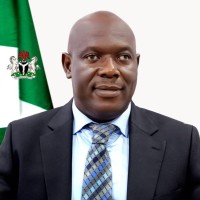
The Hydrocarbon Pollution Remediation Project (HYPREP) has commemorated the 15th anniversary of the release of the United Nations Environment Programme (UNEP) Environmental Assessment Report on Ogoniland, reaffirming its commitment to restoring the environment and improving the livelihoods of affected communities.
In a statement signed by the Project Coordinator, Prof Nenibarini Zabbey, to commemorate the anniversary, HYPREP described the anniversary as a significant milestone in Nigeria’s environmental restoration efforts, noting that the project has made remarkable progress in implementing the recommendations of the landmark UNEP report released on August 4, 2011.
The UNEP report had revealed extensive oil pollution across Ogoniland, severe environmental degradation, and serious public health risks resulting from decades of petroleum operations. It also recommended an initial $1 billion fund to commence the cleanup of the affected communities.
According to HYPREP, the Federal Government formally launched the Ogoni clean-up in 2016, while the Project Coordination Office was established in 2017 to drive the implementation of UNEP’s recommendations.
Zabbey said the current administration has continued to prioritise the project under the Renewed Hope Agenda.
Providing an update on the cleanup, the Project Coordinator disclosed that 30 of the 65 contaminated sites identified by UNEP have been fully remediated, while work is ongoing at several medium- and high-risk locations. It also stated that more than 1.5 million mangrove seedlings have been planted as part of what it described as the world’s largest restoration of oil-degraded mangroves, with over 1,000 hectares of shoreline already rehabilitated.
Zabbey further revealed that 49 Ogoni communities have been connected to potable water schemes through multiple water projects and booster stations aimed at providing safe drinking water across the region.
In the health sector, he said the 100-bed Ogoni Specialist Hospital in Kpite and the 43-bed Cottage Hospital in Buan are nearing completion, adding that several existing health facilities have been upgraded with modern medical equipment, while five ambulances have been donated to improve emergency healthcare services. The Project Coordinator also disclosed that a three-year human health biomonitoring study is being conducted in collaboration with the World Health Organization’s International Agency for Research on Cancer (IARC).
On economic empowerment, Zabbey stated that the Project has created more than 8,000 direct jobs and trained thousands of Ogoni youths and women in various vocational and technical skills, including software development, cybersecurity, aviation, commercial diving, seafaring, mechatronics, and creative arts. The project also reported awarding scholarships to more than 1,000 students, providing grants to small businesses, and supporting persons living with special needs through skills acquisition programmes.
The statement further highlighted ongoing legacy projects, including the Ogoni Power Project and the Centre of Excellence for Environmental Restoration, which it said is about 96 per cent complete. HYPREP also welcomed the recent designation of the Ogoni Wetland as a Ramsar Site of International Importance and pledged to continue promoting biodiversity conservation and sustainable management of the ecosystem.
Marking the anniversary, Zabbey said the progress achieved over the past 15 years demonstrates the collective commitment of government, development partners, stakeholders, and local communities to restoring Ogoniland. He called for renewed collaboration to sustain the cleanup effort, promote environmental sustainability, and support the long-term development of the region. 3
-

 News2 days ago
RSG Targets Nine Million Residents in Mosquito Net Distribution Campaign
-

 Oil & Energy2 days ago
Aiyedatiwa Signs New Electricity Bill
-

 Oil & Energy2 days ago
NLNG Commissions Research And Innovation Centre In RSU
-

 Maritime2 days ago
Marine Minister Commends President Tinubu On NPERA Bill Assent
-

 News2 days ago
KenPoly Holds Eight Convocations, August 29
-

 News2 days ago
RSG Begins Another Phase of Projects Commissioning Today
-

 News2 days ago
RMAFC Completes Revenue Sharing Review, Proposes New Pay
-

 Maritime2 days ago
NAGAFF Petitions IGP Over Alleged Maritime Police Harassment