
Nation
FIRS Targets N5.9trn In 2021, Mani Tells Senate Panel

The Chairman of the Federal Inland Revenue Service, Mr. Mohammed Nami, said, yesterday, that the agency was targeting N5.9trillion revenue this year.
Mani stated this before members of the Senate Committee on Finance.
The panel was reviewing the performance of the FIRS 2020 revenue projection of N5.076trillion out of which it was able to realise N4.950trillion, representing 98 per cent.
He told the panel that the cost of collection being 4 per cent, achieved N130.45billion against a budget of N186.76billion.
The FIRS chairman said the agency was proposing a total revenue collection of N5.9trillion representing an increase of 16.22 per cent above 2020 budget of N5.076 trillion.
He said the cost of collection was projected at N289.25billion at 7 per cent to take care of the increasing cost of operation and planned expansion of operation for new sources of revenue.
He further said that the agency would not be recruiting any staff in 2021 as there were not enough accommodation yet even for existing staff in the face of Covid-19.
He said, “We need to observe social distancing rules and presently some of the staff are working remotely from home.”
The Chairman, Senate Committee on Finance, Senator Solomon Adeola, said the Senate would consider the possibility of approving an increase in the cost of collection that accrue to FIRS from its operation from its present approved 4 per cent.
He said whatever was recommended by his committee would be presented for approval by the Senate in plenary as the committee cannot unilaterally approved the proposed 7 per cent proposed by the agency.
Adeola said that FIRS should look at other alternative of revenue generation for its operations from other areas of revenue beyond a blanket increase of cost of collection for its operations.
He said his panel was looking at fashioning out ways the agency could generate additional revenue for the federal and state governments.
He said, “As a way of increasing revenue of the government, our committee is to begin a full blown investigation of all 467 revenue generating agencies of the Federal Government.
“This is to ascertain compliance with remittances into the consolidated revenue account of the government as well as remittances of the 1 per cent Stamp Duty by all agencies on contracts they awarded.
“For government to execute projects and provide services, revenue from the oil sector is now grossly insufficient,” he added.
ry base, wreaking havoc.
The incident continued unabated as the insurgents stormed a Humanitarian Hub and razed it down, even as thousands of residents were trapped as they receive directives and ideologies from the Boko Haram sect currently hoisting their flags in different locations.
As it is, the number of casualties on the sides of the military, the terrorists and civilians is yet unknown, as efforts to get confirmation from Police Public Relations Officer, DSP Edet Okon, proved abortive at press time.
Unfortunately, innocent civilians are feared dead as a result of the crossfire.
Sources said, the insurgents after capturing the town which is about 75km drive from Maiduguri, the state capital, were not after the lives of civilians as long as they comply with them.
A trapped resident, Ali Usmanu said that the insurgents succeeded in burning down the newly reconstructed council secretariat, police post, schools and other public structures in the town.
This destruction is coming barely 48hours when Governor Babagana Umara Zulum visited Dikwa and spent some days distributing food, non-food items and cash amounting to over N100 million to Internally Displaced Persons (IDPs) in the town.
Recover Towns Occupied By Terrorists, Bandits, Buhari Orders Security Chiefs
President Muhammadu Buhari has ordered the nation’s security chiefs to recover all areas being occupied by insurgents, bandits and kidnappers all over the country.
The National Security Adviser (NSA), retired Maj.-Gen. Babagana Monguno told State House correspondents that Buhari issued the order during the just-concluded meeting of the National Security Council.
The meeting was presided by Buhari at the Council Chamber of the Presidential Villa, Abuja, yesterday.
According to him, no sovereign nation will allow a group of non-state actors to bring it down to its knees and bring the state to panic; apprehension, distrust and disorder.
“Therefore, both the defence and intelligence organisations have been charged that while we look forward to having a peaceful, non-kinetic resolution, we will not allow this country to drift into state failure.
“And with effect from today, the new service chiefs have been given directives by the Minister of Defence, conveyed by the President to the Minister of Defence, to reclaim all areas that have been dominated by bandits, by kidnappers and other scoundrels of scallywags.
“In doing so, I’ve also asked all the intelligence agencies to collapse all their efforts onto one platform, so that with the convergence of efforts, we will be able to give the required intelligence to the operational elements of government.
“Now, I need to stress also that there are individuals in this country who have assumed a status that is beyond what they should be. The intelligence from our own sources, the intelligence at my disposal reveals that we have certain entities, certain individuals who are making capital out of insecurity, especially kidnapping.
“This is a situation that has to be brought to an end and I’m sending a warning to anybody who is hiding beneath a veneer of some status, whether official, in terms of an official capacity or traditional or religious, to stoke the flames of disorder.
“The government is very serious about this. As I said, we’re drifting into a situation that we can no longer afford to lose lives.
“We are not going to be blackmailed, we’re going to use whatever is at our disposal, while operating within the confines of legitimacy, within the confines of legality, but the government has a responsibility to assert its will, using the instruments at its disposal to keep the state moving, alive, happy in prosperity, this will not be compromised,’’ he warned.
Monguno revealed that the meeting also deliberated on issues of freedom of citizens to reside wherever they wish to reside as stipulated in the Constitution of the Federal Republic of Nigeria.
“While at the same time, the government endorses that anybody who is a criminal, who acts on his own outside the law, should be brought to book wherever he is, but the issue here is that when we continue to pitch ourselves against each other, then this problem will only continue to be magnified.
“Therefore, Mr President has charged everyone to be mindful of this situation because once we start to profile ourselves along ethnic or religious lines, then; there’ll be no end to it.
“We’ve seen what has happened in so many countries around the globe and we do not want Nigeria to fall into that type of situation.
“I think we’ve had enough of violence, enough of chaos, enough of anarchy but I want to stress once more that any individual or group that thinks it can take it upon itself to cause disunity, disharmony and push the country to the brink should have a rethink.
“Any individual who thinks he has any support, who thinks he can undermine this government, anybody, any human being, as long as it is a citizen of this country, any person who thinks he’s the cat’s whiskers, or he can be rocky on the perch and lead us into a situation of unhappiness, will have himself to blame at the end of the day,’’ he added.
The NSA further disclosed that the president had already given directives to the military and intelligence organisations to trail and flush out all the people that had been on their watch list.
He said: “I can assure you there are quite a handful of people on our watch list. They will be trailed, they will be routed out and they’ll be brought to book.
“They’ll be prosecuted and they’ll be made an example of and anybody who wants to use this situation to blackmail the government should also think.
“The President, finally, has asked us to put our heads together to try as much as possible to work on a whole of government basis, in conjunction with a whole of scientific basis to achieve a whole of nation result.
“When I say the whole of government, I’m not saying the whole of the executive. I’m saying the whole of executive, legislature and judiciary.
“That is what the partnership is and this partnership will work with people outside the federal establishment, that is working with the state governments, working with traditional and religious organisations and local community leaders, while at the same time trying to enhance community policing.’’
2023: Create More Polling Units, Senate Tasks INEC
The Senate Committee Chairman on Independent National Electoral Commission (INEC), Senator Kabiru Gaya, has tasked the commission on making polling units available for the electorate.
He said it was within the powers of the electoral umpire to make polling units available and accessible, noting that when there is a lack of polling units, the electorates are inadvertently denied their voting rights.
Speaking at a one-day joint Senate and House Committee on INEC and Electoral Matters, yesterday, the lawmaker stressed that the availability of polling units is the first level of “citizens’ active and physical democratic rights.”
Citing section 42 of the Electoral Act, 2010, Gaya said “The commission shall establish a sufficient number of polling units in each Registration Area and allot voters to such polling units”,
He maintained that if INEC stifled voting accessibility, voters would be discouraged.
He pointed out that the challenge of the 2019 general election was over-populated voters in some polling units, insisting that such developments should not happen in 2021.
“One of the challenges that almost marred the credibility of the 2019 general election especially in densely populated urban and rural registration areas was the accessibility to polling units.
“There were some polling units that had more than 12,000 voters well over the prescribed average number of 500 voters per polling units.
Gaya urged INEC to be proactive in the area of polling units’ location that is in difficult terrain as well as ensuring that the physically challenged are taken into consideration in accessing polling units, which he revealed would be captured in the proposed Electoral Act amendment Bill, 2021.
In doing this, he said, the National Assembly was ready to support INEC to ensure inclusiveness.
Reacting, INEC Chairman, Prof. Mahmood Yakubu, confirmed the challenges of voters’ accessibility.
He assured the parliament that the narrative would change, while displaying the video clip of how overcrowded voters struggled to vote in the last election, he expressed optimism that more polling units will be created with the support of lawmakers.
According to him, no new polling units were created in the last 25 years, even when the population of voters was on steady growth.
Zamfara Kidnap: ‘FG Must Implement Plans To Stop Further Attacks’
The Centre for Democracy and Development (CDD) has expressed relief on the release of kidnapped 317 students of the Government Girls Secondary School, Jangebe in Talata Local Government Area of Zamfara State.
The CDD Director, Idayat Hassan, in a statement, yesterday, stressed that the Federal Government must map plans to curtail further attack and child right violation.
Hassan also urged the government and relevant authorities to work together and map out workable strategies that would ensure that every child is protected in his or her quest to seek development and learning.
According to him, the Federal Government ought to make efforts to ensure that all abductees in captivity are released without succumbing to any form of amnesty or ransom.
“CDD finds it unacceptable that Nigerian children are being subjected to the dehumanizing and traumatic experiences, which the bandits have continued to subject them.
“It is a slap on the face of the entire country that common criminals have turned the national space into a lawless, chaotic, and non-habitable place.
“In the face of these traumatic experiences for the families of young scholars abducted by criminal gangs, we believe it’s time for the government to adopt a new approach to curb further attacks.
“The government, therefore, needs to effectively perform its primary function of ensuring the security of lives and property of all Nigerians rather than building the hope that the kidnapping of school children will simply go away.
“We urge the government to activate the national template involving the security agencies and communities as a means of tackling the current threat of mass abductions.
“Finally, CDD calls on the government at all levels to work together to provide victims of abductions with the right psycho-social support. Given the trauma many of these students have passed through, their lives are not likely to be the same again,” the statement said.



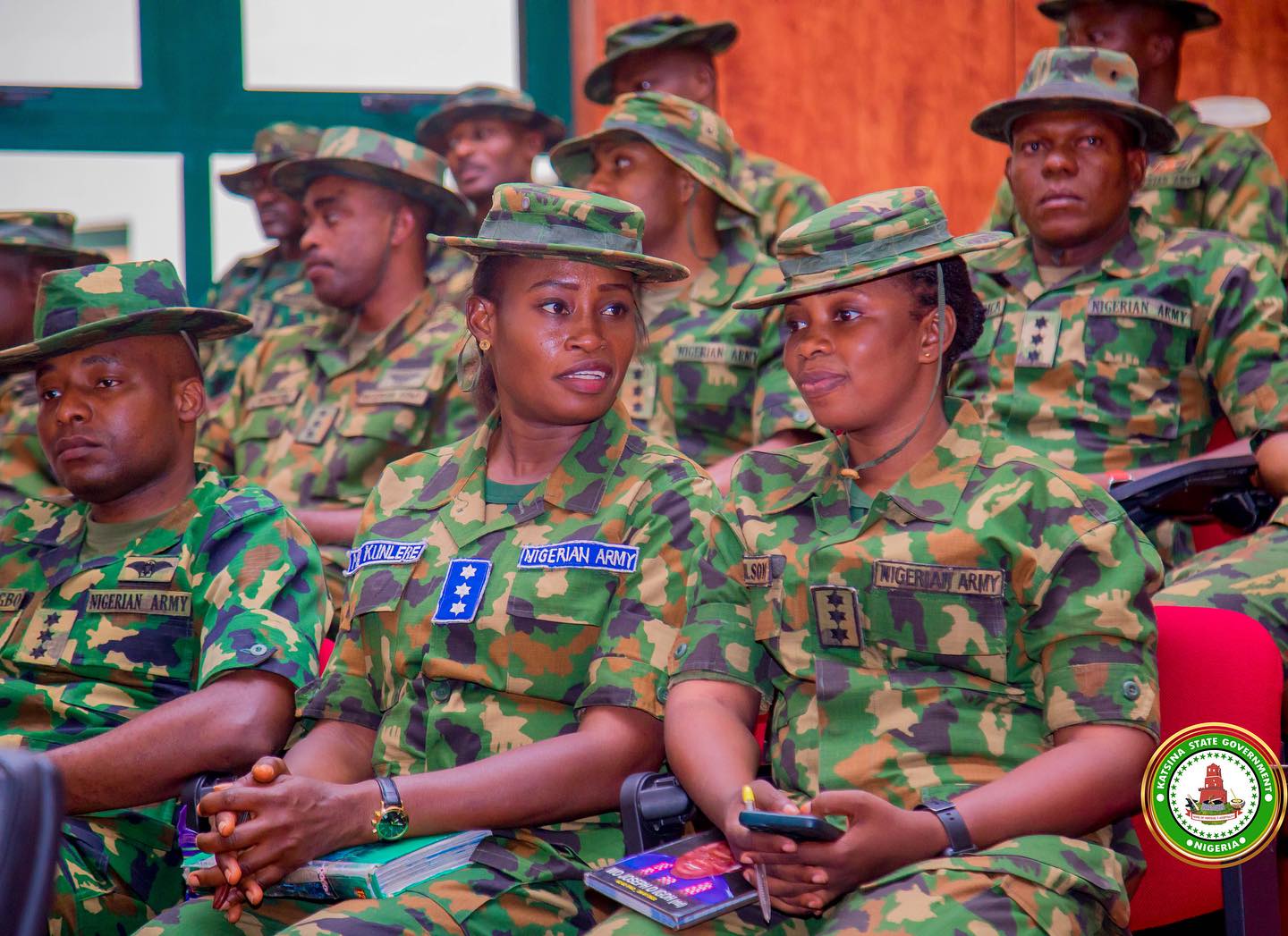
The Nigerian Army has passed out 384 female soldiers of the 90 Regular Recruit Intake (90 RRI) following the successful completion of Exercise SHINING STAR 2026 in Giri, Abuja.
In a post shared on the Nigerian Army’s X handle, yesterday, the Assistant Director, Army Public Relations, Nigerian Army Women Command, Giri, Abuja, Major Nsima Essien, said the passing-out ceremony was held on Wednesday, 28 October 2026, at the Nigerian Army School of Public Relations and Information (NASPRI), Giri, with the Chief of Army Staff (COAS), Lieutenant General W. Shaibu, represented by Major General Umar Gital Yusuf, as the Guest of Honour.
In his address, the Army Chief commended the female personnel for their dedication, resilience, discipline and commitment throughout the training exercise.
He described the successful completion of the exercise as an important milestone in their military careers and reaffirmed the Nigerian Army’s commitment to developing a professional, disciplined and combat-ready force.
He urged the newly trained soldiers to uphold the values of teamwork, courage, loyalty and professionalism, while applying the knowledge and skills acquired during the exercise to their military duties.
Shaibu emphasised the importance of continuous training, physical fitness and operational preparedness in addressing contemporary security challenges before declaring the exercise closed.
Earlier, the Acting Commander of the Nigerian Army Women Command (NAWC), Colonel S. M. Ahmed, welcomed the special guest and other dignitaries to the ceremony.
Ahmed highlighted the significance of Exercise SHINING STAR 2026 in enhancing the physical fitness, military competence, discipline and operational readiness of the female personnel.
He also acknowledged the contributions of the authorities, instructors and other personnel whose efforts ensured the successful conduct of the exercise.
Highlights of the ceremony included obstacle-crossing demonstrations and weapons-handling exercises, during which the female soldiers demonstrated their ability to strip and assemble AK-47 rifles while blindfolded.
The demonstrations showcased the personnel’s physical endurance, confidence, weapons-handling skills and proficiency in basic military tasks.
“A total of 384 female personnel of the 90 RRI participated in the exercise, alongside 14 male personnel from the Headquarters, Directorate of Army Physical Training (HQ DAPT), and 70 male personnel from the 167 Special Forces Battalion, “ Ahmed said.
The ceremony attracted senior military officers from various units and formations, representatives of paramilitary agencies and other invited guests.
Eight male and female personnel who distinguished themselves during the exercise received awards presented by the Acting Commander of NAWC.
The event also featured a vote of thanks delivered by one of the beneficiaries, the presentation of souvenirs and a group photograph to commemorate the successful completion of the exercise.
The exercise forms part of the Nigerian Army’s efforts to strengthen personnel development, improve military competence and enhance operational readiness in response to the country’s evolving security challenges.
As the world marked the 2026 International Day of the Girl Child on Sunday, October 11, 2026, a non-governmental organisation, Stand Up for Women Society (SWS) has intensified its campaign against child marriage, urging schoolgirls to prioritise education, protect their rights and develop skills for a better future.
The organisation joined the global observance of the day under the theme, “International Day of the Girl Child: End Child Marriage and Invest in Girls’ Rights,” with a sensitisation programme at Government Girls Secondary School, Oromenike, D-Line, Port Harcourt, Rivers State.
Led by its Vice Chairperson, Daba Benebo, the group engaged the students in discussions on the dangers of early marriage, teenage pregnancy, sexual abuse and other challenges that threaten the education, safety and development of the girl child.
Speaking during the programme, Benebo urged the students to reject early marriage and remain focused on their studies, stressing that education would empower them to make informed decisions about their lives and future.
She cautioned the girls against allowing anyone to deprive them of their right to education and dignity, advising them to report cases of harassment, abuse and other violations of their rights to the appropriate authorities.
Benebo assured the students that SWS remained available to support them whenever they encountered violations of their rights.
She also encouraged them to maintain discipline and responsible conduct while avoiding behaviours that could expose them to negative influences and jeopardise their future.
Beyond formal education, the SWS vice chairperson urged the students to acquire vocational skills that could provide additional opportunities for economic independence and help them navigate future challenges.
The sensitisation programme, enlivened by singing, dancing and to share their views and experiences on issues affecting the girl child interactive sessions, provided an opportunity for the students to share their views and experiences on issues affecting the girl child.
One of the major issues raised during the discussion was the appropriate age for marriage. While some participants maintained that 18 years was the constitutionally approved age, the discussion highlighted the need to consider not only age but also the maturity, preparedness and responsibilities associated with marriage.
The speaker stressed that marriage required adequate mental and emotional preparation, as well as the capacity to shoulder its responsibilities.
She therefore advised the students to concentrate on acquiring a sound education before considering marriage, noting that education would equip them with the knowledge and skills needed to make responsible decisions and manage family life.
The issue of teenage pregnancy also featured prominently during the question-and-answer session.
In addressing the subject, the speaker explained that pregnancy could occur even at the age of 12, using the example to underscore the vulnerability of young girls to the consequences of early sexual activity.
She advised the students to avoid sexual intercourse and prioritise their education, personal safety and future aspirations.
The discussion also examined the difficulties some girls encounter when living with hostile spouses, relatives or guardians.
Benebo encouraged the students to cultivate patience, humility and diligence, noting that these qualities could help them navigate difficult situations and build a brighter future.
However, she warned that patience and humility should never be interpreted as an obligation to endure violence, abuse or degrading treatment.
She urged girls experiencing hostile or abusive living conditions to seek help from their parents, trusted adults or appropriate support services rather than remain in environments that could expose them to physical or emotional trauma.
“When such happens, please return to your parents and engage in petty trade or learn a skill to support your education rather than stay in a hostile environment,” Benebo stressed.
The programme also underscored the importance of protecting girls from early marriage and other harmful practices that can disrupt their education, compromise their well-being and limit their opportunities in life.
It also reinforced the need for families, schools, communities and relevant organisations to work together to ensure that girls have access to education, vocational training, protection and the support they need to realise their potential.
For SWS, the message was clear: empowering the girl child begins with protecting her rights, investing in her education and equipping her with the confidence and skills to make informed choices about her future.
Stories by Kevin Nengia
The Egberipapa Foundation has unveiled a mass transit scheme aimed at easing transportation difficulties and improving connectivity among communities in the three Kalabari local government areas of Asari-Toru, Degema and Akuku-Toru in Rivers State.
The initiative, established by former Caretaker Committee Chairman of Akuku-Toru Local Government Council, High Chief Sobomabo Jackrich, popularly known as Egberipapa, is designed to make transportation more accessible and affordable for residents across the Kalabari area.
The scheme was launched on Monday, October 12, 2026, and is expected to address longstanding transportation challenges confronting residents, particularly those in riverine and hard-to-reach communities.
Communities expected to benefit from the initiative include Krakrama, Minama, Angulama, Sangama, Omekwe-Tariama and Omekwe-Ama.
The project is expected to ease movement within and beyond the Central Group area, while providing residents with a more convenient means of transportation for their daily activities.
For decades, transportation difficulties have posed significant challenges to several Kalabari communities, making movement between settlements both cumbersome and expensive. These challenges have also affected commercial activities, social interactions and access to essential services.
The introduction of the mass transit scheme is therefore expected to provide relief to residents, strengthen inter-community connections and stimulate economic activities across the benefiting communities.
Beyond improving mobility, the initiative could contribute to community development by facilitating the movement of people and goods, supporting local businesses and enhancing social and economic interactions within the Kalabari area.
As the scheme gets underway, attention will be focused on its implementation, accessibility and sustainability, as well as its capacity to deliver lasting transportation benefits to the target communities.
The initiative represents a potentially significant step towards addressing transportation challenges and promoting grassroots development across the Kalabari Kingdom.
-
Opinion4 days ago
Ancestorial Worship: My Take (1)
-

 Education1 day ago
PAMO MEDICAL UNIVERSITY -Nullifies Arrest warrant on VC
-
Niger Delta2 days ago
PANDEF Seeks 50% Oil Derivation Allocation Increase
-
Rivers1 day ago
Don Seeks Repositioning Of Tech Education For Dev
-

 Education1 day ago
IAUE MOVES TO END GHOST WORKERS SYNDROME AS 400 NEW NON-TEACHING STAFF UNDERGO MANDATORY ETHICS TRAINING
-

 News2 days ago
Fresh Ebola Scare As NCDC Records Two Cases
-
News2 days ago
Customs Partners EFCC, NDLEA, Others To Tackle Money Laundering, Terrorism Financing
-
 News4 days ago
FG Must Address Nigerians’ Concerns On Reforms -Shettima …Warns Against Misuse of AI, Social Media