Opinion
Wike: A Man With A New Vision
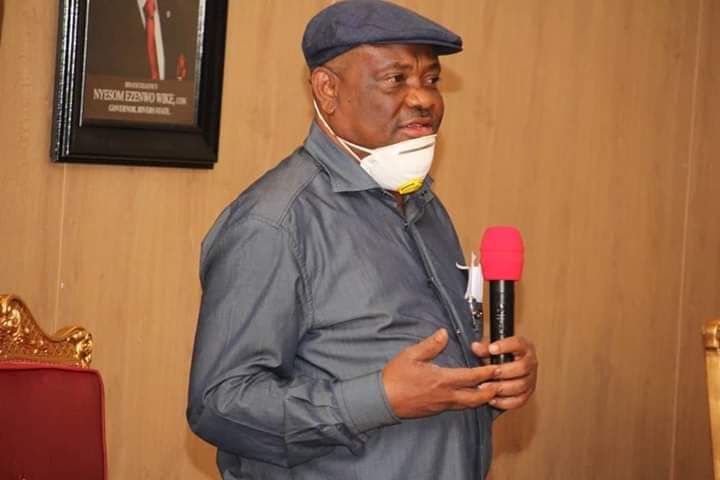
Governor Nyesom Ezenwo Wike has every reason to celebrate the first anniversary of his second tenure as the Governor of Rivers State. From every political calculation and calibration, the unequivocal conclusion is that he is a man of the people who emblematizes the Divine injunction that “Power comes from God alone.”
Throwback to 2015: Governor Nyesom Wike, then a Minister of Education, found himself in the eye of a raging political storm, contrived and fermented by treacherous forces, who betrayed a political vision and threatened to completely overturn and dismantle a well nurtured political agenda to achieve their own selfish power grabbing ambitions.
Pitted against the backdrop of a manipulated and deviously translated zonal power sharing arrangement and confronted by the real threat of political annihilation in the face of a viscous opposition that will stop at nothing to secure victory, Governor Wike found himself literally and practically isolated and surrounded as the last man standing and the only hope for the redemption and protection of the political soul of Rivers State.
However, he was greatly loved, admired and adored by the people of Rivers State as their champion. Nyesom Wike took on the opposition, both within and externally, battled them to a standstill, defeated them on all fronts and won the election convincingly. Governor Nyesom Wike ascended the throne, carrying the hopes and aspirations of Rivers people on his broad shoulders.
Fast forward to 2019: The viscious, acrimonious opposition, now emboldened with Federal might and empowered with the added authority of directing their second term campaign, deployed the full weight of both mercenary and compromised military might to the political battlefield. Traditional war songs reigned and echoed ominously at the venues of every campaign stomp and the poisoned manifesto rhetoric reeked of bitterness, inciting anger, unbridled hatred and imageries of political purgatory worse than Dante’s inferno, in the event of political defeat.
But Governor Wike was fully prepared and ready for them and believing in his superior strategic plans and greatly buoyed by the resilient will of the people, the tide would once again turn to victory in the quite remarkable life of this political Colossus. The opposition had already perfected their machinery or so they thought, to arrest and detain top people, cause disruptions of the electoral process instigate unrest to nullify voting in certain areas, abduct and hold electoral officials hostage replacing them with compromised lackeys and aid the snatching of election materials by unknown persons. All these were in their handbook of practical guidelines on Election Day and were implemented to the letter.
The last straw was in the Federal High Court, Abuja where they had all hoped that on March 8th, the day before the governorship and state assembly elections, the Court would give judgment in their favour, in a suit seeking to disqualify Governor Wike from contesting the March 9th election.
At the end of the elections however, 37 innocent Rivers people had been killed in Abonnema alone. Many more had been maimed and wounded across the state and at least 187 people had been arrested by soldiers, and detained. The harassment was unparalleled, but the people stood firm behind Wike, especially the heroic courageous women of Okirika and Ogu, who formed a human shield to prevent the military from hijacking their ballot boxes and their votes.
Indeed, as destiny would have it, the Divine hand of fate, had once again already played another master stroke and the monumental miscalculation and failure of the opposition, which had already taken place even before the first ballot was cast, can be summed up in the following Biblical verses:
Exodus 23 vs 27: I will send my terror before you and will throw into confusion all the people against whom you shall come, and I will make all your enemies turn their backs to you.
Deuteronomy 28:7 The Lord shall cause your enemies who rise up against you to be defeated before you; they will come out against you one way and will flee before you seven ways.
Isaiah 19:3-4: Then our enemies (the Egyptians) shall fight themselves rather than fighting us. I will confuse their strategy and they will tremble and fail, they will consult each others demonic powers to no avail”
So, Governor Ezenwo Wike has a plethora of reasons to celebrate the first anniversary of his second tenure in office, but in typical charismatic, all action fashion, the Rivers Governor, who was Christianed as “Mr. Projects” by none other than the Vice President of the country, Prof. Yemi Osinbajo, simply rolled up his sleeves and knuckled down to the business of delivering the dividends of democracy to the good people of Rivers State.
At the end of the first year of his second tenure, the gains of the first term were solidly consolidated upon, but addressing Rivers people in a statewide broadcast to mark the first year of his second term in office, Governor honestly confessed that normally, the State should be celebrating this important milestone with the commissioning of completed projects and correlated social activities, but these are abnormal times and moments like this call for subdued feelings and thankful prayers to God for His abundant grace and mercy upon the State and on the lives of Rivers people.
That preamble set the tone for the summary of the achievements and engagements of the Governor Wike administration in the first year of his second term and starting with the solemn declaration that, every life matters; and every Rivers life lost is a monumental tragedy, not only to the immediate families, but also to all of humanity. The Governor confirmed that as at May 29, 2020, Rivers State had painfully lost 12 persons, and probably more, to the death pangs of the deadly coronavirus pandemic which has ravaged the entire world with devastating effect for over six months now.
The scorecard on the last one year has however been replete with outstanding achievements, ground breaking events and the initiation of legacy projects which have not only transformed the landscape of the state impressively but also ensured the comprehensive sustenance of the well-being of the people in line with the development blue-print released for the second term in office, which reiterated the commitment and determination of the administration to work and serve Rivers people as if it was still the administration’s first term.
A summary reveals that virtually every area and sector has been positively impacted upon in the last year. The urban renewal programme in the capital city have progressed at an amazing place as the restoration works, including underground drains, sidewalks, green areas and street lights on most of the roads in both the old and new Government Reservation Areas are at very advanced stages of completion.
The construction of the three multi-billion-naira flyover projects at Rebisi, Okoro-nu-odo and Rumuogba, all progressing simultaneously, is an architectural wonder to behold and are expected to be delivered within schedule by Julius Berger Nigeria Limited and this is even as work on the construction of the 4th flyover bridge across GRA junction and accompanying dualization of Ezimgbu (Mummy B) road are also underway.
The dualization of several critical roads across the state, including Tombia Extension, GRA to link Ikwerre road, Kira Sapkenwa Bori Kono, straddling three Local Government Areas in Ogoni heartland are progressing satisfactorily with some having reached 92 per cent completion, all to be delivered on schedule. This is in addition to the construction of Oyigbo (Mbano camp) to Iriebe, linking Oyigbo and Obio/Akpor Local Government Areas of the State, which has already been completed.
Still on infrastructure delivery, the Alesa – Agbonchia – Oyigbo road linking Eleme and Oyigbo Local Government Areas of the State; and the Rumuakunde and Isioudu communities roads in Emohua Local Government Areas of the State, as well as the 2nd phase of Isiokpo community internal roads in Ikwerre Local Government Areas has been completed, while construction works on the 16.85 kilometers Rumuji Ibaa Isiokpo road in Emohua and Ikwerre Local Government Areas have reached 90 percent completion level, and the dualization of the 23 kilometers Omoku Egbema road in Ogba/Egbema/Ndoni Local Government Area has progressed beyond 50 per cent.
The Odufor/Akpoku/Umuoye road in Etche Local Government Area, spanning 21.3 kilometers has crossed 70 percent construction level, while the Aker-base road in Obio/Akpor Local Government, the Ula Ehuda-Odioku-Anwunugboko-Ubeta-Ihuechi-Odiereke road, the Odiokwu internal road network in Ahoada West Area as well as the Abonnema ring road in Akuku-Toru Local Government Area, and the Sime Eteo Nonwa road connecting Tai and Eleme Local Government Areas, have all progressed to between 80 and 85 percent completion.
The administration in the last one year, accelerated work on the long-abandoned roads to the coastal communities of Opobo and Andoni in Opobo/Nkoro and Andoni Local Government Areas of the State with appreciable work already done on the Ogoni Andoni Opobo (Unity) road the commitment to deliver on the promise to complete these landmark projects and actualize the age-long yearnings of the indigenes and residents of these local government areas to connect and access the rest of the State by tarred road, has been the prime motivating factor driving the zeal and energy to complete these projects and bring joy to the people. In fact, the people of the Ancient Opobo Kingdom drove home for the first time last year.
Apart from roads, significant progress was also made in the delivery of Health Care and Education Infrastructure and Services. The mother and child hospital is virtually completed, fully furnished, equipped and only undergoing necessary testing and preparations for commissioning. Also completed is the Comprehensive Health Centre at Odiokwu in Ahoada West Local Government Area.
Braithwaite Memorial Hospital (popularly known as BMH) was upgraded, completely equipped and converted to the Rivers State University Teaching Hospital, which is not only reckoned as one the best in the country, but has led to the accreditation of the programmes of that facility for the training of medical students by the Medical and Dental Council of Nigeria. Also, the furnishing and equipping of the regional referral hospitals in Degema and Bori in Degema and Khana Local Government Areas respectively, which commenced in the first year of the second term is progressing smoothly, while structural work is continuing on the ones located in Omoku and Okehi in Ogba/Egbema/Ndoni and Etche Local Government areas.
In the area of Education, the strategic intervention of the administration in the restoration, upgrade and expansion of secondary schools across the State, commenced in the first term, continues to deliver remarkable results and improvements in the quality of public education system, as funds have already been released for the comprehensive restoration and upgrade of scores of dilapidated secondary schools across the State, including: renowned schools like Enitonna High School and Government Comprehensive High School, Borikiri in Port Harcourt Local Government Area.
Renovation and upgrading of Obama High School, Degema and Model Secondary School, Tombia, all in Degema Local Government Area, as well as Community Secondary School, Omuanwa in Ikwerre Local Government Area, the famous Kalabari National College, Buguma in Asari Toru Local Government Area, Community Secondary School, Kugbo in Abua/Odual Local Government Area, Community Secondary School, Obeakpu in Oyigbo Local Government Area, and Community Secondary Schoo, Eteo in Eleme Local Government Area, have all been more than 85 per cent completed.
On the international front, the construction of students hostels for the state of the art, visionary Real Madrid Football Academy is progressing with admirable speed and consistency and the academy will soon open its doors for simultaneous academic and football and related training and mentoring programmes.
In the area of Agriculture and in line with the administration’s promise to refocus on agricultural development, the Datco cassava processing plant, with guaranteed off-taker opportunities for over 3000 local cassava farmers, and inspiring capacity to stimulate the cassava revolution in the State and related industries and create thousands of direct and indirect jobs for our people is coming on stream.
Indeed the last one year of the second tenure has been hallmarked with a commitment to the promise on inauguration day to provide first-class socio-economic infrastructure and keep the State and businesses safe, secure, achieved through hard work and the accomplishment of more with less resources and a year cut short so dramatically by the outbreak of the coronavirus pandemic and its attendant debilitating consequences.
This progressive trajectory will definitely continue into the second year and while it is already clear that it is not going to be easy given the very poor state of the national economy and the spin-off effects of the Covid-19 pandemic, the zeal and dedication to do more and recommit to work harder and deliver greater development to Rivers people is already evident in the work going on all over the state.
Governor Nyesom Wike himself puts it succinctly: “As a government, we welcome constructive and frank criticisms devoid of politics and mischievousness, because they serve to make us better performers. At any rate, this is a time for governance, not for politics, and we welcome everyone onboard to enable us to create an environment that promotes balanced economic growth, thriving private investments and good jobs; to build a State of shared prosperity; a place of boundless opportunity for all residents; and a State we can truly call our native home, our pride, our heritage, while looking into the future with optimism.
“For us, nothing matters more than Rivers State, our people, our interests, our treasures, our enormous resources and assets, our accomplishments and our greatness. And so, as we look forward to the next twelve months, all I can say is that we are inspired by your continuous support and prayers to believe that our best days are ahead of us, and working together, we will surely do more to move Rivers State forward.”
Paulinus Nsirim is the Commissioner for Information and Communications, Rivers State.

By Paulinus Nsirim
Continue Reading
Opinion
Confronting National Development In Chinese Style
Quote: “China’s rise was not a miracle. It was the result of deliberate planning, disciplined execution, and a national determination to make poverty reduction the foundation of national development.”
A short TikTok video by @ancientchinaforever recently offered a compelling summary of China’s remarkable transformation from one of the world’s poorest nations to a global economic powerhouse. In just a few minutes, it captured a lesson that developing countries like Nigeria cannot afford to ignore: meaningful development does not happen by chance. It is the product of vision, consistency, and a deliberate commitment to confronting poverty. In 1981, according to the World Bank, nearly 88 percent of China’s population lived in extreme poverty. The country was overwhelmingly rural, industrially weak, and lacking in modern infrastructure. Millions of people had limited access to quality healthcare, education, and basic social services. Yet China refused to accept poverty as its destiny. Its leaders made a strategic decision to treat poverty reduction as the starting point of national development.
Rather than relying on slogans or isolated welfare programmes, they created a coordinated system that mobilised government institutions at every level toward one overriding goal: improving the living conditions of ordinary citizens.
This was the turning point in China’s history. Poverty alleviation became a national mission. Clear targets were established, responsibilities were assigned to provincial and local governments, and officials were evaluated based on measurable results. Data was used to identify poor households, monitor progress, and adjust strategies where necessary.In effect, China built what may be described as a national development machine.The first major reforms focused on agriculture. Through the household responsibility system, farmers were given greater control over their land and allowed to sell surplus produce after meeting government quotas.
This policy created incentives for productivity and innovation. The results were dramatic. Agricultural output rose significantly, rural incomes increased, and millions were lifted out of poverty.With food security improving, China turned to industrialisation. The government established Special Economic Zones, most notably in Shenzhen, to attract foreign investment and promote export-driven manufacturing. What was once a small fishing community quickly transformed into one of the world’s leading industrial and technology hubs. Factories created millions of jobs, drawing workers from rural areas into expanding urban centres. China soon became the manufacturing capital of the world, producing electronics, textiles, machinery, and consumer goods for global markets.The revenue generated from industrial growth was reinvested in infrastructure and human development.
China understood that development requires more than factories. It demands modern infrastructure that connects people, goods, and markets. Massive investments were made in roads, railways, airports, seaports, electricity, and telecommunications.
Today, China’s high-speed rail system, modern cities, and efficient logistics networks stand as visible proof of decades of purposeful investment. Equally important was China’s commitment to education and healthcare.Schools were expanded, literacy improved, and vocational training equipped workers with the skills needed in a modern economy. Healthcare reforms reduced preventable diseases and protected families from being pushed deeper into poverty by medical costs.These investments ensured that economic growth translated into tangible improvements in living standards.
Another defining feature of China’s development model was policy continuity. Through successive Five-Year Plans, national priorities were clearly outlined and pursued over decades. While leaders changed, the core development agenda remained consistent. This stability encouraged investment, strengthened institutions, and allowed long-term projects to be completed. Unlike countries where each administration abandons the policies of its predecessor, China sustained a clear sense of direction.The results have been extraordinary. According to the World Bank, China has lifted more than 800 million people out of extreme poverty—the largest poverty reduction effort in human history. A broad middle class has emerged, and the country has become the world’s second-largest economy. Chinese companies such as Huawei Technologies and Alibaba Group now compete at the forefront of global innovation.
China’s journey has not been without challenges. Rapid industrialisation has contributed to environmental degradation, regional disparities, and demographic pressures. However, these challenges do not diminish the scale of its achievement. They underscore the complexity of transforming a nation of over one billion people. For Nigeria, China’s experience offers valuable lessons. First, poverty reduction must be treated as a strategic national priority rather than a campaign promise. Second, development requires long-term planning and policy continuity. Third, sustained investment in agriculture, infrastructure, education, and healthcare is essential. Fourth, institutions must be strengthened to ensure accountability and measurable outcomes. Finally, leadership must combine vision with disciplined execution. Nigeria is richly endowed with natural resources, entrepreneurial talent, and a youthful population.
What remains missing is a coherent and consistent development strategy that places national interest above politics. China’s transformation demonstrates that development is not a matter of luck. It is the outcome of clear priorities, effective institutions, and unwavering commitment. For countries still grappling with poverty and underdevelopment, China stands as compelling proof that when a nation confronts its challenges with strategic intent and collective discipline, extraordinary progress is possible.
Sylvia ThankGod-Amadi
Opinion
Workers’ Welfare Beyond May Day Rhetoric
Quote: Nigerian workers have endured years of hardship with remarkable resilience. What they need now is not ceremonial praise, but decisive policies that restore the dignity and value of labour”.
Beyond the colourful parades, speeches, and festivities that accompany Workers’ Day celebrations lies a sobering reality: Nigerian workers are under immense pressure. For many, May Day has become less a celebration of labour and more a reminder of the widening gap between official promises and everyday hardship. Across the country, workers are struggling with rising living costs, insecurity, and exploitative employment practices. These challenges directly affect how Nigerians feed their families, commute to work, and plan for the future. If left unresolved, they threaten both workers’ welfare and the nation’s economic stability. One of the biggest burdens facing workers today is the soaring cost of petrol. Since the deregulation of the petroleum sector, fuel prices have become highly unstable. At filling stations, prices can change within days, leaving commuters and businesses uncertain about what to expect.
For a country that is one of the world’s major oil producers, this situation is both frustrating and ironic. Years of neglect in the refining sector have left Nigeria dependent on imported petroleum products and exposed to global price shocks. The consequences are severe. Transport fares have risen sharply, consuming a large portion of workers’ salaries. After paying for transportation, many workers have little left for food, school fees, healthcare, and rent. Government must therefore take urgent steps to cushion the impact. Policies such as selling crude oil to local refineries in naira and ensuring greater price stability could help lower the cost of refined products. Temporary relief measures, transparently managed, may also provide short-term support while deeper reforms are implemented. Equally troubling is the nation’s worsening security situation.
In many communities, workers can no longer engage in farming or small-scale business activities because of kidnapping, banditry, and violent attacks. This has led to abandoned farmlands, reduced food production, and increasing hunger. Security is not only a governance concern; it is an economic necessity. Without safety, productivity declines, investment suffers, and workers sink deeper into poverty.bRecent comments by President Bola Ahmed Tinubu suggesting that political actors may be sponsoring insecurity have heightened public expectations. Nigerians want swift and decisive action against those responsible. Restoring security must be treated as a national emergency. Another issue dominating labour discussions is the call for an upward review of the national minimum wage. During this year’s Workers’ Day celebration, the President of the Trade Union Congress of Nigeria, Festus Osifo, indicated that labour unions may begin negotiations for a wage increase by July 2026.
The demand is understandable. However, salary increases alone cannot solve workers’ problems if inflation continues to erode purchasing power. The real issue is not merely how much workers earn, but what their earnings can buy. Meaningful improvement requires broader economic reforms. Stabilising the naira, boosting local production, reducing import dependence, and enforcing fiscal discipline are essential to preserving the value of wages. Without these structural changes, any salary increase will offer only temporary relief. Casualisation is another major challenge confronting Nigerian workers. Across sectors such as banking, telecommunications, manufacturing, media, and oil and gas, many employees are hired on contract terms with little or no job security. These workers often perform the same duties as permanent staff but receive lower pay and are excluded from pensions, healthcare, housing benefits, and career development opportunities.
Some remain in this uncertain status for years.This practice is unjust and harmful to national development. Workers who feel insecure and undervalued are less motivated and less productive. Although labour unions have consistently condemned casualisation, the persistence of the practice reveals weaknesses in Nigeria’s labour laws. Loopholes in the existing legal framework allow employers to evade responsibilities and discourage union participation. The National Assembly should urgently amend outdated labour legislation to close these gaps and strengthen worker protections. The Federal Ministry of Labour and Employment must also intensify oversight and enforcement. Clear regulations should ensure that no employee remains on temporary status beyond six months without consideration for permanent appointment.
Beyond wages and job security, improving workers’ welfare requires stronger public services. Affordable healthcare, quality education, reliable transportation, and social protection programmes can significantly reduce financial pressure on households. Formalising the informal sector is equally important. Millions of Nigerians work outside the formal economy without legal protections or access to pensions and health insurance. Bringing them into the formal system will improve their welfare and expand the country’s economic base. Investment in human capital is also essential. As technology continues to reshape the global economy, Nigerian workers must acquire the skills needed to remain competitive. Greater commitment to vocational training, digital literacy, and lifelong learning will help prepare workers for emerging opportunities.
Ultimately, improving workers’ welfare demands a coordinated effort involving government, employers, labour unions, and civil society. Workers’ Day should not be reduced to a symbolic annual event filled with speeches and applause. It should serve as a call to action and a reminder that the strength of any nation rests on the wellbeing of its workforce. If Nigeria is serious about achieving sustainable development, workers must be placed at the centre of public policy. Addressing insecurity, stabilising the economy, reforming labour laws, and investing in human capital are not optional—they are fundamental. Nigerian workers have shown extraordinary resilience despite years of hardship. What they need now is not more rhetoric, but purposeful leadership and concrete action that restores dignity to labour and gives real meaning to the annual celebration of Workers’ Day
Calista Ezeaku
Opinion
Curbing Youth Unemployment In Nigeria
Quote: “A nation that fails to empower its youth risks mortgaging its future.”
Youth, generally defined as individuals between the ages of 15 and 35, represent a critical phase of human development—a transition from adolescence to adulthood marked by ambition, energy, and the pursuit of purpose. In Nigeria, this demographic constitutes a significant proportion of the population, making it one of the country’s greatest assets. However, this strength is increasingly undermined by a persistent and troubling challenge: youth unemployment.
Unemployment, the condition of being without gainful employment despite the willingness and ability to work, remains a major global concern. In Nigeria, however, it has reached alarming levels, particularly among young people. With estimates suggesting that a substantial percentage of Nigerian youth are either unemployed or underemployed, the consequences have become deeply embedded in the nation’s social and economic fabric.
The impact of youth unemployment is both widespread and severe. Economically, it leads to increased poverty levels and reduced productivity. Socially, it fuels frustration, hopelessness, and disillusionment among young people. This often manifests in rising rates of crime, cyber fraud, substance abuse, and involvement in political violence. When young people are unable to find legitimate means of livelihood, they may become vulnerable to negative influences, posing a threat not only to themselves but to society at large.
One of the primary drivers of youth unemployment in Nigeria is the inadequacy of the educational system. While many young Nigerians graduate from tertiary institutions each year, a significant number lack the practical and technical skills required in today’s job market. The disconnect between academic curricula and industry demands leaves graduates ill-prepared for employment, thereby widening the gap between education and employability.
Furthermore, Nigeria’s heavy dependence on the oil sector has contributed significantly to the unemployment crisis. Over the years, this reliance has led to the neglect of other critical sectors such as agriculture, manufacturing, and technology—sectors that have the potential to generate large-scale employment. The failure to diversify the economy has limited job opportunities and stifled innovation, leaving many young people without viable career paths.
In addition, rapid population growth continues to put immense pressure on the labor market. Each year, thousands of graduates enter the workforce, but the number of available jobs remains insufficient to absorb them. This imbalance creates intense competition for limited opportunities, leaving many qualified individuals unemployed for extended periods.
Access to finance also remains a major barrier for young Nigerians who wish to venture into entrepreneurship. Despite the creativity and entrepreneurial spirit that many youths possess, the lack of access to credit facilities, mentorship, and business support systems makes it difficult for them to establish and sustain their own enterprises. This challenge is further compounded by infrastructural deficits, such as unreliable power supply and limited access to technology.
Security challenges across various parts of the country have also worsened the situation. In some regions, economic hardship and lack of opportunities have made young people susceptible to recruitment into violent or extremist activities. This not only exacerbates insecurity but also diverts the energy of the youth away from productive engagement.
Addressing youth unemployment in Nigeria requires a comprehensive and collaborative approach. The government must take the lead by implementing policies that promote economic diversification, particularly by investing in agriculture, manufacturing, and the digital economy. These sectors hold immense potential for job creation and can absorb a large portion of the unemployed youth population.
Equally important is the reform of the educational system to emphasize skill acquisition, vocational training, and entrepreneurship. Schools and institutions must align their curricula with market needs, ensuring that graduates are equipped with relevant and practical skills. Public-private partnerships can play a vital role in facilitating internships, apprenticeships, and job placement programs.
The private sector also has a crucial role to play in driving job creation and innovation. By investing in youth-focused initiatives and supporting startups, businesses can help unlock the potential of young Nigerians. Additionally, financial institutions should develop more accessible and youth-friendly credit schemes to support small and medium-sized enterprises.
On an individual level, young people must embrace self-development, adaptability, and continuous learning. In an increasingly competitive and evolving global economy, acquiring digital skills, engaging in vocational training, and exploring entrepreneurial opportunities can significantly improve employability.
In conclusion, youth unemployment remains one of the most pressing challenges facing Nigeria today. However, it is not an insurmountable problem. With deliberate policies, strategic investments, and collective action from government, the private sector, and individuals, Nigeria can transform its youth population into a powerful engine of growth and development. By empowering young people with opportunities, skills, and resources, the nation can secure a more prosperous and stable future.
IVARA Favour Isaac is a student of Pan-African Institute of Management and Technology.
By: Ivara Favour Isaac
-
Featured2 days agoWASSCE: RSG Distributes Science Materials To Secondary Schools
-
News2 days ago
Xenophobic Attacks: Nigerian Lives More Important Than Foreign Investment – Oshiomhole
-
Rivers2 days ago
MBA Forex Trial Adjourn To June 3, Amid Bereavement … As Court Declines Cost Application
-
News2 days ago
ActionAid Demands Probe Of Govs Using Public Funds For Campaign
-
Aviation2 days ago
Passengers Stranded As Delta Airline From Atlanta Route Back Eight Hours After
-
Business2 days ago
Customs Impound N2.35bn Cocaine, 15 Trailers of Rice
-
Politics2 days ago
2027: Bayelsa Senator Gets Critical Endorsement For Second Term
-
Politics2 days agoINEC Sets Rivers South-East Senatorial By-Election For June 20