Connect with us

Aviation

US, Iran Crisis: Airlines Reroute, Avoid Iran, Iraq Airspace

Published

on

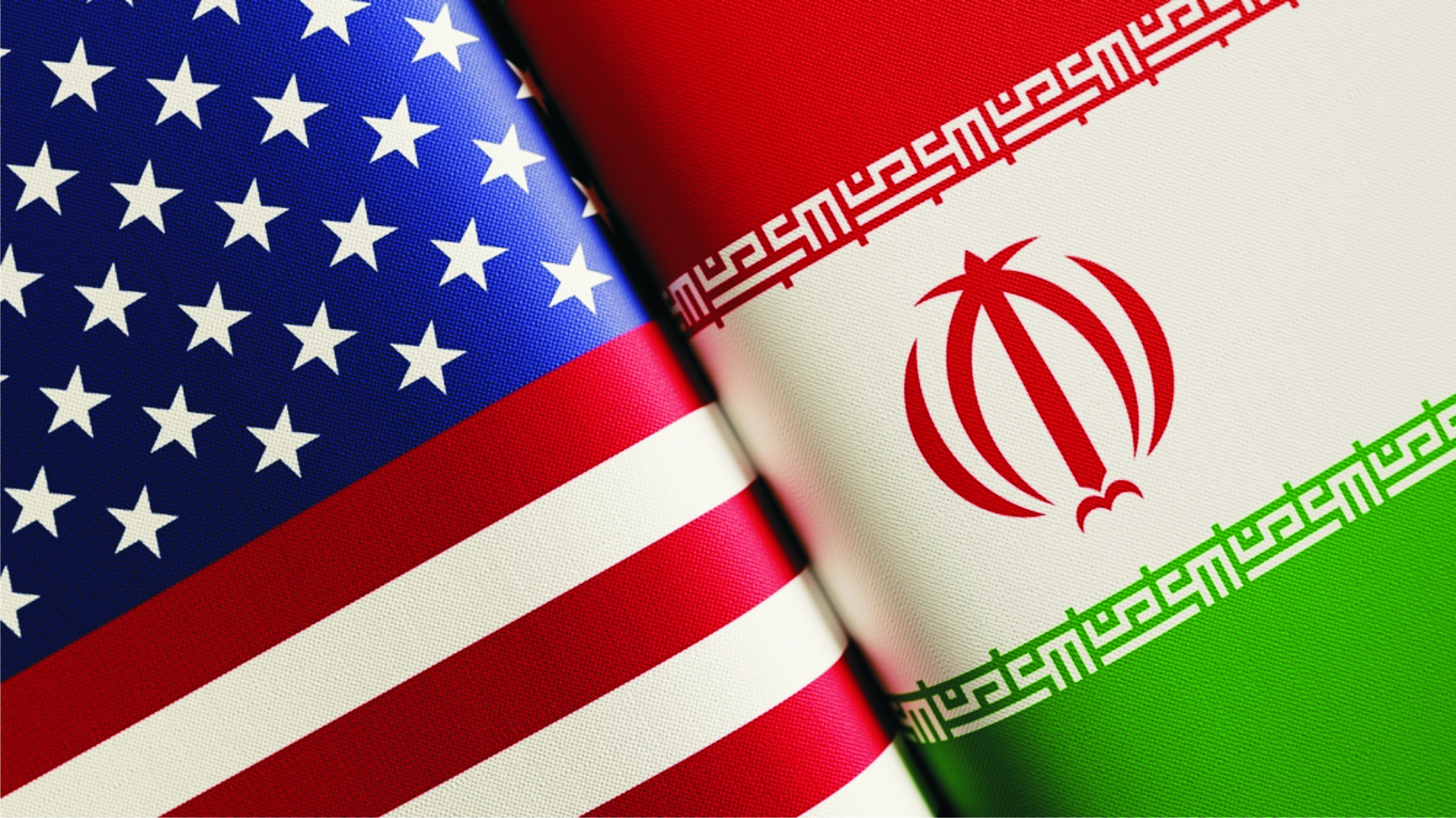
Commercial airlines are rerouting flights throughout the Middle East to avoid potential danger during heightened tensions between the United States and Iran.
Jumbled schedules could affect as many as 15,000 passengers per day, lengthen flight times by an average of 30 to 90 minutes, and severely bruise the bottom line for airlines, industry analysts said.
There is anxiety that the conflict between the longtime foes could intensify following Iranian ballistic missile strikes on Wednesday on two Iraqi bases that house U.S. troops. The attacks were retaliation for the U.S. killing of Iranian Revolutionary Guard Gen. Qassem Soleimani in a drone strike near Baghdad, last week.
“In a war situation, the first casualty is always air transport,” said Dubai-based aviation consult Mark Martin, pointing to airline bankruptcies during the Persian Gulf and Yugoslav wars.
“At least, 500 commercial flights travel through Iranian and Iraqi airspace daily,” Martin said.
A Ukrainian passenger jet crashed shortly after taking off from Iran’s capital, Wednesday, killing 167 passengers and nine crew members just hours after Iran’s ballistic missile attack, but Iranian officials said they suspected a mechanical issue brought down the 3½-year-old Boeing 737-800 aircraft.
Ukrainian officials initially agreed, but later backed away and declined to offer a cause while the investigation is ongoing.
Still, at least two Kazakh airlines, Air Astana and SCAT, were considering rerouting or canceling their flights over Iran following the crash, which killed all 176 passengers.
Poland’s national carrier, PLL LOT, said Saturday that it was changing routes to bypass Iran’s airspace.
A suite of other European carriers followed last Wednesday, and the restrictions were expected to “further depress” air travel between Iran and Western Europe, which saw strong growth after the Iran nuclear deal but a sharp dive when President Donald Trump pulled the U.S. out of the agreement and reimposed sanctions, according to the Sydney-based Center for Aviation consultancy.
Air France and Dutch carrier KLM both said Wednesday that they had suspended all flights over Iranian and Iraqi airspace indefinitely.
German airline Lufthansa and two of its subsidiaries also canceled flights to Iraq.
The Russian aviation agency, Rosaviatsia, issued an official recommendation for all Russian airlines to avoid flying over Iran, Iraq, the Persian Gulf and the Gulf of Oman “due to existing risks for the safety of international civil flights.”
Russia’s biggest private airline, S7, said it would reroute its twice-a-week flight from the Siberian city of Novosibirsk to Dubai.
Asia-Pacific carriers, which operate many of the world’s long-haul flights, were also expected to be hit hard by the ad hoc no-fly zone over Iran, Martin said.
Australian carrier Qantas said it was altering its London to Perth, Australia, route to avoid Iranian and Iraqi airspace until further notice. The longer route meant that Qantas would have to carry fewer passengers and more fuel to remain in the air for an extra 40 to 50 minutes.
Malaysia Airlines said that “due to recent events,” its planes would avoid Iranian airspace.
Singapore Airlines also said that its flights to Europe would be re-routed to avoid Iran.
Taiwanese carriers China Airlines and EVA Airways said they rerouted flights to Europe on Wednesday to skirt Iraqi and Iranian airspace. They said future route decisions would depend on regional developments.
India’s Directorate General of Civil Aviation advised Indian commercial carriers to avoid Iranian, Iraqi and Persian Gulf airspace.
“In light of the tensions within the Iranian airspace a decision to temporarily reroute flights of Air India and Air India Express overflying Iran has been taken,” said Air India spokesman Dhananjay Kumar.
Travel times will increase by as much as 40 minutes for flights in the region, the airline said.
Buta Airways, an Azerbaijani low-cost carrier, said Wednesday that it was not planning to suspend or reroute daily flights between Baku, the country’s capital, and Tehran.
In North America, Air Canada rerouted its flight from Toronto to Dubai through Egypt and Saudi Arabia to avoid traveling over Iraq.
The U.S. Federal Aviation Administration said it was barring American pilots and carriers from flying in areas of Iraqi, Iranian and some Persian Gulf airspace. The agency warned of the “potential for miscalculation or mis-identification” for civilian aircraft amid heightened tensions between the U.S. and Iran.
Such restrictions are often precautionary in nature to prevent civilian aircraft from being confused for ones engaged in armed conflict. The FAA said the restrictions were being issued due to “heightened military activities and increased political tensions in the Middle East, which present an inadvertent risk to U.S. civil aviation operations.”
In the Middle East, United Arab Emirates-owned budget airline flydubai said it had canceled a scheduled flight Wednesday from Dubai to Baghdad but was continuing flights to Basra and Najaf. Etihad Airways, the second-largest airline in the UAE, continued to operate on a regular schedule.
Emirates airline flights between Dubai and Baghdad were canceled. “The safety of our passengers, crew and aircraft is our number one priority and will not be compromised,” Emirates said in a statement.
Qatar Airways said its flights to Iraq were operating normally. “The safety of our passengers and employees is of the highest importance, and we continue to closely monitor developments in Iraq,” the airline said in a statement.
A handful of ship owners are curtailing operations in the Persian Gulf by restricting trips or only operating during daylight, said Richard Matthews, head of research at Gibson Shipbrokers. The handful of companies represents a small fraction of the 339 ship owners his company tracks that have loaded cargoes in the Persian Gulf, he said.
“People are obviously a bit more cautious, but no one’s panicking yet,” Matthews said Wednesday. “It’s very much a day-by-day assessment.”


Continue Reading

Aviation

March 28 Rollout: FAAN Directs Airlines Integration Into National Single Window

Published

on

The Federal Airports Authority of Nigeria (FAAN) has directed all cargo airline operators to integrate their operations with the National Single Window (NSW) platform ahead of its official rollout in March 2026, in a move aimed at enhancing transparency, efficiency, and revenue collection in Nigeria’s trade ecosystem.
In a statement released last Tuesday to The Tide Correspondent at Omagwa Airport in Portharcourt, FAAN disclosed that its Directorate of Cargo Development and Services, in collaboration with the NSW implementation team, recently engaged key stakeholders across the aviation and cargo value chain to prepare them for the transition to the digital platform.
The statement said that during the engagement, cargo airline operators were directed by the Minister of Finance to begin submitting their air cargo manifests through the National Single Window platform as part of preparations for the official launch scheduled for March 27, 2026.
To ensure a seamless transition, FAAN said structured training sessions would be conducted for operators and other stakeholders ahead of the rollout to guarantee smooth adoption and effective utilisation of the system.
The National Single Window project, inaugurated by President Bola Ahmed Tinubu in April 2024, is designed to centralise and digitise the processing of trade documentation, including manifests, permits, licences and customs declarations, through a single electronic gateway.
With the platform entering its first operational phase on March 27, 2026, stakeholders expect significant improvements in the way trade-related processes are handled, particularly for freight forwarders, licensed customs agents and cargo operators.
According to project principals, the successful launch of the system is expected to boost the efficient collection of customs duties and other trade-related taxes by allowing traders to submit all required documentation electronically via one platform, eliminating the need to interface separately with multiple government agencies.
Other anticipated benefits include reduced administrative costs, improved transparency, enhanced security of trade procedures and increased foreign investment driven by a more predictable and efficient trade environment.
FAAN, MTN Nigeria Launch Free Wifi Service At Lagos, Abuja Airports
The Federal Airports Authority of Nigeria (FAAN) has partnered with MTN Nigeria to provide free WiFi services at the Murtala Muhammed International Airport (MMIA) Terminal 2 in Lagos and the Nnamdi Azikiwe International Airport in Abuja.
The service was officially launched on Thursday at the Lagos terminal.
FAAN’s Managing Director and Chief Executive, Olubunmi Kuku, who was represented at the event by the Director of Airport Operations, Abdullahi Mahmood, said the initiative is part of efforts to improve passenger experience and expand digital infrastructure at Nigerian airports.
According to FAAN, the service will be extended to the MMIA temporary terminal and other international airports across the country within the next three months.
Officials said the project is structured as a public-private partnership between FAAN and MTN Nigeria.
Speaking at the event, MTN Nigeria’s Chief Enterprise Business Officer, Lynda Saint-Nwafor, who represented the company’s Chief Executive Officer, Karl Toriola, said the company would ensure the service remains reliable and secure.
While FAAN described the rollout as a step toward modernising airport facilities, details of the funding model and long-term maintenance structure were not disclosed at the launch.
Airport users have long complained about limited or unreliable internet connectivity at major Nigerian terminals, particularly during peak travel periods.
However, FAAN did not immediately indicate whether the free service would be time-limited per user or subject to bandwidth restrictions.
By: Enoch Epelle
Continue Reading

Aviation

Payment Of Cash: FAAN set February 28 Dateline in Nigeria Airport

Published

on

The Managing Director/Chief Executive of the Federal Airports Authority of Nigeria (FAAN), Mrs. Olubunmi Kuku, has firmly reiterated the Authority’s resolve to fully implement a cashless payment system across all airport payment points nationwide, effective February 28, 2026.
The reaffirmation came during a visit by executives and members of the National Union of Air Transport Employees (NUATE), who sought clarification on the decision to discontinue cash transactions at airports in Lagos last Thursday.
The engagement provided an opportunity for robust dialogue, reflecting FAAN’s open-door policy and commitment to inclusive stakeholder consultation.
According to a statement by Henry Agbebire, Director, Public Affairs and Consumer Protection, FAAN, the MD/CE emphasised that the transition to a cashless system is not only in line with global best practices in aviation management but also consistent with Federal Government directives aimed at enhancing transparency, accountability, and operational efficiency.
She referenced a Treasury Circular dated November 24, 2025, issued by the Office of the Accountant General of the Federation and signed by the Accountant General, Shamseldeen Ogunjimi, mandating the cessation of cash transactions in all government dealings.
The directive followed approval by the Federal Executive Council for Ministries, Departments and Agencies (MDAs) to discontinue physical cash collections and payments as part of broader public finance reforms.
According to the MD/CE, “There is no going back on this decision.” She stressed that the cashless initiative aligns FAAN with national financial management reforms while positioning Nigeria’s airports for greater operational integrity, improved service delivery, and stronger revenue assurance.
Importantly, Mrs. Kuku noted that the reform also forms part of FAAN’s broader strategic agenda to deepen stakeholder engagement by fostering transparency, building trust, and ensuring that partners, unions, concessionaires, and service providers are carried along in key operational decisions.
By proactively engaging NUATE and other critical stakeholders, FAAN continues to demonstrate that institutional reforms and stakeholder collaboration must go hand in hand.Beyond compliance with government policy, the MD/CE highlighted the enormous benefits of a cashless system to the aviation ecosystem, including reduction in leakages, improved transaction traceability, faster service delivery, and enhanced public confidence in airport operations.
Addressing concerns raised about the use of Paystack as a third-party platform, she clarified that Paystack merely serves as a payment gateway for processing transactions.
She assured stakeholders that no revenue is paid into any Paystack account, as all payments are made directly from Point of Sale (POS) terminals into designated Federal Government accounts.
The NUATE delegation was comprehensively briefed on the processes and strategies put in place to ensure a seamless transition by the February 28, 2026 deadline.
At the end of the engagement, the Union members expressed satisfaction with the explanations provided and acknowledged that the implementation framework is both tenable and practical.
The move marks another significant milestone in FAAN’s ongoing reform agenda, reinforcing its commitment to modernising airport operations, strengthening institutional accountability, and promoting constructive engagement with stakeholders across the aviation value chain.
By: Enoch Epelle
Continue Reading

Aviation

Aviation Professionals Want Agencies Boards’ Inauguration 

Published

on

As a measure to curb corruption and restore accountability, the Association of Nigeria Aviation Professionals (ANAP), has called on the Minister of Aviation and Aerospace Development, Festus Keyamo, to push for the urgent formation and inauguration of governing boards for all other aviation agencies.
ANAP’s Secretary General,  AbdulRasaq Saidu, made this call at the weekend when interacting with aviation correspondents, in reaction to recent inauguration of Board of the Federal Airports Authority of Nigeria (FAAN).
Keyamo had recently inaugurated the FAAN board, more than six months after its members were appointed by President Bola Tinubu, where Dr. Umar Ganduje was named Board Chairman, with FAAN’s Managing Director, Olubunmi Kuku, as the Vice Chairman.
Other board members include representatives from the Ministries of Justice, Defence, Tourism, and Aviation, as well as professionals from the Nigerian College of Aviation Technology, and FAAN’s legal department.
The ANAP scribe there urged the aviation Minister not to stop at FAAN but to ensure that all aviation parastatals are given functional boards to restore order and credibility to the sector.
He, however, commended Keyamo for recently inaugurating the board of the Federal Airports Authority of Nigeria but stressed that more needed to be done.
Saidu also warned that the continued delay in constituting boards for other aviation agencies creates room for unchecked abuses, including illegal contracts, fraudulent employment practices, and mismanagement.
“The absence of governing boards violates the enabling Acts that established these agencies. Only properly constituted boards can enforce discipline, ensure due process in decision-making, and provide oversight to prevent corruption”, Saidu said.
He emphasised that the aviation unions, including ANAP, have consistently raised concerns about poor governance and lack of transparency within the aviation system.
He called on President Bola Tinubu to act swiftly by appointing board members for all relevant agencies, in the interest of fairness and aviation safety.
Saidu also tackled the former Minister of Aviation, Senator Hadi Sirika, for failing to inaugurate any boards during his eight-year tenure, despite appointments being made by former President Muhammadu Buhari.
“ANAP raised the alarm several times under Sirika’s leadership, but nothing changed. That lapse has continued under the current administration, and it must be addressed now”, Saidu stated.

By: Corlins Walter

Continue Reading

Trending