
Nation
THE STATES

Adamawa
Senator Jubril Aminu (PDP-Adamawa Central) has commenced a tour of local government areas in Adamawa Central Senatorial District to canvass for delegates’ votes in his quest to return to senate the third time.
Addressing party delegates in Gerie, Gombi, Hong and Song local government areas on Sunday, Aminu urged delegates to return him as party candidate for continuity and more dividends of democracy.
Aminu urged delegates “not to be deceived by frivolous promises by other aspirants but insist on quality representation which I have been providing you.”
The senate committee chairman on foreign affairs urged for fairness and level playing field for all aspirants by the party.
He also urged people of the constituency to work toward peaceful primaries and general elections.
Aminu is being challenged by many aspirants for the party ticket in the zone.
Prominent among them are Alhaji Bello Tukur, the immediate past Adamawa Deputy Governor and currently, the Chief of Staff to Gov. Murtala Nyako; Mr James Barka, former Speaker of the Adamawa Assembly and Sen. Abubakar Gerie.
FCT
INEC Chairman Attahiru Jega has said that the lack of internal democracy in most political parties was posing a serious concern to the commission.
He stated this in Abuja on Monday, adding that lack of internal party democracy had been noticed in most political parties.
“Our worry in the commission is that it does not appear as if our politicians and the political parties are learning the lessons that we ought to have learnt from our past mistakes and past errors, unfortunately these are being repeated.
“Internal party democracy is very important in our democratisation process and in ensuring that there is a credible electoral process in place but from what we are seeing, there is a serious concern.
“Many parties do not take the issue of internal party democracy with the seriousness it deserves.
“We are hearing complaints about lack of following due process and we have sent monitors because we are entitled to monitor party congresses, we have been monitoring and there are a number of cases that we have heard,’’ Jega said.
Bauchi
A political movement, Arewa Citizens Action for Change (ACAC), has called on Gov. Bokola Saraki, Gen. Ibrahim Babangida and Gen. Aliyu Gusau, to participate in the forthcoming PDP presidential screening.
Malam Muslim Maigari, Secretary of Board of Trustees of ACAC, made the call on Monday in Bauchi at the joint session of the National Working Committee, state executives, Local Government Coordinators and Ward Liaison Officers of the state chapter of the organisation.
Maigari explained that the appeal did not mean the organisation had rejected the decision of Malam Adamu Ciroma-led committee which selected Alhaji Atiku Abubakar as the consensus candidate for the PDP.
“We did not reject Alhaji Atiku Abubakar as the choice of the committee but we rejected the criteria that was used to arrive at the option,’’ he said.
Gombe
More than 60 per cent of the PDP candidates for the 2011 State Assembly Election in Gombe State are consensus candidates.
Alhaji Sa’ad Hassan, a member of the State Monitoring Committee for the PDP State Assembly Primaries, disclosed this in an interview with newsmen in Gombe on Monday.
He said that in most of the 11 local government areas in the state, candidates that were returned unopposed were affirmed by delegates in fulfilment of the electoral guidelines.
Hassan, who is also the Special Assitant to Gov. Mohammad Goje on Assembly Matters, said that the conduct of the exercise was generally peaceful.
Kano
Governor Ibrahim Shekarau of Kano has urged youths in the state not to allow themselves to be used “to subvert the course of the electoral process.”
He made the remark on Monday at the presentation of the 2011 Appropriation Bill to the State’s House of Assembly.
Katsina
The Chairman, Senate Committee on Defence, Sen. Ibrahim Ida has urged the Federal Government to expose the perpetrators of the recent Abuja bomb blast and bring them to justice.
Ida, (Katsina Central), made the call in Katsina on Monday while answering questions from newsmen.
He said government should in addition; identify the perpetrators of other internal ethno-religious conflicts around the country.
“We have to identify those behind the ugly happenings and ensure that the law takes its course,” he stressed.
He advised the government to implement reports on investigations of previous crises, stressing that this would curb recurrence of disturbances.
Ida urged the government to place emphasis on public security rather than on that of individuals, where security agents were deployed to the homes of top government officials.
He appealed to the government to adequately equip, motivate, train and deploy the nation’s security forces to address insecurity.
Lagos
The Congress for Progressive Change (CPC), on Tuesday in Lagos alleged that there was massive corruption in the nation’s political system.
Mr Dennis Aghanya, the National Publicity Secretary of the CPC, told newsmen that corruption was part of the character of Nigerian politics.
Aghanya spoke against the background of incessant defection of politicians from one party to another, adding that corruption had affected their mindset.
It will be recalled that President Goodluck Jonathan’s Adviser on Amnesty Matters, Timi Alaibe, resigned and dumped PDP for the Labour party.
His action followed that of the former Information and Communications Minister, Dora Akunyili who resigned and left PDP to run for a Senatorial seat under APGA.
“This is not a PDP affair, I think the bottom line is that there is massive corruption in our political system and that corruption is affecting the mindset of our politicians.
“There is no more trust, even in my own political party there are lots of in-house-fighting that has devastated us.
“It is just that we keep hiding it but today, it is coming to limelight,’’ he said.
Niger
The Niger State Government has integrated 60 Almajiri schools (Qur’anic education schools) with western schools to ensure education for all its citizens.
The Permanent Secretary in charge of Non-Formal Education, Malam Ibrahim Malik, made the disclosure on Monday in a chat with newsmen in Minna.
He said the process of implementing the integration of the Almajiri pupils to the modern style education had been smooth.
Malik said: “I have gone round the schools that were integrated and the process was very smooth, with the Almajiris (Qur’anic pupils) integrating very well in these schools.
Oyo
The Comptroller of Agodi Prison, Ibadan, Mr Joseph Olorunmola has assured that the new prison under construction at the Olomi will be completed in June.
Olorunmola announced this when he received an ambulance donated to the prison by the Redeemed Christian Church of God (RCCG) on Monday.
He said the new block was part of the ongoing prisons reform in the country.
He said the new prison will be fitted with modern facilities which would further improve the welfare of the inmates.
He said the Comptroller General, Olusola Ogundipe, inherited dilapidated infrastructure nationwide when he assumed duties in 2006.
Olorunmola thanked the RCCG for the gift which he said would go a long way in assisting the prison service in terms of logistics.
Plateau
Most Rev. Ignatius Kaigama, the Archbishop of Jos Catholic Archdiocese, has lauded the efforts of journalists in their efforts to find a lasting peace in Plateau.
Kaigama was speaking yesterday in Jos at a luncheon he organised for journalists in the state to mark the New Year.
He said that journalists had contributed in informing the world about happenings in the state and suggested some ways out.
The archbishop particularly commended the journalists for the manner they usually handled their stories during “difficult times” in the state.
He said, “People read and hear a lot, in some cases, pictures are even shown.
Sokoto
The Sokoto State Police Commissioner, Alhaji Abubakar Manku, has said that the command is to engage religious leaders to curb political thuggery.
Manku told newsmen in Sokoto that the leaders would sensitise their congregation on the need to prevent their children from being used as political thugs during and after campaigns.
“The approach will enable parents to monitor the conduct and behaviour of their children to prevent them from being used to cause trouble in the state,’’ the commissioner said.
He said the command would do everything possible to prevent political violence and thurgery as the area commanders and divisional police officers had been briefed on ways to liaise with religious leaders in their area.
Zamfara
The Speaker, Zamfara State House of Assembly, Alhaji Bature Sambo (Gusau 1), has been returned unopposed as PDP candidate in the primary held in Gusau on Monday.
The Presiding Officer, Alhaji Ibrahim Nabature said although the constituency had 122 delegates, 113 voted for Sambo. “He was unopposed.
“The primary election was free, fair and in line with the party’s constitution.



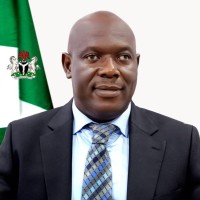
The Hydrocarbon Pollution Remediation Project (HYPREP) has commemorated the 15th anniversary of the release of the United Nations Environment Programme (UNEP) Environmental Assessment Report on Ogoniland, reaffirming its commitment to restoring the environment and improving the livelihoods of affected communities.
In a statement signed by the Project Coordinator, Prof Nenibarini Zabbey, to commemorate the anniversary, HYPREP described the anniversary as a significant milestone in Nigeria’s environmental restoration efforts, noting that the project has made remarkable progress in implementing the recommendations of the landmark UNEP report released on August 4, 2011.
The UNEP report had revealed extensive oil pollution across Ogoniland, severe environmental degradation, and serious public health risks resulting from decades of petroleum operations. It also recommended an initial $1 billion fund to commence the cleanup of the affected communities.
According to HYPREP, the Federal Government formally launched the Ogoni clean-up in 2016, while the Project Coordination Office was established in 2017 to drive the implementation of UNEP’s recommendations.
Zabbey said the current administration has continued to prioritise the project under the Renewed Hope Agenda.
Providing an update on the cleanup, the Project Coordinator disclosed that 30 of the 65 contaminated sites identified by UNEP have been fully remediated, while work is ongoing at several medium- and high-risk locations. It also stated that more than 1.5 million mangrove seedlings have been planted as part of what it described as the world’s largest restoration of oil-degraded mangroves, with over 1,000 hectares of shoreline already rehabilitated.
Zabbey further revealed that 49 Ogoni communities have been connected to potable water schemes through multiple water projects and booster stations aimed at providing safe drinking water across the region.
In the health sector, he said the 100-bed Ogoni Specialist Hospital in Kpite and the 43-bed Cottage Hospital in Buan are nearing completion, adding that several existing health facilities have been upgraded with modern medical equipment, while five ambulances have been donated to improve emergency healthcare services. The Project Coordinator also disclosed that a three-year human health biomonitoring study is being conducted in collaboration with the World Health Organization’s International Agency for Research on Cancer (IARC).
On economic empowerment, Zabbey stated that the Project has created more than 8,000 direct jobs and trained thousands of Ogoni youths and women in various vocational and technical skills, including software development, cybersecurity, aviation, commercial diving, seafaring, mechatronics, and creative arts. The project also reported awarding scholarships to more than 1,000 students, providing grants to small businesses, and supporting persons living with special needs through skills acquisition programmes.
The statement further highlighted ongoing legacy projects, including the Ogoni Power Project and the Centre of Excellence for Environmental Restoration, which it said is about 96 per cent complete. HYPREP also welcomed the recent designation of the Ogoni Wetland as a Ramsar Site of International Importance and pledged to continue promoting biodiversity conservation and sustainable management of the ecosystem.
Marking the anniversary, Zabbey said the progress achieved over the past 15 years demonstrates the collective commitment of government, development partners, stakeholders, and local communities to restoring Ogoniland. He called for renewed collaboration to sustain the cleanup effort, promote environmental sustainability, and support the long-term development of the region. 3
-

 News2 days ago
RSG Targets Nine Million Residents in Mosquito Net Distribution Campaign
-

 Oil & Energy2 days ago
Aiyedatiwa Signs New Electricity Bill
-

 Maritime2 days ago
Marine Minister Commends President Tinubu On NPERA Bill Assent
-

 Oil & Energy2 days ago
NLNG Commissions Research And Innovation Centre In RSU
-

 News2 days ago
KenPoly Holds Eight Convocations, August 29
-

 News2 days ago
RSG Begins Another Phase of Projects Commissioning Today
-

 News2 days ago
RMAFC Completes Revenue Sharing Review, Proposes New Pay
-

 Maritime2 days ago
NAGAFF Petitions IGP Over Alleged Maritime Police Harassment