
Nation
THE STATES

Adamawa
The Adamawa Universal Basic Education Board (ADSUBEB) has distributed more than 17,000 textbooks to public schools in Mubi-North Local Government Area of the state.
The Education Secretary of the local government, Alhaji Ahmed Dan-Rimi, disclosed this in an interview with newsmen in Mubi in Adamawa.
Dan-Rimi said that the books were distributed to more than 80 primary and junior secondary schools in the area.
He said that 13,844 textbooks were distributed to 66 primary schools, while 20 post-basic schools received 3,634 books.
The education secretary further disclosed that the board also distributed teachers’ guide and other instructional materials to the schools.
“The books consist of English, Mathematics, Science, Literature, Social Studies, and Integrated Science books, among others,” Dan-Rimi said.
According to him, the gesture is part of efforts to implement the nine-year basic education curriculum in the state successfully.
Ekiti
The Commissioner of Police in Ekiti State, Mr. Olayinka Balogun, has threatened to remove any Divisional Police officer (DPO) who makes himself inaccessible to members of the public.
Balogun made the threat yesterday while parading 23 robbery suspects, including a 65-year-old woman, Victoria Faturoti in Ado-Ekiti.
He promised not to allow the politicisation of the arrest and detention of any of the robbery suspects, who have been terrorising the people of Ido-Ekiti in Ido/Osi Local Government Area.
The police commissioner emphasised that the suspects would be thoroughly investigated and prosecuted.
Balogun explained that he was quite aware of the politics behind the statement allegedly made by some suspects, pointing out that investigations would be conducted to ascertain the veracity of their claims.
He assured the people of the state that all the dangerous weapons being used by robbers would be mopped up before the 2011 general elections.
According to him, all the divisional police offices of the command had been placed on alert.
FCT
The Directorate of Technical Cooperation in Africa (DTCA) says it is making efforts to utilise the expertise of Nigerians living abroad for national development.
The Director General of the directorate, Mr Sule Bassi, said this in Abuja yesterday at the directorate’s merit award.
Bassi said that “out of more than 32 million Africans living outside their countries, 17 million are Nigerians.
“For Africa to develop Africans must take the bull by the horns, we need to harness our human resources and we need to encourage them to contribute to the development of the continent.”
He said that technical cooperation was an indispensable factor in any development effort, adding that African technocrats must be given due recognition.
Bassi said that the award was put in place as a policy to recognise hard work and excellence.
He said: “We are here to celebrate excellence in service.
“We are here to celebrate integrity in mandate delivery, honesty, loyalty and team work.”
Kaduna
The Federal Road Safety Commission (FRSC) in Kaduna State recorded 37 accidents during the third quarter of 2010.
The commission’s Public Relations Officer in Kaduna State, Malam Yunusa Ibrahim, made this known in an interview with our correspondent in Kaduna yesterday.
He said that the commission recorded 13 accidents in September and eight accidents in October, November and December, respectively.
Ibrahim said that the number of accidents so far recorded during the year was lower than that of 2009, which was put at 404 accidents.
He attributed the decrease to the enlightenment campaign, sensitisation workshops, lectures and seminars on traffic rules and regulations.
Kano
Kano-based Islamic Scholar, Sheik AbdulJabbar Kabara, has decried the continued poor performance of students in the Senior Secondary School Certificate Examinations (SSCE).
“As a scholar, I am worried about the continued recording of poor results in the SSCE by our students.
The trend must not be allowed to continue,” Kabara said in an interview with newsmen in Kano yesterday.
The cleric opined that majority of candidates who perform poorly in public examinations were those from “poor parentage”.
“You will discover that most of those who record poor results in these public examinations are children of the poor, because the wards of the well-to-do attend quality schools here in Nigeria and abroad,” he said.
Kabara also opined that children of the rich were taught by better-qualified teachers with better facilities in their schools; hence they performed better in public examinations.
Kabara, therefore, identified poverty as one of the causes of poor performance of students in public examinations.
Lagos
Authorities of the Lagos State University (LASU), Ojo, have appealed to the institution’s striking lecturers to suspend their action in the interest of their students.
That LASU lecturers, under the aegis of the Academic Staff Union of University (ASUU), have been on strike for more than three months.
Mrs Anthonia Oyeniyi, LASU’s Head of Information and Public Relations, made the appeal in an interview with our correspondent in Lagos.
According to her, it is only the lecturers that can resolve their disagreement with the state government, a problem which has halted academic activities in the school.
The lecturers are protesting against the non-implementation of 53.3 per cent enhanced pay for lecturers as negotiated by ASUU with the Federal Government in 2009.
Osun
The All Farmers Association of Nigeria (AFAN), Osun Chapter, has commended Gov. Rauf Aregbesola on his plans to revive the state agricultural sector.
Alhaji Raheem Adeniji, the state Chairman of the association, gave the commendation yesterday in Osogbo while reacting to the 2011 budget proposals presented by the governor.
Aregbesola in his first budget presented to the state House of Assembly on Wednesday, gave indication of his plans to revive the agricultural sector.
The governor said that the government would acquire 1,000 hectares of farmlands in each of the 30 local government areas.
He said the farmlands would be cleared and ploughed before being allocated to interested and practicing farmers.
Under the plan, government, Aregbesola said, would purchase farm produce directly from farmers to prevent wastage and have surplus for sale outside the state.
The governor said his administration would encourage commercial farming by assisting farmers who engaged in commercial farming to access bank loans.
Oyo
A Factional Leader of the NURTW in Oyo State, Alhaji Lateef Salako (a.k.a Eleweomo) has been killed in Ibadan during the Local Government Congress of the PDP on Thursday.
The State Commissioner of Police, Mr Baba Bolanta, confirmed the death of Salako to newsmen during the PDP local government congress in Ibadan.
He, however, said he could not give details, saying that the Divisional Police Officer in charge of the Area had been summoned to brief him on the incident.
Salako (a.k.a Eleweomo) was reportedly killed at IDC Primary School, Olunloyo area of Ibadan during the party congress of Ona Ara Local Government Area on Thursday.
His remains have been deposited at the State Hospital Mortuary, Adeoyo.
trouble started when the motorcade of the Senate Leader, Sen. Teslim Folarin, arrived at the venue of the congress.
Sources told our correspondent that argument arose as to whether the deceased union leader was a delegate to the congress or not, because he allegedly introduced himself as a delegate.
Sokoto
Sokoto State Government has earmarked N 5.1 billion for the execution of various projects in the agricultural sector in 2011.
Gov. Aliyu Wamakko said this in Sokoto yesterday while presenting the 2011 budget proposals to the state House of Assembly.
He said government would accord priority to the agricultural sector in order to consolidate, sustain and improve on the level of achievements so far recorded in the sector.
Wamakko promised that government would embark on the rehabilitation and expansion of all irrigation schemes destroyed by floods in all parts of the state.
“Protection of farmlands near riverbanks flooded annually, especially the troublesome Maimasuka farm site will be given attention,’’ he said.
Wamakko added that construction of flood control structures would be pursued with vigour.
To ensure food security, Wamakko said his administration would buy assorted grains for the state Strategic Grains Reserves Programme.
Yobe
Yobe Governor, Alhaji Ibrahim Gaidam, yesterday presented an appropriation bill of N64.2 billion for the 2011 fiscal year to the state House of Assembly.
The budget represents a decrease of 1.4 per cent over the N65 billion budgeted in 2010.
Christened “budget of Sustainability”, Gaidam told the legislators in Damaturu that the state had N2.7 billion in its account as an opening balance carried forward to 2011.
The governor said the state was expected to generate N34.8 billion from the federation account in 2011.
Gaidam added that N6.7 billion was expected from Value Added Tax while N9 billion would come from the excess crude oil.



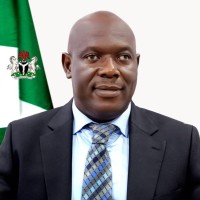
The Hydrocarbon Pollution Remediation Project (HYPREP) has commemorated the 15th anniversary of the release of the United Nations Environment Programme (UNEP) Environmental Assessment Report on Ogoniland, reaffirming its commitment to restoring the environment and improving the livelihoods of affected communities.
In a statement signed by the Project Coordinator, Prof Nenibarini Zabbey, to commemorate the anniversary, HYPREP described the anniversary as a significant milestone in Nigeria’s environmental restoration efforts, noting that the project has made remarkable progress in implementing the recommendations of the landmark UNEP report released on August 4, 2011.
The UNEP report had revealed extensive oil pollution across Ogoniland, severe environmental degradation, and serious public health risks resulting from decades of petroleum operations. It also recommended an initial $1 billion fund to commence the cleanup of the affected communities.
According to HYPREP, the Federal Government formally launched the Ogoni clean-up in 2016, while the Project Coordination Office was established in 2017 to drive the implementation of UNEP’s recommendations.
Zabbey said the current administration has continued to prioritise the project under the Renewed Hope Agenda.
Providing an update on the cleanup, the Project Coordinator disclosed that 30 of the 65 contaminated sites identified by UNEP have been fully remediated, while work is ongoing at several medium- and high-risk locations. It also stated that more than 1.5 million mangrove seedlings have been planted as part of what it described as the world’s largest restoration of oil-degraded mangroves, with over 1,000 hectares of shoreline already rehabilitated.
Zabbey further revealed that 49 Ogoni communities have been connected to potable water schemes through multiple water projects and booster stations aimed at providing safe drinking water across the region.
In the health sector, he said the 100-bed Ogoni Specialist Hospital in Kpite and the 43-bed Cottage Hospital in Buan are nearing completion, adding that several existing health facilities have been upgraded with modern medical equipment, while five ambulances have been donated to improve emergency healthcare services. The Project Coordinator also disclosed that a three-year human health biomonitoring study is being conducted in collaboration with the World Health Organization’s International Agency for Research on Cancer (IARC).
On economic empowerment, Zabbey stated that the Project has created more than 8,000 direct jobs and trained thousands of Ogoni youths and women in various vocational and technical skills, including software development, cybersecurity, aviation, commercial diving, seafaring, mechatronics, and creative arts. The project also reported awarding scholarships to more than 1,000 students, providing grants to small businesses, and supporting persons living with special needs through skills acquisition programmes.
The statement further highlighted ongoing legacy projects, including the Ogoni Power Project and the Centre of Excellence for Environmental Restoration, which it said is about 96 per cent complete. HYPREP also welcomed the recent designation of the Ogoni Wetland as a Ramsar Site of International Importance and pledged to continue promoting biodiversity conservation and sustainable management of the ecosystem.
Marking the anniversary, Zabbey said the progress achieved over the past 15 years demonstrates the collective commitment of government, development partners, stakeholders, and local communities to restoring Ogoniland. He called for renewed collaboration to sustain the cleanup effort, promote environmental sustainability, and support the long-term development of the region. 3
-

 News1 day ago
RSG Targets Nine Million Residents in Mosquito Net Distribution Campaign
-

 Oil & Energy1 day ago
Aiyedatiwa Signs New Electricity Bill
-

 Maritime1 day ago
Marine Minister Commends President Tinubu On NPERA Bill Assent
-

 Oil & Energy1 day ago
NLNG Commissions Research And Innovation Centre In RSU
-

 News1 day ago
KenPoly Holds Eight Convocations, August 29
-

 News1 day ago
RMAFC Completes Revenue Sharing Review, Proposes New Pay
-

 News1 day ago
RSG Begins Another Phase of Projects Commissioning Today
-

 Maritime1 day ago
NAGAFF Petitions IGP Over Alleged Maritime Police Harassment