
Nation
THE STATES

Adamawa
Governor Murtala Nyako of Adamawa State has described the N18, 000 minimum wage as too small.
Speaking with newsmen in an interactive session on Christmas day in Yola, Nyako said the amount was to meager to cater for a family man.
Nyako was, however, quick to point out that in spite of the small amount, many state governments would find it difficult to implement.
He said this was because of the states’ sole dependence on the monthly federation account allocation.
Nyako said there was need for states to source for alternatives to oil money if they were to meet the growing developmental needs of their people.
He said it was the zeal to wean Adamawa from over dependence on oil money that his administration engaged in projects such as transforming agriculture by introducing commercial farming.
Bauchi
The wife of the Bauchi State Governor, Hajiya Aisha Yuguda, has distributed food and textile materials to various churches in the state to mark the Christmas.
The materials were presented to various churches by the representative of the governor’s wife, who is also the Commissioner for Women Affairs, Hajiya Talatu Barwa.
At the presentation in Bauchi on Saturday, Yuguda said “this is just a token gift to the Christian faithful to assist you in this year’s celebration. We pray that we celebrate the season in peace.’’
She felicitated with the Christian community in the state and prayed for a peaceful celebration.
Receiving the items, Mrs Suzana Moses of St. Joseph’s Catholic Church, Yelwa-Bauchi, expressed gratitude to the first lady and assured her that the gifts would be distributed accordingly.
FCT
Alhaji Balarabe Musa, National Chairman of Peoples Redemption Party (PRP), has urged the Federal Government to carry out a total reform of the electoral process.
Musa, who made the call in an interview with newsmen in Abuja, said it would help to reduce tension in the country.
He noted that Nigerians approved a complete overhaul of the electoral process, to ensure transparent and peaceful elections in the country.
“The whole purpose for the electoral reform, every Nigerian agrees, is to ensure the electoral process is credible.
“It must be credible and capable of bringing about free, fair and transparent election leading to a legitimate government and solving the perpetual crisis Nigerians are facing, particularly after every national election,’’ he said.
The PRP chairman decried the current trend in which candidates were imposed on the electorate without consideration for their freedom of choice.
Kaduna
Governor Patrick Yakowa of Kaduna State has advised Christians to see Christmas as a period for sober reflection and stock taking on their relationship with God.
Yakowa, in Christmas message signed by Mr Reuben Buhari, the Special Adviser on Media and Publicity and made available last Friday, felicitated with Christians and the entire people of the state on the event.
He said “Christmas is not only a time for celebration, but a period for sober reflection and stock taking of God’s blessings.
“One of the areas we must reflect on is our relationship with God and with our fellow humans and therefore Christians and the entire people of Kaduna State must be committed to religious harmony, peaceful living and understanding of one another.”
Kano
Malam Ahmad Abusalma, a Hausa film director in Abuja, on Sunday lauded Kano’s Hausa film industry as it clocked 20, saying that it had come of age.
Abusalma, who gave the commendation in an interview with newsmen in Kano, said that the Hausa film industry would excel in Africa if was supported by stakeholders.
He recalled that the industry was founded by a few practitioners “who were then regarded as jobless and stupid”, adding that due to their strength and courage, the industry had grown into a big one across the Northern states.
Katsina
Katsina State Rural Water Supply and Sanitation Agency (RUWASSA) has established water, sanitation and hygiene committees in 28 communities to ensure effective water supply and sanitation in the state.
The agency also established environmental health clubs in 12 secondary schools to promote environmental sanitation as well as ensure good water supply to the schools.
Alhaji Abubakar Gege, the Executive Director, disclosed this in an interview with newsmen yesterday in Katsina.
He said members of the committees and the environmental health clubs which were formed in the last three months had received training on maintenance, ownership and operation of all water supply facilities.
Gege disclosed that after inaugurating the three new rigs of the agency three months ago, the state government had released N158.3 million to the agency.
Kebbi
The Kebbi State Governor, Alhaji Sa’idu Dakingari, on Friday commended Christians for sustaining peaceful co-existence and lending support to the constituted authority.
A statement by the Chief Press Secretary, Alhaji Abubakar Dakingari, quoted the governor as wishing Christians a Merry Christmas and urging them to emulate the exemplary life of Jesus Christ.
“I enjoin all Christians to emulate the virtues of Jesus Christ and use this festive mood as a time for sober reflections with a view to improving our future,” it stated.
He urged them to pray for peace, unity and successful elections in 2011.
He urged Christians further to pray for safe return of the Christian pilgrims in Jerusalem now performing their religious obligations.
NAN reports that the Christmas was marked peacefully with Christians attending church services and exchanged gifts and visits with friends, neighbours and relations.
Lagos
The Head, Test Development Division of the West African Examination Council (WAEC), Mr Patrick Modebe said by 2020 the examination body would conduct its examinations in the e-test format.
Speaking with newsmen in Lagos on Saturday, Modebe noted that the Council had begun the process to realise that objective, even before 2020.
Modebe, who would be retiring from the Council soon, said that adoption of the Electronic Examination method popularly called the e-test format by the Council, would be ‘a vision come alive’.
“I also know that WAEC is working assiduously towards applying the e-marking method in its operation to facilitate early release of examination results,’’ he said.
He, however, observed that the application of the electronic e-test and e-marking formats depended greatly on government’s success in its National Computerisation Policy.
Ogun
Mr Poju Adeyemi, an Action Congress of Nigeria (ACN) chieftain in Ogun, said the party would take over the reins of government in the state in 2011.
Adeyemi, a former Secretary to the State Government (SSG) between 1999 and 2003, made the declaration in an interview with newsmen in Abeokuta.
He said that ACN had been put in good shape to win at all levels in the forthcoming general elections in the state.
Adeyemi said his optimism was based on the feelers the party was getting from all nooks and crannies of the state.
“The response we have been getting from our interactions with the people is that they are tired of the present administration. When the masses say yes, who can say no?
“The ACN is solidly on ground to provide a better alternative to what he described as a charade,’’ he said.
Plateau
The Plateau State Government has condemned those behind the planting of bombs which rocked some parts of Jos on Christmas eve.
Mr Gregory Yenlong, the Commissioner for Information and
Communications, in a broadcast on Saturday, said that the act was heinous and condemned those behind it.
Yenlong said that the act also laid credence to several threats
by some unknown persons to make the state ungovernable,
“as a way of opposing the administration.’’
He commiserated with families of those killed in the blasts
and wished those who sustained injuries quick recovery.
Our correspondent learnt that the first of the bombs detonated at about 7.30 p.m. around Kabong (Gada Biyu) , while the second was at Angwang Rukuba, at about 8 p.m.
Sokoto
An aspirant on the platform of the PDP, Alhaji Yusuf Abdullahi, has called on President Goodluck Jonathan not to allow PDP governors leave the party because of the electoral act amendment.
Abdullahi, who is eyeing the Isa/Sabon-Birni Federal Constituency seat in the House of Representatives, made the call in an interview with newsmen in Sokoto.
He said that the current controversy over the electoral act amendment should not be allowed to tear the biggest party in Africa apart.
“PDP has come to stay in Nigeria, Mr President should use his good office to settle with the governors because they are closed to the electorate who will contribute positively towards the success of the party at the polls,’’ he said.
The Aspirant also advised President Goodluck Jonathan not to listen to Abuja politicians as “they have nothing to offer as far as getting eligible voters is concerned.
He pointed out that “those that matter are the governors who are with their people and who will work towards the success of our party.’’



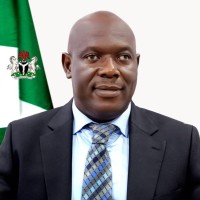
The Hydrocarbon Pollution Remediation Project (HYPREP) has commemorated the 15th anniversary of the release of the United Nations Environment Programme (UNEP) Environmental Assessment Report on Ogoniland, reaffirming its commitment to restoring the environment and improving the livelihoods of affected communities.
In a statement signed by the Project Coordinator, Prof Nenibarini Zabbey, to commemorate the anniversary, HYPREP described the anniversary as a significant milestone in Nigeria’s environmental restoration efforts, noting that the project has made remarkable progress in implementing the recommendations of the landmark UNEP report released on August 4, 2011.
The UNEP report had revealed extensive oil pollution across Ogoniland, severe environmental degradation, and serious public health risks resulting from decades of petroleum operations. It also recommended an initial $1 billion fund to commence the cleanup of the affected communities.
According to HYPREP, the Federal Government formally launched the Ogoni clean-up in 2016, while the Project Coordination Office was established in 2017 to drive the implementation of UNEP’s recommendations.
Zabbey said the current administration has continued to prioritise the project under the Renewed Hope Agenda.
Providing an update on the cleanup, the Project Coordinator disclosed that 30 of the 65 contaminated sites identified by UNEP have been fully remediated, while work is ongoing at several medium- and high-risk locations. It also stated that more than 1.5 million mangrove seedlings have been planted as part of what it described as the world’s largest restoration of oil-degraded mangroves, with over 1,000 hectares of shoreline already rehabilitated.
Zabbey further revealed that 49 Ogoni communities have been connected to potable water schemes through multiple water projects and booster stations aimed at providing safe drinking water across the region.
In the health sector, he said the 100-bed Ogoni Specialist Hospital in Kpite and the 43-bed Cottage Hospital in Buan are nearing completion, adding that several existing health facilities have been upgraded with modern medical equipment, while five ambulances have been donated to improve emergency healthcare services. The Project Coordinator also disclosed that a three-year human health biomonitoring study is being conducted in collaboration with the World Health Organization’s International Agency for Research on Cancer (IARC).
On economic empowerment, Zabbey stated that the Project has created more than 8,000 direct jobs and trained thousands of Ogoni youths and women in various vocational and technical skills, including software development, cybersecurity, aviation, commercial diving, seafaring, mechatronics, and creative arts. The project also reported awarding scholarships to more than 1,000 students, providing grants to small businesses, and supporting persons living with special needs through skills acquisition programmes.
The statement further highlighted ongoing legacy projects, including the Ogoni Power Project and the Centre of Excellence for Environmental Restoration, which it said is about 96 per cent complete. HYPREP also welcomed the recent designation of the Ogoni Wetland as a Ramsar Site of International Importance and pledged to continue promoting biodiversity conservation and sustainable management of the ecosystem.
Marking the anniversary, Zabbey said the progress achieved over the past 15 years demonstrates the collective commitment of government, development partners, stakeholders, and local communities to restoring Ogoniland. He called for renewed collaboration to sustain the cleanup effort, promote environmental sustainability, and support the long-term development of the region. 3
-

 News2 days ago
RSG Targets Nine Million Residents in Mosquito Net Distribution Campaign
-

 Oil & Energy1 day ago
Aiyedatiwa Signs New Electricity Bill
-

 Oil & Energy1 day ago
NLNG Commissions Research And Innovation Centre In RSU
-

 Maritime1 day ago
Marine Minister Commends President Tinubu On NPERA Bill Assent
-

 News2 days ago
KenPoly Holds Eight Convocations, August 29
-

 News2 days ago
RSG Begins Another Phase of Projects Commissioning Today
-

 News2 days ago
RMAFC Completes Revenue Sharing Review, Proposes New Pay
-

 Maritime1 day ago
NAGAFF Petitions IGP Over Alleged Maritime Police Harassment