
Politics
2019 Polls: The Allegations And Realities

Accusations and counter-accusations after an election have no doubt become the hallmark of Nigerian politics. In most cases, the loser does more of the accusations, while the winner eulogizes the process leading to his/her success, even when there are glaring cases of misnomers.
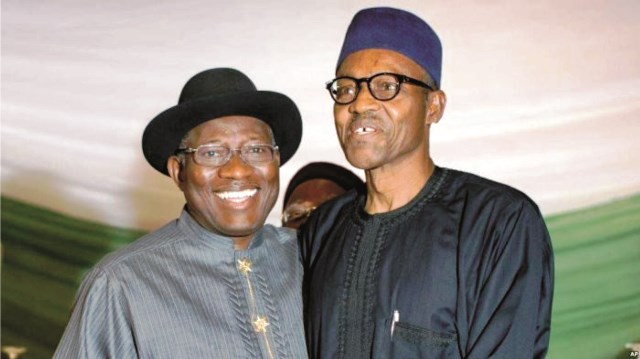
In fact, but for President Goodluck Jonathan, who conceded defeat in 2015 to Muhammadu Buhari, it is difficult to name any other person who lost an election, organised by the country’s electoral umpire and accepted the results in Nigeria. It has become normal, so much that even when there is good reason for the loser to feel cheated and hence aggrieved, he is widely seen as following the band wagon.
Unfortunately, this stance has become a major Achilles’ heel of Nigerian politics, one that has, election after election, either bemusedly present-ed those who say all is well in the face of clear unwell as the real destroyers of the country’s yearnings for democracy, or made the losers (who are tagged mere complainers) as troublemakers.
Ironically, this aspect of the country’s politics is the part that makes each subsequent election stand out on its own. In the history of Nigerian politics, for instance, critics will always point to 2003 as the period when politics of gunrunning found its way into Nigerian politics. Since then, the situation has only been as good or bad as the focus of the sitting president, and in the interpretation of the interest of the one talking.
Worthy of note is the fact that at each point, most of those who dish out these bitter experiences, or receive same, have either been direct or indirect key players when it started, or supported it as the norm they came into play, even when they may have known at some point that it wasn’t right for the polity.
The difference between political gunrunning when it started and now is that while in the beginning the key players were civilians whose briefs was to protect the interest of their principals, currently those commandeering with the aid of the gun are trained military personnel who have sworn to protect the interests of the people.
The result is that while those who are on the receiving end of the alleged excesses of the military, which, like in the Abonnema experience of February 23, 2019 Presidential and National Assembly elections, allegedly claimed over 50 lives at the end of the day, those who it has favoured see it as their time to shine. This is all there is to the allegations and counter allegations over the 2019 elections.
In the midst of all this, however, there is the need to think out of the box, if one would truly want to be seen as being patriotic, as most of the key players claim to be, about what Nigeria has been thus far as a Republic, and what it should be in terms of development.
When viewed from the perspectives of the realities as they emerge, which come up almost as frequent as the brains of those who concoct their works, and placed side-by-side with what the leadership claims to be focused on for the good of society, it becomes very easy to clearly separate the real allegations, the reality of it, and the ideality of the situation which everybody seem to lay claim to.
What could perhaps be regarded as one of the first allegations of the 2019 Nigeria’s general elections occurred in Rivers State in Ikwerre and Emohua Local Government Areas (LGAs): The Returning Officers of both LGAs alleged military invasion, intimidation, molestation and carting away of collation materials, as the case may be, hence there was no result to declare at the LGA collation centers.
The reality of the allegations is that it does not change the fact that from the point of the polling units, where results are first declared, up to the Wards level, agents of political parties and virtually all concerned and their cronies have direct access to the real figures of each result.
On the other hand, ideally, whether the results were delivered at the LGA Collation Centers or not, it will be easy to get the results in bits from the Units or Wards and still arrive at the correct result, in perhaps slightly adjustable time, if the electoral umpire had worked out enough contingency plans as backups, and also earned the trust of the voters.
Even when such contingencies may not have been foreseen, if after the killings in Abonnema and the collation disruptions in other areas, the Independent National Electoral Commission (INEC) could ignore them and announce the Presidential and National Assembly elections, what else could stop elections in areas where voting had successfully taken place in a peaceful atmosphere, counted at the Units and Wards, only to be disrupted at the LGA?
But for that it shows the reality that INEC is less concerned (or interested) about getting genuine election results, and so places more attention on getting any result from persons other than the ones they officially appointed to get the results from, the Mahmood Yakubu-led INEC can hardly have genuine reason to let the one characterised by fatalities go, and stamp its feet on a better option.
In its second interim report on the Governor-ship and State House of Assembly elections of March 9, 2019, the Nigeria Bar Association (NBA) said in part that, “The political parties had a field day inducing voters with money, food items, soaps and various other items to vote for their partie’s candidates. These acts of inducement right before security agents within the voting precincts have the propensity to destroy the citizens’ confidence in the entire election process.
“There were several reports of electoral violence from all over the country. Party thugs and hoodlums had a field day invading voting centers to snatch polling materials, destroy voting materials, harass, molest and intimidate voters and, in some instances, INEC officials”.
The report, credited to the Chairman of the NBA Election Working Group, Afam Asigwe, stated that, “Surprising in most places where these dreadful acts were recorded or reported, security agents were either complicit or indifferent”.
The Chief Observer of the European Union Observation Mission to Nigeria, Maria Arena, summed up when she said,” Observers, includ-ing EU observers, were denied access to collation centres in Rivers, apparently by military personnel. This lack of access for observers compromises transpa-rency and trust in the process.
“In Rivers, INEC suspended until further notice the elections due to violence in polling units and collation centers, staff being taken hostage and election materials, including results sheets, seized or destroyed by unauthorised persons.
“There is no doubt that the electoral process there was severely compro-mised.”
While these allegations have not been able to encourage INEC and the Federal Government to take deliberate steps in ensuring that the military is only involved in securing the environment for peaceful elections, it only proves the reality that as far as these elections are concerned, the military has been given the power to do everything they deem fit, including taking as many lives as they can, even in a non-war situation.
Another key reality is the phrase, “people dressed in Army uniforms”, used to describe Army personnel who are blamed for carrying out all the stated allegations before and during the 2019 elections. While these allegations are sometimes backed by video footages, the military seem to be unperturbed, as it seems with the Federal Government too. With each subsequent denial of the allegations, it seems to be business as usual.
In all of these (and many more), all key players claim ideality: they want the people to see them as saints; people who are doing everything for the interest of the country; that they are the best thing to happen to the people, even when they do not have the least regard for the people, by their actions.
Leadership seem to forget in a hurry that by its actions and inactions, it has done a pretty good job doing in a more grievous manner what it had professed against just about four years ago. The APC-led Government seems only to be bent on improving on the same things it allegedly fought against, and for which it got the people’s Presidential mandate in 2015.
Soibi Max-Alalibo



The commission announced the extension in a statement issued on Saturday and signed by the National Commissioner and Chairman of its Information and Voter Education Committee, Mohammed Haruna.
According to INEC, the decision followed appeals by political parties for additional time to complete the submission process through the dedicated online portal.
“The submission window, which according to the revised Timetable and Schedule of Activities for the General Election was originally scheduled to close on Saturday, 8th August, 2026, has been extended to Tuesday, 11th August, 2026,” the commission said.
In a a related development, INEC announced the suspension of PVC collection in Osun State ahead of the August 15 governorship election.
The commission said voters who applied for replacement of lost, damaged or defaced Permanent Voter Cards would have until midnight on Sunday, August 9, to print downloadable copies of their cards.
The electoral body explained that the deadline was necessary to enable it compile data on downloaded PVCs and produce final statistics on the total number of cards collected ahead of the election.
INEC said PVC collection in Osun commenced at the Registration Area level from July 22 to 28, 2026, but was extended to July 31 following complaints about large crowds and difficulties experienced by voters at collection centres.
The exercise subsequently moved to the local government level and ran from August 1 to 7.
The commission also disclosed that replacement downloadable PVCs had been made available to voters in Odo-Otin and Ife Central Local Government Areas following the theft of cards during attacks on the two collection centres.
It stressed that the stolen cards could not be used to vote.
INEC reassured Osun residents of its preparedness for the August 15 governorship election.
“The commission reiterates that the stolen cards cannot be used to vote.
“INEC reassures the people of Osun State of its readiness to conduct a free, fair, credible and inclusive governorship election on 15th August, 2026,” the statement said.
The commission said the deadline, initially set for Saturday, 8 August, has been extended to Tuesday, 11 August 2026, following appeals from political parties for more time.
INEC also announced that the window for voters who applied to replace lost, damaged or defaced PVCs to download their replacement cards will close at midnight on Sunday, 9 August.
The move is to enable the commission compile final PVC collection figures ahead of the 15 August Osun governorship election.
INEC said replacement downloadable PVCs have also been provided to affected voters in Odo-Otin and Ife Central Local Government Areas after hoodlums carted away cards from two collection centres, stressing that the stolen cards cannot be used to vote.
The commission reaffirmed its readiness to conduct a free, fair, credible and inclusive election in Osun State.
Gov. Kefas made the remarks over the weekend at the Federal Medical Centre (FMC), Jalingo, during the flag-off of the second phase of the Renewed Hope Medical Outreach in Taraba State, organised as part of activities marking Prof. Yilwatda’s 58th birthday.
The governor commended Prof. Yilwatda for choosing to mark his birthday by providing medical care to people in need.
“What Professor Nentawe did is a powerful demonstration of what leadership should be,” Gov. Kefas said.
He assured that his administration would continue to support initiatives that complement government efforts to improve healthcare delivery and the wellbeing of residents.
Speaking at the event, Prof. Yilwatda called on Nigerian leaders to embrace the culture of giving and use their positions to touch the lives of the less privileged.
He said his decision to celebrate his 58th birthday in Taraba State was deliberate and informed by the needs of underserved communities, particularly people who face difficulties accessing healthcare because of distance and financial constraints.
According to him, the intervention followed a needs assessment and was extended across the three senatorial districts of the state.
He said the exercise commenced on August 3 at Takum General Hospital and covered the Federal University Teaching Hospital, Wukari; First Referral Hospital, Sunkani, Ardo-Kola Local Government Area; General Hospital, Bali; General Hospital, Gembu; and FMC Jalingo.
Prof. Yilwatda said the intervention provided medical services to thousands of beneficiaries, including people who required surgical procedures.
He said sustainable national development could only be achieved when strong institutions placed Nigerians at the centre of development.
“Leadership is about service,” he said, urging political and public leaders to make giving back to society an important part of their responsibilities.
He reaffirmed his commitment to serving Nigeria and its people, saying his personal vision was to make every day of his life useful to humanity.
“Every day that I live, the vision is: let it be useful to humanity,” he said.
The Taraba State Commissioner for Health, Dr. Bordiya Buma, commended the initiative, saying it was consistent with the Renewed Hope agenda and efforts to strengthen healthcare delivery in the state.
Dr Buma said the second phase followed the successful completion of the first phase, which was conducted simultaneously in six local government areas, with two LGAs selected from each of the three senatorial districts.
According to him, more than 10,000 patients were attended to during the first phase, including people with medical and surgical conditions.
He disclosed that 327 general surgeries, 71 eye surgeries and 575 dental procedures were carried out during the exercise.
The commissioner expressed appreciation to President Bola Tinubu for the Renewed Hope Medical Outreach and thanked Prof. Yilwatda for supporting the initiative and choosing Taraba State as a beneficiary.
The Minister of Health and Social Welfare, Prof. Muhammad Ali Pate, also commended Prof. Yilwatda for choosing Taraba State to mark his 58th birthday through a medical outreach.
Prof. Pate said making healthcare the centrepiece of the birthday celebration was significant because health affects everyone.
-

 News2 days ago
RSG Targets Nine Million Residents in Mosquito Net Distribution Campaign
-

 Oil & Energy1 day ago
Aiyedatiwa Signs New Electricity Bill
-

 Maritime1 day ago
Marine Minister Commends President Tinubu On NPERA Bill Assent
-

 Oil & Energy1 day ago
NLNG Commissions Research And Innovation Centre In RSU
-

 News2 days ago
KenPoly Holds Eight Convocations, August 29
-

 News2 days ago
RMAFC Completes Revenue Sharing Review, Proposes New Pay
-

 News2 days ago
RSG Begins Another Phase of Projects Commissioning Today
-

 Maritime1 day ago
NAGAFF Petitions IGP Over Alleged Maritime Police Harassment