
Featured
US, Others Condemn Genocide In Nigeria …As SERAP Seeks UN Special Session Over Killings …Security Operatives Stop Ezekwesili’s Protest To Villa …Buhari’s Visit To Plateau Belated, Says PDP

The United States Government has strongly condemned the attacks in Plateau State in which no fewer than 86 people were killed and several others injured.
Spokesperson for the US Department of State, Ms Heather Nauert, in a statement, yesterday, said the perpetrators of the attacks should be brought to justice.
She further said, “The United States condemns, in the strongest possible terms, the killing of civilians and destruction of property in Nigeria’s Middle Belt region over the weekend.
Similarly, the National Association of Nigerian Students (NANS), yesterday, condemned the latest killing by suspected Fulani herdsmen in some communities in Plateau State.
It would be recalled that some suspected herdsmen killed over 86 persons during an attack on Razat, Ruku, Nyarr, Kura and Gana-Ropp villages of Gashish District in Barkin Ladi Local Government Area of Plateau State, over the weekend.
The National Public Relations Officer of the association, Mr Bestman Okereafor made the condemnation in a statement in Enugu.
The association condoled with the affected families and urged the Federal Government to address the issue of killings in the country.
“With great sadness, the leadership of NANS joins the world and fellow Nigerians in condemning the gruesome murder in some states of the federation, especially the most recent killings in Plateau State by suspected herdsmen.
The association, however, noted with concern that such killing had continued despite of its repeated appeals to the problem.
“NANS is appealing to Mr President to stand by his promise of protecting human rights and fighting human rights abuses,” Okoroafaor said.
Reacting, the newly registered political party, Young Progressives Party (YPP), accused the President Muhammadu Buhari-led Federal Government of incompetence, over the continued logjam recorded in its budget preparations and over the incessant killings recorded across the country.
YPP, in a statement by its National Publicity Secretary, Comrade Egbeola Wale Martins, strongly condemned the latest killings in 11 villages in Plateau State, where over 86 innocent people were confirmed killed by rampaging herdsmen, who he said had become a more worrisome security threat than the once dreaded Boko Haram sect.
According to him, this incessant killing has now become a recurring event under the watchful eyes of an APC government that rode to power on the mantra of change anchored on security, economy and anti-corruption.
He said, “It is high time the APC led government declared a National mourning and emergency while also as a matter of national expediency re-jig the entire security apparatus as we cannot continue to do things the same way and expect a different result.
“We are in desperate times that require drastic measures to be urgently taken to completely halt the incessant killings that have now become a norm in a society where sanity should prevail.”
“We advise the APC-led government to automate our budget preparation process by developing software that can aid seamless analysis and preparation of a flawless budget that can be submitted at least five months earlier to the National Assembly for consideration.”
Egbeola also condemn the just concluded APC convention, which he alleged was characterized by violence even with the presence of over 5,000 policemen and two surveillance helicopters.
“This show of shame aired on national television shows among other things how not to conduct a peaceful convention and the outcome of this shambolic charade called convention is beginning to be a cause for worry, because how can a party which cannot organize a credible convention organize or support a transparent, peaceful and credible elections come 2019,” he argued.
Also reacting, women groups in Plateau condemned the massacre of people, especially women and innocent children, in the recent attacks on its communities and cautioned opinion leaders against making inciting comments.
In separate interviews with newsmen, yesterday, in Jos, the International Federation of Women Lawyers (FIDA) said the attacks were acts of inhumanity and criminality.
The FIDA Chairperson in Plateau, Mrs Mary Izam, said government should comply with the amended provisions of section 14(2b) of the 1999 Constitution of protecting lives and property of the citizenry.
The National Coordinator, Christian Women for Excellence and Empowerment in Nigeria (CWEENS), Prof. Funmilayo Para-Mallam, also condemned the killings.
Meanwhile, the Socio-Economic Rights and Accountability Project (SERAP) has sent an open letter to all the Permanent Representatives of Member and Observer States of the UN Human Rights Council, Geneva, urging their delegation to initiative and actively support the urgent holding of a special session of the Human Rights Council to address the ongoing killings of Nigerians and residents by suspected herdsmen and/or unknown persons in Nigeria, most recently in Plateau State where over 80 people were brutally murdered.
The organization urged the Human Rights Council to adopt a resolution to “condemn in the strongest possible terms the ongoing killings and revenge attacks on innocent Nigerians and residents by suspected herdsmen and/or unknown persons as well as the ongoing impunity enjoyed by suspected perpetrators and groups that have suggested these atrocities may be retaliatory killings.”
In the letter dated June 26, 2018, and signed by SERAP’s Deputy Director, Timothy Adewale, the organization said, “The proposed measures are necessary because several calls by Nigerians asking the Nigerian authorities to end the killings and attacks have largely gone unheeded for far too long. The Human Rights Council cannot ignore persistent attacks and killings of Nigerians and residents. If the Human Rights Council does not assume its responsibility and give voice to the victims, it would exacerbate the impunity of perpetrators; continue to hide their victims; and deepen the invisibility of the killings and attacks to the comity of nations.”
The organisation also urged “The Human Rights Council to stand ready to take additional measures according to the evolution of the situation in Plateau, Benue and several other states across Nigeria, including recommending that the UN General Assembly, in view of gross and systematic nature of the killings and attacks, and the failure of the Nigerian authorities to end the killings, considers the application of the measures foreseen in paragraph 8 of General Assembly resolution 60/251 (which authorises the suspension of the rights of membership in the council of a member of the council that commits and/or allows gross and systematic killings, attacks and other grave violations of human rights).”
The organisation expressed “serious concern that to date, no credible investigations have been carried out to determine who exactly is responsible for the killings and attacks and put an end to the atrocities.”
“SERAP urges the Human Rights Council to at the proposed special session adopt a resolution that expresses its deep concern about the ongoing killings and attacks on innocent Nigerians and residents in several states of the Federation, most recently in Plateau and Benue states of the country.
“The Human Rights Council should demand that the Nigerian authorities end these killings and attacks as a matter of critical and urgent priority, including by immediately identifying suspected perpetrators and their supporters, sponsors, and by conducting thorough, impartial and independent investigations with a view to bringing those responsible to justice and providing victims with access to justice and effective remedies, including adequate compensation, satisfaction and guarantee of non-repetition.
“The Human Rights Council should request the High Commissioner for Human Rights to urgently appoint a group of independent experts to monitor, verify and report on the ongoing killings and attacks on innocent Nigerians and residents across many states of Nigeria, most recently in Plateau and Benue states, with relevant expertise in mass atrocity prevention, as well as in combating retaliatory attacks, with a view to making recommendations on preventing atrocities, combating farmers and herdsmen crisis, and improving the safety and security of all citizens and residents, as well as achieving accountability for the killings and attacks.
In another development, security operatives attached to the Presidential Villa Gate, close to the Federal Secretariat, Abuja, yesterday stopped what was described as a solo protest by former Minister of Education, Dr. Oby Ezekwesili over the recent gruesome murder of over 86 people in Plateau State.
The former Minister was said to have been harassed and assaulted by the security operatives while attempting to march towards the Villa to demand accountability and end to the violent killings going on in the country.
Dressed in a symbolic red attire, Ezekwesili carried a banner with inscriptions such as Help!, #EndTheBloodFlow, #EndThe Killings, #WeWantJustice.
Ezekwesili who took to her twitter handle said, “I marched as far as I could to the villa to protest the ineffectual ways of Nigerian president on the terrorists/herdsmen killings.
The police, military and SSS trampled on my rights, seized my banner.” Recall that the Bring Back Our Girls group had in a statement last Monday said that the former minister would embark on the solo march on Tuesday at 11.30 am.
The group in its statement stated that the march was fully endorsed and supported by the BBOG as the issue was part of the things it had been advocating about for the past four years. However, the protest was stopped at the Presidential villa gate when the security operatives stationed around the gate manhandled her while struggling to retrieve the placards with different inscriptions from her.
It was gathered that Dr. Ezekwesili vehemently resisted any form of harassment which later turned to commotion as the Police allegedly dragged her. It was further gathered that journalists with the former minister covering the fracas were not spared, as their phones and cameras were allegedly seized by the security operatives. Speaking during the protest, Ezekwesili said: “I am addressing my message to you as the President and Commander-in-Chief of Nigeria.
I am addressing my demands to you as that one individual bestowed with the powers of centralised command and control of our security institutions and personnel to enforce the provisions of Section 14 subsection 2b of the Nigerian Constitution (As amended) which states that ‘the welfare and security of the citizens shall be the primary purpose of the government,.”
Six of the 12 demands she highlighted in her message to the President were: “Putting an end to the endless killings by herdsmen going on in the country”.
“Revealing the identity of the perpetrators of these wanton killings in Benue, Taraba, Kaduna, Zamfara, Plateau, Nasarawa and Kogi states etc”. Justice for the victims of violent killings across the country and secure the living in all parts of the country”.
“Ending the ineffectiveness of the security establishment”. “Ending your loyalty to the Service Chiefs. Stopping the blame game and confusing statements on the killings of the citizens.”
Also, the Peoples Democratic Party (PDP) yesterday, criticised President Muhammadu Buhari, over his afterthought visit to Plateau State over the killing of scores of people in the state, describing the visit as belated.
The PDP National Publicity Secretary, Mr Kola Ologbondiyan, who stated this in Akure, Ondo State capital, said President Buhari has failed in its constitutional responsibility of protecting lives and property.
Ologbondiyan noted that the President was more interested in his re-election bid than to provide adequate security to the people who voted him into power.
He said “for us in the PDP, we believed that President Buhari is more interested in 2019 Presidential election than governance. He does not care about what happened between now and 2019.
He goes after votes and his passionate drive is how to secure electoral victory in his ill-fated desire to returned in 2019.
Otherwise, there is a huge lost of lives in the Plateau state and we felt that it goes beyond the issue of sending Vice President to go and check.
We think that responsibly, the first place that Mr President should go to is the Plateau state, not going to commission a state project in Cross River.
We cannot say that because Cross River is a PDP state and encourage Mr President to do what is not just because we want the President to do what is sensitive to the feelings of ordinary Nigerians.
His action of going to Cross river at the expense of going to Pleasure, where a huge number of Nigerians has been killed is, to say the least, is irresponsible.
Ologbondiyan stated that the APC government and President Buhari had failed to add value to the lives of the common man in the last three years but noted that the President has been moving around commissioning white elephant projects.
He said “as a matter of fact, what singular project has Mr President commissioned on behalf of Federal Government in last 2 years? The President always move about to commission projects like bus stop or boreholes in another state, whereas the basic responsibilities of being in governance are the protection of lives and property.
“We are witnessing a situation where country and our nation is almost returned to a burial parlour.
We believed that that should be a concern to Mr President not chasing after state projects for commissioning all in the game of seeking reelection in 2019.”
Speaking on the APC position on restructuring, Ologbondiyan said it was difficult for the party and its leaders to embrace restructuring because APC is a movement.
He said “ they lied to Nigerians and because our political system is metamorphosing, Nigerian didn’t believe that group of a political elite can come together, just to lied to them and seized political power.
“ can you tell me apart from restructuring, the singular promised that APC had made and had lived up to it ? not one, so denying restructuring wouldn’t be a surprise to us in the PDP because we knew from the onset that the party did not mean well for Nigerians.
“It is not new to us in our party that APC is now claiming that restructuring is parochial or restructuring has the different meaning to different people.”



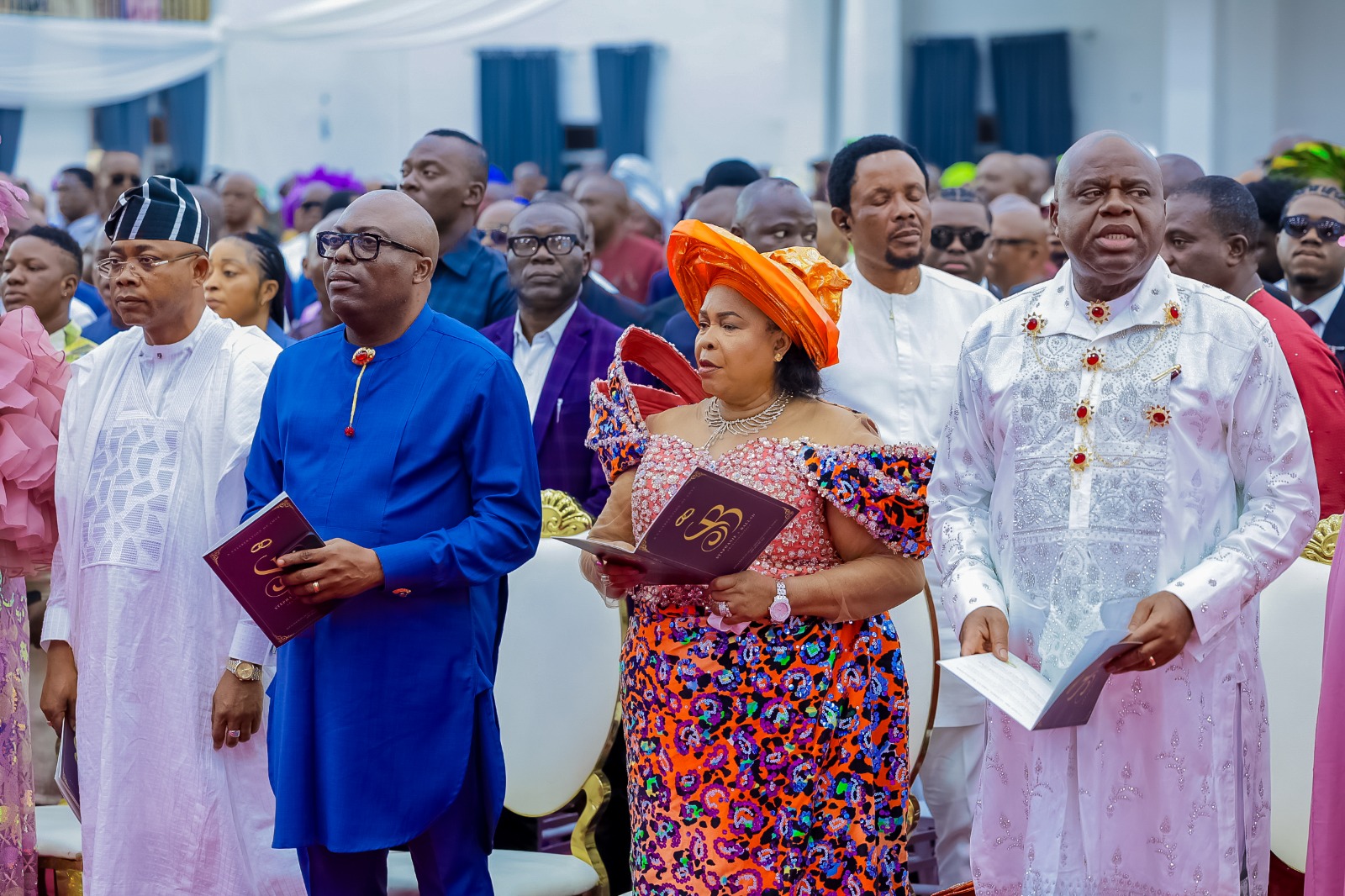
Rivers State, Sir Siminalayi Fubara, has assured members of the National Youth Service Corps (NYSC) of his administration’s commitment to supporting and strengthening the scheme in the State.
Fubara gave the assurance last Friday at the NYSC permanent orientation camp, Nonwa-Gbam, Tai Local Government Area in the State, during the swearing-in ceremony of 2026 Batch B Stream II orientation course.
Represented by the Permanent Secretary, Cabinet Bureau, Office of the Secretary to the State Government, Dr. Promise Oguzie, the governor said the State Government would remain intentional in providing the necessary support to improve the NYSC scheme and enhance the experiences of corps members deployed to the state.
He charged the corps members to be role models and quality nation-builders in their service to the good people of Rivers State in particular, and Nigeria at large.
“I charge you to be exemplary, dedicated and committed in all you do. Take full advantage of all the camp programmes and activities to enrich yourselves”, he said.
In his welcome address, the State Coordinator of NYSC in Rivers State, Mr. Moses Oleghe, urged corps members to see their deployment to Rivers State as a “veritable opportunity to make meaningful contribution to the growth of the State in particular and Nigeria at large.”
He further charged them to serve with all sense of “integrity, discipline, and the fear of God, especially when they will be engaged as INEC ad-hoc staff that will conduct the 2027 general elections.”
A total of 3,584 corps members composed of 1,421 males and 2,163 females were sworn in by the Chief Judge of Rivers State, who was represented by Justice Godspower Aguma.

Governor of Rivers State, Sir Siminalayi Fubara, says Nigeria needs God-fearing leaders for the nation to move in the right direction and make meaningful progress.
The Governor stated this yesterday when he received in audience, the World President of the Seventh Day Adventist Church, Pastor Erton Kohler; his wife, Andriene Marques Kohler; daughter Mariana Marques Kohler and a retinue of ministers of the church at Government House, Port Harcourt.
Fubara who hailed the Seventh Day Adventist Church for its contributions to education and the grooming of future leaders in Nigeria, expressed delight that the Church had over the years, been investing in education at various levels and currently runs two universities in the country.
He commended the church for not only using its institutions to spread the gospel of Christianity but to groom future leaders for the country.
According to him, religion should not be just about defending one’s faith, but also making meaningful impact on the lives of the people.
He said that by floating these educational institutions, the church has demonstrated capacity to support Nigeria in the task of producing not only educated people but a breed of God-fearing leaders.
“Our country is where it is today because we lack the fear of God. If you have the fear of God, there should be a limit to what you can do because you understand the supremacy of God. But when God is not in your equation, you’ll go beyond the line and that is what has brought us to where we are today.
“So, I feel very happy that you are contributing to the development of our future leaders in this country. We need the right people being in the right place; prepared properly with good minds; that is what we need, not just in Nigeria but round the whole world.,” he said.
Governor Fubara further observed that the absence of God-fearing people in high places to take the right decisions that could impact positively on the society, has also given rise to other problems such as social inequality, poverty, corruption and criminality. According to him, Nigeria needs a system where the average parent could afford quality education for their children and a guarantee that upon graduation, the average child will have the capacity to compete favourably with anybody, anywhere in the world.
“If we have a situation where the little money that you’re being paid as wage can also afford you quality healthcare and after working at least for 15-20 years, you have a roof over your head, tell me why you should be involved in any kind of crime? At that point, you’ll feel secured and this attitude of insecurity about the future that leads to all the social vices we have today won’t be there,” he said.
Governor Fubara expressed appreciation to the delegation for the visit and for their prayers for Rivers State, assuring them of his continued support for their programmes in the state.
Leader of the delegation and World President of the Seventh Day Adventist Church, Pastor Erton Kohler said he was in Nigeria for a special conference of the church during which thousands of the church’s ministers will be undergoing an empowerment programme to further equip them for the task of herding their flocks and serving the society.
He expressed gratitude to the Governor for the warm reception accorded his entourage, saying the memory of the visit will linger in his mind for a lifetime.
Kohler disclosed that the Church has over twenty -four million (24,000,000) members and more than 182,000 places of worship, spread across 212 countries of the world.

The Rivers State House of Assembly has approved the 2026–2028 Medium Term Expenditure Framework (MTEF) submitted by Governor Siminalayi Fubara.
This reaffirms the lawmakers’ commitment to enacting laws and taking legislative actions geared towards the overall development of the State.
The Assembly gave the approval during its Second Legislative Sitting of the Fourth Session held last Friday.
Speaking on the MTEF document during plenary, the House Speaker, Rt. Hon. Martin Amaewhule, noted that by the provision of Section 10(1)(b) of the Rivers State Fiscal Responsibility Law No. 8 of 2010, the MTEF ought to have been laid before the House in September 2025.
Amaewhule explained that traditionally, the document is expected to be presented four months before the commencement of the next financial year and immediately after the expiration of every three-year fiscal cycle.
He, however, stated that in the interest of the State and its people, the House considered it necessary to deliberate on the document, describing it as a precursor to the 2026 Budget Estimates.
The Speaker expressed concern that the year had already progressed significantly before the presentation of the framework.
During deliberations on the document, members examined the assumptions and projections contained in the MTEF and observed that strict adherence to the outlined fiscal parameters would ultimately serve the interest of Rivers people.
The lawmakers maintained that effective implementation of the framework would promote prudent financial management and enhance developmental planning across the State.
Following the debate and positive consideration by members, the Speaker put the question to the House and members voted overwhelmingly in support of the approval of the MTEF.
Meanwhile, during the same sitting last Friday, the House also received a petition from the Chairman of Obio/Akpor Local Government Council, Dr. Gift Worlu.
The petition was presented by the member representing Obio/Akpor Constituency II, Hon. Emilia Amadi.
According to the petition, concerns were raised over an imminent security breach, threats to lives, destruction of property and alleged forceful takeover of property by some lawless persons within parts of the Local Government Area.
Presenting the petition before the House, Hon. Amadi appealed to the lawmakers to revisit the matter and take necessary steps aimed at safeguarding lives and property in the affected communities.
The House is expected to further deliberate on the petition and consider measures to address the concerns raised in order to sustain peace and security in the area.
King Onunwor
-

 News2 days ago
RSG Targets Nine Million Residents in Mosquito Net Distribution Campaign
-

 Oil & Energy2 days ago
Aiyedatiwa Signs New Electricity Bill
-

 Maritime2 days ago
Marine Minister Commends President Tinubu On NPERA Bill Assent
-

 Oil & Energy2 days ago
NLNG Commissions Research And Innovation Centre In RSU
-

 News2 days ago
KenPoly Holds Eight Convocations, August 29
-

 News2 days ago
RSG Begins Another Phase of Projects Commissioning Today
-

 News2 days ago
RMAFC Completes Revenue Sharing Review, Proposes New Pay
-

 Maritime2 days ago
NAGAFF Petitions IGP Over Alleged Maritime Police Harassment