Connect with us

Opinion

Of Law, Legal Technicalities And Justice

Published

on

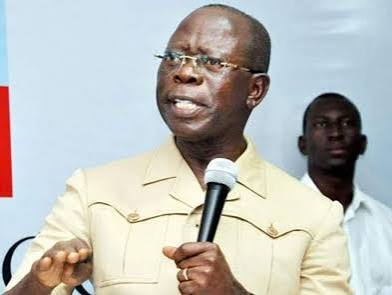
Some people don’t know and some pretend not to know that law has its technicalities-both civil and criminal proceedings. They talk of technicalities and say that lawyers delay cases, look, without being immodest; I have been involved in a lot of cases in this country.
I have defended a lot of people. During the run-up to the 2015 elections, I was one of the lawyers hired on pro bono basis to defend the All Progressives Congress and its candidate, Muhammadu Buhari. We employed all the tactics available, employable and allowable in the legal profession; why didn’t they blame us then? If we didn’t, the election would not have held.
If you do that today, some people, even within the profession, will blame you. I know what I’m talking about. The election was to hold on a Saturday and Justice Gabriel Kolawole of the Federal High Court, Abuja, said he was going to deliver his judgement on whether or not card readers should be used by the Independent National Electoral Commission on Thursday, two days to the election. We filed preliminary objection, he overruled it. I was in court with Lateef Fagbemi (SAN), Akin Olujinmi (SAN), and Kola Awodein, (when) Asiwaju Bola Tinubu sent an aircraft to pick me in Akure, saying that if we were not in court, the election would not hold.
There are things that need to be unveiled in this country. Tinubu, Babatunde Fashola (former Lagos State Governor), the Vice President (Prof. Yemi Osibajo), Lai Mohammed, the AGF (Abubakar Malami) were in the know. And Kolawole overruled us. Then he called the plaintiff and said, can you go ahead with originating summons? I will deliver my judgement tomorrow. Like someone who was possessed, I rose up and said I was applying for stay of proceedings. Then, the other lawyer interjected and asked for my formal application. I gave him two authorities offhand that I could apply orally. That was two days to the election.
Kolawole said well, whatever it is; I would want to listen to you. He listened to me. We did it pro bono in the sense that the APC hasn’t paid us. Nobody even wrote a letter to say thank you. Then, thereafter, he wrote a ruling and granted stay of proceedings 48 hours to the election. The Supreme Court later held that, though the card reader was a good innovation, it was not yet in the law.
Would Buhari have been President if we had not done that? What could be more technical than that? They filed action against Buhari, we looked at it; we raised objections and we were dragging that. Is that not technicality? And some people will now accuse me when I do it for other people that I’m defending looters. But when you do it for them, it is right; that is double standard. And what baffles me is that some high lawyers, who should know better, also accuse some lawyers of defending looters? To hell with anybody who has looted the treasury.
I believe in my profession, and I thank God for what I am. I am a fulfilled person, and don’t want any position from any government, but then government should allow those of us who are privately engaged to do our work.
In our offices in Lagos and Abuja, we have over 75 members of staff – professionals and supporting staff. We pay more than what the government pays, and don’t owe workers. A cleaner in my office earns far more than what government calls minimum wage. And when you say someone is a looter, who is a looter?
Anybody who loots will have his day in court and God will punish looters, but at the same time, judge not, so that you are not judged. And let the accused person defend himself. All religions give room for fair hearing. I grew up to know that when people came to my father to settle disputes, he would say ‘e je ko so tie, agba ti o gbo ejo enikan dajo, agba osika ni’ (let him say his side of the story; an elder who bases his judgement on only one side of the story is wicked). I grew up to know that. So, you don’t want people to be heard? If that is the case, change the constitution. So, once someone is accused, he is arrested and taken to prison. Then, abolish the courts. That is my position. And what goes around comes around. You may be the accuser today, tomorrow; it may be your turn to face accusations. Let the law take its course.
It is tyrannical, dictatorial and smacks of militarism when you start accusing lawyers who defend people. You cannot have democracy without free speech and people having access to courts. You cannot be the accuser, the lawyer and the judge. They say lawyers and judges delay the prosecution of looters, then if they have already been adjudged looters, don’t prosecute them. It is only a court of law that can come to the conclusion that someone has looted the treasury after evidence has been produced.
I believe in anti-corruption, you know, I said earlier that woe betide anybody who has looted the treasury or any person who uses his position to amass wealth. But when you keep on describing Nigeria as a country that is corrupt, investors will stay off. And if you know some judges are corrupt, deal with them, but don’t go to another country to say that the judiciary in your country is corrupt; nobody will come there because it is about investment and the rule of law.
And when you talk of corruption among lawyers, who are the people? It takes two to tango. Let every politician in Nigeria swear by the god of thunder that he has not tried to induce a judge.
Let the President take a cue from the United States President, Barack Obama. George W. Bush squandered American funds on the Gulf War as President of the US because he wanted Saddam Hussein by all means –dead or alive- after the September 11 attack. The economy of the US was comatose when Obama took over, but did you hear him say any bad thing about Bush? He had his own agenda. He started issuing presidential orders and proclamations and within two or three years, the economy was revived without him condemning anybody.
To me, government is a continuum. I’m not in the Peoples Democratic Party or the APC; I don’t even see any difference between the two of them when it is so easy for the PDP people to move to the APC and immediately become progressives. You don’t sell that to me. Mr. President.
Olanipekun, a Senior Advocate of Nigeria (SAN), writes from Abuja.

Wole Olanipekun

Continue Reading

Opinion

Wike VS Soldier’s Altercation: Matters Arising

Published

on

The events that unfolded in Abuja on Tuesday November 11, 2025 between the Minister of the Federal Capital Territory, Chief Nyesom Wike and a detachment of soldiers guarding a disputed property, led by Adams Yerima, a commissioned Naval Officer, may go down as one of the defining images of Nigeria’s democratic contradictions. It was not merely a quarrel over land. It was a confrontation between civil authority and the military legacy that still hovers over our national life.

Nyesom Wike, fiery and fearless as always, was seen on video exchanging words with a uniformed officer who refused to grant him passage to inspect a parcel of land alleged to have been illegally acquired. The minister’s voice rose, his temper flared, and the soldier, too, stood his ground, insisting on his own authority. Around them, aides, security men, and bystanders watched, stunned, as two embodiments of the Nigerian state clashed in the open.

The images spread fast, igniting debates across drawing rooms, beer parlours, and social media platforms. Some hailed Wike for standing up to military arrogance; others scolded him for perceived disrespect to the armed forces. Yet beneath the noise lies a deeper question about what sort of society we are building and whether power in Nigeria truly understands the limits of its own reach.

It is tragic that, more than two decades into civil rule, the relationship between the civilian arm of government and the military remains fragile and poorly understood. The presence of soldiers in a land dispute between private individuals and the city administration is, by all civic standards, an aberration. It recalls a dark era when might was right, and uniforms conferred immunity against accountability.

Wike’s anger, even if fiery, was rooted in a legitimate concern: that no individual, however connected or retired, should deploy the military to protect personal interests. That sentiment echoes the fundamental democratic creed that the law is supreme, not personalities. If his passion overshot decorum, it was perhaps a reflection of a nation weary of impunity.

On the other hand, the soldier in question is a symbol of another truth: that discipline, respect for order, and duty to hierarchy are ingrained in our armed forces. He may have been caught between conflicting instructions one from his superiors, another from a civilian minister exercising his lawful authority. The confusion points not to personal failure but to institutional dysfunction.

It is, therefore, simplistic to turn the incident into a morality play of good versus evil.

*********”**** What happened was an institutional embarrassment. Both men represented facets of the same failing system a polity still learning how to reconcile authority with civility, law with loyalty, and service with restraint.

In fairness, Wike has shown himself as a man of uncommon courage. Whether in Rivers State or at the FCTA, he does not shy away from confrontation. Yet courage without composure often feeds misunderstanding. A public officer must always be the cooler head, even when provoked, because the power of example outweighs the satisfaction of winning an argument.

Conversely, soldiers, too, must be reminded that their uniforms do not place them above civilian oversight. The military exists to defend the nation, not to enforce property claims or intimidate lawful authorities. Their participation in purely civil matters corrodes the image of the institution and erodes public trust.

One cannot overlook the irony: in a country where kidnappers roam highways and bandits sack villages, armed men are posted to guard contested land in the capital. It reflects misplaced priorities and distorted values. The Nigerian soldier, trained to defend sovereignty, should not be drawn into private or bureaucratic tussles.

Sycophancy remains the greatest ailment of our political culture. Many of those who now cheer one side or the other do so not out of conviction but out of convenience. Tomorrow they will switch allegiance. True patriotism lies not in defending personalities but in defending principles. A people enslaved by flattery cannot nurture a culture of justice.

The Nigerian elite must learn to submit to the same laws that govern the poor. When big men fence off public land and use connections to shield their interests, they mock the very constitution they swore to uphold. The FCT, as the mirror of national order, must not become a jungle where only the powerful can build.

The lesson for Wike himself is also clear: power is best exercised with calmness. The weight of his office demands more than bravery; it demands statesmanship. To lead is not merely to command, but to persuade — even those who resist your authority.

Equally, the lesson for the armed forces is that professionalism shines brightest in restraint. Obedience to illegal orders is not loyalty; it is complicity. The soldier who stands on the side of justice protects both his honour and the dignity of his uniform.

The Presidency, too, must see this episode as a wake-up call to clarify institutional boundaries. If soldiers can be drawn into civil enforcement without authorization, then our democracy remains at risk of subtle militarization. The constitution must speak louder than confusion.

The Nigerian public deserves better than spectacles of ego. We crave leaders who rise above emotion and officers who respect civilian supremacy. Our children must not inherit a nation where authority means shouting matches and intimidation in public glare.

Every democracy matures through such tests. What matters is whether we learn the right lessons. The British once had generals who defied parliament; the Americans once fought over states’ rights; Nigeria, too, must pass through her own growing pains but with humility, not hubris.

If the confrontation has stirred discomfort, then perhaps it has done the nation some good. It forces a conversation long overdue: Who truly owns the state — the citizen or the powerful? Can we build a Nigeria where institutions, not individuals, define our destiny?

As the dust settles, both the FCTA and the military hierarchy must conduct impartial investigations. The truth must be established — not to shame anyone, but to restore order. Where laws were broken, consequences must follow. Where misunderstandings occurred, apologies must be offered.

Let the rule of law triumph over the rule of impulse. Let civility triumph over confrontation. Let governance return to the path of dialogue and procedure.

Nigeria cannot continue to oscillate between civilian bravado and military arrogance. Both impulses spring from the same insecurity — the fear of losing control. True leadership lies in the ability to trust institutions to do their work without coercion.

Those who witnessed the clash saw a drama of two gladiators. One in starched khaki, one in well-cut suit. Both proud, both unyielding. But a nation cannot be built on stubbornness; it must be built on understanding. Power, when it meets power, should produce order, not chaos.

We must resist the temptation to glorify temper. Governance is not warfare; it is stewardship. The citizen watches, the world observes, and history records. How we handle moments like this will define our collective maturity.

The confrontation may have ended without violence, but it left deep questions in the national conscience. When men of authority quarrel in the open, institutions tremble. The people, once again, become spectators in a theatre of misplaced pride.

It is time for all who hold office — civilian or military — to remember that they serve under the same flag. That flag is neither khaki nor political colour; it is green-white-green, and it demands humility.

No victor, no vanquish only a lesson for a nation still learning to govern itself with dignity.

By; King Onunwor

Continue Reading

Opinion

Ndifon’s  Verdict and University Power Reform

Published

on

Quote:”But beyond the courtroom victory lies a pressing question: What next? How do we ensure that Nigerian universities no longer serve as hunting grounds for predatory academics? How do we guarantee that students—especially young women—can pursue education without fear of victimization?”
The conviction of Professor Cyril Ndifon, suspended Dean of Law at the University of Calabar, to five years in prison by the Federal High Court Abuja, provided a rare moment of relief amid the week’s troubling national events. Beyond punishing one individual, the judgment signaled that accountability—especially regarding sexual harassment and abuse of power in Nigerian higher institutions—may finally be gaining traction. For years, many students, especially young women, have quietly endured intimidation, coercion, and the misuse of academic privilege. Reports and surveys have consistently shown the depth of this problem. A 2018 World Bank survey estimated that 70% of female graduates had faced some form of sexual harassment in school, while a Nigerian study recorded sexual violence as the most common form of gender-based violence on campuses.
Ndifon’s case has therefore become symbolic—challenging the belief that powerful academics can act with impunity. Justice James Omotosho’s ruling went beyond the conviction; it exposed the systemic rot that enables abuse. His description of Ndifon as a predator highlighted how institutions fail when they lack strong, independent structures for accountability. Although the Independent Corrupt Practices and Other Related Offences Commission (ICPC) proved its case beyond reasonable doubt, many similar cases never reach court because victims remain afraid, discouraged, or convinced that the system will not protect them. A major difference in this case was that a government agency fulfilled its responsibility rather than letting the matter fade, as often happens with campus scandals. Too often, allegations arise but internal committees stall, victims lose hope, and the accused quietly escape consequences.
This time, however, the judiciary refused to allow such evasion. The court’s decision to center the victims and dismiss attempts to discredit them set an important precedent at a time when survivors are often blamed or pressured into silence. Yet the bigger question remains: What next? How can Nigerian universities become safe spaces where students, particularly young women, can pursue education without fear? First, reporting systems must be overhauled. Traditional structures—where complaints pass through heads of departments or deans—are inadequate, especially when senior officers are the accused. Independent, gender-sensitive complaint bodies are essential. Some institutions, such as the University of Ibadan and Godfrey Okoye University, have already taken steps by establishing gender-mainstreaming units. Other universities must follow suit, ensuring confidentiality, protection from backlash, and transparent investigations.
Second, proven cases of harassment must attract real consequences—not quiet transfers or administrative warnings. Sexual exploitation is not a mere disciplinary issue; it is a crime and should be promptly escalated to law-enforcement agencies. Treating criminal behaviour as an internal matter only emboldens perpetrators. Third, students must feel safe to speak up. As a senior lecturer at the University of Abuja advised, silence fuels impunity. Students need to believe that justice is attainable and that they will be supported. This requires consistent sensitization efforts by student unions, civil society groups, gender advocacy organizations, and ministries of women affairs. New students, in particular, need early guidance to understand their rights and available support systems. The recent approval of the Sexual Harassment of Students (Prevention and Prohibition) Bill, 2025, prescribing up to 14 years imprisonment for educators convicted of harassment, is a step in the right direction.
Quick presidential assent and domestication by states will strengthen legal protection. As Nelson Mandela said, “A society that fails to protect its women cannot claim to be civilized.” This principle must guide Nigeria’s legislative and institutional reforms. The legal profession has its own soul-searching to do. Law faculties are expected to model ethics and justice. When a senior law academic betrays these values, the damage extends beyond the victims—it undermines confidence in both higher education and the justice system. The judiciary’s firm stance in this case therefore reinforces the idea that the law exists to protect the vulnerable, not shield the powerful. Yet, this moment should not end with celebration alone; it must ignite a broader institutional awakening. Universities must begin to review their staff appraisal systems to include behavioural ethics, not just academic output.
Governing councils should strengthen oversight mechanisms and ensure that disciplinary processes are free from internal politics. Alumni associations and parents’ forums can also play a monitoring role, demanding higher standards of conduct from staff and administrators. Importantly, the government must provide universities with the financial and technical support needed to establish functional gender desks, counselling units, and digital reporting platforms. Only when all stakeholders take ownership of the problem can lasting reform be achieved. Professor Ndifon’s sentencing represents justice for one victim, but it must inspire justice for many more. It should mark the beginning of a nationwide resolve to reclaim Nigerian universities from those who misuse authority. The future of education in this country must be shaped by knowledge, dignity, and integrity—not fear or manipulation. The judgment is a call to action: to build campuses where students are safe, where lecturers are held accountable, and where power is exercised with responsibility. Only then can Nigeria truly claim to be nurturing the leaders of tomorrow.
By: Calista Ezeaku
Continue Reading

Opinion

As Nigeria’s Insecurity Rings Alarm

Published

on

Quote:”President Donald Trump’s designation of Nigeria a Country of Special Concern and further threats to intervene in countries experiencing religious persecution reflect a growing international concern regarding Nigeria’s deteriorating security situation.”
In recent years, Nigeria has witnessed an alarming evolution of insecurity that threatens not only the stability of the nation but also the broader West African region. Bandit attacks on schools, farms, mosques, and Christian worship centers have become distressingly commonplace, painting a grim picture of a country under siege from multiple fronts. The rise of kidnappings for ransom, coupled with the persistent threat of terrorism from groups like Boko Haram and ISWAP, has ignited fears among communities and hampered economic activities. As neighboring Sahel countries grapple with coups and the spread of extremist ideologies, Nigeria finds itself at a precarious crossroads that demands urgent attention and action.
According to media tally, about 2,496 students have been abducted in 92 school attacks since the Chibok saga of 2014. And prompted by recent incidents in Kwara, Kebbi and Niger states, where hundreds of pupils were abducted, state governments across northern Nigeria are shutting down, or relocating schools. Even the federal government last week, via the Federal Ministry of Education hastily ordered principals of 41 unity schools across northern Nigeria, to shut-down.The increasing frequency and audacity of bandit attacks highlight a troubling trend in Nigeria’s security landscape. Schools, once seen as sanctuaries for learning, have become targets for kidnappers seeking to exploit vulnerable students. These attacks not only disrupt education but also instill fear in families, leading to mass withdrawals from schools. Should we raise a generation of children deprived of their right to education?
Similarly, farms and places of worship have not been spared. Communities that once thrived on agriculture and faith, now live in constant dread of violent incursions. The targeted killings of Christians and attacks on mosques further exacerbate religious tensions, threatening to disrupt the social fabric that holds Nigeria together.The situation is compounded by the unsettling developments in the Sahel region, where coups and the rise of jihadist groups have created a volatile environment. The spillover effects of this instability are palpable in Nigeria, as extremist ideologies proliferate and armed groups gain confidence. The porous borders of the region facilitate the movement of militants and weapons, making it increasingly difficult for Nigerian authorities to contain the threats. As Nigeria struggles to secure its territory, the consequences of failure become more pronounced, with the potential for a broader regional crisis looming on the horizon.
President Donald Trump’s designation of Nigeria a Country of Special Concern and further threats to intervene in countries experiencing religious persecution reflect a growing international concern regarding Nigeria’s deteriorating security situation.
While such attention can bring much-needed awareness to the plight of affected communities, it also underscores a significant truth: the responsibility for addressing these challenges ultimately lies with the Nigerian government. The inaction and apparent inability to protect citizens from violence and ensure justice for victims send a troubling message about the state’s commitment to safeguarding its populace. The economic ramifications of this evolving insecurity are dire. Foreign investment, a critical driver of economic growth, is deterred by the pervasive violence and instability.
 Investors are wary of committing resources to a country where the risk of loss is heightened by kidnappings and attacks on businesses.Additionally, agricultural production suffers as farmers abandon their lands, fearing for their safety. The recent upsurge in insecurity coincides with a crucial harvest season, when farmers need to recoup investment to finance the next round. A decline in harvests this year would reverse recent gains of recovery in food production and exacerbate poverty, further straining the nation’s resources. Socially, the implications of failing to tackle insecurity are profound. Mistrust in government institutions grows as citizens witness a lack of effective response to violence and crime. This erosion of faith can lead to civil unrests, as frustrated populations demand accountability and action.
Moreover, the vulnerability of young people in conflict-affected areas increases the risk of radicalization, as they seek identity and purpose in extremist movements that exploit their disillusionment. The South-East crisis is peculiar in this regard. The evolving insecurity in Nigeria is not merely a national crisis; it poses a significant threat to regional stability and international interests. The convergence of banditry, terrorism, and political instability in the Sahel creates a complex security environment that requires a coordinated response. The Nigerian government, in partnership with regional allies and international partners, must adopt a comprehensive strategy that addresses the root causes of insecurity, strengthens law enforcement, and fosters community resilience.
It’s time Nigerians address all regional grievances with reconciliation and empathy, rather than with coercion. As citizens, civil society, and international stakeholders, it is crucial to advocate for effective policies that prioritize security, justice, development and inclusiveness. A collective effort is needed to ensure a safer, more stable future for Nigeria and the West African region. Ultimately, Nigeria stands at a critical juncture. The path forward demands decisive action to restore security, rebuild trust, and ensure that all citizens can live without fear. The time for complacency has passed; the stakes are too high, and the consequences of inaction are too grave. A collective effort is essential to navigate this challenging landscape and forge a safer, more stable future for Nigeria and the West African region.
By: Joseph Nwankwor
Continue Reading

Trending