
Nation
THE STATES

Adamawa
The Adamawa State Government said it had gazetted 30
grazing reserves and registered more than 1.5 million herds of cattle in the state.
The state Commissioner for Livestock Development, Dr Isa Salihu, made this known in an interview with newsmen in Yola.
Salihu said that the development was in line with the Federal Government effort to establish grazing reserves in the interested states.
“We have 72 grazing reserves in the state, out of which 30 are already gazetted.
“5,000 hectares of land was allocated to the Federal Government for the establishment of national grazing reserves.
Bauchi
Governor Mohammed Abubakar of Bauchi State has
appointed 15 new permanent secretaries (PS) as part of his administration‘s ongoing civil service reform.
A statement signed by Secretary to the State Government (SSG) in Bauchi, Alhaji Bello Illelah, said the appointment would reinvigorate the civil service.
Illelah said the appointment, which takes immediate effect, was also aimed at better service delivery to the people of the state.
He named Sa’idu Maikobi, Garba Magaji, Sani Ahmed and Dr Bala Lukshi, as some of the newly appointed permanent secretaries.
The SSG also said that: Aliyu Jibo, Nasiru Yelwa, Musa Wadata, Ahmed Misau and Yahuza Adamu were among the newly appointed permanent secretaries.
FCT
The ECOWAS Court has expressed concern over non
implementation of its judgment by the members’ states.
The Vice President of the Court, Justice Micah Wright told newsmen in Abuja that only three out of 15 member states had put in place mechanism to execute the court’s decision.
“The court has experienced a couple of hardships or impediments as you say in the dispensation of its work, for example, notably in the execution of the judgment of the court.
“The court as you know does not have a police and the court does not execute or implement its own decisions, the court depends upon the goodwill of the member states.
“So, when the court renders a judgment, the court forwards the judgment to the member states and requests the member states to execute or implement that judgment – that is one of the impediments we have”.
Kebbi
The Coordinator, National Teachers Institute (NTI) in
Kebbi State, Alhaji Salman Maiwada, has warned students of the institute against non payment of their first semester course fees.
Maiwada gave the warning in Birnin Kebbi during a sensitisation workshop on the need for the students to pay the course fees.
He said that records showed that only 44 per cent of the 3,000 students in the institute in Kebbi paid their registration, project and teaching practice fees.
He said that prompt payment of the fees would enable the institute print course modules and other academic documents and also pay tutors their course allowance.
Kogi
A medical practitioner, Ademola Adeola, has advised
Nigerian youths to refrain from drug abuse and trafficking so that they could have healthy and promising future.
Adeola told newsmen in Lokoja that youths’ involvement in drug abuse and trafficking in drugs could lead to crime.
It could also cause untimely deaths; destruction of lives, families, societies and the nation in general, he said.
According to him, the lives of many youths are being destroyed by illicit drugs annually and this has constituted a serious threat to public health, security and the wellbeing of humanity.
Kwara
The Senior Staff Association of Nigerian Polytechnics
(SSANIP), Federal Polytechnic, Offa chapter, has implored the Minister of Education, Alhaji Adamu Adamu to name a substantive rector for the polytechnic.
The SSANIP chairman, Chief Bankole Ayodele, made this call on Tuesday in a release he issued in Ilorin, a copy of which was made available to newsmen.
According to the release, SSANIP expresses its confidence in the Minister of Education and the Federal Government to announce the most qualified person as the substantive rector of the institution.
“We also appeal that this announcement be made without any further delay so as to ease unnecessary tension on campus,” SSANIP chairman added.
Lagos
A teenage boy, Lateef Nurudeen, has been arraigned in
Lagos for allegedly snatching a woman’s handbag containing N30,000 and a phone.
Nurudeen, 18, whose address is unknown, is facing a charge of theft at an Ikeja Magistrates’ Court.
The Prosecutor, Sgt. Ishola Samuel, said the accused had on June 22 snatched a handbag from a woman (names withheld) under the bridge at Iyana-Ipaja, a Lagos suburb.
Samuel said the bag contained an android phone valued at N22, 000 and N30,000 cash.
“The accused was apprehended by the police following an alarm raised by the complainant.’’
Nasarawa
A Child Rights Activist in Nasarawa State, Mrs Justina
Alu, has called for the establishment of child right advocacy clubs in secondary schools in the country.
The activist, who made the call in an interview with our correspondent in Lafia, said that the clubs would enable children to understand their rights.
She noted that the establishment of advocacy clubs in schools across the state and the country at large would enable children to speak out whenever their rights were violated.
According to Alu, series of laws have been promulgated by the national and various state assemblies across the country to protect the rights of the child.
Ondo
The Nigeria Drug Law Enforcement Agency (NDLEA)
has arrested 66 drug offenders in six months in Ondo State.
The state Commander of the agency, Mr Mohammed Sokoto, disclosed this at a news conference to mark this year’s International Day against Drug Abuse and Illicit Trafficking in Akure.
The commander revealed that the agency seized 1348.62 kg of cannabis sativa and destroyed 367, 016kg (36. 7tons) of cannabis farms.
Sokoto said the agency would not relent in its effort to reduce the circulation of illicit drugs in the society.
Osun
Medical practitioners have called for more funding of
public healthcare, saying the state of the sector in Nigeria is worrisome.
The Managing Director of Alaafia Hospital, Dr Niyi Ogini, told newsmen in Osogbo that the present condition of the health sector in the country required urgent attention to meet contemporary needs.
He identified lack of modern equipment and adequate skilled human resources as some of the challenges facing the sector.
Ogini, who is the former Chairman of Nigeria Medical Association (NMA) in Osun, advised government to pay more attention to the sector, especially the primary healthcare.
Also, a senior physician at the Ladoke Akintola University Teaching Hospital, Dr Bolaji Ojo, said special university of medicine should be established to produce necessary manpower for the sector.
Oyo
The Institute of Agricultural Research and Training,
Ibadan, said it had trained farmers on control of armyworm which recently invaded maize farms in the South West.
Dr Oluwakemi Odeyemi, Entomologist at the institute, disclosed this in an interview with newsmen in Ibadan.
Odeyemi said the pest, called Spodoptera Frugiperda, was the first of its kind in West Africa.
She said the insect, which ravaged maize fields at an alarming rate, also affected farms in other parts of the country.
The entomologist advised farmers to maintain good field hygiene, regular monitoring, burning of crop residues as well as allow ploughed fields for at least a week to expose the insects to heat and birds.
Plateau
Governor Simon Lalong of Plateau State has promised
to equip the Plateau Environmental Protection and Sanitation Agency (PEPSA) to keep the state clean.
Speaking while monitoring the monthly environmental sanitation in Jos and environs, Lalong said that a clean environment was needed to stay healthy.
He assured the people that his administration was committed to providing equipment needed by PEPSA to do its work.
“This is the first time I am monitoring the exercise since I became governor. I have seen what is going on and what is needed to be done.
“The agency has made some requests that are before me and I will immediately address them to enable the agency to do its work better,’’ he said.
He appealed to the people to take sanitation seriously, pointing out that it would help them to stay healthy.



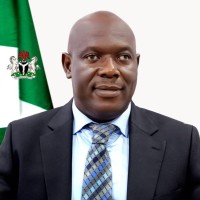
The Hydrocarbon Pollution Remediation Project (HYPREP) has commemorated the 15th anniversary of the release of the United Nations Environment Programme (UNEP) Environmental Assessment Report on Ogoniland, reaffirming its commitment to restoring the environment and improving the livelihoods of affected communities.
In a statement signed by the Project Coordinator, Prof Nenibarini Zabbey, to commemorate the anniversary, HYPREP described the anniversary as a significant milestone in Nigeria’s environmental restoration efforts, noting that the project has made remarkable progress in implementing the recommendations of the landmark UNEP report released on August 4, 2011.
The UNEP report had revealed extensive oil pollution across Ogoniland, severe environmental degradation, and serious public health risks resulting from decades of petroleum operations. It also recommended an initial $1 billion fund to commence the cleanup of the affected communities.
According to HYPREP, the Federal Government formally launched the Ogoni clean-up in 2016, while the Project Coordination Office was established in 2017 to drive the implementation of UNEP’s recommendations.
Zabbey said the current administration has continued to prioritise the project under the Renewed Hope Agenda.
Providing an update on the cleanup, the Project Coordinator disclosed that 30 of the 65 contaminated sites identified by UNEP have been fully remediated, while work is ongoing at several medium- and high-risk locations. It also stated that more than 1.5 million mangrove seedlings have been planted as part of what it described as the world’s largest restoration of oil-degraded mangroves, with over 1,000 hectares of shoreline already rehabilitated.
Zabbey further revealed that 49 Ogoni communities have been connected to potable water schemes through multiple water projects and booster stations aimed at providing safe drinking water across the region.
In the health sector, he said the 100-bed Ogoni Specialist Hospital in Kpite and the 43-bed Cottage Hospital in Buan are nearing completion, adding that several existing health facilities have been upgraded with modern medical equipment, while five ambulances have been donated to improve emergency healthcare services. The Project Coordinator also disclosed that a three-year human health biomonitoring study is being conducted in collaboration with the World Health Organization’s International Agency for Research on Cancer (IARC).
On economic empowerment, Zabbey stated that the Project has created more than 8,000 direct jobs and trained thousands of Ogoni youths and women in various vocational and technical skills, including software development, cybersecurity, aviation, commercial diving, seafaring, mechatronics, and creative arts. The project also reported awarding scholarships to more than 1,000 students, providing grants to small businesses, and supporting persons living with special needs through skills acquisition programmes.
The statement further highlighted ongoing legacy projects, including the Ogoni Power Project and the Centre of Excellence for Environmental Restoration, which it said is about 96 per cent complete. HYPREP also welcomed the recent designation of the Ogoni Wetland as a Ramsar Site of International Importance and pledged to continue promoting biodiversity conservation and sustainable management of the ecosystem.
Marking the anniversary, Zabbey said the progress achieved over the past 15 years demonstrates the collective commitment of government, development partners, stakeholders, and local communities to restoring Ogoniland. He called for renewed collaboration to sustain the cleanup effort, promote environmental sustainability, and support the long-term development of the region. 3
-

 News2 days ago
RSG Targets Nine Million Residents in Mosquito Net Distribution Campaign
-

 Oil & Energy2 days ago
Aiyedatiwa Signs New Electricity Bill
-

 Maritime2 days ago
Marine Minister Commends President Tinubu On NPERA Bill Assent
-

 Oil & Energy2 days ago
NLNG Commissions Research And Innovation Centre In RSU
-

 News2 days ago
KenPoly Holds Eight Convocations, August 29
-

 News2 days ago
RSG Begins Another Phase of Projects Commissioning Today
-

 News2 days ago
RMAFC Completes Revenue Sharing Review, Proposes New Pay
-

 Maritime2 days ago
NAGAFF Petitions IGP Over Alleged Maritime Police Harassment