
Sports
Celebrating Heroes, Stars Of Sports In Rivers State

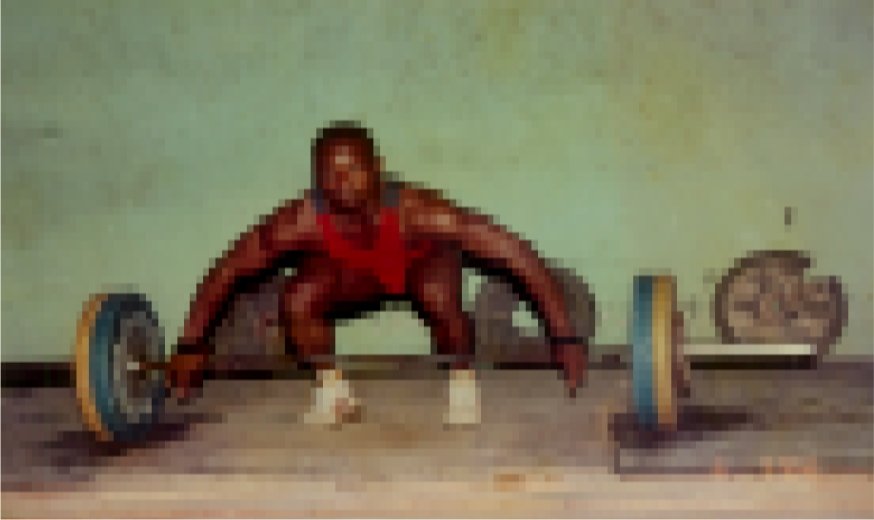
Oliver Toby showing off his skills in a training session during his hay days
Since the creation of Riv
ers State, about 49 years ago, men and women from the State, both the old and present day Rivers, have carved niches for themselves and earned spaces in the sporting maps, not only in the State but Nigeria and beyond.
Over the years, athletes discovered in the streets, creeks and coastal lines of the State have worked hard to make marks and rub shoulders with other national and international athletes of repute. In the course of their efforts, they succeeded in bringing glory to the State in particular and the country in general.
Therefore, at times like this, when stocks are taken, visions assessed and the future visualized, it is always apt to put the maxim which states that, “it is from the ashes of the past and the substance of the present that the future is determined,” to test, in order to inspire the younger generation and those that would want to take to a particular way of life, like sports, business to contribute to the development and promotion of the image of the State.
That is why it is pertinent to always recall and recognize the stars and heroes of yesteryears without forgetting the current crop of pacesetters in an industry, particularly sports.
In the years of yore, especially, in the 1960s, ‘70s and ‘80s, Rivers State used to be one of the major nursery beds that supplied athletes to national teams and contingents in different and several sporting events.
In fact, veteran athletics coach, Tobias Igwe, aka Toblow, once in an interview referred to Rivers State as a major benefactor to Nigerian sports, especially in track and field events as regards the production of athletes in the 1960s, 70s and 80s.
Thus, as Rivers State celebrates her 49 years of existence, efforts to be a major player in the entity called Nigeria and several achievements of her successive administrations, sons and daughters, it is worthy to once again recognise, some of Rivers, Stars and heroes, who not only took their chosen sports careers beyond the shores of the State but returned with accolades, laurels and honour.
Dr. George Ogan (Late)
This Okrika-born athlete and sports administrator per excellence was a pioneer Long and Triple jumper that was discovered in the 1960s. He later became a role model for young men who were attracted to long and triple jumps and became an idol and mentor to later day triple jumpers like Joshua Kio and others. Late Ogan took his events to the Olympics and Commonwealth Games where he won medals. A technocrat of repute, Ogan later became an administrator in the sports industry and a member of the committee that studied the sports policies and models that made East Germany so successful back in the days. His committee’s recommendations gave birth to the National Sports Festival in Nigeria which had its first edition in Lagos in 1973.
Warisenibo Kalada Aminiokuma:
A Bonny-born high jumper of repute. He dominated and popularized the event and won several meets, especially in the then Eastern Nigeria.
He was also a member of the Port Harcourt Red Devils that were a strong force in Nigerian football those days.
Ombo G. Peters (Late):
One of the best sprinters to have come out of Akuku-Toru Local Government Area and Rivers State. Late Peters was a specialist in the sprints and long jump between 1960s and 1970s and was a member of the Nigerian Team to the Edinburgh Commonwealth Games of 1986.
Ethel Jacks:
Jacks hails from Asari-Toru Local Government Area of the State and became a Table Tennis Queen of great repute in the ‘60s and ‘70s. Her dexterity saw her being described as a national and African Queen of the sport before the emergence of players from the South West as leading forces of the game.
Joshua J. Kio:
Popularly known as J. J. Kio, this Okrika-born athlete took the baton from the likes of Late George Ogan and Nemi Adoki. He was synonymous with Triple Jump in Rivers and Nigeria. He won several national and international laurels in the sport as champion. Kio, who has been Director, Sports Institute, Isaka and Director, Sports Development in the Sports Ministry is to date, one of Rivers State’s only two-time Olympians, after featuring in Moscow; 1980 and Los Angeles, 1984.
Chief Nemi Adoki:
Another Triple Jump Star from Okrika, Chief Adoki was a revelation and toast of the event at the National Sports Festival in Ibadan tagged Oluyole ’70. He was one of the triple jumpers that ruled the scene between the 1970s and early 80s before veering into sports administration. Adoki was among the pioneer members of the National Association of Athletics Refereeing, officials, NAATO.
Chief Adokiye Amiesimaka, MON, JP:
Also from Okrika, Amiesimaka was one of the few youngsters that were able to combine sports with University education in the late 1970s and ‘80s. As an undergraduate at the University of Lagos, the gifted footballer was able to play for the national team, the then Green Eagles that went on to win the African Cup of Nations for the country for the first time in 1980.
He also played for the famous Rangers International of Enugu and Sharks FC of Port Harcourt. An accomplished Lawyer, Amiesimaka was a sometime the Attorney-General of the State, ace broadcaster and football administrator with a passion for the development of grassroots football.
He is currently among other things a football columnist in a national daily.
Tamunoemi Gibson:
Another athlete from Asari-Toru area of the State, Gibson was a guru and hero n Badminton in Nigeria. He represented the country in a couple of All Africa and Commonwealth Games where he made name for himself and Nigeria.
Ojadi Aduche:
An Okrika-born athlete, a Weightlifter that blazed the trail in the State in the 1990s. He was a dominant force at the National Sports Festivals. A real champion that flew the country’s flag at both the All Africa and Commonwealth Games where he won medals.
Ojadi won gold medals at the All Africa Games in Kenya and Cairo ’91, Silver at Commonwealth Games in 1990 and was a member of Team Nigeria to the 1992 Olympic Games in Barcelona in 1992.
He has since become a coach, helping to wean Weightlifting talents in Rivers State.
Oliver Toby (Opobo)
One of the successful 64kg category Weightlifters from Rivers State, Toby dominated the scene in the 1990’s. He emerged junior champion during several World Weightlifting Championships in 1990 in Florida, Miami and in 1992 in Turkey.
He also won three gold medals at World Junior Weightlifting Championships in 1994 in Canada. At the All Africa Games, Cairo ’91 and in Kenya, he casted away two gold and silver medals, respectively. He is also an Olympian, having participated at the 1992 Olympic Games in Barcelona.
Benjamin Minimah:
Another Weightlifting talent from the State. Minimah, from Opobo virtually took over the mantle from Ojadi Aduche and was a class apart at successive National Sports Festivals in the 1990s until Bauchi 2000, when a combination of events saw him lose out in medals and he bowed out of competitive weightlifting.
Godwin Banuna:
Banuna from Khana Local Government Area was among the very few long distance runners produced by the State. In fact, the athlete nicknamed Mr. Endurance was arguably the best greatest long distance runner/steeple chase champion ever in the State. He reigned supreme in the 1970s and won laurels at national and continental levels.
Silas Ogwuama (Late)
Another Okrika-born athlete that distinguished himself in athletics (Field events). He specialized in the Throwing events: Javelin, Discus and Shot-put. He won a bronze medal for Nigeria during the ECOWAS Games of 1977.
Mpakabuari Fynface:
Fyneface is from Asari-Toru LGA but now based in the USA. He was a dominant champion in the 400 metres and 400 metres low hurdles races in the 1970s and ‘80s.
Graywood Oruwari:
Another Asari-Toru born athlete now in USA, he was a specialist in the 110 metres high hurdles race in the ‘70s and ‘80s.
Tari Tikili: (Old Rivers)
Tikili was a Squash athlete and champion. He made waves in the 1970s and ‘80s at national and state level.
Obia Inyingiyikabo (Okrika)
Obia is the leading face of new generation athletes that thrust the State in the glare of national and continental limelight. Nicknamed ‘the Fish,’ she is the queen of the pool and bestrode the national swimming landscape as a colossus for years. A national record holder in Breaststrokes and Backstrokes, Obia dominated National Sports Festivals, regional and national swimming tournaments.
She at different times emerged multiple gold medal winner at different Collegiate Games, at both the Nigerian University Games, NUGA and West African University Games, WAUG. University of Port Harcourt owes some of her past domineering performances at NUGA and WAUG, to Inyingiyikabo’s medal hauls. In fact, she is regarded as the greatest female swimmer of all time in Nigeria.
Eric Willams: (Okrika)
Another recent generation swimmer who showed great potentials. After winning medals for the State, especially at National Sports Festivals, Williams captained Nigeria in several national and international competitions where he equally won laurels.
Imama Amapakabo (Okrika)
This ex-youth international turned coach is currently making waves as the Head Coach of Rangers International FC of Enugu. He made his name playing as the safest hands for Sharks Football Club of Port Harcourt in the 1980s and ‘90s.
‘Imamarima’ as he is fondly called, perhaps has not received as much celebration as he truly deserved. This unassuming but agile goalkeeper in his time was an integral part of the pioneer national Under-17 team that conquered the world in China and won the World Cup (FIFA/Kodak U-17 World Championship) for Africa and Nigeria for the first time in 1985.
After retiring from active football, Amapakabo trained as a coach and has been part of the coaching crew at Sharks FC and Enyimba International before joining the camp of the Flying Antelopes in Enugu.
Joseph Yobo: (Khana)
Yobo has been one of the most consistent performers in Nigeria football. After cutting his teeth at local side, NAFCON FC, Port Harcourt, he became a youth international and part of the Flying Eagles team when Nigeria hosted the world during the World Youth Championship, WYC, Nigeria’99. He also took his game to Europe, England and Turkey and became an integral part of the Super Eagles. He went on to captain the Super Eagles and emerged the first player to hit the century mark (100 caps) for the national team.
Yobo, today could be considered to be one of the icons of the national team and football in Rivers State.
Taribo West (Asari-Toru)
West was an indefatigable defender that emerged from the streets to Julius Berger FC of Lagos from where he took his game to Europe and the national teams. He was a Trojan in defence for the Super Eagles and perhaps had his highest point in the game when he made history as part of the Olympic team to win gold in the football event for the very first time for Nigeria and Africa at Atlanta ’96, beating world football powers, Brazil and Argentina enroute the gold medal. West played for top European sides like Club Bougge in the Belgian Jupilar league and Inter Milan in Serie A.
Tammy Atorudibo (Okrika)
This sprinter busted into the scene in the 1990s and took the short sprints by storm. He was compared to the famous ‘Bullet Ben Johnson’ of Canada as he showed tremendous potentials on the tracks and went on to represent the State and country, respectively at national and international competitions in 100m, 200m and 4 x 100m Relay.
Otonye Iworima: (Okrika)
This Long and Triple jump athlete emerged from the production line of other jumpers of Okrika extraction. He remains one of the leading lights in the jump events in Rivers and Nigeria and has flown the State and national flags at several competitions. It is on record that Iworima earned Nigeria a bronze medal at the last Commonwealth Games in Glasgow.
Hon. Tex Jamabo (Late):
This Okrika born versatile sports person has been described as a creative genius in sports and arts, and a pioneer in gymnastics. Before his death, he was a keen stakeholder in the development and promotion of volleyball and volleyball talents in the State.
Pastor Amabere Jamabo (Okrika)
An all rounder, who excelled in many events including Athletics, boxing, Handball and Cricket.
This list is by no means exhaustive as there are still many Rivers men and women who have made positive marks and others still making impacts in various sports in the State and Nigeria.
Also, to the credit of the State, it is pertinent to once again put it on record that Rivers is one of the few States in Nigeria to have hosted the ‘National Olympics Games;, National Sports Festival twice in its history. It hosted first in 1988 and again in 2011, when it put on show not only the best show piece festival but emerged as winner for the very first time.
The Sports Festival must be one of the sporting folklores that must be cherished and preserved in the archives of the State.



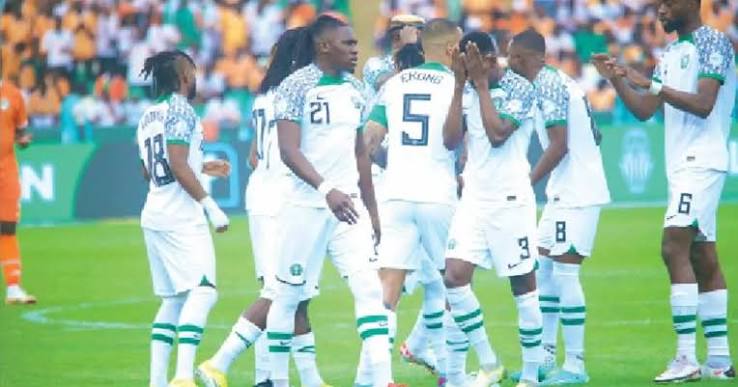
Nigerian football fans and former internationals may have finally joined the call on President Bola Ahmed Tinubu to save Nigerian football from the grip of the Nigeria Football Federation (NFF), demanding a complete overhaul and the resignation of the board following a series of national-team heartbreaks, including the Super Eagles’ failure to qualify for the 2026 FIFA World Cup, their second consecutive absence and the Super Falcons’ recent loss of an automatic qualification spot for the 2027 FIFA Women’s World Cup in Brazil.
Until now, football legend Segun Odegbami has been a lone voice in the vanguard of those calling on the Ibrahim Gusau-led NFF board to step aside. However, many ex-internationals, angered that the national embarrassment has now spilled over to the women’s team, have joined the call to “save our football.”
“We are demanding a total systemic clear-out and consequences at every tier of Nigerian football,” one of the former players said yesterday, pleading to remain anonymous to avoid “arrows” from what he described as desperate officials holding Nigerian football by the jugular.
Ahead of the September 27, 2026 elective congress of the NFF, scheduled to hold in Lafia, Nasarawa State, Chairman of the Advocacy for Nigeria Football Reforms Initiative, Prince Harrison Jalla, has also painted a gloomy picture of the future of Nigerian football.
Jalla’s position is in tandem with that of some aspirants who are also crying blue murder, alleging that the electoral procedure is skewed in favour of incumbent NFF President Ibrahim Musa Gusau to secure a smooth passage to a second term unopposed.
Jalla insisted that “all indicators are pointing to a gloomy picture for the future of Nigerian football, mainly due to administrative ineptitude, while the gladiators remain engrossed and fixated on the election.”
“The major crux of the election is the guidelines, which make it very difficult for other candidates to secure endorsements from across the six geopolitical zones to challenge Gusau.
“The NFF elective congress creates a skewed voting structure because [certain blocs] hold an overwhelming majority of the voting power, which critics argue marginalises key football stakeholders such as club owners, players, coaches, referees and sports writers.
“Out of the total delegates and voting structure, the 37 State FA chairmen form the primary voting bloc, making it difficult for independent candidates to win.
“This is so because of the marriage between the FA chairmen and the NFF. Most FA chairmen depend solely on the Federation for favours. Over time, during national and international engagements, the NFF uses such opportunities to reward the FA chairmen with trips and estacodes.
“They have been so compromised that no Jupiter would make them see reasons for a change. The system, therefore, heavily favours the incumbent leadership seeking re-election. That explains why they were in a hurry to pass a vote of confidence in the NFF leadership even when Nigerian football became topsy-turvy.
“As desperation has beclouded their reasoning, they have forgotten how low they have dragged Nigerian football.”
A cursory look at the catalogue of failures by Nigeria’s national teams will reveal this;
Super Eagles (Senior Men): Failed to qualify for the 2026 FIFA World Cup. Their campaign ended in agonising fashion in November 2025 during the CAF playoff final, when they lost 4–3 on penalties to DR Congo. This marked the second consecutive World Cup missed by the senior national team. Earlier, in January 2026, they were also eliminated from the 2025 AFCON via a penalty shootout.
Super Falcons (Senior Women): Suffered an early continental exit by losing 1–0 to Cameroon in the 2026 WAFCON quarter-finals. The defeat stripped them of an automatic ticket to the 2027 FIFA Women’s World Cup in Brazil, forcing them into an inter-confederation playoff route. Worse still, Banyana Banyana of South Africa stopped the Super Falcons with a 2-1 defeat in Morocco, marking Nigeria’s worst outing in the history of WAFCON.
Golden Eaglets (Men’s U-17): Failed to qualify for the U-17 AFCON and subsequently missed out on three consecutive FIFA U-17 World Cups — 2023, 2025 and 2026.
Flying Eagles (Men’s U-20): Missed both the 2026 U-20 AFCON and the FIFA U-20 World Cup.
Olympic Team (Men’s U-23): Failed to qualify for the 2023 U-23 AFCON, which directly resulted in their failure to qualify for the 2024 Paris Olympic Games.
An official NFF apology to the government and Nigerians was met with backlash, with fans dismissing it as “too little, too late” and “one apology too many”, while demanding actual resignations.
The current frustration among fans stems from what they regard as an unprecedented catalogue of systemic failures across all tiers of Nigeria’s national teams.
Segun Odegbami said the failures had become one too many.
“If you fail to take your team to the World Cup, you find out that more often than not, they vote you out or sack you.
“That’s the measure. If you have a coach who doesn’t do well, they sack him. If you have a player who is doing badly, you remove him.”
“These guys have not succeeded. They’re our friends; that’s the painful thing. We know ourselves. We are all in the business and, when we champion the fact that they should go, they make you an enemy.
“It’s not a personalised thing. They have failed and, if we go back to that route, we are going to fail as we have failed before,” he said.
The financial damage from missing recent major tournaments is equally devastating, with total losses estimated at between ?150 billion and ?300 billion in direct payouts and broader economic partnerships.
This continuous string of qualification failures has effectively choked off the federation’s primary revenue pipelines and left its local development initiatives starved of funds.
The economic wreckage breaks down across several critical areas. By failing to reach the expanded World Cup, the NFF forfeited a guaranteed baseline participation fee of $10.5 million, reportedly worth roughly ?15.5 billion.
This single tournament loss wiped out an amount equivalent to roughly 87 per cent of the NFF’s projected annual operational budget. Had the Super Eagles advanced beyond the group stage, the rewards would have risen above $12 million, while reaching the quarter-finals could have yielded up to $20 million in performance-related payments.
Early exits by the Super Falcons and the qualification failures of the youth teams, U-17, U-20 and U-23, mean the NFF has also missed out on vital developmental subsidies and travel grants normally provided by continental governing bodies.
Corporate organisations and major sports betting companies are scaling back their sponsorship valuations. Without global television exposure, the NFF cannot command premium rates for brand placement.
The federation also misses out on potential revenue from global jersey sales, training gear and licensed supporter memorabilia that normally spike around major tournaments.
By missing out on tournament participation, Nigeria also loses leverage to draw heavily from FIFA’s financial programmes aimed at upgrading domestic training academies and pitches.
Consecutive missed World Cups have further lowered the market value of the national team brand, making future broadcast and marketing rights significantly harder to sell at a premium.
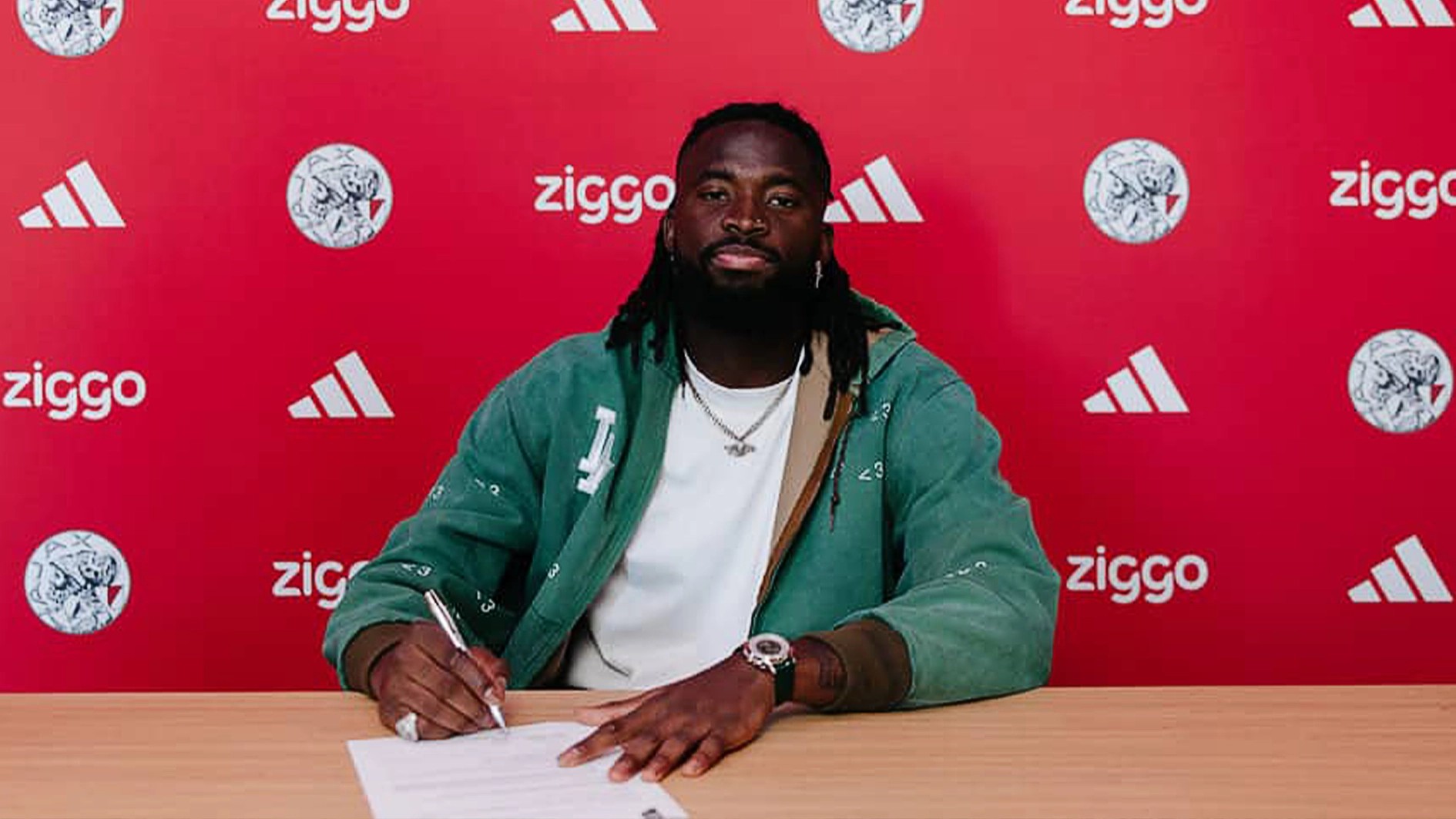
Former Ajax midfielder Hedwiges Maduro has praised Nigerian striker Tolu Arokodare, highlighting the forward’s strength and power and suggesting that he could prove valuable to Ajax in the Eredivisie.
Arokodare joined Ajax from Wolverhampton Wanderers on a season-long loan in July, with the Dutch club holding an option to make the move permanent.
He has already made an impact for his new side, providing an assist in Ajax’s 2-0 victory over PEC Zwolle in their opening Eredivisie fixture.
Maduro discussed Arokodare’s qualities during an appearance on ESPN’s Voetbalpraat, where he assessed how the Nigerian could complement Ajax’s attacking options.
He sees Arokodare as offering a different profile to Marcos Leonardo, particularly against opponents who defend deep and limit the space available for attacking runs.
Speaking about the Nigerian striker, Maduro highlighted his physical qualities and explained why he believes they could make him a valuable option for Ajax in the Dutch top flight.
“I think Tolu has something special, in terms of strength and power. I think he can be of real value in the Eredivisie,” Maduro said, as quoted by Ajax Showtime.
According to Maduro, the tactical demands of certain matches could make Arokodare’s physical presence an important option for Ajax, especially when opponents retreat towards their own penalty area.
He contrasted the situation with Leonardo, who he believes benefits from having space to make attacking runs. Maduro explained that when teams defend deep, those spaces become more difficult to find.
“Leonardo needs space. If teams drop back completely, where are you going to make those runs?
Then you get more use out of Tolu as a focal point to drop the ball,” he added.
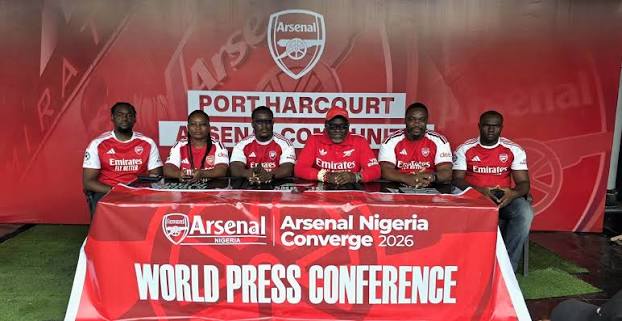
The Chairman of the Local Organizing Committee, LOC, of the Arsenal Nigeria Converge 2026, Ugochukwu Oputa, has said that over 25 states across Nigeria were involved in the second edition of the Arsenal Converge scheduled for Port Harcourt from August 14 to 16, 2026.
Oputa disclosed this on Sunday after the Converge meeting at the Ediz Wine Bar in Port Harcourt, Rivers State.
According to him, Arsenal’s popularity cuts across the nation, and the Converge is organized to provide a period for supporters to network, interact, and harmonize.
“Knowing how Arsenal’s popularity is spread across the nation, it became necessary that all the different supporters of Arsenal club across the country harmonize and create a particular period where we can meet, network and interact,” Oputa said.
He outlined the five-day schedule of activities to include
Press conference,
Environmental sanitation and community service at Mile 1 Market, Diobu, involving both visitors and residents, arrival, welcome and cocktail party. Others included Games Day, football competition and other fun activities at the Rivers State University football pitch, Community Shield watch party yesterday, where all Arsenal supporters’ groups met, interacted, and discussed the future of Arsenal, including plans for the 2027 hosting rights of the Converge.
Oputa added that this year’s Converge which was in Port Harcourt, had over 3,000 fans registered.
“Port Harcourt Arsenal Community is a recognized supporters’ club of Arsenal in London and we have over 25 states that participated in the Arsenal Nigeria Converge 2026,” he said.
Also speaking, a member of the Nigeria Arsenal Supporters Working Committee, Nsikak Ntia, said that what distinguishes Arsenal supporters is their offline community impact.
“What we are doing here in Port Harcourt is beyond football. It’s a family that is growing. We had over 3,000 to 4,000 people on Saturday at the Rivers State University that shared the confidence that Arsenal represents,” Ntia said.
He noted that the club’s motto, ‘Victoria Concordia Crescit’ – ‘Victory Through Harmony’ – is the bedrock of the group.
“The work that we do at Mile 1 Market is to help with environmental protection and increase what we do in society.
“We also have future plans to promote environmental protection and better ways to handle waste.
“These are things that are germane for our future, the future of our young people and generations unborn.
” It goes beyond football, it goes beyond banter, it goes beyond yapping at each other.
“That is what Arsenal Football Club is all about. Arsenal has the most well-organized supporters’ club in Nigeria and Africa’ he sated.
-

 News3 days ago
RSG Targets Nine Million Residents in Mosquito Net Distribution Campaign
-

 Oil & Energy3 days ago
Aiyedatiwa Signs New Electricity Bill
-

 Maritime3 days ago
Marine Minister Commends President Tinubu On NPERA Bill Assent
-

 Oil & Energy3 days ago
NLNG Commissions Research And Innovation Centre In RSU
-

 News3 days ago
KenPoly Holds Eight Convocations, August 29
-

 News3 days ago
RSG Begins Another Phase of Projects Commissioning Today
-

 News3 days ago
RMAFC Completes Revenue Sharing Review, Proposes New Pay
-

 Maritime3 days ago
NAGAFF Petitions IGP Over Alleged Maritime Police Harassment