
Rivers
Don Traces Nigeria’s Highway Woes To Design Failures … Proposes Mechanistic-Empirical Design Approach



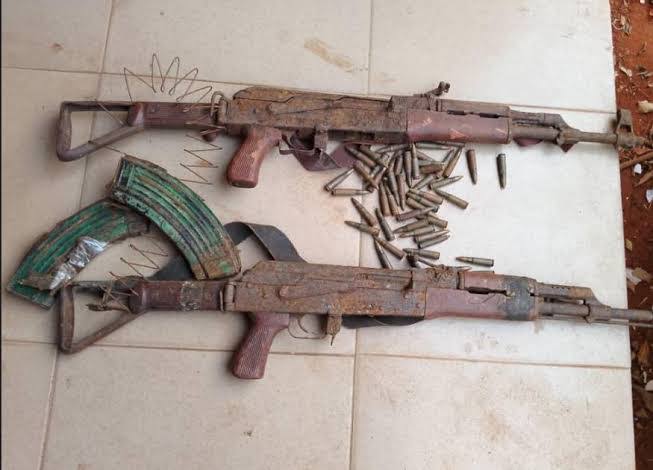
The Rivers State Police Command has arrested three suspected members of a criminal gang allegedly responsible for the killing of two police officers during a stop-and-search operation in Aluu, Ikwerre Local Government Area of the State.
The State Police Command made this known recently in a statement by its Public Relations Officer, ASP Blessing Agabe, in Port Harcourt.
According to the statement, the suspects were arrested by operatives of the Command’s Violent Crime Response Unit (VCRU), following sustained intelligence-driven operations launched after the June 29, 2026 attack on the officers.
The suspects were identified as Maduabuchi Emeka, alias “Doctor”, 34, a native of Egbata Community in Omoku; Chinedu Owhor, 42, from Akabuka, Omoku, but resident in Aluu Community; and Kamachi Joe, 28, also from Egbata Community.
The Police said the officers, who were attached to the Aluu Division, came under attack while conducting a routine stop-and-search operation at a security checkpoint along the Mbodo-Aluu axis of the Obiri-Kwerre Road.
The assailants, the Command stated, opened fire on the officers and fled with their service rifles after the attack, leaving two policemen dead.
The Police said one of the officers sustained severe injuries to his leg during the attack, which later resulted in amputation, but he eventually died, while the other officer was also killed in the incident.
Following the attack, the Commissioner of Police, CP Olugbenga Adewole Adepoju, directed the immediate deployment of the Command’s operational and intelligence assets to track down the perpetrators and recover the stolen firearms.
The Command said the directive yielded results as VCRU operatives, acting on credible intelligence and sustained tactical operations, arrested the three suspects and recovered three AK-47 rifles and one Scorpion rifle.
The Police said two of the recovered AK-47 rifles were the service rifles allegedly taken from the slain officers during the attack, adding that the recovery constituted a major breakthrough in the investigation.
The Command further disclosed that investigation had allegedly linked the suspects to other murder cases currently under investigation, while efforts were ongoing to apprehend another suspected member of the gang who remains at large.
The Commissioner of Police commended the operatives for the breakthrough and warned criminal elements that Rivers State would not provide a safe haven for those involved in violent crimes, assuring residents that the Command would continue to identify, arrest and prosecute perpetrators.
He urged members of the public to provide credible information to aid ongoing security operations.
By: King Onunwor
A Port Harcourt-based Journalist and former Chief of Staff to Emohua Local Government Council, Hon. Obindah Nwordu, has pledged to build on the legacies of his late father.
Nwordu, who made the pledge while speaking with newsmen at the burial ceremony of his father, Elder Nna Nwordu, popularly called Ezeji, in Emohua Local Government Area, assured that the family would continue to uphold the values and principles which the deceased stood for during his lifetime.
He described his late father as a man who devoted his life to the welfare and upbringing of his children, stressing that his virtues had continued to shape the lives of members of the family.
According to him, although the death of his father had created a painful vacuum within the family, the occasion also provided an opportunity to celebrate a life well lived and the enduring contributions he made to his family and community.
He said the greatest tribute the children could pay their late father was to preserve the good name he left behind and ensure that the values he instilled in them were not allowed to die with him.
Obindah further said the family would remain united and committed to advancing the ideals of their late father, adding that they would also seek to improve on the foundation he established for the family.
He noted that Elder Nwordu’s emphasis on hard work, discipline, integrity and responsibility remained lessons that would continue to guide him and his siblings in their respective endeavours.
The journalist further assured that the family would sustain the relationships and goodwill which their father established during his lifetime, noting that his legacy extended beyond the immediate family to the wider community.
He expressed gratitude to relatives, friends, colleagues, political associates, community leaders and well-wishers who identified with the family during the period of mourning and attended the burial ceremony.
Obindah particularly appreciated those who travelled from within and outside Rivers State to honour the memory of Elder Nwordu, describing their presence and support as a demonstration of the impact the deceased made on the lives of people around him.
He urged members of the family to remain steadfast in upholding their father’s values, stressing that the best way to keep his memory alive was through good character, unity and positive contributions to society.
The former Chief of Staff said the family would not allow the legacies of their departed hero to fade away, but would continue to build upon them and ensure that his name remained a source of pride and inspiration to present and future generations.
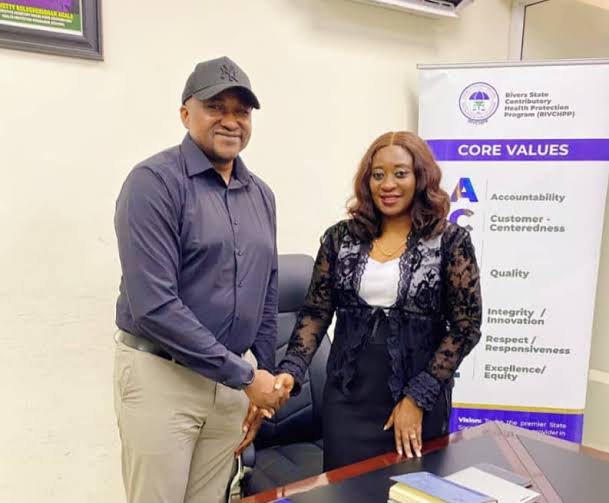
The Trade Union Congress (TUC), Rivers State Council, has called on the Rivers State Government to introduce a seamless health insurance arrangement that will ensure all civil servants and their dependants are enrolled in the Rivers State Contributory Health Protection Programme (RIVCHPP).
The TUC made the demand when its leadership visited the Executive Secretary/Chief Executive Officer of RIVCHPP, Dr. Vetty Agala, in Port Harcourt, amid renewed calls for wider coverage of residents under the state’s social health insurance scheme.
Speaking during the visit, TUC Chairman, Comrade Samuel Ogan, commended the management of RIVCHPP for its efforts to expand access to healthcare, stressing that health insurance remained the most sustainable way of protecting workers and their families from the financial burden of illness.
Ogan, however, said workers would be more willing to embrace the scheme if government could develop a system that eliminates visible deductions from their salaries.
He urged the state government to work out a seamless arrangement through which all workers and their dependants could be automatically captured in RIVCHPP’s plans.
According to him, enrolling the entire civil service in the programme would not only protect workers, but also encourage other organisations and individuals to embrace health insurance.
The TUC Chairman pledged that the union would engage relevant stakeholders to facilitate the enrolment of workers into RIVCHPP’s health insurance packages.
Earlier, Agala described RIVCHPP as a strategic initiative of the Rivers State Governor, Siminalayi Fubara, aimed at ensuring financial risk e living and working in Rivers State protection for everyone living and working in Rivers State.
She said the programme was designed to make universal health coverage a reality by enabling residents to access quality healthcare without suffering financial hardship or relying on out-of-pocket payments at the point of care.
Agala, who commended the state government for investing in healthcare infrastructure and manpower, lamented the low patronage of health facilities, noting that the challenge was not necessarily a lack of illness but, in many cases, the inability of residents to afford medical care.
She said RIVCHPP was established to bridge that gap and ensure that people, regardless of their social or economic status, could obtain medical attention whenever they needed it.
The RIVCHPP boss disclosed that the agency had c illnesses. developed packages for residents in the formal and informal sectors, vulnerable groups and people living with chronic illnesses.
She also highlighted the agency’s educational sector plans, under which pupils in primary and secondary schools would pay N9,000 annually, while tertiary institution students would pay N12,000 per academic year. She explained that registered students would remain covered during their holidays.
Agala called on labour unions, international oil companies, religious organisations, community and political leaders, as well as well-meaning individuals, to partner RIVCHPP by sponsoring health insurance for members of their communities.
She stressed that government funding alone could not sustain a viable health insurance system, adding that the number of vulnerable residents currently benefiting from the programme remained only a fraction of the population in need.
In a related development, Agala assured the University of Port Harcourt Medical Students Association (PUMSA) of the agency’s readiness to collaborate with the university’s entire student community to expand access to healthcare.
She gave the assurance when the PUMSA leadership, led by its President, Nelson Fadeh Leteh, visited the agency.
Agala said students constituted a critical segment of the population that RIVCHPP was seeking to bring under its health insurance coverage, stressing that the agency’s objective was to ensure that no resident of Rivers State was excluded from access to quality healthcare.
She said RIVCHPP had begun engagements with relevant authorities to address existing institutional dynamics that could facilitate the enrolment of students, while advising the association to e process in presenting its demands follow due process in presenting its demands.
Earlier, Leteh outlined some of the challenges and hazards confronting medical students, particularly during clinical training, and expressed the association’s desire to enrol its members in RIVCHPP’s programmes.
He said the welfare of medical students remained a priority for the association, noting that the existing health insurance arrangement available to the students was characterised by protocols and bottlenecks that often hindered seamless access to healthcare.
The visit ended with the presentation of RIVCHPP’s promotional materials to the visiting delegations.
By; Wokoma Emmanuel & Theresa Frederick
-

 News2 days ago
RSG Targets Nine Million Residents in Mosquito Net Distribution Campaign
-

 Oil & Energy2 days ago
Aiyedatiwa Signs New Electricity Bill
-

 Oil & Energy2 days ago
NLNG Commissions Research And Innovation Centre In RSU
-

 Maritime2 days ago
Marine Minister Commends President Tinubu On NPERA Bill Assent
-

 News2 days ago
KenPoly Holds Eight Convocations, August 29
-

 News2 days ago
RSG Begins Another Phase of Projects Commissioning Today
-

 News2 days ago
RMAFC Completes Revenue Sharing Review, Proposes New Pay
-

 Maritime2 days ago
NAGAFF Petitions IGP Over Alleged Maritime Police Harassment