
Niger Delta
A’Ibom Seeks End To Local Engineers, Craftsmen Discrimination

The Akwa Ibom State Government says local engineers and craftsmen in the state must be given the enabling environment to creditably perform their professional duties.
Secretary to the State Government, Mr. Enobong Uwah, stated this at a town-hall meeting organised by the Public Complaints Commission (PCC) in Uyo, yesterday.
The meeting had the theme: “Systematic and Proactive Investigation into Discrimination of Local Engineers and Craftsmen by Foreign Construction Companies”.
Represented by Mr Idoreinyin Orok, Special Assistant to the Governor on Political Matters, Uwah said the meeting provided an opportunity for stakeholders to brainstorm on the matter.
He said the State Government had taken critical steps towards promoting local content and creating the environment for local professionals to participate in construction works.
Uwah urged the participants to utilise the opportunity provided by the meeting to identify the cause of the discrimination.
“This event is timely, it will provide avenue to identify the root causes of the challenges, and to find practical and enforceable solutions.
“We need to create an enabling environment where local professionals can thrive by contributing their skills and ingenuity to the development of the state”, he said.
Uwah said the Akwa Ibom Government, would collaborate with the PCC and other relevant bodies to ensure that the rights of local engineers and craftsmen were protected.
“As a state, we are committed to upholding the principles of local content in every sector, particularly in construction and engineering.
“Our motive is to ensure that our talents are not only recognised but prioritised”, Uwah said.
Chairman, Nigerian Society of Engineers (NSE), Uyo Branch, Mr. Emem Ezekiel, described the discrimination against local engineers and craftsmen as unfair.
He said it was grossly unfair not to recognise and appreciate the skills and expertise of Nigerian engineers and craftsmen.
Ezekiel expressed worries that different levels of government in the country did not consider local firms worthy of being awarded contracts.
The NSE Chairman said the challenges faced by local engineers and craftsmen were not mere professional imperatives but a moral and economic necessity.
Ezekiel said the contributions of local professionals to the development of Akwa Ibom and Nigeria as a whole could be over-emphasised.
He stated that local engineers and craftsmen had proven their mettle over time by delivering projects that rivaled those handled by foreign contractors.
Earlier, the PCC Federal Commissioner, Mr. Ubong Uwah, said the town-hall meeting was to assemble stakeholders to discuss the issue critically with a view to finding solutions.
“We are here to explore ways of ensuring equal participation of local engineers and craftsmen in contract implementation in Akwa Ibom.
“Participants are to discuss the challenges faced by local engineers and craftsmen that affect their participation in contract implementation.
“Let’s use the meeting to seek solutions by identifying strategies to promote equal opportunities for them.
“We should also outline ways of establishing partnerships by fostering collaborations between local engineers, craftsmen, contractors, and government agencies”, he said.


Continue Reading

Nigeria has recorded its strongest-ever outing in global university rankings, with 24 institutions earning places in the 2026 Times Higher Education (THE) World University Rankings and Sub-Saharan Africa University Rankings.
However, only four universities from the South-South geopolitical zone made the prestigious list.
The South-South institutions that secured places in the rankings are Delta State University, Abraka (12th), University of Benin (22nd), University of Calabar (23rd), and University of Port Harcourt (24th).
The rankings, which represent Nigeria’s highest-ever participation, reinforces the country’s growing influence in higher education across Sub-Saharan Africa, with 24 universities listed, up from 21 in both the 2024 and 2025 editions.
The University of Ibadan retained its position as Nigeria’s highest-ranked institution, followed by the University of Lagos, while Bayero University, Kano, emerged as the third-best performing university in the country.
Of the 24 institutions, 17 are federal universities, four are state-owned, and three are private universities, reflecting broad improvements in teaching, research, and institutional performance across the country’s tertiary education sector.
The rankings also underscore the growing global recognition of Nigeria’s specialised universities of technology and agriculture, while state-owned institutions continue to improve their academic profiles through enhanced research output and governance reforms.
The full list of Nigeria’s universities in the 2026 THE rankings are: University of Ibadan; University of Lagos; Bayero University, Kano; Covenant University; Landmark University; Ahmadu Bello University; Federal University of Technology, Minna; University of Ilorin; University of Jos; University of Nigeria; Babcock University; and Delta State University, Abraka.
Others are: Ekiti State University; Federal University of Agriculture, Abeokuta; Federal University of Technology, Akure; Federal University of Technology, Owerri; Federal University, Oye-Ekiti; Ladoke Akintola University of Technology; Lagos State University; Nnamdi Azikiwe University; Obafemi Awolowo University; University of Benin; University of Calabar; and University of Port Harcourt.
The rankings highlight both Nigeria’s expanding presence on the global academic stage and the need for greater investment in higher education across regions, particularly in the South-South, where only four universities made the country’s top 24 list.
The Ogu Community in Otubo-Atissa, Yenagoa Local Government Area of Bayelsa State, has stated its commitment to preserving its culture, peace and community development through the celebration of the annual “Uge Adiafa” New Yam Festival, tagged “Ogbolo ’26.”
Held at St. John’s Primary School Field, Ogu, the colourful festival served not only as the traditional commencement of the yam harvest season, but also as a tribute to the community’s illustrious son and founder of the Uge Adiafa Festival, His Majesty, Late King Fedrick Aduku Simangi Ogbotom-Edede IV.
The celebration brought together sons and daughters of the community, traditional rulers, academics, youths and other guests in a display of thanksgiving, cultural performances and renewed communal solidarity.
Addressing the gathering, the traditional head of the community, HRH Bishop Akuegbe Paul, expressed delight at the massive turnout, describing the festival as a symbol of thanksgiving to God, cultural identity and unity among the people.
He noted that beyond celebrating a successful farming season, the festival honours the enduring legacy of the late monarch, whose vision established the Uge Adiafa Festival as a platform for preserving the community’s rich cultural heritage and promoting peaceful coexistence.
Guest of Honour, Professor Nedie Patience Akani, of Rivers State University, Port Harcourt, commended the community for embracing reconciliation and unity.
Professor Akani, who is of the Department of Microbiology, Faculty of Science, of the university and a daughter of the soil, said, “This is my first time attending this New Yam Festival. I came because of the good things happening in this community.
“Before now, there were quarrels in the community, with court cases here and there, brother fighting against brother. But today, God has united us. It is a wonderful thing to be united because where there is no unity, there can be no progress in the home, family or community.
“I thank the head of Ogu Community, HRH, Bishop Akuege Paul, for making today’s celebration a reality”, she stated.
The event also featured inter-compound cultural competitions, with Yenikabu II Compound emerging overall winner, while Bongata Compound and Abrima Compound finished first d second runners-up respectively.
Also, eleven Compound Chiefs alongside their respective Head Compound Women Chiefs were coronated. The Woman Chief of Ogu Community, HH, Dare Tiebiri and her Deputy, Chief Stella Jordan Mark, were also coronated.
Dignitaries that graced the occasion included the Ebenanawei of Akamabubu Kingdom, Southern Ijaw LGA, Yenagoa, Bayelsa State, HRM, King J. Olotu Erepamo; the Paramount Ruler, Ikibiri Community, Yenagoa LGA, Bayelsa State, HRH, Barrister Morris Lagos; and the Ebeni-Isisibo of Atissa Kingdom, HRH, God’swill Arab Simeon.
Other are: the Ebeni-Otubo, Atissa Kingdom, HRH, Sir Anderson J. Olumo, and his wife, Mrs. Tarila Anderson Olumo; the Deputy Head of Ogu Community, HH, Mission Obugu, and wife of the Ebeni-Ibe of Atissa Kingdom, Mrs. Diemeze Victor Awala.
For the people of Ogu, the festival was more than a celebration of the first harvest, it underscored the importance of preserving cultural traditions, strengthening communal bonds, promoting reconciliation and passing cherished values from one generation to another, while also ensuring that the legacy of their forebears continue to inspire future generations.
Sterling Oil Exploration and Energy Production Company Limited (SEEPCO) has partnered the Delta State Government, Vcare for Development Foundation (VCDF) and the Nigerian Red Cross Society to promote voluntary blood donation as part of efforts to strengthen the state’s blood supply and save lives.
The initiative, which forms part of SEEPCO’s Corporate Social Responsibility (CSR) programme for its host communities, aligns with activities marking the 2026 World Blood Donor Day with the theme, “One Drop of Humanity: Give Blood, Save Lives.”
The campaign was conducted across Delta State’s three senatorial districts — Asaba, Ughelli and Warri — where stakeholders sensitised residents on the importance of voluntary, regular and unpaid blood donation as the most sustainable means of ensuring adequate blood supply for healthcare facilities.
The exercise followed a similar campaign in Lagos State, where SEEPCO, in partnership with the Lagos State Blood Transfusion Service (LSBTS) and the Nigerian Red Cross Society, mobilised about 550 pints of blood within two days.
VCDF also highlighted the steady growth of its annual blood donation drive, with the number of donors increasing from 98 in 2022 to 147 in 2023, 268 in 2024 and 341 in 2025.
Before the Delta campaign, the foundation had recorded a cumulative total of 1,404 voluntary donors, a feat that earned it the Blood Donation Champion Award from the Lagos State Blood Transfusion Service.
At the Central Hospital, Ughelli, the hospital’s management and Blood Transfusion Committee commended SEEPCO, VCDF, the Delta State Ministry of Health and other partners for supporting initiatives aimed at improving access to safe blood for patients.
Speaking during the campaign, Delta State Commissioner for Health, Dr. Joseph Onojaeme, described voluntary blood donation as critical to responding to public health emergencies and saving lives during accidents, childbirth and other medical emergencies.
He said: “Voluntary blood donation is important for public health emergencies and to save lives during accidents and childbirth. We are deeply grateful to VCDF and its partners for their commitment to promoting voluntary blood donation and supporting life-saving healthcare initiatives.”
Participants said the awareness campaign had increased public understanding of the importance of blood donation, with many first-time donors expressing willingness to become regular donors after learning about the safety, benefits and life-saving impact of donating blood.
Stakeholders also stressed the need for sustained public enlightenment, noting that a single blood donation could save multiple lives, as the campaign recorded impressive community participation across the three senatorial districts.
-
News4 days ago
Rivers Court Jails Man Seven Years For Defiling Minor …Directs N5 Million Upkeep For Victim
-
News4 days ago
Alleged Coup Plot: DSS Docks Five For Hiding Sylva’s Whereabouts
-
 Politics4 days ago
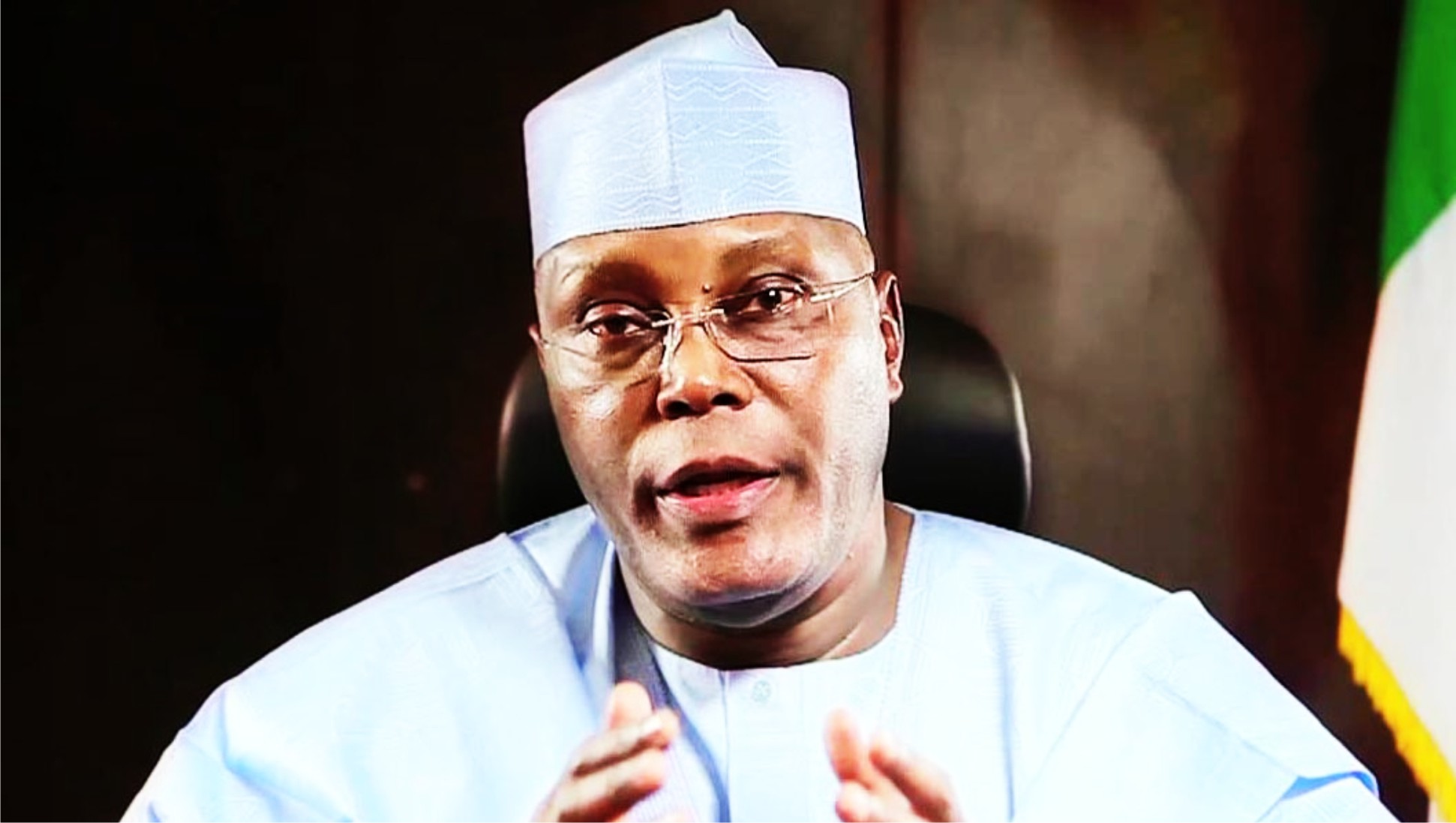
Atiku Names Kenneth Okonkwo As Spokesperson
-

 News4 days ago
FG To Replace NYSC Khaki With Adire
-
Niger Delta4 days ago
24 Nigerian Universities Make 2026 THE Rankings … 4 S’South Versitieis Pull Through
-
News4 days ago
BOI Unveils Maiden Impact Report, Disburses N644.9bn In 2025
-

 News4 days ago
Fubara Seeks Full Resolution Of Bille Gas Leakage …Pledges Upgrade Of Community Health Centre
-
Women4 days ago
NAWOJ Seeks Partnership With Hotel Presidential On Summit