
News
Shettima To Lead Nigerian Delegation To CHOGM 2024

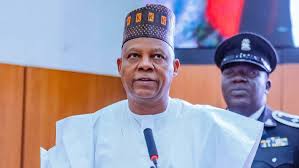
President Bola Tinubu has mandated Vice-President Kashim Shettima to lead Nigeria’s delegation to the 2024 Commonwealth Heads of Government Meeting (CHOGM), Shettima’s spokesperson, Stanley Nkwocha, said yesterday in Abuja.
Nkwocha, in a statement, explained that Shettima would join King Charles of England and other world leaders from 56 member countries at the CHOGM scheduled to hold in the Pacific small island of Apia, Samoa.
According to him, the event with the theme, “One Resilient Common Future: Transforming our Common Wealth,” will hold from October 21 to 26.
He said that discussions would focus on how member countries could harness their strengths through resilience, unlocking potential, leveraging the ‘Commonwealth Advantage’, and fostering a connected, digital Commonwealth.
He said that Nigeria and other member countries would also elect and appoint the next Commonwealth Secretary-General.
“In line with the agreed memorandum on the establishment and functions of the Commonwealth Secretariat (revised 2022), and the principle of regional rotation, the next Commonwealth Secretary-General will come from the Africa Region.
“The candidates for the role are from Lesotho, Ghana, and The Gambia, while Nigeria will have a major role to play as the largest African member in this regard.”
Similarly, Nkwocha said that Shettima and other world leaders would deliberate on the global economy, environmental and security challenges.
“They will also discuss how Commonwealth countries can work together to build resilience, boost trade, innovation, growth and empower the Commonwealth’s 1.5 billion young people for a more peaceful and sustainable future,” he said.
He said that Shettima would use the platform provided by the Commonwealth Business Forum to further attract investors to Nigeria.
He revealed that global experts from businesses and the private sector would convene to recommend and champion solutions to global challenges.
Nkwocha added that Shettima would participate in the People’s Forum, the single largest opportunity organised by the Commonwealth Foundation for people to engage with leaders on global development issues.
“The Vice-President will also engage in bilateral meetings and other executive sessions,” he said.


A group of Eminent persons from the Niger Delta region under the aegis of The Niger Delta Watch Dog has warned the Federal Government against yielding to the call to decentralize pipeline surveillance in the region.
The Eminent persons who said this in a press release made available to newsmen in Port Harcourt said those calling for decentralization of pipeline surveillance are ignorant of the dangers it poses to the peace and stability of the Niger Delta.
.They argued that the proposal poses significant risk to the peace security and economic stability of the region.
According to the release” While decentralization is often perceived as a means of promoting inclusivity and local participation, in this specific context it poses significant risks to peace, security, and economic stability.
It further said”evidence from community dynamics across the region suggests that decentralization will cause more harm than good, leading to increased conflict, fragmentation of authority, and heightened threats to critical national infrastructure.
“By contrast, the centralized model currently implemented by Tantita Security Services under the leadership of Government Ekpemupolo Tompolo has demonstrated measurable success in stabilizing the region, reducing conflict, and safeguarding Nigeria’s economic lifelines”
While describing the Niger Delta region as the backbone of Nigeria oil and gas, it added that any changes in policy will lead to crisis in the region.
“The Niger Delta region remains the backbone of Nigeria’s oil and gas industry, hosting extensive pipeline networks that are vital to national revenue and economic sustainability.
“Given the sensitive nature of this infrastructure, the framework through which pipeline security is managed must prioritize stability, coordination, and conflict prevention.
“Any policy shift particularly toward decentralization must therefore be carefully evaluated in light of the region’s socio-political realities”
It said
The release jointly signed by Chief Idowu Asonja ,Ellington Pokumo the Public Relations officer of the group Comrade Douye kojo Isoun and others,
said decentralization will lead to escalation of Inter-Community land dispute, intensifies rivalry between groups as well as heightens the struggle against Territorial control among others.
“Decentralizing pipeline security will likely intensify existing disputes between neighbouring communities as many communities in the Niger Delta have been involved in conflicts over Land ownership and territorial boundaries as well as Control of natural resources and
“Claims over oil pipelines passing through their territories” adding
“Such instability not only disrupts social harmony but also directly endangers pipeline infrastructure, increasing the risk of vandalism, sabotage, and production losses”
It said the gains recorded so far by the present centralization policy should be preserve as any shifts could wrecked havoc in the region.
“Any policy shift must preserve these hard-earned gains. At this time, decentralization presents a significant risk, while the current system continues to offer stability, security, and economic assurance for the nation.
“It is therefore strongly advised that the Federal Government of Nigeria carefully scrutinize and ultimately disregard calls for the decentralization of pipeline security contracts. “Available evidence and prevailing realities suggest that such calls may not be driven by the broader national interest, but rather by narrow, self-serving agendas that could reignite conflict within the region, this we know the Government does not need” the group said

The Director-General of the Rivers State Investment Promotion Agency (RSIPA), Dr. Chamberlain Peterside, has used the platform of the revived BRACED Commission to unveil investment opportunities and plans in Rivers State.
The BRACED Commission just bounced back and has already held a roundtable in Port Harcourt preparatory to an economic summit in the near future.
The roundtable featured the investment promotion agencies of the cooperating states: Bayelsa, Rivers, Akwa Ibom, Cross River, Edo, and Delta states.
Dr Peterside not only chaired the roundtable but made presentations for Rivers State economic landscape.
He hailed the rebound of the BRACED Commission which did well at the onset. “The governors of the region were one and united for one cause. Then, politics came and everything scattered. The agenda is simple, to integrate the economy of the region into one strong bloc.”
He admitted that Rivers State’s investment promotion agency is very young, plus six months in the limbo of state of emergency. “This thus is a very unique opportunity to get resurgent momentum.”
He listed the achievements of RSIPA in the short period since its establishment, saying it has received numerous investment proposals.
“We’ve engaged actively with the private sector, both those currently operating in the state and those intending to invest. We do realize the fact that investment begins from domestic investors. and you have to guide them.
“Through outreach programmes and establishment of a One-Stop-Center (OSC), we have created a streamlined system for addressing investor needs, supporting their business operations. For the first time in Rivers State, prospective investors and small and medium enterprises now have a centralized hub that can address their challenges and find solutions that enable them to thrive.”
He outlined the plans ahead thus: “One of our cardinal focuses at RSIPA is to enhance the operating climate and improve the ease of doing business.
“We are committed to creating a vibrant and business-friendly environment that attracts and retains investment. We are also working closely with other ministries, departments, and agencies to harmonize our activities.
“Collaboration for us is key; we see Rivers State as a single ecosystem where all stakeholders work together to support investment inflow and build a favorable environment for businesses to flourish.”
For the region, he lamented the situation whereby “the carpet is shifting under our feet. The IOCs (international oil corporations) have moved offshore. The issue before us now is how should the region act now. We should target big ticket investment proposals. This is because some proposals will involve other states. There is thus need to collaborate.”
He gave examples of projects that cannot be for one state. “Railway system is not for one state. At the moment, there is no railway line that links Benin to Port Harcourt to Calabar. BRACED can push this agenda.
“There is an oil route from Opobo to Akwa Ibom where Sterling Oil is operating. It’s a route of interest. Governor Sim Fubara wants us to synergise with other states economically. The best time is now because all the governors are now in one political party.”
He called on all the agencies in the BRACED states to sell the idea to their governors.
“Let the governors know that BRACED task is not a competition but as a collaboration. We have the Niger Delta Development Commission (NDDC), the South-South Chambers of Commerce, Industry, Mines and Agriculture (SSCCIMA), the Niger Delta Chambers of Commerce, Industry, Trade, Mines, and Agriculture (NDCCITMA), etc. This is the ripest time to strike the iron.”
The Director General of the Bayelsa Investment Promotion Agency (BIPA), Mrs. Patience Ranami Abah, also shook the floor when she presented what she termed ‘Closing the Value Capture Gap’.
She showed how the states will win bigger by playing together to present an economic front.
David Franklin, a deputy director, who represented the Permanent Secretary, Federal Ministry of Industry, Trade, and Investment, Abuja, said investment in people is the beginning of prosperity.
“The South-South is the hub of power of Nigeria due to the hydrocarbon industry, blue economy, agriculture, tourism, etc.”
The Director General, BRACED Commission, Amb.Joe Keshi, in his welcome remarks, said the roundtable was themed around synchrosnising investment frontiers in a strategic framework for south-south economic integration.
The roundtable ended with a communique that recommended setting up a monitoring committee, and other organs to drive integration and investment.
Some of the key resolutions in the Communique issued at the end of the two-day symposium included the call for a BRACED Investment Promotion Charter with a harmonized Regional Investment Promotion Framework and a roadmap.
The Communique called for infrastructure alignment, uniform economic reforms, human capital development plan, and a technical oversight group.
The communique urged state governments, investors, and development partners to collaborate in transforming the BRACED states into a beacon of economic dynamism.
The Defence Headquarters has placed troops on nationwide alert ahead of the Easter celebrations, assuring Nigerians of tightened security.
The DHQ also reaffirmed that ongoing support from the United States is strengthening counter-terrorism operations, with a visible impact expected in the coming weeks.
Addressing journalists during the end-of-the-month briefing on Tuesday in Abuja, the Director, Defence Media Operations, Maj Gen Michael Onoja, assured citizens of heightened vigilance by troops during the Easter celebrations.
Onoja said the Armed Forces had already placed personnel on alert nationwide to prevent any security breach during the holiday period.
He added that similar measures were implemented during previous festive seasons, including Christmas and Eid-el-Fitr, and would be sustained.
“We know that festive seasons usually have heightened security activities. The military command gives instructions to ensure all personnel are on alert. This time will not be different,” he said.
He emphasised that security agencies would not relax despite the celebrations, noting that adversaries often attempted to exploit such periods.
“I can assure you that we will always be on alert, particularly at this period of festivities, because we know that the threats expect us to relax.
“But we are not going to relax. Everything will be okay for this Easter,” he added.
Speaking on the ongoing collaboration with the US forces, Onoja said the impact of the collaboration may not be immediately visible due to the nature of military engagements, but expressed confidence that the benefits would become evident in the coming weeks and months.
He said the U.S. support to Nigeria’s operations had been significant, particularly in the areas of intelligence sharing and training, noting that the assistance was being provided on favourable terms to strengthen ongoing counter-threat operations.
According to him, “You are aware that they are bringing intelligence and training support to us, which we need. They are giving that to us on very favourable terms. There are lots of things I cannot say because of confidentiality.”
He added that the intelligence being provided included information on the location of threats and hostile elements, stressing that Nigerian troops would act accordingly.
“All we can say is that these things take time. There is a gestation period when we are conducting military operations.
“You will not see it immediately, but in the next few months or weeks, you will feel the difference in the impact of the assistance that the U.S. is providing,” Onoja stated.
On February 16, 2026, DHQ confirmed the arrival of approximately 100 US military personnel and equipment at Bauchi Airfield.
According to the military high command, the personnel, who are not combat troops, were in Nigeria strictly for technical assistance, training, and advisory roles in counter-terrorism efforts.
However, insecurity has continued to surge in several parts of the country since their deployment, raising concerns about the effectiveness of the collaboration.