
Business
Discos Generate N3.95trn In Five years

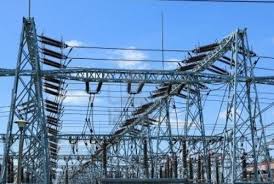
Nigeria’s electricity distribution companies collectively generated about N3.95trn revenue between 2019 and the first quarter of 2024.
This is according to data from the National Bureau of Statistics (NBS).
The NBS data revealed an upward trajectory in revenue generation over the past five years, as the power distributors made N482.6billion in 2019, N526.8billion in 2020, N761.2billion in 2021, N828.1billion in 2022, N1.07billion in 2023, and N291.6billion in the first quarter of 2024.
Experts attribute this consistent growth in revenue to several factors, including ongoing tariff adjustments moving towards cost-reflective pricing, which has allowed the Discos to align revenue with the cost of providing electricity.
Also, the National Mass Metering Programme has increased the number of metered customers, reducing estimated billing and improving the accuracy of revenue collection.
The programme has also contributed to reducing Aggregate Technical, Commercial, and Collection losses that have previously plagued the sector.
Also, the enhanced regulatory oversight and the adoption of modern technology in billing and collection have streamlined processes, minimised revenue leakages, and improved collection efficiency.
However, despite this revenue growth, the Discos face significant challenges, including high unpaid bills, electricity theft, infrastructure deficits, and energy losses.
These issues have hindered the Discos’ ability to fully capitalise on the potential of Nigeria’s electricity market.
While reacting to this, the President of the Nigeria Consumer Protection Network, Kunle Olubiyo, questioned the efficiency of the Discos and called for urgent reforms.
According to him, despite the pre-privatisation commitments of the Discos to meter customers and the improved collection and billing efficiency, the power distributors had largely failed to meet their obligations.
“We cannot score the Discos more than five per cent. In terms of complaints resolution, they lack the software to track issues and have failed woefully in conflict resolution”, he said.
Olubiyo further highlighted the inadequacies of the Discos despite significant investments in the firms by the government and the Central Bank of Nigeria aimed at network improvements.
He raised concerns about the implementation of the Federal Government’s National Mass Metering Programme, accusing some meter vendors and Discos of conspiracy.
“Many of the customers listed as metered were not metered. The idea was to attach GPS coordinates to every metered point as a precondition for metering, but this was not done”, the NCPN President stated.
According to Olubiyo, the government’s ongoing intervention, which includes funding the importation and installation of two million meters annually using public funds, raises questions about the essence of privatisation.
He highlighted instances where governance or liquidity issues led to Discos being placed under receivership, with interim management teams appointed by the Bureau of Public Enterprises.
He, however, noted that the effectiveness of these interventions was often undermined by internal politics and job insecurity among Disco management.
He said, “We’ve seen board chairmen abruptly remove MDs in Abuja, Port Harcourt, and several other Discos”.
Olubiyo welcomed the recent empowerment of states to regulate electricity within their jurisdictions under the Electricity Act, describing it as a positive development.
“The migration of electricity from the exclusive to the concurrent list is a good omen”, he said.
He urged the Federal Government to invest its 40 per cent equity in Discos and shift towards resource-driven energy solutions.
Reflecting on the power sector’s performance since privatisation, Olubiyo lamented the stagnation in electricity generation.
He noted that “In 2013, the peak generation on the grid was 5,800 megawatts. As we speak, from 2013 to now, we haven’t even been able to hit 6,000 megawatts of electricity evacuation on the grid”.
Describing the present situation as “a decline or backward growth, progressing in error”, Olubiyo, however, praised the recent licensing of companies such as MTN and Honeywell to engage in Nigeria’s bulk electricity trading or captive generation.
He argued that off-grid generation and independent power plants, etc, were steps in the right direction to stabilise power supply, particularly for industrial areas.
This came as the Transmission Company of Nigeria, a Federal Government-owned firm that transmits electricity from power generation companies to distribution firms, announced that it had been grappling with funding shortfalls.
It said this has stalled the completion of 129 critical projects. TCN’s Managing Director, Abdulaziz Sule, who revealed this recently in Abuja, said the company was facing a funding gap of N637.37bn, out of a total required amount of N1.79tn.
Sule appealed to the National Assembly for intervention to address these challenges and ensure the timely completion of the critical projects. The funding gap, he noted, is delaying project completion and hindering efficient service delivery.
He said the company is dealing with other challenges including inadequate modern tools, port clearance issues, lengthy procurement processes, lack of spinning reserve, delayed donor-funded projects due to unpaid counterpart funding, and recent VAT and levy charges on offshore equipment.


The Central Bank of Nigeria (CBN) yesterday said 33 banks have met new minimum capital requirements under its recapitalisation programme, raising a combined N4.65 trillion to strengthen the financial system.
The apex bank disclosed this in a statement marking the end of the exercise, which commenced in March 2024 and drew participation from domestic and foreign investors.
The statement was jointly signed by the Director of Banking Supervision, Olubukola Akinwunmi, and the Acting Director of Corporate Communications, Hakama Sidi-Ali.
The statement said “Over the 24-month period, Nigerian banks raised a total of N4.65tn in new capital, strengthening the resilience of the financial system and enhancing its capacity to support the economy.”
The regulator said local investors accounted for 72.55 per cent of the funds, while international investors contributed 27.45 per cent, reflecting continued confidence in the sector.
Commenting on the outcome, the CBN Governor, Olayemi Cardoso, said in the statement, “The recapitalisation programme has strengthened the capital base of Nigerian banks, reinforcing the resilience of the financial system and ensuring it is well-positioned to support economic growth and withstand domestic and external shocks.”
It added that while 33 banks have complied with the new thresholds, a few others are still undergoing regulatory and legal processes.
The statement noted, “The CBN confirms that 33 banks have met the revised minimum capital requirements established under the programme.
“A limited number of institutions remain subject to ongoing regulatory and judicial processes, which are being addressed through established supervisory and legal frameworks.
“All banks remain fully operational, ensuring continued access to banking services for customers.”
The apex bank stressed that the exercise was executed without disrupting banking operations, ensuring uninterrupted access to services nationwide.
It further stated that key prudential indicators have improved, particularly capital adequacy ratios, which remain above global Basel benchmarks.
The minimum ratios were set at 10 per cent for regional and national banks and 15 per cent for banks with international licences.
The bank also said the recapitalisation coincided with a gradual exit from regulatory forbearance, a move it said improved asset quality, strengthened balance sheet transparency, and enhanced overall stability.
To preserve these gains, the CBN said it has reinforced its risk-based supervision framework, mandating periodic stress tests and adequate capital buffers for banks.
It added that supervisory and prudential guidelines would be reviewed regularly to strengthen governance, risk management, and resilience across the sector.
“The successful completion of the programme establishes a stronger and more resilient banking system, better positioned to support lending, mobilise savings, and withstand domestic and global shocks,” the statement said.
The Tide learnt that foreign capital inflows into Nigeria’s banking sector rose by 93.25 per cent year-on-year to $13.53bn in 2025, up from $7.00bn recorded in 2024, amid the ongoing recapitalisation drive by the Central Bank of Nigeria.
Data from the National Bureau of Statistics capital importation report showed that the banking sector remained the dominant destination for foreign capital, accounting for $13.53bn of the total $23.22bn recorded in 2025, representing 58.26 per cent of total inflows, up from 56.81 per cent in 2024.
The surge reflects heightened investor interest in Nigerian banks as they raised fresh capital to meet new regulatory thresholds introduced by the apex bank, with industry-wide recapitalisation activities driving large-scale inflows across all quarters of the year.
However, the Centre for the Promotion of Private Enterprise (CPPE) recently raised concerns over weak credit flows to small businesses despite recent banking sector reforms.
The CPPE, led by a renowned economist, Dr Muda Yusuf, acknowledged that the ongoing bank recapitalisation exercise by the CBN has strengthened the financial system, but warned that the benefits have yet to translate into meaningful support for the real economy.

The facility will be disbursed through participating Microfinance Institutions (MFIs), which will in turn extend the loans to their customers, particularly SMEs, as they directly interface with businesses at the grassroots level.
The Executive Director of COMCIN, Mr. Micheal Ogbaa who represented the Chairman, Dr. Iredele Oyedele (FCA, FCCA), said the initiative is designed to strengthen micro-lending institutions and expand access to finance for grassroots entrepreneurs, particularly women and youths in the informal sector.
Ogbaa explained that COMCIN does not lend directly to individuals but works through its network of microfinance and cooperative institutions, which in turn provide loans to end users.
“We came together to advocate for the microfinance ecosystem. Commercial banks often exclude people at the grassroots, but our members are positioned to reach them. This facility will empower them to do more,” he said.
He noted that the loan scheme offers low interest rates and flexible repayment plans, making it more accessible to small business owners.
According to him, about 90 percent of beneficiaries are expected to be women, who play a key role in sustaining families and driving economic activities at the local level.
“Our focus is on traders, service providers, and players in the informal sector. These are the real movers of the economy. By supporting them, we are strengthening families and contributing to national development,” he added.
Ogbaa disclosed that eligible SMEs with proven integrity and business track records could access up to N5 million each through participating micro-lending institutions. The rollout has commenced in Lagos and will extend to Abuja, Enugu, and other regions, including the South-West, South-East, and North-East.
He said 12 micro-lending institutions have already benefited from the scheme, while 85 applications are currently being processed under the pilot phase.
“Our target is to reach at least 100,000 SMEs nationwide. We are building a platform that connects funding partners with credible micro-lending institutions, creating a reliable channel for financial inclusion,” Ogbaa said.
He added that COMCIN is also working to attract larger funding pools from development finance institutions and private investors, noting that successful implementation of the pilot phase would boost confidence and unlock more capital for SMEs.
“We have seen encouraging testimonies from early beneficiaries. As we demonstrate transparency and efficiency, more institutions will be willing to channel funds through us,” he said.

-
News4 days ago
Decentralizing Pipeline Surveillance Poses Greater Dangers To Niger Delta …. Group Warns
-

 Politics4 days ago
APC Resumes Electronic Membership Registration Nationwide
-

 Rivers4 days ago
Court Rules Out Interim Administration In Jumbo House, Bonny
-
Business4 days ago
33 Banks Raise N4.65tn As Recapitalisation Ends
-

 Politics4 days ago
Alleged Coup: Protests Rock N’Assembly As Detained Officers’ Children, Wives Demand Justice
-

 Nation4 days ago
Nile University Hosts ICA Nigeria First National Confab On Global Communication
-
Sports4 days ago
Lewandowski Leads Top Stars Missing From W/Cup Roll Call
-

 Sports4 days ago
Para Games: Team Rivers Wins 53 Medals On Day 5 … Director Praise Athletes