
News
Speed Up Investigations, Trials To Decongest Prisons, Fubara Urges Police, Judiciary …As Reps Affirm Low Crime Rate In Rivers

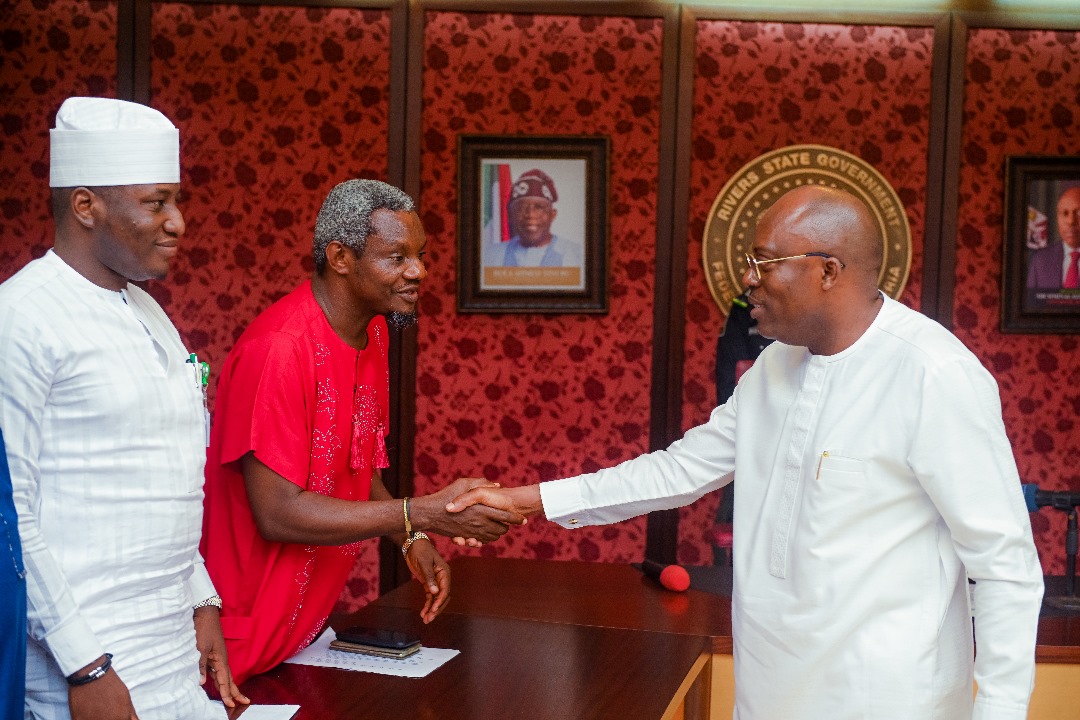
Rivers State Governor, Sir Siminalayi Fubara, has called for speedy investigation of suspects arrested for crime and taken through unimpeded process of legal trails to ensure that they did not eventually get dumped in the correctional centres unduly on awaiting trial list.
This, he said, will place more demand on the Nigeria Police Force and the Judiciary to rise up to the challenge of ensuring that their institutions truly function effectively towards achieving desired successes of decongesting correctional centres and dispensing justice.
Governor Fubara insisted that such approach will contribute largely to solving the incidences of overcrowded correctional centres with awaiting trial inmates across the country, including the attendant financial burden required for their upkeep.
The Governor gave the charge when he received the House of Representatives Committee on Reformatory Institutions, led by its Chairman, Hon. Chinedu Ogah, on a courtesy visit to Government House in Port Harcourt on Monday.
The Governor said: “I know that the State Government, from time to time, I mean, through the Chief Judge, had visited the Correctional Centres, and after evaluation, and I have seen a few letters he has written about what he saw on his visit, and having confirmed, and accessed a few of the inmates, he had granted them either bail or pardon.
“But this issue goes back to one major thing: institutions that we call the Police Force and the Judiciary. Most of these issues that we are talking about; overcrowding of the Correctional Centres, might be due to delay in the trial of their cases. That is the truth.
“The other aspect is that you arrest somebody wrongfully or whatever, and the process of investigation takes two, three, four years. So, we need to make sure that our institutions are functioning effectively.
“And, if they are functioning effectively, I strongly believe that most of these issues of over-crowding of the Correctional Centres won’t be there.”
Governor Fubara said: “But, this is where we are, and we will continue to encourage our system to do it better. Maybe, if we had made these complaints earlier, some of the corrections would have been done.
“So, now that we are saying it, I believe they are hearing, and they will expedite action to make sure that some of these things are put to check.”
The Governor said his administration is focused on the need of Rivers people, adding that while addressing those needs, it is also mindful of the importance of properly integrating ex-convicts into the society.
Governor Fubara, however, advised: “We also need to ensure that proper evaluations are done to ensure that we are not endangering our people.
“It is not just to say we need to reintegrate them. We also need to do the proper thing to make sure that when they leave the centres, they can fit into the society.
“I think even in the Correctional Centres, they have vocational activities there. Some of them have the opportunity of running academic programmes online.
“So, first of all, they should also show this commitment that they want to change, that they want to be part of the system, coming back to the society, and we as a government, will do all we can make it possible.”
The Governor expressed delight that issues of the correctional centres attracted the attention of the National Assembly, which means that government is alive and up to its responsibility.
Governor Fubara also thanked members of the committee for the visit, and acknowledging the modest achievements of his administration so far, particularly in ensuring a reduction of crime in the State compared to what was inherited.
He said, “It goes to say just one thing: we know what the problem is, and we are tackling the problem from the root cause.
“What is the problem associated with crime: unemployment, insecurity. This insecurity is economic insecurity and that is what causes crime.
“It is a global issue, though but as a State, we will continue to do our best to see to it that our youths are engaged meaningfully, and are discouraged from associating with anything that will bring bad image to our State.”
Governor Fubara explained that his administration has continued to support the Controller of the Port Harcourt Correctional Centre with monthly subvention to assist in the day-to-day running of his office as well as other levels of assistance.
The Governor noted that most of the correctional centres were built over 80 years ago when nobody envisaged that the number of inmates will increase astronomically as witnessed now.
But he said that what the Federal Government is doing in the State by building new facilities to house inmates and the plan to relocate correctional centres in the city centre will be something to support.
“I will mandate the Secretary to the State Government to go and access what is going on there, and liaise with the appropriate authorities and see where we can come in to complete it so that this issue of having these Correctional Centres in the centre of the city which is not a good idea, at least, we can solve that problem once and for all.”
Governor Fubara charged the committee to play its part effectively by making the requisite laws and secure the legislative backing that can eventually correct the mistakes that have been noticed.
He explained, “It shouldn’t be something we just put in our Constitution. It should be given all the strength of implementation or execution of those laws. So, you should help us, do it right, and we will take it from there on the part of execution which is the duty of the Executive.”
Speaking further, Governor Fubara said: “Let me thank you, more especially for coming to see us. Let me on behalf of the Government and the good people of Rivers State, assure you that you have not made any mistake.
“You have done the right thing, and you have taken the right step. I believe that by the end of your visit, you are going to come up with recommendations that are going to help us solve some of these problems.
“But in all, we all have to put hands together to support this administration of our President. Nigeria is a very big and complex society; different ideologies, multi-cultural beliefs, social differences, but we are all here as one because of the flag of Nigeria.
“So, what we need to do is to ensure that we work as one, on one common interest to make sure that we sustain this entity called Nigeria. If Nigeria succeeds, we all succeed. And Nigeria will only succeed when we support the President.
“If Nigeria fails, everybody fails. The sub-nationals, like Rivers State, and any other state will also fail. You can’t succeed just as a state. Your success must be extended to the centre,” he added.
In his speech, the leader of the delegation and Chairman, House of Representatives Committee on Reformatory Institutions, Hon. Chinedu Ogah, explained that they are in Rivers State to oversight all the Correctional Institutions domiciled in the State.
Hon. Ogah noted the gross neglect that the Correctional Service has suffered in the country, particularly in the aspect of security.
He listed four Correctional Service centres in Rivers State to include Port Harcourt, Ahoada, Degema and the Farm Settlement; with each housing about 4,000 inmates, adding that 91 percent of such inmates are awaiting trial.
Hon. Ogah said: “And most of these people are not yet convicted, and some of them are not being justified: what the case is all about. And the major issue, the negligence aspect of the security, is that they don’t care how to reintegrate, reform, bring them back into the society so they cannot indulge in crime.
“If we really look into it, we find out that, that is the only way we can ensure the security of lives and property in this country, by making sure that those we feel have already committed crimes are reformed and reintegrated into the society by giving them skills and opportunity so that they can have something to feed, and not go back to crime.
“And Your Excellency, from our records, we found out that since your assumption of office, there has been reduction of crime rate in Rivers State because of what you have done by empowering the youths in all the local governments economically, in all the wards by giving them a sense of belonging too. We have to commend you for that.”
Hon Ogah said further: “Rivers State is one of the places where the construction of 3,000-capacity centres is ongoing in Bori, and this construction has gotten up to 60 percent.
“But Your Excellency, you know the truth: Federal Government cannot do it alone, and as a Governor that knows the problems of the people, that is our essence of coming to you to partner with the Committee on Reformatory Institutions to know what we can do together to relocate that correctional service centre.”
He, therefore, solicited the support of the State Government to make the initiative of the Federal Government succeed for the peace and development of Rivers State and Nigeria.



The Rivers State chapter of the All Progressives Congress Christian Leaders Forum has expressed strong confidence in the capacity of All Progressives Congress (All Progressives Congress) candidates in the state to deliver effective governance if elected into office in the coming elections.
The State Coordinator of the forum, Archbishop Lucky Aroh, made this known during a breakfast and thanksgiving meeting held in Port Harcourt, where leaders gathered to pray for the stability of the party and the safety of its candidates ahead of the 2027 general elections.According to him, the meeting was convened to seek divine intervention for peace, unity, and security among APC candidates across Rivers State.
“Today we are praying for APC stability in Rivers State and the security of our candidates that have been elected to contest the 2027 elections. It is a breakfast meeting,” Aroh said.
He further expressed optimism that the party’s candidates would not disappoint the people if entrusted with leadership responsibilities.
“They will not fail when elected into office. We are here as fathers of the land to let them know, and I must tell you the truth that these are the authentic people that will do well in Rivers State,” he added.
Speaking earlier, the National Chairman of the forum, Professor Olanrewaju Abraham, commended the Rivers State chapter for organizing the programme, noting that the national body of the forum believes strongly in the power of prayer.
He stated that political leadership provides an opportunity to influence society positively, including advancing moral and spiritual values, while expressing confidence that APC candidates at all levels would emerge victorious in the upcoming elections.
Also speaking, the Rivers State Women Leader of the APC, Hon. Darling Amadi, praised the forum for its commitment to prayers for peace, stability, and the protection of party candidates.
Represented by the Deputy Women Leader of the party in the state, she described the initiative as commendable and urged other political and support groups within the party to emulate the gesture in promoting unity and stability.
By: John Bibor, Menebe Emmanuel & Fortune Paibi
Prominent businessman and philanthropist, Elder Anthony Osagwe-Ogo, was celebrated in grand style as he marked his 70th birthday anniversary, with distinguished Nigerians, business leaders, and golf enthusiasts gathering to honour his remarkable contributions to society.
The colourful celebration took place at the Port Harcourt Golf Club, where friends, associates, and well-wishers converged to pay tribute to the revered elder statesman.
Chairman of the occasion, High Chief (Dr.) Ikenna Okafor, described the celebrant as a detribalised Nigerian whose generosity, humility, and commitment to humanity have earned him admiration across different communities and backgrounds.
According to Dr. Okafor, Pa Osagwe-Ogo’s impact on society and the development of his community remains unparalleled. He noted that members of the golfing community are proud to be associated with a father figure who consistently promotes the welfare and well-being of those around him.
He further stated that the history and growth of the Port Harcourt Golf Club cannot be told without acknowledging the significant role played by the celebrant, whose wisdom, encouragement, and leadership have helped sustain the club over the years.
“We are here to celebrate a man who has impacted humanity positively, a peace-loving individual and an epitome of hope for the younger generation. We pray to emulate his virtues. Today, we celebrate a bridge-builder, a trailblazer, and an iconic leader whose life continues to inspire many,” Dr. Okafor said.
He expressed delight at the large turnout of guests from various walks of life, describing it as a testament to the respect and affection Pa Osagwe-Ogo commands within and beyond Rivers State.
In his response, the celebrant, Pa Anthony Osagwe-Ogo, expressed profound gratitude to God for preserving his life and granting him the privilege of attaining the milestone age of 70.
He also thanked members of the Port Harcourt Golf Club, family members, friends, and associates for identifying with him during the celebration and for their unwavering support over the years.
The event featured the cutting of the birthday cake, presentation of awards to deserving members of the club, goodwill messages, and moments of celebration among guests.
The ceremony was attended by notable personalities from the business community, the golfing fraternity, and other sectors, all of whom joined in celebrating the life and legacy of the respected elder statesman.
Rivers State Governor, Sir Siminalayi Fubara, and the Permanent Secretary of the Rivers State Ministry of Information and Communications, Dr. Honour Kuru Sirawoo, have been honoured with awards of recognition in connection with the 2026 Democracy Day celebrations held in Port Harcourt.
The awards, which formed part of activities marking Nigeria’s Democracy Day on June 12, were formally presented on Tuesday at the Ministry of Information and Communications in Port Harcourt.
Presenting the awards was Hon. Abdul Hameed Oladipupo Alli, popularly known as “Mr. Nigeria,” Publisher of Asiwaju Trumpet Magazine and Achievers World International Magazine.
Governor Fubara was recognised for his efforts in sustaining peace, stability, and a conducive political atmospherJohn Bibor / Menebe Emmanuel / Fortune Paibie in Rivers State. The organisers noted that his administration has fostered harmony and strengthened civic participation across the state.
Dr. Sirawoo, on the other hand, was honoured for his exemplary administrative leadership and significant contributions to effective information management within the Ministry of Information and Communications.
Representing Dr. Sirawoo at the presentation ceremony, Dr. Christian Davies received the award on his behalf and expressed gratitude for the recognition. He described the honour as a reflection of Dr. Sirawoo’s unwavering commitment to professionalism, excellence, and dedicated public service.
Dr. Davies assured the organisers that the award would be formally conveyed to the Permanent Secretary.
The event also featured the presentation of commemorative publications highlighting major governance and civic milestones in Rivers State, including Easter celebrations, Workers’ Day activities, the Governor’s third anniversary in office, and Democracy Day programmes.
Organisers of the awards commended the Rivers State administration for what they described as sustained peace, political stability, and improved civic engagement, noting that these achievements have contributed significantly to the state’s continued development.
By: Jessica Sambol