Connect with us

Oil & Energy

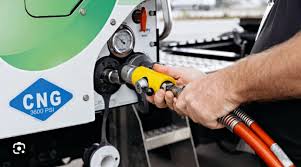
CNG Initiative: FG Targets 25,000 Jobs, $2.5bn Investment 

Published

on

The Programme Director and Chief Executive, Presidential Compressed Natural Gas Initiatives, Michael Oluwagbemi, has announced the Federal Government’s plan to target over 25,000 jobs and $2.5 billion worth of investment by 2027.
Oluwagbemi made this known during the Presidential CNG stakeholders’ engagement workshop held at BOVAS Auto-Gas Filling Stations, Ajibode Bus-Stop, in Ibadan, Oyo State capital, at the weekend.
He stated that the initiative, which was part of palliative measures to ease the burden of the removal of fuel subsidy, would attract enormous investment and job creation as well as impact positively on the lives of Nigerians.
Meanwhile, he called on Nigerians to embrace the new initiatives by the Federal Government as part of palliatives to cushion the effect of the removal of fuel subsidy in the country.
“On October 1, 2023, when the President gave his speech, he announced that the Presidential CNG initiatives are going to be rolled out as part of palliatives on the removal of fuel subsidy.
“One of our major concerns is to make sure that the transition for the transportation sector is a cheaper, safer, and more reliable source of energy.
“In the coming weeks, we are going to be announcing the conversion incentives programme which will enable Nigerians currently using PMS and Diesel fuel vehicles to be able to convert their vehicles at designated places across the country at a discounted price based on certain pre-qualification under the palliative programme of the Federal Government”, he said.
On the value chain of the initiative, Oluwagbemi explained that the Federal Ministry of Finance is acquiring tricycles and buses that would be assembled and manufactured in Nigeria, with more than five automobile firms being activated.
“The value chain of the programme starts with every one of us. From the point of converting your vehicle, you have created the demand for natural gas.
“If your vehicle is converted by technicians and refuelled by autogas workshops across the country, then you are creating jobs for civil engineers and technicians. You’re creating jobs for the upstream in terms of upstream activities associated with oil and gas.
“And in line with the programme, the Federal Ministry of Finance is acquiring a number of tricycles and buses that will be assembled and manufactured in Nigeria. More than five of our automobile firms have been activated. So, you can see that in terms of job creation, the opportunities for Nigerians are enormous.
“The President has said we need to convert one million vehicles by 2027. We need 1,000 conversion shops and we need over 3,000 filing stations just like this. You can imagine the level of investment required for this.
“In order to sustain one million vehicle conversions by 2027, we need 25,000 technicians. So, the job creation potential is an opportunity for job creation in addition to our gross domestic product, $2.5 billion worth of investment to be mobilised in the next four years and of course more than $25 billion added to our GDP”, he said.
Oluwagbemi further called on Nigerians to embrace the new initiatives by the Federal Government as part of palliatives to cushion the effect of the removal of fuel subsidy in the country.
The representative of BOVAS Filling Station, a private investor in the Presidential CNG Initiatives, Temitope Samson, said, “We have worked with the regulators, we are also working with the Presidential Initiatives on CNG to make sure that standard safety is adhered to. We have also worked with the Standard Organisation of Nigeria to ensure that we have a standard accepted internationally.
“Our role is to ensure that there is availability of CNG across the nation, and to also ensure we have enough kits and tanks that are converted for people to use as many as possible, and to ensure safety and to train others so that anywhere they get to, they have very safe conversion”.
Recall that last year, President Bola Tinubu approved the Presidential Compressed Natural Gas initiative(PCNG-i)
This initiative aims to not only introduce more than 11,500 new CNG-enabled vehicles and provide 55,000 CNG conversion kits for existing vehicles that depend on Premium Motor Spirit but also promote local manufacturing, assembly, and job creation.


Continue Reading

Oil & Energy

TotalEnergies, Conoil Sign Deal To Boost Oil Production

Published

on

TotalEnergies has signed agreements with Conoil Producing Limited under which to acquire from Conoil a 50 per cent interest in Oil Processing Licence (OPL) 257, a deep-water offshore oil block in Nigeria.
The deal entails Conoil also acquiring a 40 per cent participating interest held by TotalEnergies in Oil Minining Lease (OML) 136, both located offshore Nigeria.
Upon completion of this transaction, TotalEnergies’ interest in OPL257 would be increased from 40 per cent to 90 per cent, while Conoil will retain a 10% interest in this block.
Covering an area of around 370 square kilometres, OPL 257 is located 150 kilometers offshore from the coast of Nigeria. “This block is adjacent to PPL 261, where TotalEnergies (24%) and its partners discovered in 2005 the Egina South field, which extends into OPL257.
Senior Vice-President Africa, Exploration & Production at TotalEnergies, Mike Sangster, said “An appraisal well of Egina South is planned to be drilled in 2026 on OPL257 side, and the field is expected to be developed as a tie-back to the Egina FPSO, located approximately 30 km away.
“This transaction, built on our longstanding partnership with Conoil, will enable TotalEnergies to proceed with the appraisal of the Egina South discovery, an attractive tie-back opportunity for Egina FPSO.
“This fits perfectly with our strategy to leverage existing production facilities to profitably develop additional resources and to focus on our operated gas and offshore oil assets in Nigeria”.
Continue Reading

Oil & Energy

“COP30: FG, Brazil Partner On Carbon Emissions Reduction

Published

on

The Federal Government and Brazil have deepened collaboration on climate action, focusing on sustainable agriculture, renewable energy, and the reduction of black carbon emissions.
The partnership is anchored in South-South cooperation through the Brazil-Nigeria Strategic Dialogue Mechanism, which facilitates the exchange of ideas, technology, and policy alignment within the global climate framework, particularly the Paris Agreement.
The Executive Secretary, Amazon Interstates Consortium, Marcello Brito, made the disclosure during an interview with newsmen, in Abuja, on the sidelines of the 2025 COP30 United Nations Climate Change Conference, held in Belem, Brazil.
Brito emphasized that both nations are committed to global efforts aimed at curbing black carbon emissions, a critical component of climate mitigation strategies.
“Nigeria and Brazil are collaborating on climate change remedies primarily through the Green Imperative Project (GIP) for sustainable agriculture, and by working together on renewable energy transition and climate finance mobilisation,” Brito said.
“These efforts are part of a broader strategic partnership aimed at fostering sustainable development and inclusive growth between the two Global South nations,” Brito added.
TheTide gathered that President Bola Ahmed Tinubu announced an ambitious plan to mobilize up to $3 billion annually in climate finance, through its National Carbon Market Framework and Climate Change Fund, positioning itself as a leader in nature-positive investment across the Global South.
Represented by the Vice President, Senator Kashim Shettima, Tinubu made the announcement during a high-level thematic session of the conference titled ‘Climate and Nature: Forests and Oceans’
Tinubu stressed that Nigeria’s climate strategy is rooted in restoring balance between nature, development, and economic resilience.
Hosted in the heart of the Amazon, on November 10—21, the 30th COP30 conference brought together the international community to discuss key climate issues, focusing on implementing the Paris Agreement, reviewing nationally determined contributions (NDCs), and advancing goals for energy transition, climate finance, forest conservation, and adaptation.
Continue Reading

Oil & Energy

DisCo Debts, Major Barrier To New Grid Projects In Nigeria ……. Stakeholders 

Published

on

Energy industry leaders and lenders have raised concerns that the high-risk legacy debts of Distribution Companies (DisCos) and unclear regulatory frameworks are significant barriers to the financing and development of new grid-connected power projects in Nigeria.
The consensus among financiers and power sector executives is that addressing legacy DisCo debt, improving contractual transparency, and streamlining regulatory frameworks are critical to unlocking private investment in Nigeria’s power infrastructure.
Speaking in the context of new grid-connected power plants, during panel sessions at the just concluded Lagos Chamber of Commerce and Industry (LCCI) Power Conference, Senior Vice President at Stanbic IBTC Infrastructure Fund, Jumoke Ayo-Famisa, explained the cautious approach lenders take when evaluating embedded or grid-scale power projects.
Ayo-Famisa who emphasized the critical importance of clarity around off-takers and contract structures said “If someone approaches us today with an embedded power project, the first question is always: Who is the off-taker? Who are you signing the contract with?” . “In Lagos State, for example, there is Eko Electricity and Excel Distribution Company Limited. Knowing this is important,” she said.
She highlighted the nuances in contract types, whether the developer is responsible just for generation or for the full chain, including distribution and collection.
“Collection is very important because you would be wondering, ‘is the cash going to be commingled with whatever is happening at the major DISCO level, is it ring-fenced, what is the cash flow waterfall,” she stated.
Ayo-Famisa pointed out that the major stumbling block remains the “high leverage in the books of the legacy DisCos.” Incoming project financiers want to be confident that their cash flows won’t be exposed to the financial risks of these indebted entities. This makes clarity on contractual relationships and cash flow mechanisms a top priority.
Noting that tariff clarity also remains a challenge, Ayo-Famisa said “Some states have come out to clearly say that there is no subsidy; some are saying they are exploring solutions for the lower income segments. So, the clarity would be on who is responsible for the tariff, is this sponsored?, Can they change tariffs?, In terms of if their cost rises, they can pass it on, or they have to wait for the regulator.
“Unlike, what you find in the willing seller-willing buyer, where they negotiate and agree on their prices. Now they are going into grid, there is Band A, Band B, if my power goes into, say, Ikeja Electric, or I have a contract with them, “am I commingled with whatever is happening across their multiple bands?”
Also speaking, Group Managing Director and CEO of West Power & Gas Limited, Wola Joseph Condotti, stressed the dual-edged nature of decentralization in the power sector.
“Of course, decentralization brings us closer to the people as the jurisdiction is now clear. You also know that your tariff would be reflective of the type of people living in that environment. You cannot take the Lagos tariff to Zamfara, and this is what has been happening before now in the power sector. So, decentralization brings about a more customized solution to issues you find on the ground.
“Some of the issues I see are those that bother on capacity. It was a centrally run system that had 11 DISCOs. Of the 11 DISCOs, I think there are 3 or 4 of us today that are surviving or alive, if I may put it that way. If you go to electricity generation companies, they are doing much better,” she said.
Condotti highlighted regulatory overlaps as another complication, especially when power generation or distribution crosses state lines.
She said, “Investors would definitely have a problem. Say if you have a plant in Ogun State supplying power to another state, say Lagos State; you are automatically regulated by NERC. But the truth is that the state regulator of Ogun State and Lagos State wants you to comply with certain regulatory standards.”
With the growing demand for reliable electricity and an urgent need for infrastructure expansion, the ability to navigate these complex financial and regulatory landscapes would determine the pace at which new grid-connected power projects can be developed.
Continue Reading

Trending