Connect with us

Rivers

HYPREP Completes Six Water Projects, Three Booster Stations In Ogoniland

Published

on

The Hydrocarbon Pollution Remediation Project (HYPREP) has so far completed six water headworks and three booster stations in Ogoniland in Rivers State.
HYPREP’s Project Coordinator, Prof Nenibarini Zabbey, who dropped the hint in Port Harcourt during the commemoration of this year’s World Water Day last Friday, said potable water is currently being supplied in 18 communities in the area.
He noted that when construction of the ongoing 18 water schemes is completed, HYPREP should have achieved 95 percent potable water supply coverage of the entire Gokana Local Government Area; 70 percent of Khana Local Government Area; 90 percent of Eleme Local Government Area; and 95 percent of Tai Local Government Area.
Zabbey further indicated that each water scheme comprises boreholes, ground and overhead water tanks, treatment plants, staff quarters for resident workers, a generating power set; and a mini laboratory for quality checks and quality control.
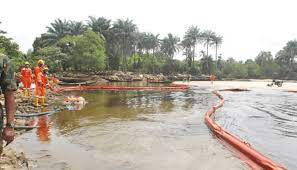
He said HYPREP is also undertaking shoreline clean-up and mangrove restoration in Ogoniland to restore ecosystem goods and services, including the maintenance of water quality, for the socio-economic benefits of the local and contiguous communities.
With HYPREP’s investment in potable water infrastructure and rehabilitation of oil-degraded creeks, he said the agency significantly contributes to economic development, poverty reduction and resilience to climate change.
The Project Coordinator, therefore, maintained that by harnessing the power of water for sustainable development, “we can create opportunities for peace and prosperity for present and future generations”.
“We recognise the interconnectedness between water security and peace building efforts.By prioritising access to water resources, promoting dialogue and fostering collaboration, we can address root causes of conflict and build bridges toward lasting peace”, he said, adding that it is imperative to adopt inclusive and participatory approaches to water governance that prioritise the needs of all stakeholders, including marginalised and vulnerable communities.
Therefore, to ensure the sustainability of HYPREP-built water schemes in Ogoniland, Zabbey said HYPREP would continue to collaborate with communities in the design and execution of the projects and would hand over the water facilities to the respective communities for effective management.
According to him, the facilities are managed by HYPREP in the first two years, during which, with the collaboration of the Rivers State Government,it trains community workers and sets up the Water Consumers Association (WCA) for continuous management and sustainability.
Zabbey noted that as the world commemorates the World Water Day, “we reaffirm our commitment to leveraging water as a peace and sustainable development catalyst”, and urged the people of the world to work together across borders, sectors and ideologies to ensure water resources are managed responsibly, equitably and sustainably, as well as honour the vital role of water in promoting peace and building a better world for ourselves and future generations.
He said the World Water Day commemoration was a reminder of the profound significance of water as a catalyst for peace, stability and sustainable development around the globe.
The Project Coordinator said this year’s theme, ‘Leveraging Water for Peace’, underscores water’s vital role in fostering cooperation, understanding, development and peaceful coexistence among nations and communities, contending that HYPREP understands that water is a fundamental human need and a shared resource that transcends borders and cultures, as it is essential for food security, sanitation, health and economic prosperity.
He noted that access to quality water remains a pressing issue for millions worldwide, exacerbating tensions and conflicts in many regions.
“Considering the importance of safe water to human existence, the United Nations Environment Programme(UNEP) Environmental Assessment of Ogoniland Report recommends providing potable water for oil-impacted Ogoni communities.Thus, HYPREP has taken bold steps towards enhancing communities’ access to safe water for various uses”, he said.

By: Donatus Ebi

Continue Reading

Rivers

NDDC Provides Lifeline To Flood-Hit Ogu-Bolo Community

Published

on

In response to the recent flood disaster that displaced families, destroyed farmlands, and worsened economic hardship in Ogu/Bolo Community, The Niger Delta Development Commission (NDDC) has distributed relief materials to residents of the community.
Presenting the items on behalf of the Managing Director, the Director II, Education, Health and Social Services, Engr. Jeremiah Onolejoloni, said the intervention underscores the commission’s commitment to alleviating the plight of vulnerable communities across the Niger Delta.
According to a statement by the Director of Corporate Affairs, Seledi Thompson-Wakama, the gesture followed the devastating impact of flooding on livelihoods in the community.
The Managing Director noted that the commission, in collaboration with the Derek and Davia Foundation, provided financial support to facilitate the distribution of essential food items and household materials to affected residents.
He described the initiative as part of efforts to address pressing needs, adding that it also reflects government’s solidarity with citizens facing economic challenges.
“This intervention goes beyond palliatives. It is a demonstration of government’s presence, compassion and commitment to supporting families in distress, in line with the renewed hope agenda of the President,” he said.
He urged community leaders to ensure fair distribution of the items and encouraged residents to sustain peace and support development programmes.
The Paramount Ruler of Ogu-Bolo, Chief Joachim Amachiri, commended the Commission for the timely intervention, noting that it would provide much-needed relief to victims of the flood.
He reaffirmed the community’s support for NDDC initiatives aimed at improving living conditions in the region.
Also speaking, a consultant on the programme, represented by Dr. George Smile, praised the commission’s responsiveness to disaster-affected communities, disclosing that plans were underway, in partnership with development stakeholders, to extend similar support to neighbouring areas.
Wokoma Emmanuel & Theresa Frederick
Continue Reading

Rivers

Don Traces Nigeria’s Highway Woes To Design Failures  … Proposes Mechanistic-Empirical Design Approach

Published

on

A lecturer at the Rivers State University (RSU), Professor Emmanuel Osilemme Ekwulo, has called for a fundamental overhaul of Nigeria’s highway pavement systems, stating that poor design practices and weak standards, not just inadequate funding, are at the heart of the country’s persistent road failures.
Delivering the 128th inaugural lecture at the Rivers State University, titled “Removing Roadblocks: Rebuilding The Foundation For Reliable Highway Pavement Infrastructure”, Ekwulo argued that Nigeria’s roads will continue to deteriorate prematurely unless critical engineering principles are strictly applied and enforced.
According to him, recurring defects in the nation’s highways stem from a combination of faulty design processes, substandard construction materials, weak regulatory enforcement, poor drainage systems, and widespread disregard for professional ethics.
He stressed that these systemic failures have undermined the durability of road infrastructure despite significant financial investments.
“Premature pavement failures in Nigeria are not due to lack of funds alone, but largely due to poor design decisions, weak material standards, and absence of accountability,” he said.
Ekwulo proposed the adoption of the mechanistic-empirical design approach, a scientifically grounded method for predicting pavement performance, as a pathway to improving road quality.
He also advocated for the development of a localized framework, the Nigerian Empirical and Mechanistic Pavement Design System (NEMPADS), to reflect the country’s unique environmental and material conditions.
He further recommended stricter quality control measures, including independent audits, the establishment of a national database for material characterization, and compulsory traffic load analysis for all road projects.
The use of modified binders and advanced materials, he added, would enhance pavement resilience.
To ensure sustainability, the Professor called for the implementation of a National Pavement Management System to coordinate maintenance and monitoring efforts nationwide, noting that consistent upkeep is essential to prolonging road lifespan.
Ekwulo emphasized the need for stronger collaboration between academia and industry, urging universities to lead applied research initiatives and pilot projects that can deliver practical solutions to Nigeria’s infrastructure challenges.
Earlier, the Vice Chancellor of Rivers State University, Professor Isaac Zeb-Obipi, said universities must play a frontline role in addressing national development issues through research-driven interventions.
He described the lecture as timely, noting that the neglect of core engineering standards has contributed significantly to the country’s failing highways.
The event, held at the Dr. Ezenwo Wike Senate Building in the campus, also featured the formal decoration of Ekwulo as the institution’s 128th inaugural lecturer.
Reiterating his position after the lecture, Ekwulo stated that with proper design methods, quality materials, and strict adherence to global standards, Nigeria’s roads can achieve their intended lifespan of 10 to 20 years or more.
“Without a return to engineering fundamentals and accountability, investments in road infrastructure will continue to yield poor results”, he concluded.
Continue Reading

Rivers

CP Reaffirms Commitment To Human Rights, Community Policing In Rivers

Published

on

The Rivers State Commissioner of Police, Olugbenga Adepoju, has assured residents of the command’s commitment to upholding human rights and delivering people-oriented policing.
He stressed that officers under his watch would continue to operate within the confines of the law, while strengthening community relations.
Adepoju gave the assurance  during a sensitisation walk organised by the  State Police Command as part of activities marking the National Police Day in Port Harcourt.
He noted that the exercise was aimed at fostering trust and enhancing cooperation between the police and the public.
While expressing appreciation to President Bola Ahmed Tinubu for approving a special day for the Nigeria Police to celebrate its achievements, he described the gesture as a morale booster that would spur officers to greater efficiency and professionalism in service delivery.
The CP also commended the Inspector-General of Police, Olatunji Rilwan Disu, for initiating a week-long celebration, which he said had provided an opportunity for the police to reconnect with citizens and showcase reforms within the force.
According to him, the large turnout of residents, stakeholders and members of the business community during the exercise was a clear indication of the growing confidence reposed in the police by the people of Rivers State.
He reiterated that the Command would sustain its sensitisation efforts, adding that officers had been adequately briefed to respect the rights of citizens, maintain professionalism and work closely with the media to promote transparency and accountability.
Adepoju disclosed that the week-long activities commenced with environmental sanitation across commands and divisions, alongside public enlightenment campaigns targeted at strengthening police-community relations.
He further revealed that the Command had also embarked on free medical outreach for both officers and members of the public, as part of its corporate social responsibility and commitment to public welfare.
The CP added that financial support would be extended to widows of fallen police officers through the presentation of cheques, in line with directives from the police high command, to cushion the effects of their loss.
In his response, the Chairman of the Police Community Relations Committee (PCRC) in the state, Voke Emore, said the initiative was geared towards rebuilding trust between the police and the communities they serve.
Emore noted that the renewed synergy between the police and residents in Rivers State had created an enabling environment for effective policing, urging the public to continue supporting security agencies with useful information.
Also, a representative of the Police Officers’ Wives Association (POWA), Mrs. Chima Nnaji, said the group participated in the walk to show solidarity with their spouses.
 The event drew attendance from senior police officers, members of the PCRC, and stakeholders from various sectors of the state.
King Onunwor
Continue Reading

Trending