Connect with us

Editorial

Fubara: Champion Of Service, Compassion

Published

on

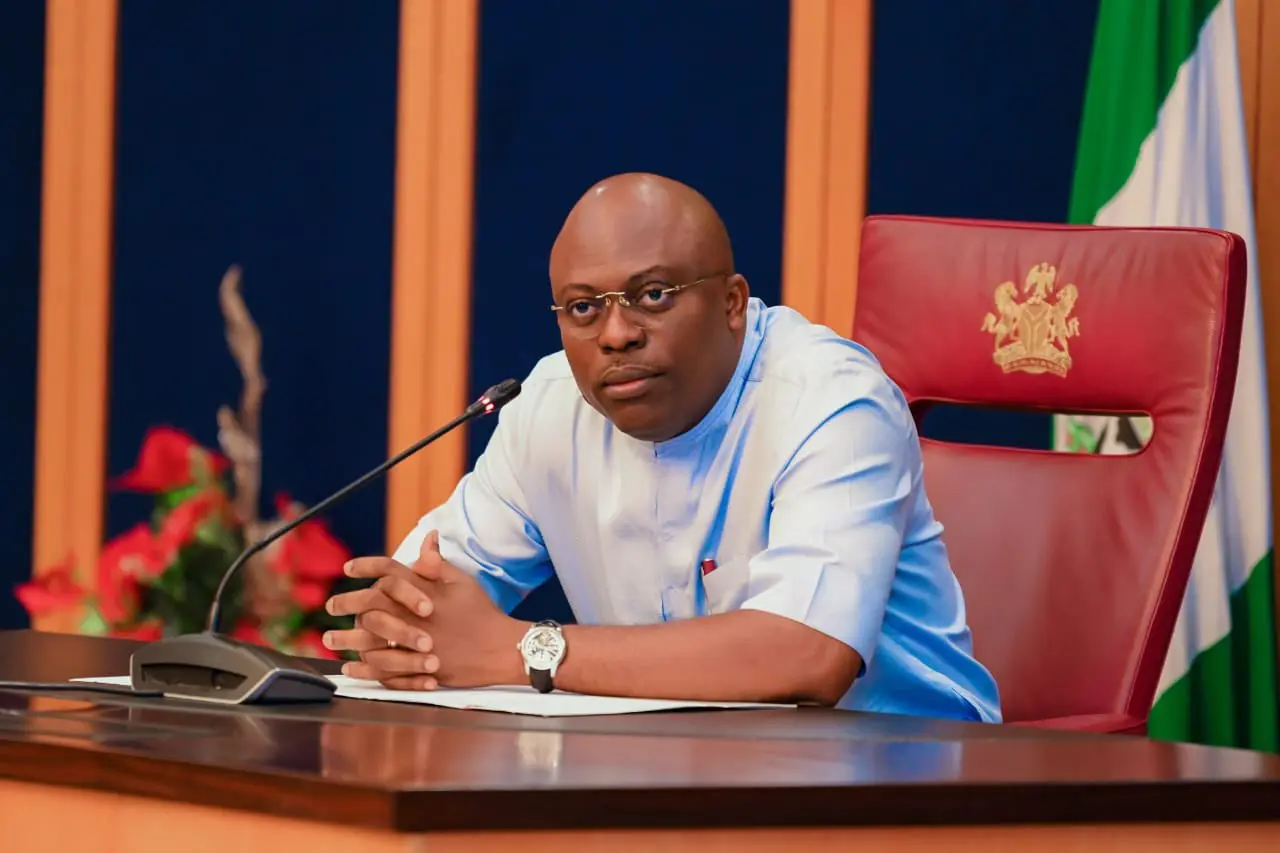
The decision of the Rivers State Governor, Sir Siminalayi Fubara, to grant immediate promotions,
accompanied by full financial benefits to local government workers in the state serves as a significant milestone in his administration. The governor’s pronouncement is apt because local government workers provide services that enable the state to function optimally and ensure the well-being of its people at the grassroots.
The approval was granted during a private meeting held at the Government House in Port Harcourt last Monday. Principal officers representing all 23 local government areas, alongside the leadership of the Nigeria Union of Local Government Employees (NULGE), were present at the gathering.
Fubara also approved the immediate implementation of a N30,000.00 minimum wage for local government workers and the immediate implementation of the N35,000.00 wage award approved by the Federal Government to cushion the effects of the removal of fuel subsidy. He further acknowledged the importance of including NULGE as a member of the Local Government Pensions Board, as mandated by law.
This decision reflects his commitment to ensuring fair representation and the protection of the rights of local government workers. Furthermore, he emphasised the implementation of a consolidated salary structure for local government employees retiring at grade level 17.
The welfare of local government employees in Rivers State has been a topic of discussion and controversy for several years. The workers have consistently voiced their concerns, particularly through the media, regarding the lack of staff promotions for nearly eight years, and the failure to implement the approved N30,000 minimum wage, along with other benefits and entitlements since 2019. These issues have sparked protests and dissatisfaction among the staff.
Clearly, Fubara emerges as a towering figure, embodying unwavering commitment to Rivers people. With tireless efforts, he has not only touched but also transformed numerous lives at the grassroots. Fubara’s genuine concern for the well-being of his fellow citizens has been the driving force behind his remarkable achievements. His selfless actions have brought about positive change and uplifted communities.
The governor’s recent decision to approve the immediate payment of the N30,000 minimum wage for all local government staff in the state reflects his deep-rooted empathy and understanding of the challenges faced by the working class in the local government areas. This move demonstrates his commitment to improving the lives of the people he governs.
Also, his directive to pay N35,000 wage award to the workers to cushion the effects of the removal of fuel subsidy is commendable. It demonstrates his proactive approach in addressing the economic hardships faced by the workers. Moreover, his mandate for the prompt settlement of withheld allowances, gratuities, promotions, and accrued benefits validates a profound sense of justice and fairness.
In the light of the prolonged period of stagnation and uncertainty faced by the workers over the past eight years, the governor’s recent compassionate gesture exhibited profound necessity. It serves as a lifeline for these individuals who have grappled with an unbearable sense of insecurity and disarray within their professional lives.
Fubara’s actions transcend mere words, representing a resolute commitment to improving the welfare and preserving the dignity of each and every individual placed under his responsible guidance. The gravity of this gesture cannot be understated; it holds the potential to reinvigorate the spirits of those who have become disheartened by the persisting conditions of their employment.
Regrettably, the local government chairmen in the state seem uncertain about supporting this initiative, presumably for political reasons. Such a stance underscores the prevalence of politicking on issues where social welfare should remain paramount. Their legal challenge option, in this case, could result in unnecessary strains on our already burdened judicial system, prolong uncertainty for the workers, and essentially serve as another testament to the division and gridlock that retarded ongoing progress. Besides, the chairmen should know that the minimum wage is backed by law properly legislated upon by the National Assembly. In addition, the wage award is a Presidential Proclamation which also has the force of law as an Executive Order. Promotions, pension and gratuities are the rights of workers, which no law can deny them.
Therefore, instead, the chairmen should focus more on constructive dialogue and negotiation with the aim of arriving at a mutually beneficial resolution. The chairmen should find a common ground with the governor by acknowledging the far-reaching benefits of his proposition while actively voicing their concerns. Such an approach would promote a culture of collaborative governance. This is more likely to elicit public trust, affirming the role of the government as a protector and promoter of the people’s welfare.
Beyond its positive economic implications, this move also mirrors the administration’s moral responsibility towards its employees. It is necessary for the public sector to set an example as a fair and responsible employer by appreciating and rewarding staff members’ efforts adequately. Therefore, Fubara’s move helps to build trust between the government and its employees, promoting a more harmonious and respectful working environment, which is fundamental to productivity and employee satisfaction.
We express our admiration and unreserved appreciation for the governor, a paragon of exceptional leadership, humility, unwavering dedication to service, and an unyielding commitment to forging a bright and equitable future for all. His love for peace, respect for rule of law, fairness, equity and justice is unprecedented. Every facet of his character and endeavours exemplifies the epitome of excellence, inspiring others with his remarkable achievements and fostering a profound sense of unity and advancement. This is why we stand with Fubara on this move.


Continue Reading

Editorial

Task Before New IGP 

Published

on

The appointment of Olatunji Disu as Inspector-General of Police following the resignation of Kayode Egbetokun marks a significant turning point for the Nigeria Police Force. Announced by President Bola Tinubu, the change in leadership comes at a time when the country is grappling with serious security concerns. Disu’s emergence has already drawn national attention, given both the urgency of the situation and the expectations placed upon him.
Upon confirmation of his appointment, Disu pledged to justify the confidence reposed in him. Central to his promise is a firm commitment to end impunity and enforce a zero-tolerance policy towards corruption within the force. Such assurances, though commendable, will ultimately be judged by the practical steps he takes in the coming months.
The new IGP also emphasised the importance of public cooperation in effective policing. He rightly noted that no police force anywhere in the world can succeed without the support of the people it serves. This acknowledgement highlights the critical relationship between law enforcement and the community, a relationship that has long been strained in Nigeria.
While congratulating Disu on his elevation, it is important to recognise the enormity of the task before him. He assumes office at a particularly difficult time, as underscored by the President during the decoration ceremony. Nigeria’s security landscape remains fragile, requiring decisive leadership and immediate action.
President Tinubu described the appointment as coming at a defining moment for national security. He urged the new police chief to restore public confidence and improve the institution he now leads. The expectation is not merely to maintain the status quo, but to leave the force better than he met it.
The security challenges confronting the nation are considerable. From banditry and terrorism to organised crime and communal conflicts, the threats are diverse and deeply entrenched. These issues have not only endangered lives and property but have also heightened public anxiety across the country.
Ironically, the police, who are meant to be at the forefront of restoring law and order, are themselves beset by internal challenges. Issues such as poor welfare, inadequate training, and systemic corruption have weakened the institution’s effectiveness. This dual burden makes Disu’s assignment even more complex.
A key priority for the new IGP must, therefore, be to restore peace and rebuild confidence, both within the force and among the general public. For many Nigerians, the police are no longer seen as protectors but as adversaries. This perception, whether wholly justified or not, must be urgently addressed.
Cleaning up the force and restoring its credibility will require more than rhetoric. Disu has already made the necessary commitments, but Nigerians will expect tangible results. Institutional reform must be thorough, transparent, and sustained if it is to yield meaningful change.
Equally important is the welfare of police personnel. Many officers operate under extremely poor conditions, with inadequate facilities and insufficient resources. Numerous police stations across the country are in a deplorable state, lacking basic equipment needed for effective policing.
No organisation can function optimally under such circumstances. If the police are to fulfil their constitutional mandate, they must be properly equipped and motivated. Addressing issues of welfare and infrastructure will go a long way in boosting morale and enhancing performance.
The list of challenges before the new police chief is extensive. From modernising equipment to improving training and discipline, the reforms required are wide-ranging. It is hoped that Disu will take the time to carefully assess these issues and implement practical solutions.
His appointment also comes amid growing calls for the establishment of state police. There is now a broad national consensus that the current centralised policing system is inadequate for addressing local security challenges. This debate has brought renewed attention to constitutional provisions governing policing in Nigeria.
While concerns about the potential pitfalls of state policing remain, its advantages appear increasingly compelling. Managing this transition, if it materialises, will be another critical responsibility for Disu. Ultimately, he assumes office with considerable goodwill, but his success will depend on his ability to translate promises into measurable improvements.
The success or failure of Olatunji Disu will be measured not by promises made but by results achieved. Nigerians yearn for a police force that is professional, accountable, and truly committed to their safety. If Disu can rise to this moment, confront entrenched challenges with courage, and drive meaningful reform, he will not only justify his appointment but also leave a lasting legacy in the annals of policing in Nigeria.
Continue Reading

Editorial

Nigeria: Cushioning Effects Of M’East Crisis 

Published

on

The ongoing crisis in the Middle East between the United States and Israel on one hand and Iran on the other has once again unsettled global stability, with escalating tensions disrupting oil production routes and threatening key supply chains. Conflicts involving major oil-producing nations and strategic waterways have created uncertainty in the international energy market. As history has repeatedly shown, instability in this region often sends shockwaves across the global economy, particularly in energy-dependent countries.
One of the most immediate consequences of this war has been a sharp rise in global crude oil prices. Brent Crude has surged between $105 and $110 per barrel in recent weeks, reflecting fears of supply shortages. This increase has translated into higher fuel costs worldwide, placing immense pressure on both developed and developing economies.
Nigeria, despite being a major crude oil producer, has not been spared. The country’s heavy reliance on imported refined petroleum products has meant that global price increases directly affect domestic fuel costs. Rather than benefiting fully from higher crude prices, Nigerians are grappling with the paradox of rising oil wealth alongside worsening living conditions.
The impact on the cost of living has been severe. Transportation fares across major cities have increased by over 50 per cent, while food inflation has climbed above 30 per cent, according to recent data from the National Bureau of Statistics (NBS). The ripple effect of higher fuel prices has touched every sector, from agriculture to manufacturing, making basic goods increasingly unaffordable for ordinary citizens.
In response to this growing hardship, the Nigeria Labour Congress (NLC) has demanded urgent intervention from the Federal Government to cushion the effects of the recent spike in petrol prices occasioned by the Middle East crisis. The call reflects widespread frustration among workers and the broader population.
The NLC made this demand in a statement titled “Save Nigerians From This Shock: An Urgent Relief Has Become Necessary,” signed by its President, Joe Ajaero. The statement underscores the urgency of the situation and highlights the growing disconnect between government policy and the lived realities of citizens.
We strongly support the NLC’s clarion call and urge the administration of President Bola Tinubu to take immediate and decisive steps to cushion the harsh effects of the crisis on Nigerians. Leadership at this critical moment requires bold, people-centred policies that prioritise national welfare over market orthodoxy.
One such step is the reintroduction of a fuel subsidy, funded by the gains from the current surge in global crude oil prices. The government could choose to subsidise either the finished petroleum products or the crude supplied to local refiners. Providing crude at reduced rates to Aliko Dangote refinery would significantly lower the final pump price for consumers.
This brings into focus the role of Dangote, whose refinery has the potential to transform Nigeria’s energy landscape. Dangote has stated that the Federal Government currently supplies only 30 per cent of the crude required for his refinery, compelling him to import the remaining 70 per cent. For a country that produces millions of barrels daily, this situation is both inefficient and unacceptable.
Beyond fuel pricing, there is a pressing need for direct support to workers. A cost-of-living allowance, a wage award, and targeted tax relief measures would provide immediate relief. At the same time, the government must take concrete steps to revive Nigeria’s dormant public refineries, which have long been a drain on public resources without delivering value.
The sharp rise in fuel prices, now selling at approximately N1,310 to N1,400 per litre in many parts of the country, has deepened economic hardship. For millions of Nigerians, daily survival has become a struggle. Without urgent intervention, the nation risks severe social unrest, as frustration continues to mount among the populace.
It is deeply troubling that the Federal Government appears to have left Nigerians at the mercy of volatile global oil prices triggered by the Middle East imbroglio. This situation has exposed the fragility of the downstream petroleum sector and highlighted the failure to build resilience despite decades of oil wealth.
As long as Nigeria remains tied to a market-driven pricing structure dictated by global fluctuations and continues to neglect its domestic refining capacity, it will remain vulnerable to external shocks. International conflicts and speculative market forces will continue to dictate the economic fate of Nigerian households.
Nigerian workers are being pauperised and subjected to immense suffering. They are not mere statistics; they are the engine of the nation’s economy. When that engine overheats, the entire system risks collapse. Ignoring their plight is not just unjust—it is economically reckless.
Finally, the estimated N30 trillion oil windfall expected from the current crisis must not be squandered as in the past. These resources should be transparently managed and invested in social protection programmes, infrastructure, and economic stabilisation. In addition, Nigeria must develop robust crude storage systems, as seen in other countries, to cushion future shocks. Failure to properly manage the energy situation could further accelerate inflation, compounding the already substantial burden on citizens.
Continue Reading

Editorial

Thumbs Up For Sit-At-Home Reversal

Published

on

For the first time in over five years, the bustling markets of Anambra State, particularly the sprawling Onitsha Main Market, opened for business on February 2, 2026, without the fear of coercion or violence. This development marks the definitive end of the illegal Monday sit-at-home order that has held the South-East region hostage since 2021. Governor Chukwuma Soludo has achieved what many thought impossible, finally laying to rest an obnoxious practice that has bled the region dry economically and psychologically.
The Monday sit-at-home order was first declared by the Indigenous People of Biafra (IPOB) on July 30, 2021. The proscribed organisation imposed the directive to pressure the Federal Government into releasing their detained leader, Nnamdi Kanu, and to advance their demand for the creation of an independent sovereign state of Biafra. What began as a protest mechanism quickly degenerated into a compulsory lockdown enforced through intimidation and violence.
For more than four years, the South-East had been crippled every Monday. Schools remained shut, businesses pulled down their shutters, and economic activity ground to a halt across the five states of Anambra, Abia, Enugu, Ebonyi, and Imo. Governor Soludo recently quantified the devastation, noting that every Monday lost represented about 20 per cent of the work week for the region’s informal economy. When calculated over 52 weeks annually for several years, the cumulative losses are truly staggering.
The economic cost to the region has been nothing short of catastrophic. Investors fled, businesses relocated to other parts of the country, and the South-East lost its competitive edge as West Africa’s premier commercial hub. The Onitsha Main Market, reputedly the largest market in West Africa, sat empty every Monday. Thousands of traders lost 52 working days every year, children missed countless hours of education, and families saw their incomes dwindle. The opportunity cost of this self-imposed isolation runs into hundreds of billions of naira.
Professor Soludo demonstrated exceptional leadership by taking the bull by the horns. His administration ordered the closure of the Onitsha Main Market for one week, sending a clear message that the era of economic sabotage was over. Following this decisive action, he engaged in meaningful dialogue with traders and stakeholders, reaching a consensus that markets must operate on Mondays like every other day of the week.
The results of this courageous stance are now visible for all to see. Over 45,000 shops at the Onitsha Main Market reopened for business, and traders turned out in their tens of thousands, jubilant that they could finally resume their livelihoods without fear. The atmosphere was reportedly electric, with over 100,000 people celebrating what many described as a liberation from years of economic captivity imposed by faceless enforcers.
Soludo deserves the highest commendation for confronting this age-long practice that isolated the South-East from the rest of Nigeria. It takes uncommon courage and determination to challenge an entrenched system enforced through fear and violence.
It is senseless for any group to impose such hardship on the very people it claims to be fighting to liberate. Perhaps IPOB thought they were punishing the Federal Government by shutting down the South-East every Monday. Little did they realise that they were inflicting the deepest wounds on their own people. The traders, the schoolchildren, the transporters, and the ordinary workers who lost income and opportunities were all Igbos, the very constituency IPOB professes to protect.
Can it be imagined what it takes to shut down an entire geopolitical zone every Monday for over four years? The mathematics of loss is simple but devastating: 52 Mondays annually means 52 lost working days per year. For a region built on commerce and entrepreneurship, this represented a self-inflicted wound that no external enemy could have achieved. The South-East was effectively closed for business one day every week while the rest of Nigeria moved forward.
Thankfully, IPOB has now officially endorsed the cancellation of the sit-at-home order once and for all. In a statement released, the group announced that Nnamdi Kanu had directed the “total cancellation” of the directive, urging residents to open their shops, go to work, and send their children to school without fear. This is a welcome development, though we must approach it with cautious optimism, as this is not the first time such announcements have been made.
Previous attempts to end the practice were frustrated by the activities of one Simon Ekpa, a self-styled disciple of the IPOB leader based in Finland. Whenever IPOB issued statements calling for a cessation of the sit-at-home, Ekpa would counter with orders for its continuation, creating confusion and perpetuating the cycle of fear. Now that Ekpa has been convicted and jailed in Finland for inciting terrorism and tax fraud, we hope there will be no further excuses to continue this damaging observance.
With the definitive end of the sit-at-home order, people in the South-East, as well as Nigerians travelling through the region, can finally heave a sigh of relief. The order caused immense apprehension for travellers who had to pass through the South-East to reach other parts of the country. Major highways were deserted on Mondays, creating security vulnerabilities and disrupting the flow of commerce and movement across the nation. This created countless problems for families, businesses, and national cohesion.
Now that this painful chapter has come to an end, we urge the proscribed IPOB not to renege on their decision. The South-East people, who were the greatest victims of this infamous order, can now return to doing what they do best: business. The resilience of the Igbo entrepreneur is legendary, and given the opportunity, the region will bounce back stronger than ever. However, this requires that the peace holds and the markets remain open every Monday without exception.
We urge everyone in the region—business owners, market leaders, transporters, stakeholders, and ordinary citizens—to cooperate fully to ensure that this new development is sustained. The government at all levels must also begin to address the underlying issues that led to this ugly incident. We cannot run away from the fact that there is a genuine feeling of marginalisation and oppression in the South-East that the Federal Government needs to look into.
Undoubtedly, Governor Soludo’s action has impacted positively on Anambra State and the entire region. It is a huge plus for the state’s economy, the security architecture of the South-East, and the confidence of investors who had written off the region as too risky for business. By restoring normalcy to Mondays, Soludo has given the people back their most valuable asset: the freedom to earn a living without fear. This is leadership, and this is progress.
Continue Reading

Trending