
Opinion
Feast Of Champions

There was a noisy night carousing in my neighbourhood recently, resulting in the need to alert the nearest police unit about the disturbing assault on the night. One took the risk of moving to the scene of noise at a witching hour of the night. The place was heavily guarded by security personnel, with some of them quaffing merrily. It turned out that the occasion was a celebration of political victory, including loud, rowdy noise for Ali Bongo of Gabon. By 3.15 am the celebrants of “timbre and caliber” had left the scene, while their supporters remained to enjoy what was left by the champions: booze, nkwobi, isi-ewu, etc.
There were some after-party ribald songs, including “Ndike-Ndike W-Obodo…” and such careless talks like: “T.O. is our man…” But when a new Board of Niger Delta Development Commission (NDDC) was brought into the night revelry, it was not difficult to figure out who “T. O.” would mean. Like mischievous la go in Shakespeare’s Othello would say: “good wine is a good familiar creature if it be well used”. But that feast of champions whose celebration was obviously over the recent appointments in the NDDC Board, was a symbolic message.
Apart from disturbing the peace of the night, the feast of champions was an indication that politics and political patronage are investment ventures. Politics of sinecure and patronage are usually the indicators of a parasitic political economy. Current status of the Nigerian political economy is rooted in a gangsterist monopoly of the mineral oil and gas of the Niger Delta region, with military regime deciding who got what. Past military rulers installed a regime of secrecy in the award of oil blocks and mining licences.
Without going into the details of the malfeasance involved in the politics of oil and gas sector in Nigeria since 1969, there are some glaring facts which cannot be swept under the carpet. One of such facts is that key players in the oil industry confessed to those who had the courage to approach them to find out the truth, that they were “working for owners of oil blocks, rather than oil bearing communities or the country”. Efforts were also made to find out what shenanigans shrouded ownership of oil blocks rather than oil bearing communities or the country”. Efforts were also made to find out what shenanigans shrouded ownership of oil blocks and the patterns of allocation. Good research!
The Nigerian Extractive Industries Transparency Initiative (NEITI) as well as Senator Ita Enang gave some information which pointed towards what culminated into the present state of Nigeria’s political economy. Also Late Bola Ige, at a lecture organised by Ibadan Chamber of Commerce in 1999, could afford to warn that: “All Nigerians are thieves, stealing the property of the Niger Delta people, and if care is not taken, we will face the wrath of God, because it is a sin to continue to plunder the resources of the people”. Was there any such plunder?
It was based on that statement of Late Bola Ige’s that the structure of Nigeria’s political economy was described as a gangsterist monopoly of the mineral resources of the Niger Delta people. It is logical to say that the predicaments confronting Nigeria currently can be traced to the shenanigans having to do with maldistribution of the nation’s resources. A part of the strategy to maintain the status-quo included the nature of political structure put in place by the out-going military regime in 1999, which made politics a “do-or-die” affair. High stakes in politics turned it into a gangsterist affair where the winner must be a desperado to be able to win.
Thus success in political contests must be celebrated as the feast of champions, because, to be a champion would demand desperate fights involved in do-or-die affairs. That appellation attached to Nigerian political culture was obviously not a mistaken utterance by the person who gave that description. Foreign observers of Nigerian political practices have also used that description as justification for reference to “Black gangster governments”. The Times On-Line news of April 19,2008, by Matthew Parris would give more details about this issue.
Desperate fights in do-or-die contests would demand that the one who emerges as champion should celebrate such victory. There would also be a “Pay back” for those who played some back-up roles in the contest, which would include some political appointments and nominations as members of some boards. Therefore, the noisy celebration described here as feast of champions was a night of carousing in which some foot soldiers met to drink to their success. Neither would anybody blame the champions for celebrating their success in elections.
The Nigerian political economy has been built upon parasitism and bringandage, whereby it is folly to be gentle and honest, while brashness and clever smartness would pay greater dividends. Once a system of chicanery has been installed in a polity as a part of the strategies to get to power, it becomes very difficult to root it out. Anybody can observe quite easily that an average Nigerian would try smart and clever means to get what he wants, rather than follow due process or allow the rule of law to prevail. This is often so because of a voodoo system of management installed in public bureaucracy, which was a part of the gangsterist system.
From the practice of “missing file’ in public offices, to “budget padding’ which we hear about quite often, the pervasiveness of corrupt practices in Nigeria can hardly be rooted out without a ruthless surgery. The situation is worse because of the unstable value of the naira, which also translates into a poor standard of living by an average Nigerian. For whatever reason and by whatever means that the structure was brought about, the middle class in Nigeria rarely exists now. What we have currently is a divided society: Very rich and very poor; champions and the short-changed!
That the Nigerian economy is in jeopardy arises from the fact that the leadership of the nation took many things for granted. Serious crimes were committed in several quarters before, during and after the Nigerian Civil War, of which a blanket amnesty was given, thus sending out a message about the dawn of an era of impurity. It is to be expected that turning around to penalise petty law breakers when high crimes are glossed over, can be a sad message that the “wrath of the law” is meant for some groups of persons, while others enjoy immunity and impunity.
Please the impression must not continue to grow as if Nigeria is a divided nation – class line, ethnic, religious, ideological, etc; engaged in some cold war. A mindset along these lines gives impetus to the organization of a feast of champions in celebration of victory in a “do-or-die affair”, it is natural that where there is a present threat to life, anything done to stay alive is a not only justifiable but also calls for a feast to celebrate it. University students caught cheating in examinations would ask: “Is cheating in examination worse than electoral malpractices?
By: Bright Amirize
Dr Amirize is a retired lecturer from the Rivers State University, Port Harcourt.



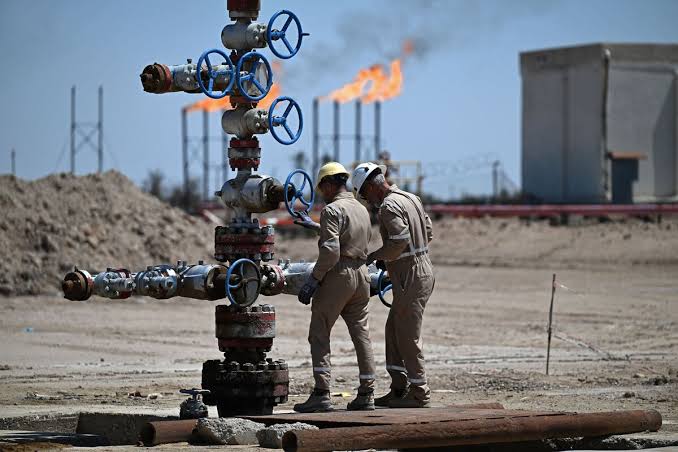
Quote: “No oil vessel, commercial contract or operational deadline is worth the loss of innocent lives; where environmental grievances are ignored and dialogue gives way to confrontation, the entire society pays a price that no compensation can adequately erase.”

Quote:”The value of wealth is
Will and gifts are subjects
A Will is an important legal
Where documentation is
This does not mean every
Properly completed lifetime
Property owners must also
My appeal is simple: let us
-

 Education2 days ago
FCE Yola Graduates 3,555 Teachers , Seeks Upgrade to University
-

 Sports2 days ago
Nigerian Trio Target Titles At PFL Africa Finals
-

 Niger Delta2 days ago
Diri Restates Stance On Lagos-Calabar Coastal Highway
-

 Niger Delta2 days ago
C’River, NUJ Pay Tribute To Late Guardian Editor
-

 News2 days ago
NDLEA Recovers Tons Of Illicit Drug Consignments In Nine States
-

 Opinion2 days ago
Checking Voter Apathy In Nigeria’s Electoral Process
-

 Politics2 days ago
2027: DICKSON’S EX-ALLY VOWS TO WORK AGAINST NDC INTEREST IN BAYELSA
-

 Politics2 days ago
2027: GROUP PLEDGES 40,000 SUPPORTERS FOR COALITION CANDIDATES IN RIVERS